




Energy-Saving Two-Chamber Processing Line for High-Volume Glass Plants
An Energy-Saving Two-Chamber Processing Line lets a glass plant heat two batches at the same time. One chamber pre-heats the next load while the other chamber brings the current load to tempering temperature. This overlap shortens idle time, raises daily output, and cuts heat loss. Our Easttec double chamber furnace handles glass from 4mm to 19mm and reaches 1.8 to 2 times the capacity of a standard single-chamber furnace. In this article, we explain how the system works, where the savings come from, and what U.S. buyers should check before they order.
Why High-Volume Glass Plants Are Prioritizing Energy Efficiency
Rising Energy Costs Shape Tempering Margins
Heat is what makes tempering happen. It takes over 600°C to heat the glass before it can be quenched. This means that heaters and fans run nonstop for hours on end every shift. There is a lot of energy used in making glass, according to the U.S. Department of Energy. Plants that have more than one shift have to pay a lot for their power costs. It loses heat through walls, doors, and time when it's not being used. All of this waste can be seen in the last square meter of glass. Every plant manager pays attention to three numbers: energy per square meter, rejection, and delivery time. There is a heater right next to the margin that lowers the first one without hurting the other two.
Who Benefits Most From a Double Chamber Furnace?
The best plants are the ones that get big orders all the time. It works well for architectural glass processors that need to cut a lot of 4mm to 6mm lites for doors, windows, and walls. Contract deep-processing shops and glass shops that make appliances, furniture, and shower walls both make repeat runs when they need to work faster. One Energy-Saving Two-Chamber Processing Line can handle architectural and industrial glass from 4mm to 19mm for a mixed order book. If the volumes of some plants are small or don't stay the same, they might not fill both chambers very often. This is why we ask each buyer for a weekly square-meter goal before we come up with a design.
What the Two-Chamber Concept Means in Practice?
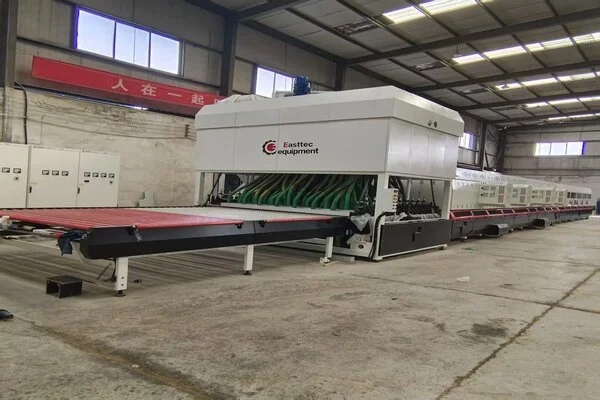
Think of the line as a race for heat. Some burners need the first load to heat up all the way before they can put in the next load. This system has two chambers: one that warms up first and one that heats up quickly. They work together. While the first batch cooks, the second one is already getting hot. The production no longer stops and starts; there is now a steady flow. Ask each supplier what each chamber does, how long each stage lasts, and how the glass gets to the quenching section. Not all suppliers have the same roles for each chamber.
How Does an Energy-Saving Two-Chamber Processing Line Work?
Dual-Stage Heating: Pre-Heating and High-Heating Chambers
The water in the first chamber slowly warms up the glass. There is just enough heat left in the second chamber to finish tempering. Because the heat rises slowly over two steps, the glass is less likely to break or crack. This helps keep the surface flat and lessens warping compared to fast single-stage heating. Being able to hold two batches at once means that the very hot chamber doesn't have to wait for a load very often. In order to temper this delayed flow, an Energy-Saving Two-Chamber Processing Line is built. It takes the oven less time to get ready for the next load and more time to heat the glass.
Matrix Heating and Forced Convection for Even Temperature
There is no need to worry about the glass being flat and clear when it comes out of the oven. In order to get good visual quality and reliable results, we use matrix heating technology. We also use real forced convection, which is based on Italian technology. There is a high-temperature fan inside the furnace that moves hot air around. The convection parts are made of ceramics that can handle temperatures of up to 1300°C. Moving air quickly brings heat into the glass, which makes it heat up more quickly and waste less energy. It is even more important to have steady heat flow when the glass is up to 19mm thick, since it takes longer for the core to warm up.
IPC Control Synchronizes Heating and Quenching
How long it takes for the chambers and quench section to work together in an Energy-Saving Two-Chamber Processing Line determines the real output. The rooms and the quenching area are always in sync with each other thanks to an industrial PC (IPC) in our furnace. The people who work there keep recipes for making things of all shapes and sizes and call them up when they get a new order. The menu comes in many languages, like English and Spanish, so U.S. crews can work in the language they prefer. In just one week, new operators can learn how to run and fix things. This is helpful for plants that have trouble finding skilled workers. Also, our techs are available 24 hours a day, seven days a week for live help.
Energy Efficiency and Production Performance Compared With Conventional Lines
Throughput Against a Single-Chamber Furnace
Because it takes less time to heat, our Energy-Saving Two-Chamber Processing Line reaches 1.8 to 2 times the capacity of a standard single-chamber furnace. There is a gain because the next batch starts to warm up while the first batch is finishing up. Speeds are very fast for 4mm to 6mm architecture lites, which are the main parts of window and wall systems. If someone wants to buy from us, they should think of the multiplier as a design figure and compare it to the sizes of their own glasses during acceptance testing. When there are changeovers, different thicknesses, and rejects, the output of any line will be less efficient.
Where the Energy Savings Come From
The savings are made possible by three parts of the system. For starters, better insulation cuts heat loss by 20%. This means that less electricity is needed to make up for the lost heat. Second, forced convection is a good way to get heat into the glass quickly. Third, a smart power management system divides the electricity between the two rooms. This makes it cheaper per square meter to run the business. Our plan saves power and helps people cut back on their own power use by about a third. It varies on the type of glass used, how tightly it is packed, and how much electricity costs where you live. To find out, have your own product tested for energy per square meter. Setting goals for managing energy according to ISO 50001 is a good way to keep track of progress.
Optical Quality and Thickness Range
How well you save energy depends on the quality. It costs more to fix or replace glass that gets scratched or warped by a faster burner. The two-stage slow rise in temperature lowers thermal shock and stress, which helps the surface stay flat and not change much. Building tempered glass in the U.S. has to meet ASTM C1048, which tells you how to squeeze the glass's surface. Rules for safety glass, such as ANSI Z97.1 and 16 CFR 1201, decide how well it works in a crash. Our line of 4mm to 19mm glass lets a plant quote both thin architectural lites and thick industrial pieces. You should always run a sample of the glass and check its flatness, fragmentation, and visual quality before taking the whole piece.
How to Select a Two-Chamber Line and Judge the ROI?
Define Your Production Scenario First
First, you need to decide what kind of project it is for an Energy-Saving Two-Chamber Processing Line: a new plant, an increase in capacity, a replacement, or an energy retrofit. You should write down the glass sizes, thickness ranges, products, annual output, working hours, utilities that can be accessed, floor space, and growth plans. A quick look at how much energy is used and how much is made is important here. Every month, write down the current output, the number of kWh used, the break, the scrap, and the work hours. This information gives you a clear goal for your sellers, and you can use it to judge how well they did later. These facts help our engineers plan the project. This is part of our one-stop service method, which begins with the request and ends with service after the sale.
Compare Total Cost of Ownership, Not Only Price
If you want to get a good idea of your return on investment (ROI), you should add up the cost of the product, shipping, setup, training, extra parts, and changes that make it more useful. The other thing is that it keeps track of costs like electricity, labor, repairs, scrap, and downtime. Look at each quote using the same glass specs and output volume to compare them. Then, look at the payback for different types of power prices and outputs. Our Energy-Saving Two-Chamber Processing Line speeds things up and saves 20% of the heat that would have been lost. This means that there is less waste per square meter and more glass is shipped each shift. The amount of time it takes to get your money back depends on how much power you use and how much you pay for it. To get a list of each provider's guaranteed capacity, energy use, service terms, and acceptance criteria, ask them to write them down.
Check Customization and Compliance for the U.S. Market
We make each burner a one-of-a-kind piece of gear. Industrial voltage and frequency standards around the world are 220V, 380V, 415V, and 50/60Hz, which can all be used by power systems. Right away, make sure you know what the stock is at your U.S. site. The tools should be the right size, have the right heating rates, and have the right cooling factors for the product. The menus can also be changed to a different color or language. The oven meets the safety standards set by the CE mark. Electricity rules and codes vary from state to state, so before you place your order, talk to us and your electrician about what you need. Transport takes between 60 and 120 business days, based on the model.
Installation, Maintenance, and Procurement Risks
Prepare the Plant Before Delivery
Planning ahead can help you avoid delays. Check the height of the building, its base needs, the floor loads, the equipment's entry routes, its power capacity, its ability to cool, ventilate, and pressurize air, as well as the flow of materials around the furnace. Check our plan drawing against the size of your hall, where you load and unload, and where the cutting and washing tools are situated above. Please let us know as soon as possible so that our engineers can plan the layout and set a date for delivery. A clear site study also gives your electrician time to get the power set up correctly before the machine arrives.
Commissioning, Training, and Daily Maintenance
The machinery and electricity are checked, safety tests are done, the line is run without any products in it, and glass trials with your own goods are done. They then improve the recipes and temperature curves even more. After that, your team will learn how to run the Energy-Saving Two-Chamber Processing Line as operators, so they will be ready to go in the first week. Every so often after the machine is up and running, check the sensors, heating elements, insulation, conveyors, fans, bearings, and control cabinets. Our technicians offer online help 24 hours a day, seven days a week to cut down on downtime. We make the furnace so that it is easy to keep. Before we ship the extra parts, make a list of the ones you need or want. Then, keep them on site.
Common Procurement Risks and How to Avoid Them
Most people get it wrong when they compare sizes instead of prices. It's possible that a low quote doesn't include setup, training, software, spare parts, or care after the sale if you get one. Claims about energy that haven't been tested are another red flag, as are numbers for capacity that are based on the fastest speed that can be thought of. There is no need to ask for both written test conditions and acceptance standards. If you can, go to the workshop or ask someone to show you how to use the valuable tools. It often takes months to make a choice about it. People are welcome to come see the factory. Since 1994, we've been making tools for tempering glass. Before signing, check the company's references, see how quickly they can help you, and see if they can provide extra parts.
Conclusion
Some of the problems that large glass companies have to deal with are rising energy costs, tight shipping schedules, and strict quality standards. To handle these stresses, an Energy-Saving Two-Chamber Processing Line heats up one lot before it's done. This is said to make the line 1.8 to 2 times more productive than a single-chamber burner. Formulated heating, forced convection, and advanced insulation make it possible to achieve even heating, good optical quality, and 20% less heat loss. With the help of the IPC, both chambers and the quenching section stay in sync. The thickest glass that can be handled on the same line is 19mm thick, and the thinnest is 4mm thick. It's important to have clear production data, know the total cost of ownership, trust tested results, get the site ready, and buy from a supplier that offers setup, training, and service.
FAQ
What thickness range can the Easttec double chamber furnace process?
Glass from 4mm to 19mm thick can be used for building and industry. Building lites between 4mm and 6mm can be made very quickly.
How much more output can I expect than from a single-chamber furnace?
Our Energy-Saving Two-Chamber Processing Line can reach 1.8 to 2 times as much output as a normal single-chamber burner because one batch starts to heat up while another one ends. We test it to make sure that the result is correct because it depends on the mix of glass sizes and thicknesses and how often the glass is changed.
How long does delivery take?
Every boiler is a different piece of machinery. Transport takes between 60 and 120 business days, based on the model.
How fast can new operators learn the system?
The program that works with more than one language for recipes and menus helps new owners learn how to run and fix things in just one week. You can talk to one of our techs online at any time, seven days a week.
Can the furnace match my plant's voltage?
Yes. The three common voltages used in power systems around the world are 220V, 380V, and 415V at 50/60Hz. Let us know what your site needs, and we'll make sure it's set up right.
Request a Project-Specific Energy-Saving Two-Chamber Processing Line Proposal from EASTTEC EQUIPMENT
To make your Energy-Saving Two-Chamber Processing Line, choose Easttec items. It's up to our engineers to decide what size, thickness range, voltage, and output your plant needs for the glass. We also build, train, and give online help 24 hours a day, 7 days a week for all of our projects. Send your needs to sales@easttecmachine.com by email to get a price suited to your project. Please visit easttecglass.com for more information.
References
1. U.S. Department of Energy, Energy and Environmental Profile of the U.S. Glass Industry, 2002
2. ASTM International, ASTM C1048 Standard Specification for Heat-Treated Flat Glass, 2018
3. American National Standards Institute, ANSI Z97.1 Safety Glazing Materials Used in Buildings, 2015
4. International Organization for Standardization, ISO 50001 Energy Management Systems, 2018
5. European Parliament and Council of the European Union, Directive 2006/42/EC on Machinery, 2006
6. U.S. Energy Information Administration, Manufacturing Energy Consumption Survey, 2018

USER EVALUATE
Here is the customer's evaluation of us