




Why Use Radiation Flat & Bend Glass Tempering Furnace of Flexible Roller for Architectural Glass?
Architectural glass production demands precision, structural strength, and visual clarity. A Radiation Flat & Bend Glass Tempering Furnace of Flexible Roller answers these demands directly. By combining matrix radiant heating with an adjustable flexible roller mechanism, this system processes both flat and curved architectural glass—from 5mm to 19mm thickness—within a single production line. It reduces energy loss by 20% through high-density insulation and maintains heating uniformity within ±2°C, preventing optical distortion. For facilities producing curtain wall panels, skylights, or facade glass, this equipment delivers measurable quality and operational consistency.
Understanding Radiation Flat & Bend Glass Tempering Furnace Technology
Infrared radiation heating doesn't use heated air as a medium; instead, it sends heat directly to the surface of the glass. Compared to systems that only use convection, which can leave uneven temperature zones on larger panels, this direct absorption method heats the whole glass sheet faster and more evenly.
How Radiation Heating Works at the Core
Radiation elements set up in a matrix pattern send out infrared energy that the glass always soaks up. Easttec's multi-zone matrix radiant heating system splits the furnace chamber into heating zones that can be controlled separately. This gives operators precise control over temperature differences between glass of different sizes and thicknesses.
The Flexible Roller Mechanism Explained
The flexible roller system has a high-strength shaft that can be adjusted and heat-resistant sleeves that can change from a flat shape to a calculated circle. The sleeves are usually made of Kevlar or ceramic coating. Servo-motor control makes this change happen automatically, so no manual mold changes are needed. This makes one line that can work with both flat building glass and forms with a lot of curves, like skylights.
Step-by-Step Tempering Process for Architectural Glass
The heating room keeps the temperature between 680°C and 720°C, with a range of less than 2°C. This is where the glass goes. Once the glass is fully flattened, the flexible rollers move it into the quench section. High-pressure air quickly cools it, keeping the surface compression stress above 90MPa, which meets EN 12150-1 and ASTM C1048 standards.
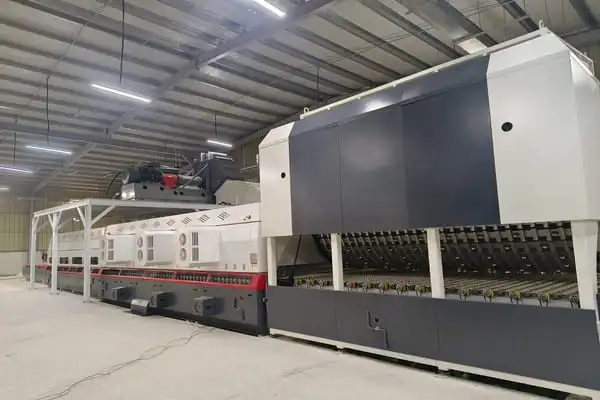
Advantages of Using Radiation Furnaces with Flexible Roller for Architectural Glass
When radiant heating and a Radiation Flat & Bend Glass Tempering Furnace of Flexible Roller Transport are used together, they solve two problems that have been bothering architects for a long time: curved glass that distorts the view and rigid production when switching between flat and bent orders.
When it comes to technology, this equipment gives your production line the following strengths:
- Exceptional Bending Versatility: The adjustable flexible roller system handles a wide range of custom curvatures that rigid conveyor systems cannot physically achieve. Processors working on decorative facades, corner curtain wall units, or skylight glazing gain access to complex geometries without separate mold tooling or dedicated bend lines.
- Precision Matrix Thermal Control: Easttec's multi-zone matrix radiant heating delivers uniform thermal absorption across the full glass sheet. This precise distribution prevents "ghosting" and optical wave distortion, producing surfaces that meet elite architectural glass standards and pass zebra board inspection without adjustment.
- 20% Thermal Energy Savings: High-density composite insulation built into the furnace structure reduces heat loss by 20% compared to conventional models. Stable furnace temperature retention lowers reheating cycles, which directly cuts electricity consumption—a significant factor given that tempering is one of the most energy-intensive steps in glass manufacturing.
- Robust IPC & PLC Control Architecture: A stable Industrial PC combined with a PLC interface manages all process parameters. Operators store and recall hundreds of production recipes through a secure interface, allowing fast, repeatable transitions between flat and bent production runs without manual reconfiguration.
Easttec's multi-zone matrix radiant heating spreads heat evenly across the whole glass sheet, making it perfect for precise temperature control. This exact distribution stops "ghosting" and optical wave distortion, making surfaces that meet the highest standards for building glass and pass the zebra board inspection test without any changes.
Comparing Radiation Furnace Solutions with Traditional Alternatives
A lot of places still use older furnaces that only use convection or fixed-roller bend lines. Knowing when radiation with flexible rollers works better than other choices helps production managers choose the right capital equipment.
Radiation vs. Convection Heating Performance
Convection furnaces heat glass indirectly by moving hot air around. This can make the temperature of bigger or thicker pieces vary. Radiation heating directly hits the glass surface, making the temperature even across the sheet to within ±2°C. When optical quality is a requirement for architectural glass, this difference is important for how it works.
Flexible Rollers vs. Fixed Roller Systems
Processors are locked into a single shape by fixed roller units. Changing the curve means replacing the rollers or setting up a new production line, which costs more money and takes up more floor space. Through the HMI interface, the servo-controlled Radiation Flat & Bend Glass Tempering Furnace of Flexible Rollers can change the configuration of a machine in less than five minutes. This means that one machine can handle the output of two separate lines.
ROI and Total Cost of Production
When figuring out the total cost of ownership, facilities should take into account how much energy they save, how much scrap they get rid of, and how often they need to be serviced. This equipment usually pays for itself faster than buying two different systems because it wastes 20% less energy and can do both flat and curved production at the same time.
Maintenance and Common Issues of Radiation Flat & Bend Glass Tempering Furnaces
Regular upkeep is needed to keep the quality of the result consistent. Facilities that use this technology as a "set it and forget it" method have downtime that they could have avoided and quality that slowly gets worse.
Scheduled Inspection Priorities
The basic maintenance schedule includes checking the condition of the roller sleeves, the insulation modules, and the radiation heating elements every month for wear and tear. Easttec's machines are made so that new workers can learn how to do basic repairs in just one week of training.
Common Operational Challenges and Solutions
Most of the time, a broken heating element or a blocked zone sensor is to blame for temperature differences between zones. High-temperature encoders and real-time feedback loops that lock in roller positions against thermal expansion fix any position error that happens during long production shifts. The IPC tracking tool can find both problems early on, before they hurt the quality of the product.
Emergency Protocols and Uptime Protection
The heater has a gas emergency drive system and a UPS to back up the PLC. If the power goes out, all the glass in the heating chamber is safely ejected to keep the roller contacts from getting damaged. This keeps both the product and the equipment safe.
Procurement Considerations and How to Source Radiation Flat & Bend Glass Tempering Furnaces with Flexible Rollers
When choosing a bend glass tempering furnace provider, you need to look at their technical skills, whether they meet certification requirements, and how easy it will be to get help in the future.
Evaluating Supplier Credentials and Certifications
Most countries require tools to have at least CE certification before they can be sold. Easttec follows strict CE safety rules when making their products, which means they are built well and meet electrical safety standards. Also, buyers should check to see if the supplier has processed glass on their reference lines to meet EN 12150-1 or ASTM C1048 standards.
Customization and Lead Time Planning
Tempering kilns for glass are custom-made pieces of capital equipment. Easttec offers software interfaces in English, Spanish, Russian, Korean, and Portuguese, as well as the ability to change power systems to global voltage and frequency standards (220V, 380V, 415V, 50/60Hz), as well as the ability to set output parameters. Delivery takes anywhere from 60 to 120 working days, based on the type and your needs.
After-Sales Support as a Decision Factor
When purchasing managers look at a radiation flat bend glass tempering furnace provider, they should make sure that they offer expert support online 24 hours a day, on-site installation help, and a steady supply of spare parts. As part of the standard supply agreement, Easttec's team helps with installation, commissioning, and training for operators.
Conclusion
This radiation flat and bend glass tempering technology, with the Radiation Flat & Bend Glass Tempering Furnace of Flexible Roller transport, makes it possible for architectural glass makers to make both flat panels and complexly curved glass on the same production line. Matrix radiant heating, high-density insulation that saves 20% of energy, servo-controlled bends, and IPC-driven recipe management all work together to solve the main production problems that U.S. sites face. If a business is thinking about buying glass tempering equipment, this system is a good choice because it balances quality output, operational flexibility, and long-term cost control.
FAQ
1. What glass thicknesses can this furnace process?
The system processes architectural glass from 5mm to 19mm in both flat and bent configurations. This range covers most commercial and residential construction applications, including curtain wall panels, skylights, and structural facade glass.
2. How long does it take to switch from flat to bend production mode?
Servo-controlled flexible rollers complete automated configuration changes in under five minutes through the HMI interface. The IPC stores hundreds of bend parameters, so operators recall saved recipes without manual measurement or roller replacement.
3. Does radiation heating work for Low-E glass?
Yes. While radiation heating requires adjusted heating curves for Low-E coated glass, Easttec's multi-zone matrix control allows independent zone temperature calibration to prevent coating oxidation while achieving full temper.
4. What certifications does this equipment carry?
The furnace is manufactured to CE safety directives. Tempered glass produced on this line can meet EN 12150-1 and ASTM C1048 standards, which are recognized in both European and North American markets.
5. What happens if there is a power outage during production?
A pneumatic emergency drive system and PLC UPS backup activate automatically. All glass inside the heating chamber is safely ejected to prevent contact damage to the rollers and the glass product.
Partner with EASTTEC EQUIPMENT for Your Next Tempering Line Investment
Since 1994, EASTTEC EQUIPMENT has helped glass processors all over the world, and our Radiation Flat & Bend Glass Tempering Furnace of Flexible Roller is the result of thirty years of experience in production engineering. As a reliable company that makes flat and bend glass tempering furnaces, we offer full customization, CE-certified build quality, and expert help 24 hours a day, 7 days a week, from the time you call to the time you install your furnace. To get technical advice and an equipment quote that fits your production needs, please email our team at sales@easttecmachine.com.
References
1. Glass International Magazine, 2022
2. Tempering and Heat Strengthening of Flat Glass — ASTM International, 2021
3. EN 12150-1: Glass in Building — Thermally Toughened Soda Lime Silicate Safety Glass — European Committee for Standardization (CEN), 2019
4. Glass Processing Technology and Equipment — Glass Technology Journal, 2020
5. Energy Efficiency in Industrial Furnace Operations — U.S. Department of Energy, Industrial Technologies Program, 2018
6. Architectural Glass: Design and Fabrication Standards — American Institute of Architects (AIA) Technical Reference Series, 2021

USER EVALUATE
Here is the customer's evaluation of us