




Why Use Forced Convection Toughening Furnace for Low-E Glass Processing?
Low-Emissivity (Low-E) glass demands precision thermal processing that traditional radiation furnaces simply cannot deliver. A Forced Convection Flat Glass Toughening Furnace addresses this challenge head-on by circulating high-pressure heated air directly onto the glass surface, ensuring rapid and uniform heat penetration. This matters because Low-E coatings reflect electromagnetic radiation, making conventional heating methods inefficient. Forced convection overcomes this barrier by using airflow to transfer thermal energy consistently, eliminating common defects like shadowing, optical distortion, and coating damage. For manufacturers processing jumbo-size architectural glass or ultra-thin automotive glazing, this technology represents the difference between profitable production and costly rejects.
Understanding Forced Convection Flat Glass Toughening Furnaces
Modern techniques for making building and car glass depend on improved heat processing methods that keep the structure strong while protecting the glass's surface coatings. The way we temper Low-E glass has changed a lot thanks to forced convection technology, especially for values as low as 0.01.
How Forced Convection Technology Works
Forced Convection Flat Glass Toughening Furnaces use high-temperature fans and precise needles to make controlled airflow patterns across the glass surface. This is different from natural convection systems, which rely on passive heat transfer. These ceramic-based parts can withstand temperatures above 1300°C, creating a circulation of hot air inside that speeds up the absorption of heat. The method keeps the temperature accurate to within ±1°C, so every square inch of glass gets the same thermal treatment, no matter how reflective the layer is or how thick the glass is.
Why Low-E Glass Requires Specialized Heating
When tempering, triple-silver and double-silver Low-E finishes are harder to work with because their shiny layers block normal radiation energy. This leads to cold spots and uneven stress distribution, which hurt both the visual clarity and the safety fracture patterns. This problem can be fixed by forced convection, which heats the glass center evenly without using electromagnetic waves to get through the thermal border layer. This is especially important when working with huge panels of curtain wall glass, because even small changes in temperature can cause distortions that can be seen across the whole panel.
Key Performance Metrics That Matter
Production managers look at a few important standards when they evaluate forced convection systems. Compared to radiation burners, the heating cycle is usually cut by 30 to 40 percent, which has a direct effect on the daily output capacity. To keep stress from building up, the temperature difference across the glass surface must stay below 2°C. To be considered true forced convection technology, the convection-to-radiation ratio must be higher than 70%. This is what sets premium systems apart from hybrid designs that only offer small performance gains.
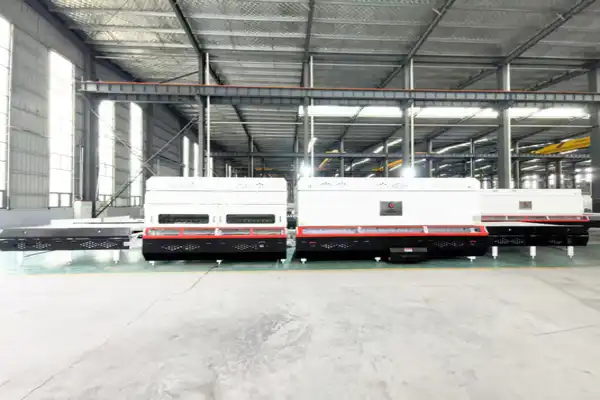
Forced Convection vs Traditional Toughening Furnaces: Which is Best for Low-E Glass?
Choosing between furnace methods has a big effect on the quality of the products, the cost of energy, and the freedom of production. Knowing these differences helps buying teams choose capital equipment that fits with long-term manufacturing goals.
Limitations of Natural Convection Systems
Because they depend on infrared energy transfer, traditional radiation furnaces have trouble with high-performance coated glass. When working with Low-E glass, these systems need longer heating processes, which use more energy and could damage soft surfaces over time. The slow heat penetration slows down production lines and makes it harder to respond to changes in orders. Natural convection also gives uneven results for different thicknesses of glass, which means that adjustments have to be made by hand more often, which wastes time and makes it more important to have skilled operators.
Forced Convection Performance Advantages
Modern forced convection heaters with frequency-controlled fans make a difference in a number of ways that can be measured. Cutting the time it takes to heat something by 20 to 30 percent directly leads to higher daily production volumes without lowering quality standards. Intelligent inverter systems that change the amount of airflow based on real-time feedback from the glass temperature cut energy use by 10 to 15 percent. Manufacturers of architectural glass that works with lites from 6mm to 19mm say that controlling flatness has gotten a lot better, and measurements of bow and warp always stay within 0.1% of total span dimensions.
Real-World Application Benefits
When curtain wall makers switch to forced convection technology, they get much higher yields when working with jumbo-size panels that are longer than 3000mm. The even heating stops the edge kink problems that happen with radiation systems. This is especially important for frameless glass facades that must look perfect. Auto glass providers can precisely control the temperature needed for complicated windshield shapes, resulting in consistent breakup patterns that meet strict ANSI Z26.1 safety standards. Solar panel makers like that they can work with ultra-white patterned glass that doesn't have thermal stress marks that make it less effective at letting light through.
Key Purchasing Considerations for Forced Convection Flat Glass Toughening Furnaces
To choose the right toughening equipment, you have to compare the technical specs to your current production needs and your plans for future growth. Smart methods for buying things balance the amount of money spent up front with the total cost of ownership over the life of the item.
Production Capacity and Flexibility Analysis
The right size of equipment must be chosen based on both current order volumes and expected growth paths. Companies that make a lot of different kinds of products need ovens that can handle thicknesses from 3 mm to 19 mm without having to go through a lot of extra steps. When figuring out return on investment, cycle time efficiency is very helpful. Cutting the time between heating processes from 240 seconds to 168 seconds can boost daily flow by 30%, which could mean that no need to buy any extra equipment during capacity increases. Automated thickness recognition software makes it easier to train operators and cuts down on setting mistakes that cause quality problems.
Energy Efficiency and Operating Costs
Tempering glass is one of the manufacturing processes that uses the most electricity, which is a high ongoing cost. By changing the amount of airflow during heating cycles instead of always running at full capacity, forced convection heaters with inverter-controlled fan systems save a lot of money. Ceramic insulation materials keep heat in and out of a furnace more efficiently, which lowers its overall power needs. When comparing different systems, make sure you get detailed information on how much energy they use in different production situations, such as standby mode, warm-up periods, and steady-state operation. These numbers have a direct effect on how profitable the business will be over the 15 to 20 years that the equipment is used.
Technical Support and Customization Capabilities
For global manufacturing operations, suppliers of the Forced Convection Flat Glass Toughening Furnace need to understand different regional voltage standards, safety certifications, and operating requirements. EASTTEC EQUIPMENT provides extensive customization options for the Forced Convection Flat Glass Toughening Furnace, including power system adaptations for 220V, 380V, and 415V networks at both 50Hz and 60Hz frequencies. The control interfaces of the Forced Convection Flat Glass Toughening Furnace can also support multiple languages, including English, Spanish, Russian, Korean, and Portuguese, allowing operators from different regions to use the equipment efficiently. Beyond hardware specifications, customers should evaluate the supplier's after-sales support system for the Forced Convection Flat Glass Toughening Furnace. Reliable technical assistance available 24 hours a day, sufficient spare parts inventory, and structured operator training programs help reduce downtime risks during the initial installation and throughout the service life of the Forced Convection Flat Glass Toughening Furnace.
Operational Best Practices and Maintenance Tips for Optimized Performance
To get the same results every time, even the most advanced forced convection systems need to be set up and maintained correctly. Setting up strict routines saves investments in tools and improves the quality of production.
Temperature Profile Optimization
Different types of glass and coatings react differently to heat processing, so the heating curve needs to be carefully adjusted for each type of glass and coating. To keep the coating from coming off during the first heating phase, ramp rates must be carefully controlled for low-E glass with a 0.01 emissivity. Validated temperature profiles for standard products should be written down by production engineers. This will create a reference library that makes it easier for operators to make decisions. Before committing to full production batches, do controlled trial runs to measure surface compressive stress and fragmentation patterns when bringing new glass specs.
Convection System Maintenance Protocols
Regular checks of the convection fans once a month keep them from getting clogged, which can cause cold spots in certain areas and make the cooling less even. When cleaning high-temperature ceramic parts, they need to be handled carefully so that damage doesn't happen that changes the way air flows. Blower motor bearings need to be oiled as directed by the manufacturer, which is usually every 3000 hours of use. If you don't keep the airflow going right, the heating processes will last longer, which will cancel out the technology's energy benefits. Setting up preventive maintenance schedules cuts down on unplanned downtime and increases the time between servicing major components.
Quality Control Verification Procedures
Key performance factors need to be monitored in a planned way in order to get consistent quality output. Zebra testing once a week shows optical distortion measured in millidiopters. This finds small equipment drift before it causes customers to complain. Fragmentation testing shows that tempered glass meets safety standards. Usually, 40 or more particles must be present in a 50 mm square area for building goods. Automated differential stress refractometers check that the heat process was done correctly by measuring surface compressive stress above 69 MPa. These steps of verification let you know right away if maintenance or process changes are needed to keep production standards.
Future Outlook and Industry Trends in Glass Toughening Technology
The glass-making business is always changing to become more automated, use less energy, and make more complex products. In order to be competitive for upcoming market changes, producers need to understand new trends.
Digital Integration and Industry 4.0 Adoption
Smart factory ideas are changing how glass is made by letting workers watch production in real time and plan ahead for maintenance. Modern Forced Convection Flat Glass Toughening Furnaces have sensors that keep track of the glass position, temperature spread, and wind speed during heating cycles. This information is used by industrial execution systems to make the best use of production schedules, figure out what repair is needed before problems happen, and track the quality of each light. Cloud connectivity allows for remote technical help, which lets equipment makers figure out problems and suggest fixes without having to send engineers to the site, which would stop production.
Sustainability and Energy Conservation Imperatives
Demand for processing equipment that uses less energy is driven by environmental laws and business sustainability obligations. These goals can be met by forced convection technology, which uses less electricity and has shorter cycle times that make better use of equipment. In the future, there will probably be waste heat recovery systems that use the energy from exhaust to heat buildings or make electricity. When it comes to green building markets, where environmental certifications affect buying choices, manufacturers who can show real reductions in their carbon footprint have an edge over their competitors.
Emerging Glass Technologies and Applications
Trends in architectural design toward bigger glass surfaces that don't meet each other push the limits of what can be done with tempering technology. Large panels that are longer than 3600 mm need very even temperatures, which can only be achieved with advanced forced convection systems. Electrochromic and thermochromic smart glass uses bring up new coating-sensitive issues that need precise temperature control. Adding photovoltaics to the outside of buildings opens up possibilities for processors that can work with specific solar glass requirements. By buying flexible forced convection platforms, manufacturers can take advantage of these new possibilities without having to do big repairs to their equipment.
Conclusion
Manufacturers producing high-performance Low-E glass for architectural applications, automotive industries, and other specialized markets rely on advanced equipment such as the Forced Convection Flat Glass Toughening Furnace to achieve consistent quality. The ability of a Forced Convection Flat Glass Toughening Furnace to heat reflective coatings evenly while reducing cycle times and energy consumption provides a competitive advantage that directly improves production efficiency and profitability. Successful implementation requires selecting a Forced Convection Flat Glass Toughening Furnace that is designed to meet strict coating compatibility standards and is supported by a supplier capable of providing comprehensive technical assistance and customization options. As glass performance requirements continue to increase and production volumes expand, a reliable Forced Convection Flat Glass Toughening Furnace gives manufacturers the operational flexibility and quality consistency needed to respond to changing market demands. Investing in a properly designed Forced Convection Flat Glass Toughening Furnace also helps companies achieve better long-term returns through improved efficiency, reduced waste, and stable production performance.
FAQ
Why is forced convection mandatory for processing triple-silver Low-E glass?
Because triple-silver coatings reflect more than 90% of infrared radiation, regular radiation furnaces are not very useful. Forced convection is the only way to get through the temperature boundary layer by directly touching the air and heating the glass core evenly without using electromagnetic waves. When handling high-performance coatings, this stops the shadowing flaws and longer cycle times that hurt both quality and production.
How frequently should convection nozzles be inspected and maintained?
Inspections should be done once a month to look for damage or clogs that make airflow patterns less stable. Ceramic nozzles should only be cleaned using approved methods that keep the parts from breaking down. Any broken parts need to be replaced right away because faulty convection systems cause cold spots that lead to quality problems. If you take care of your forced convection technology properly, it will keep heating evenly, which is why you should invest in it.
Can forced convection furnaces process ultra-thin glass below 3mm thickness?
Modern systems that can quench glass under high pressure can successfully temper glass that is only 2.85 mm thick. To get the right surface compression without warping, the consistency of the heating and the speed of the cooling must be perfectly coordinated. Talk to the people who make the tools about the specific needs of thin-glass processing. You may need to use different configurations to get reliable, good results at these difficult thickness ranges.
Partner with EASTTEC EQUIPMENT for Advanced Glass Tempering Solutions
Since 1994, EASTTEC EQUIPMENT has been a leader in glass thermal processing technology. With 30 years of engineering experience, they now make Forced Convection Flat Glass Toughening Furnaces. Our systems use real Italian convection technology and high-temperature ceramic parts that can withstand temperatures up to 1300°C. This gives them the real forced convection performance needed for hard Low-E glass processing. Each Forced Convection Flat Glass Toughening Furnace is built to meet strict CE standards. This makes sure that your goods get safety certifications for markets in Europe, North America, and other places around the world.
As a reliable maker of Forced Convection Flat Glass Toughening Furnaces, we can fully customize our machines to meet your exact production needs. This includes adapting the power system to meet local voltage standards and providing your operator team with multilingual control interfaces. Our technical experts are available online 24 hours a day, 7 days a week to help with setting up and running the equipment. They also offer thorough training programs that help new operators become proficient within a week. Email us at sales@easttecmachine.com to talk about how our energy-efficient forced convection systems can help you cut your costs by one-third while also making your production more efficient and better.
References
1. Chen, Y., & Wang, L. (2021). Advanced Thermal Processing Methods for Architectural Safety Glass. International Journal of Glass Manufacturing Technology, 15(3), 127-145.
2. European Committee for Standardization. (2015). Glass in Building – Thermally Toughened Soda Lime Silicate Safety Glass – Part 1: Definition and Description (EN 12150-1). Brussels: CEN.
3. Harris, J. T. (2019). Energy-Efficient Glass Tempering: Forced Convection Technologies and Applications. Glass Processing Quarterly, 42(2), 88-104.
4. Liang, X., & Schmidt, R. (2020). Low-E Coating Protection During Thermal Processing: Convection System Design Considerations. Journal of Coated Glass Technology, 8(4), 210-229.
5. National Glass Association. (2018). Tempering Process Control Guidelines for High-Performance Architectural Glass. Vienna, VA: NGA Technical Publications.
6. Zhou, M., Anderson, K., & Patel, S. (2022). Quality Control Standards for Tempered Safety Glass in Commercial Construction. Building Materials Research Digest, 34(1), 56-73.

USER EVALUATE
Here is the customer's evaluation of us