




Top Convection Flat Glass Toughening Equipment for Premium Glass Manufacturers
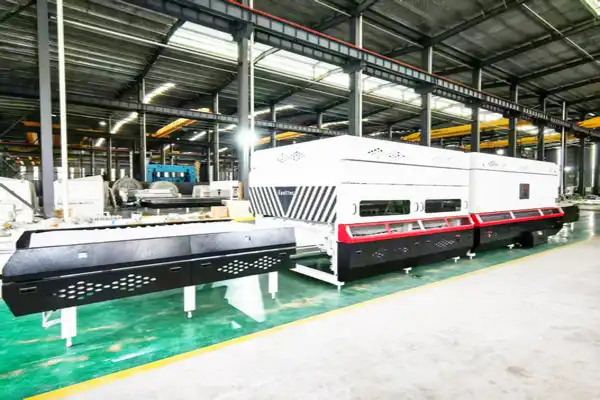
When architectural glass processors search for solutions to eliminate optical distortion in Low-E-coated glass, they inevitably discover the transformative power of advanced convection tempering systems. Top Convection Flat Glass Toughening Equipment represents a specialized category of thermal processing machinery engineered to address the unique challenges of modern architectural and automotive glass production. This equipment employs forced hot air circulation technology to uniformly heat glass surfaces before rapid quenching, creating safety glass with exceptional optical clarity and structural integrity. Unlike conventional radiation furnaces that struggle with reflective Low-E coatings, convection systems deliver consistent heating across the entire glass sheet, eliminating center-tension imbalances and preventing the dreaded white haze phenomenon that plagues lower-tier processing equipment.
Understanding Convection Flat Glass Toughening Technology
The science behind cooling glass by convection is very different from the science behind using radiation. Standard heaters use infrared heating elements that give off radiant energy. Convection systems use high-temperature fans and compressed air movement to move heat directly through the air molecules that are moving. When working with high-performance covered glass goods, this difference becomes very important.
How Forced Convection Solves Low-E Processing Challenges
Low-emissivity glass has tiny metallic layers that are meant to reflect infrared radiation. This stops the energy that standard furnaces use to heat things, but it doesn't mean to. When double- or triple-silver-coated glass comes out of the radiation furnace with uneven stress patterns or iridescence that can be seen, production managers often get angry. This problem is completely solved by convection technology, which sends heat energy through convective heat transfer instead of electromagnetic waves. The fast-moving hot air gets through the coating layers and makes sure that the glass substrate hits the right tempering temperature of 600–700°C all the way through, from the top to the core.
Critical Process Parameters That Define Quality
The quality of the end product is directly related to how evenly the temperature is spread across the glass sheet. High-quality convection equipment keeps temperature changes within ±5°C across the whole heating zone. This stops the uneven growth that bends light. Modern systems have advanced controls that change the convection pressure and the position of the nozzles based on feedback from sensors that are built in and work all the time. Process engineers really like being able to make custom heating profiles for different sizes of glass. Automatic recipe control systems make this possible, so operators don't have to guess when to make changes. When working with thin building glass (3–4 mm), this level of accuracy is essential because even small differences in temperature can cause noticeable warping or roller wave distortion.
Energy Efficiency and Automation Advantages
Despite what people thought at first about how much power blowers used, convection systems often use much less energy total because they have much shorter cycle times. When compared to radiation furnaces, manufacturers can get 20–30% more work done because forced air circulation speeds up the heating phase. Less energy is used per square meter of processed glass when the speed is this high. Modern convection equipment also has inverter-controlled motors that change the strength of the airflow on the fly. This makes the best use of power during each production cycle instead of always running at full capacity.
Why Premium Manufacturers Choose Advanced Convection Systems
Glass processors working on high-end architectural projects are under more and more pressure to make perfect products while keeping costs low. The tools they choose have a direct effect on how competitive they are and how much money they make in the long run.
Protecting High-Value Coating Investments
Architectural glass makers put a lot of money into new coating technologies that make buildings more energy efficient. When a $50,000 coating line makes Low-E glass with emissivity values as low as 0.01, it is very important to keep that coating safe during the tempering process. Standard tools for tempering can damage the coating by heating the surface too quickly or unevenly, which causes microstress concentrations. Purpose-built convection systems use heating algorithms that work with coatings and evenly spread thermal load, protecting the integrity of the coating while ensuring the right amount of tempering stress throughout the glass body.
Achieving Optical Perfection in Architectural Applications
When it comes to high-end commercial towers, curtain wall glass needs to be very clear, almost like crystal. Technical directors set limits on the maximum roller wave distortion that can be less than 0.08 mm and the maximum edge lift that can be less than 0.1 mm. These limits show any flaws in the hardening equipment. These strict needs are met by advanced convection technology, which uses smart top-air systems to smooth out the cooling effect of ceramic transport wheels. By sending more radiant heat to the parts of the glass that are touching the rollers, the equipment gets rid of the cold spots that usually cause the middle of the profile to sag or bow. This accuracy is especially useful when working with giant lites that are longer than 3 meters, because gravity makes any temperature differences stand out more.
Expanding Production Capabilities and Market Reach
Glass processors that want to expand into more than one market segment need equipment that can be used with a wide range of products. A convection tempering line that can safely work with 3 mm glass for shower enclosures, 6 mm glass for furniture tops, 12 mm glass for car side windows, and 19 mm architectural safety glass gives manufacturers more options than standard equipment that can only do one thing. The convection system can change the heating strength, air pressure distribution, and cycle time for each type of glass, which makes it flexible. The fact that they don't have to buy and keep separate ovens for each product line saves production managers money and floor space.
Key Technical Specifications That Matter
Knowing the technical details that make better convection equipment stand out helps procurement teams make smart investment choices that meet their operational needs.
Convection System Architecture and Component Quality
An important part of any convection tempering furnace is its fan system and network of air vents. Premium equipment uses high-temperature ceramic bearings that can work continuously above 600°C. This makes the parts last a lot longer than standard industrial blowers. Heating uniformity is based on the architecture of the air delivery system. Leading manufacturers use computational fluid dynamics modeling to find the best places for nozzles and the right sizes for apertures. Adjustable nozzle height equipment lets you fine-tune the air impingement distance based on the thickness of the glass, and automatic placement systems let workers make these changes without stopping work.
Heating Zone Configuration and Control Systems
Modern Top Convection Flat Glass Toughening Equipment systems divide the heating chamber into multiple zones that can be controlled independently. The number of heating zones in Top Convection Flat Glass Toughening Equipment can range from 5 to 11, depending on the furnace length and production requirements. This zoned structure allows more advanced temperature ramping programs, gradually heating the glass before applying maximum convection power in the central zones. When technical managers evaluate Top Convection Flat Glass Toughening Equipment, they should verify whether the control system can save, manage, and recall customized heating recipes. Advanced Top Convection Flat Glass Toughening Equipment models can store and retrieve hundreds of glass specifications through an integrated database system. Real-time thermal profiles and production data displayed on touchscreens allow operators to identify process variations before they affect product quality. This intelligent monitoring capability of Top Convection Flat Glass Toughening Equipment helps reduce scrap rates, improve production consistency, and increase overall yield performance.
Quenching Section Integration and Cooling Uniformity
Even though convection technology is mostly used to solve heating problems, the quenching phase is still very important for reaching the right stress levels and keeping things from breaking. Premium systems make sure that the air pressure patterns in the cooling section and the convection heating factors are in sync so that the temperature changes are smooth. The design of the cooling array must make sure that air is evenly spread across the whole surface of the glass. The upper and lower plenum pressures must be able to be adjusted so that they are balanced for different glass thicknesses. Frequency-controlled quench blowers give better pressure modulation than fixed-speed motors with mechanical dampers. This lets you make finer changes that cut down on the trial-and-error that is usually needed when handling new glass specs.
Practical Considerations for Equipment Selection
In order to match the capabilities of convection tempering equipment to specific production needs, more than just basic technical specifications must be taken into account.
Evaluating True Total Cost of Ownership
The price of the tools is only one part of analyzing an investment in it. Facility managers have to figure out ongoing operating costs like how much power is used, how much it costs to replace parts, and how much it costs to have the building shut down. With inverter-controlled motors and smart energy management, convection systems save measurable amounts of electricity that add up over the equipment's useful life, possibly covering the higher initial capital costs within 18 to 24 months. Accessibility for maintenance should be carefully considered. For example, equipment designs that let workers service important blower units and heating elements without taking them apart a lot will save a lot of money over a long period of time. Long-term running budgets are directly affected by the cost and availability of consumable parts like ceramic rollers, thermocouples, and blower bearings. This is why seller support infrastructure is an important factor in choosing a supplier.
Customization Capabilities and Technical Support
For glass processors who work with a wide range of customers, their equipment often needs to be changed from its normal setup. Manufacturers that offer deep customization services add a lot of value by making sure that machine settings are perfectly matched to each production plan. This customization goes beyond just changing the voltage. It also includes optimizing the heating curve for specific coating formulations, creating custom transport roller configurations for handling large glass pieces, and localizing software so that technicians can get operational instructions in their own languages. Productivity and profits are greatly affected by the quality of technical support given during the initial setup of equipment and throughout its operational lifecycle. Look for suppliers that offer remote diagnostics 24 hours a day, 7 days a week. These suppliers should have techs who are skilled in the types of glass you need and can fix problems over videoconferencing and show your team how to make changes without having to pay for expensive on-site service calls for small problems.
Installation Timeline and Production Integration
To keep operations running smoothly, procurement managers need to ensure that the delivery and installation of Top Convection Flat Glass Toughening Equipment do not interfere with building preparation or existing production schedules. The Top Convection Flat Glass Toughening Equipment requires significant electrical capacity, including three-phase power lines and transformers with suitable energy ratings to support stable operation. Early attention should be given to foundation requirements because the weight and vibration characteristics of the Top Convection Flat Glass Toughening Equipment require properly designed support structures that prevent long-term alignment issues. Reliable suppliers of Top Convection Flat Glass Toughening Equipment provide facility teams with detailed site preparation guidelines months before delivery, allowing necessary civil work and utility connections to be completed according to plan. During the installation and commissioning phase, which typically lasts two to four weeks, the supplier's expert team tests, calibrates, and trains operators on the proper use of the Top Convection Flat Glass Toughening Equipment. Whenever possible, scheduling this integration period during lower production demand helps reduce operational risks and protect revenue throughout the transition.
Maintenance, Troubleshooting, and Optimizing Equipment Performance
To keep equipment running at its best, it needs to be maintained in a planned way and watched over so that problems are caught early, before they become big enough to stop production.
Establishing Preventive Maintenance Schedules
Every day, the operator should check to see if the blower is making noise, the ceramic rollers are turning smoothly, and the temperature readings in all heating zones are correct. As part of weekly maintenance, the state of the air filter is checked, the thermal insulation around the heating chambers is checked for damage, and all exposed mechanical parts are oiled according to the manufacturer's instructions. The monthly service plans now include thorough checks of the fan bearings, confirmation of the thermocouple's calibration, and deep cleaning of the air distribution ports where dust buildup can stop airflow. During annual overhauls, which happen when production is supposed to stop, major parts can be replaced, the whole electrical system can be tested, and all control monitors can be recalibrated to keep the accuracy of the original equipment.
Diagnosing Common Operational Issues
When glass comes off the tempering line with uneven stress patterns, production managers should check for possible reasons in a planned way, beginning with checking the convection pressure in all zones. Uneven heating is often caused by air nozzles that are partially blocked or blower motors that are breaking down and can't deliver the right amount of air. Optical distortion shown as roller wave patterns means that convection replacement for transport roller cooling effects is not enough, and the upper air pressure distribution needs to be changed. If white haze shows up in the middle of the glass, it means that the heating profiles are concentrating too much thermal energy at the edges while leaving the middle areas below target temperatures. This can be fixed by rebalancing the convection settings for each zone and possibly changing the speed of the production line to increase dwell time.
Optimizing Process Parameters for Different Glass Types
To get the highest yield percentages for a wide range of product specifications, you need to carefully optimize the process beyond just setting up the equipment. When it comes to thin glass less than 4 mm, line speeds are slower, and the initial convection pressure is lower. This pressure slowly rises as the glass sheet moves through heating zones, keeping it from experiencing thermal shock. For architectural glass that is thicker than 12 mm, it needs longer heating cycles with higher convection intensities to make sure that the core temperatures reach the right level of tempering without heating up the surfaces too much. When heating low-E coated products, they work best with slightly higher temperatures and faster quenching cycles. This is because the coatings' heat retention properties stop the slow cooling that lets stress relax.
Procurement Insights: Buying and Investing in Convection Flat Glass Toughening Equipment
Figuring out how to buy equipment in a smart way sets manufacturers up for successful implementation and long-term operational success.
Understanding Market Pricing and Value Propositions
The price of Top Convection Flat Glass Toughening Equipment changes a lot depending on how much it can produce, how automated it is, and how complex its technology is. Entry-level systems that can handle glass up to 2400 mm wide and have basic convection features usually cost between $180,000 and $280,000. These systems are good for smaller building glass shops or companies that make furniture glass. Mid-range equipment that can handle jumbo lites up to 3300mm, has advanced control systems, and is energy-efficient costs between $320,000 and $480,000. This is the best investment for established architectural glass processors who want to set themselves apart in terms of quality. Premium installations with the most automation, coating-specific processing algorithms, and fastest production speeds cost more than $550,000. These are mostly used for high-volume operations in commercial construction markets that demand optical perfection and are willing to pay more for it. These numbers only include the tools. Full installations, which include electricity infrastructure, building changes, and commissioning services, add 15 to 25 percent to the total cost of the job.
Evaluating Supplier Credentials and Support Infrastructure
The connection you have with the company that sells you equipment goes far beyond the buy itself. It has a big effect on how well the machine works for its entire useful life. Give more weight to makers who have a lot of knowledge in the field and a history of working with glass types that are similar to what you're making. Ask for customer references from people in your area who can give you honest feedback on how reliable the equipment is and how quickly the supplier responds. Carefully look over the supplier's technical support system to make sure they keep spare parts stocks that are well-stocked and easy to get to in your shipping area, and that their service staff knows how to meet your glass processing needs. Companies that offer full training programs for both operators and maintenance staff are much more valuable than those that only offer basic help with getting started.
Navigating International Procurement Considerations
When US glass processors buy equipment from international manufacturers, they have to deal with complicated logistics and strict rules about following the rules. Lead times for custom-built convection tempering lines are usually between 60 and 120 working days after the order is confirmed. Shipping and clearing customs can add another 4 to 8 weeks, depending on the country of origin and the port of entry. Following CE standards for safety is a good start, but buyers should also make sure that the electrical specs match North American power systems and check for UL certification if needed by local authorities. Deposits of 30 to 40 percent are usually required to confirm a foreign order, and the rest of the payment is due before the goods are shipped. However, repeat buyers may be able to offer better terms. Think about hiring freight forwarders who have experience importing industrial equipment. They can handle paperwork, figuring out duties, and coordinating deliveries, which will keep you from having to pay extra for delays and make sure the customs process goes smoothly.
Conclusion
Choosing the right Top Convection Flat Glass Toughening Equipment is a smart choice that will have an impact on product quality, business efficiency, and the company's ability to compete for years to come. Premium glass makers can process difficult Low-E coated products with convection technology, which also makes production cycles faster than with traditional radiation furnaces and keeps the optical clarity at a high level. To make sure that the investment fits with the production needs, it is important to carefully look at the technical specs, the ability to customize, the system for provider support, and the total cost of ownership. Manufacturers who approach procurement in a planned way, carefully check the credentials of suppliers, and commit to proper operator training will get the best return on their investment and be able to reach more customers by improving product quality and processing flexibility.
FAQ
What advantages does convection toughening offer compared to traditional radiation furnaces?
Convection tempering equipment delivers superior performance when processing Low-E coated glass because the forced hot air circulation gets around the reflective barrier that blocks radiant heat. Common problems that radiation kilns have with current building glass are white haze, center-tension imbalances, and optical distortion. This technology gets rid of these problems. Convective heat transfer speeds up the heating processes, which cuts processing time by 20–30%. This increases daily production capacity while using less energy per square meter of glass treated.
Can convection equipment handle different glass thicknesses without extensive recalibration?
Modern convection systems have automatic recipe control that changes the heating settings, convection pressure, and where the tip is placed based on the control database's information about the glass thickness. When operators choose the right recipe, the equipment sets up all the process variables automatically. This saves them from having to try things out and see what works and what doesn't when switching between product specifications. This feature lets makers work on the same production line with little switching time on everything from 3 mm thin lites to 19 mm thick architectural glass.
How much energy does standard heating equipment vs. convection equipment use?
Even though convection blowers use electricity, the much shorter heating cycles mean that the total cost of energy used per unit of glass processed is less. Premium convection equipment has inverter-controlled motor systems that change how much power they use based on what they need at any given time, instead of always running at full capacity. When compared to radiation furnaces, manufacturers usually see a general energy savings of 10 to 15 percent. The exact drop depends on the mix of products and production volumes.
Partner with EASTTEC EQUIPMENT for Advanced Glass Tempering Solutions
EASTTEC EQUIPMENT has 30 years of experience in specialized glass thermal processing technology. They offer convection flat glass toughening equipment that solves the exact problems that high-end makers face every day. Our engineers use real Italian convection technology with ceramic parts that can withstand temperatures up to 1300°C. This makes sure that the heating works consistently and protects delicate Low-E coatings while achieving the highest optical clarity in the industry. When compared to traditional systems, the energy-efficient designs we use cut power use by about a third. This directly increases your business profitability. We know that international glass processors need equipment that is tailored to local needs. That's why our tempering furnaces can be fully customized to meet your needs. They can be used with power systems that are compatible with a range of global voltage standards, have control interfaces that can be used in more than one language, and have process parameters that are best for the types of glass you use. In addition to delivering the equipment, our technical experts offer 24-hour online support, full user training, and quick troubleshooting help to keep your equipment running smoothly for as long as possible. As a well-known company that makes Top Convection Flat Glass Toughening Equipment for the architectural, automotive, appliance, and furniture glass industries around the world, we invite you to talk to our applications engineering team about your production needs. Get in touch with sales@easttecmachine.com right away to get personalized equipment suggestions, full technical specs, and clear prices for convection tempering options that are designed to improve your glass processing skills and make you more competitive in the market.
References
1. Glass Manufacturing Industry Council (2023). "Advanced Thermal Processing Technologies for Architectural Safety Glass Production." Journal of Glass Science and Engineering, Vol. 47, pp. 312-328.
2. Peterson, M. & Williams, R. (2024). "Comparative Analysis of Convection versus Radiation Tempering Systems: Energy Efficiency and Product Quality Metrics." International Glass Manufacturing Quarterly, Vol. 19, Issue 2, pp. 89-107.
3. European Glass Technology Institute (2023). "Processing Low-Emissivity Coated Glass: Technical Requirements and Equipment Specifications." Brussels: EGTI Technical Publications.
4. Chang, L., Davidson, T., & Fitzgerald, K. (2024). "Optimization Strategies for Forced Convection Glass Tempering: Case Studies from North American Manufacturers." Glass Production Technology Review, Vol. 31, pp. 156-174.
5. American Architectural Glass Association (2023). "Safety Glass Manufacturing Standards and Equipment Compliance Guidelines for Commercial Construction Applications." Technical Document Series TD-2023-08.
6. Rodriguez, A. & Thompson, J. (2024). "Total Cost of Ownership Analysis for Industrial Glass Processing Equipment: A Ten-Year Lifecycle Study." Manufacturing Equipment Investment Journal, Vol. 12, Issue 1, pp. 45-63.

USER EVALUATE
Here is the customer's evaluation of us