




Why Is Radiation Flexible Roller Glass Bending and Tempering Machine Used in Advanced Glass Factories?
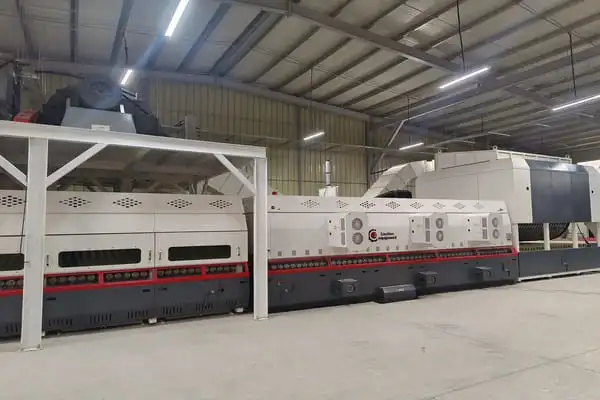
Advanced glass factories choose a Radiation Flexible Roller Glass Bending and Tempering Machine because it solves problems that traditional bending equipment simply cannot. By combining high-efficiency radiant heating with an adjustable flexible roller bed, this technology heats flat glass uniformly to its softening point and shapes it into precise curved profiles — all without physical molds. The result is faster changeovers, lower defect rates, and consistent tempering stress across complex geometries. For architectural, automotive, furniture, and appliance glass producers, this machine represents a practical answer to quality, efficiency, and cost control challenges on the production floor.
Understanding Radiant Flexible Roller Glass Bending Technology
This part explains the core technology so that technical leaders and production managers can compare it to the way they do things now.
How Radiant Heating Works in Glass Processing
Radiant heating, on the other hand, uses infrared radiation elements to send heat directly into the glass surface, instead of using convection. This method makes the heat spread out more evenly across the whole sheet faster. Industry process data shows that using PID-controlled radiation zones, the temperature difference across the glass surface can be kept to less than ±2°C. This level of uniformity lowers optical distortion and stress accumulation inside the glass before it bends.
The Role of the Flexible Roller Mechanism
The flexible roller bed is what makes the system work. The adjustable high-strength roller system changes its curvature shape in about one to five minutes via PLC order, while set molds take hours to swap. This means that a plant that makes both cylinder-shaped curtain wall glass and curved furniture panels can switch between shapes during the same shift without having to stop work to change the tools.
Why Multi-Zone PID Control Matters
With Easttec's Multi-zone Matrix Radiant Heating, the heater is split into separate heating zones, and each one has its own PID loop that controls it. This structure makes sure that the glass sheet is at the right temperature from edge to center before the folding process starts. "Ghosting," roller wave marks, and leftover stress are all caused by uneven heating, so companies that want to make high-quality glass have to use zoned control.
Advantages of Radiation Flexible Roller Glass Bending Machines Versus Traditional Methods
Knowing how this technology is different from older methods helps buying managers convince plant owners that they need to spend money on capital equipment.
Many years ago, the industry used gravity bending and fixed ceramic roller bending. But these methods have real problems: they require expensive molds for small runs, take a long time to switch between jobs, and don't always apply the right amount of stress to complex curves. The radiation flexible roller method directly fixes all of these problems.
The best things about Easttec's radiation flexible roller bending system are these:
- 20% Thermal Energy Savings: High-density composite insulation reduces heat loss by 20% compared to conventional furnace designs. The furnace maintains a stable internal thermal environment, which lowers electricity consumption per production cycle and reduces long-term operating costs — a measurable ROI benefit for factory owners tracking energy budgets.
- Superior Arc Precision and Surface Quality: The adjustable roller system applies controlled, even pressure across the glass profile. Precision-ground rollers minimize surface marking, and the flexible mechanism holds bending radius accuracy that meets ISO 11485 and ASTM C1048 standards for tempered glass optical performance.
- Hybrid Flat and Bent Tempering: The system processes both flat and bent glass within the same furnace platform, handling thicknesses from 5mm to 19mm. This dual capability means one Radiation Flexible Roller Glass Bending and Tempering Machine serves multiple product lines — from shower enclosures and furniture tabletops to curved architectural panels — without separate equipment investments.
- IPC and PLC Reliability: Driven by a stable Industrial PC and PLC interface, the control architecture supports 24/7 operation without the reliability risks associated with consumer-grade touchscreen systems. Operators store and recall hundreds of production recipes, making product changeovers fast and repeatable.
The three biggest problems that glass makers say they have are high energy costs, uneven bending quality, and too much downtime when switching between products. These benefits directly address these problems.
Key Considerations When Procuring a Radiation Flexible Roller Glass Bending Machine
Buying this kind of tool is a big investment of money. Glass annealing kilns are usually bought every three to twelve months, and there are usually a lot of technical reviews that happen before a purchase order is signed.
Evaluating Supplier Credentials
Buyers should make sure that the company that made the item has valid certifications. The radiation flexible roller bending and tempering machine made by Easttec has CE certification, which means it meets European safety and performance standards. This is a big deal for glass factories that want to sell their finished products in North America and Europe.
Assessing Customization Depth
Voltage norms, glass sizes, and output rates vary from factory to factory. A good company that sells radiation-flexible roller glass bending machines should have software that can be used in multiple languages, the ability to adapt to different power systems (220V, 380V, 415V, 50/60Hz), and heating rates that can be changed. Easttec has options in English, Spanish, Russian, Korean, Portuguese, and other languages. This makes it much easier for new workers to learn quickly.
After-Sales Support and Lead Time
It usually takes between 60 and 120 working days to get customized glass tempering furnaces. As part of the purchase deal, buyers need to make sure that the seller includes on-site installation, commissioning, and training for operators. Easttec technicians offer online help 24 hours a day, seven days a week. This lowers the risk of output stopping once the machine is up and running.
Why Advanced Glass Factories Prefer Radiation Flexible Roller Glass Bending Machines
Architectural glass companies that make curved curtain wall panels, auto glass companies that shape specialty windshields, and furniture glass companies that make decoratively bent tabletops all have the same problem: they need a Radiation Flexible Roller Glass Bending and Tempering Machine that can handle different curves without lowering quality or raising costs.
Within a width range of 5 mm to 19 mm, the radiation flexible roller platform can work with clear float, tinted, and etched glass. The multi-zone matrix heating system makes sure that all the glass absorbs heat evenly, no matter what color or design it has on the surface. This creates constant tempering stress that passes the EN 12150-1 fragment test, which means that there are more than 40 to 60 fragments per 50x50mm area.
Companies that make commercial refrigeration display cabinets, specialty marine glazing programs, or high-end architectural projects say that the mold-free design of this machine makes small-batch curved glass more cost-effective than it was with older machines.
Practical Guide: How to Maximize the Benefits of Your Radiation Flexible Roller Glass Bending Machine
Operator Training Priorities
When training for the first time, new operators should focus on managing recipes in the IPC interface, keeping an eye on the PID zones, and learning how to adjust the rollers in the right order. Easttec's software is designed so that new operators can become proficient within a week. This directly addresses the lack of skilled workers that many glass processing facilities are experiencing.
Routine Maintenance Schedule
Unplanned downtime can be avoided by checking the state of the high-temperature bearings, roller sleeves (which are usually made of Kevlar or aramid material), and radiation heating elements once a week. By checking the furnace chamber's insulation once a month, you can make sure that the 20% heat retention benefit stays the same for the whole life of the machine.
Safety and Compliance Protocols
Operators should follow the instructions for radiation protection, make sure that the electrical links to the IPC system are stable, and use digital profile scanning to check the system's geometric accuracy every three months. The machine continues to meet customer order tolerances as long as the bent profile variation stays within 1mm to 2mm of the goal CAD standard.
Conclusion
The Radiation Flexible Roller Glass Bending and Tempering Machine has become a popular production tool in modern glass plants because it directly addresses the most persistent problems in the industry, including high energy use, precise bending, flexible products, and inefficient operators. This equipment from Easttec has a multi-zone matrix radiant heating system, an adjustable roller architecture, an IPC and PLC control system, and CE certification. It helps glass processors get higher yield rates and lower operating costs. When factories buy this technology, they get a production tool that can handle glass lines for architecture, furniture, cars, and appliances all in one well-supported system.
FAQ
1. What glass thicknesses does this machine process?
The Easttec radiation flexible roller bending and tempering furnace handles glass from 5mm to 19mm, covering architectural panels, furniture glass, appliance glass, and specialty curved glazing products.
2. How does radiation heating differ from forced convection?
Radiant heating delivers thermal energy directly into the glass body, achieving uniform core temperature faster than convection alone. This is particularly effective for clear float and patterned glass where deep, even heating is needed before bending.
3. What is the changeover time between different bending radii?
The automated PLC-driven roller system adjusts to a new curvature profile in approximately one to five minutes — compared to several hours for manual mold changes on traditional equipment.
4. What glass types are compatible?
The machine is optimized for clear float, tinted, and patterned glass. It is designed for non-coated glass varieties; factories processing Low-E coated glass should discuss auxiliary heating configurations with Easttec's technical team.
5. Does the machine carry international certification?
Yes. The machine is CE certified, meeting European safety and performance standards and supporting export compliance requirements for customers shipping finished glass to international markets.
Get a Custom Quote from EASTTEC EQUIPMENT Today
Since 1994, EASTTEC EQUIPMENT has been a leader in manufacturing heat processing equipment for glass. Our Radiation Flexible Roller Glass Bending and Tempering Machine for sale has performance that is CE-certified, saves 20% on energy costs, and can be fully customized. You can email our team at sales@easttecmachine.com to get a personalized technical proposal, an estimate of your production capacity, or a demonstration of the machine. We back up every system with full installation, training for operators, and technical support 24 hours a day, 7 days a week.
References
1. Glass Technology: European Journal of Glass Science and Technology, Society of Glass Technology, 2021.
2. ASTM C1048: Standard Specification for Heat-Strengthened and Fully Tempered Flat Glass, ASTM International, 2018.
3. EN 12150-1: Glass in Building — Thermally Toughened Soda Lime Silicate Safety Glass, European Committee for Standardization, 2015.
4. ISO 11485-3: Glass in Building — Curved Glass, International Organization for Standardization, 2020.
5. Glass Processing Days Conference Proceedings, Tamglass/Glaston, 2019.
6. International Journal of Applied Glass Science, American Ceramic Society, 2022.

USER EVALUATE
Here is the customer's evaluation of us