




What Makes Radiation Flexible Roller Furnace Suitable for Precision Glass Processing?
A radiation flexible roller furnace is suitable for precision glass processing because it combines long-wave infrared radiation heating with an adjustable roller transport system, delivering controlled, uniform thermal energy across every glass surface. This design eliminates the temperature hot spots and mechanical marks that plague rigid roller systems. For manufacturers processing glass from 5mm to 19mm — whether flat architectural panels or curved shower enclosures — this equipment addresses the core production challenges of optical clarity, dimensional accuracy, and energy consumption in a single production line.
Understanding Radiation Flexible Roller Furnace Technology
How Radiation Heating Works in Glass Tempering
Instead of moving hot air around, radiation heating sends heat straight into the glass mass through infrared emission. This method lowers the amount of heat that hits the furnace walls and other structural parts. This is why radiation-based systems always use 15–20% less energy than convection-heavy ones. The glass absorbs heat at the molecular level, making the temperature gradient more even across its thickness. This is very important when working with clear float glass, tinted glass, or patterned glass.
The Role of Flexible Roller Mechanisms
The "flexible" part of the roller system refers to a high-strength flexible shaft mechanism that can be adjusted. These shafts can change from flat to bent shapes without having to change the molds by hand, which is different from set, rigid rollers. Because of this, a single production line can make both flat curtain wall glass and ornamental domes with a lot of curves. The rollers keep the same amount of touch pressure on the glass surface, which keeps the surface from getting scratched and gets rid of the roller wave warping that is common in older machines.
Multi-Zone Matrix Radiant Heating and PID Control
Easttec's multi-zone matrix radiant heating system splits the furnace chamber into thermal zones that can be controlled separately. PID (Proportional-Integral-Derivative) controllers in each zone make sure that the power flow is always changing based on real-time temperature input. With this level of control, the temperature stays within very small ranges, which makes sure that the glass sheet reaches its tempering temperature evenly before moving on to the bending or quenching phase. As a result, the standard of the product stays the same from one production run to the next.
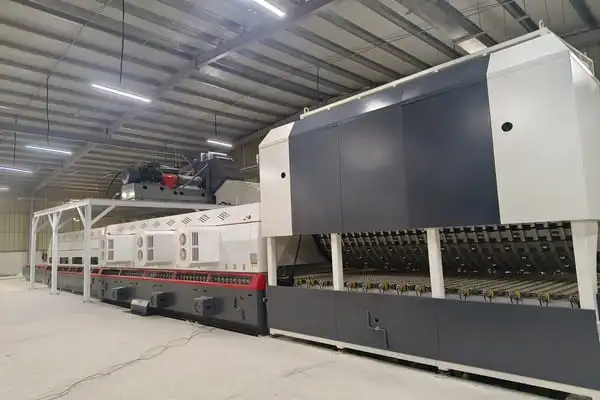
Advantages of Radiation Flexible Roller Furnace for Precision Glass Applications
The Radiation Flexible Roller Furnace solves the most important problems in modern glass processes, such as consistent quality, high energy costs, and the need for flexible production. This equipment will help your factory in the following ways.
- Exceptional Bending Versatility: The adjustable high-strength flexible roller system accommodates a wider range of curvatures and smaller bending radii than rigid roller alternatives. Processors can handle custom architectural glass, decorative interior panels, and specialty industrial shapes without retooling or changing molds — a significant time and cost advantage for contract glass processors serving multiple markets.
- Precision Matrix Thermal Control: Easttec's multi-zone matrix radiant heating prevents optical distortion and surface "ghosting" by ensuring uniform thermal absorption across the full glass sheet. This directly supports compliance with EN 12150-1 flatness and fragmentation standards and ANSI Z97.1 impact requirements, which architectural and automotive buyers regularly audit.
- 20% Thermal Energy Savings: High-density composite insulation reduces furnace heat loss by 20% compared to traditional models. For a medium-scale factory running two shifts daily, this translates to measurable reductions in monthly electricity bills — a factor that directly improves your ROI calculation over the equipment's service life.
- Robust IPC & PLC Reliability: The Industrial PC (IPC) and PLC interface keeps the system running 24/7 without the failure risks tied to consumer-grade touchscreen panels. Operators can store and recall hundreds of production recipes, cutting changeover time between flat and bent glass orders to under five minutes.
Strong IPC and PLC Reliability: The Industrial PC (IPC) and PLC interface keeps the system running 24 hours a day, seven days a week, without the problems that come with consumer-grade touchscreens. Operators can save and remember hundreds of production recipes. This means that it takes them less than five minutes to switch between orders for flat and bent glass.
Comparison: Radiation Flexible Roller Furnace vs Traditional Furnace Types
Temperature Uniformity Across the Glass Sheet
Single-zone roller kilns and traditional box furnaces heat glass from fixed positions, creating differences in temperature across large sheets. A multi-zone radiant system changes the output for each zone in real time, which lets the temperature in the whole heating chamber be controlled to within ±1°C. This accuracy is most important when tempering large curtain wall panels or thin 5mm furniture glass, because even small changes in temperature can cause them to bend or break.
Operational Flexibility for Mixed Production
When moving between flat and curved glass goods, belt furnaces and rigid roller systems usually need a lot of downtime. This problem is solved by the flexible roller design. By using a saved PLC recipe, a single line can switch between making flat insulated glass units and curved shower walls. This is a real improvement in production efficiency that can't be matched by older machines.
Long-Term Maintenance and Energy Cost
Because heated air escapes every time the door opens and closes, Radiation Flexible Roller Furnaces need more energy to keep the chamber at the same temperature. In radiation-based systems, high-density composite insulation keeps heat in better between cycles. The ceramic radiation plates are made to last for 10 years, and the only upkeep they need is to be cleaned once a year. This means that they don't need to be fixed as often as blower-based convection systems do.
Maintenance, Safety, and Operational Best Practices
Routine Care for Rollers and Heating Elements
Two major areas of preventive maintenance are checking the alignment of the roller blade and looking at the surface of the radiation element. Uneven glass transport, which is the main cause of surface marks and edge chips, can be avoided by making sure the flexible shafts are properly adjusted. Every year, ceramic radiation plates should be checked for buildup of dirt and wear on the surface. Elements that are clean keep their peak emissivity, which has a direct effect on how evenly they heat.
Safety Compliance and CE Certification
The Easttec radiation flexible roller tempering furnace is built to meet strict CE safety standards. This gives it an approved technical base for exporting around the world. Electrical safety, thermal protection systems, and emergency stop procedures are all covered by CE certification. Operators who work in places like the EU and many U.S. state procurement programs that need certified equipment can get this equipment that has already been proven to be compliant.
Monitoring, Automation, and Operator Training
The interface between the IPC and PLC allows for automatic problem finding and output logging. The easy-to-use recipe management system and multiple language menu choices (English, Spanish, Russian, Portuguese, and Korean) mean that new workers can get up to speed in just one week. Easttec technicians offer online support 24 hours a day, seven days a week. As part of its one-stop service process, the company also provides installation, commissioning, and operator training on-site.
Procuring Radiation Flexible Roller Furnaces: What B2B Buyers Need to Know
Evaluating Suppliers and Customization Capability
Procurement teams should look at more than just the price when choosing a Radiation Flexible Roller Furnace maker. They should also look at how knowledgeable the provider is in engineering. Easttec has been in business since 1994 and has more than 30 years of experience working with glass and European (Italian) quality management standards. The company allows for a lot of customization. Voltage compatibility (220V, 380V, 415V, 50/60Hz), equipment size, heating curves, cooling parameters, and color can all be set to the factory's needs.
Pricing Transparency, Lead Time, and After-Sales Support
Glass tempering furnaces are big pieces of equipment that take 60 to 120 working days to deliver, based on the type and configuration. Before making a decision, buyers should get detailed quotes that include the cost of the equipment, its installation, training, and the availability of extra parts. Easttec takes care of everything in one place, from initial questions to project planning, production, installation, commissioning, user training, and long-term support after the sale.
OEM and Configuration Options
OEM versions are available for independent glass processors and contract manufacturers who work with a lot of different businesses. Easttec can design and build art glass surface thermal processing production lines or tempering equipment with specific needs based on what the customer wants. Because of this, the company is a good choice for businesses that need equipment that isn't available in their normal collection.
Conclusion
A Radiation Flexible Roller Furnace is good for precise glass making because it solves three issues at once: even temperature, flexible structure, and low energy use. Easttec's flat and bend tempering line can handle glass from 5 mm to 19 mm, saves 20% energy, and is CE certified. This means that manufacturers can make both flat and curved products on the same line. The IPC/PLC control design makes the system less reliant on operators, and the multi-zone matrix radiant heating system gives buyers of architectural, car, and appliance glass the optical quality they want. This type of equipment should be carefully considered by companies that want to boost output while lowering costs.
FAQ
1. What temperature range does the furnace operate at?
The heating room gets as hot as 680–720°C, and all of the temperature zones are kept within ±1°C of each other. This range includes the tempering needs for clear float glass, tinted glass, and patterned glass.
2. How does the flexible roller system affect glass quality?
The flexible shaft mechanism can be adjusted to keep the contact pressure the same on both flat and curved glass surfaces. This stops the rolling wave distortion and edge chipping that happen with stiff systems. This directly lowers the number of breaks and optical flaws.
3. Can one furnace handle both flat and bent glass production?
Yes. The design can work with both flat building glass and high-curve bent glass on the same line. It takes less than five minutes for operators to switch between production modes by calling up a saved PLC recipe.
4. What glass thicknesses are compatible?
The machinery can work with glass thicknesses ranging from 5 mm to 19 mm and can be used for furniture tops, shower enclosures, curtain wall panels, and special industrial glass all at the same time.
5. How do I select a qualified supplier?
Look for proof of production experience, CE certification, the ability to customize, and organized help after the sale. Before you buy, get references from similar glass processing businesses and make sure that spare parts are available and that technical support responds quickly.
Request a Quote from EASTTEC EQUIPMENT — Radiation Flexible Roller Furnace Supplier
Since 1994, EASTTEC EQUIPMENT has been designing ways to temper glass. Our Radiation Flexible Roller Furnace saves 20% on energy costs, is safe (CE-certified), and can be fully customized to meet voltage standards around the world. We can set up the right option for your production line, whether you work with flat glass or curved architectural glass, as a contract manufacturer. To get a full quote or set up a plant tour, please email our technical team at sales@easttecmachine.com.
References
1. Glass Technology International. (2021). Advances in Radiant Heating for Flat Glass Tempering Processes. Ceram Publications.
2. Glass Processing Days Conference Proceedings. (2019). Flexible Roller Systems and Their Impact on Optical Distortion in Curved Glass. Tamglass/GPD Finland.
3. European Committee for Standardization. (2019). EN 12150-1: Glass in Building — Thermally Toughened Soda Lime Silicate Safety Glass. CEN.
4. American National Standards Institute. (2018). ANSI Z97.1: Safety Glazing Materials Used in Buildings. ANSI.
5. International Journal of Applied Glass Science. (2020). Thermal Uniformity and Energy Efficiency in Industrial Glass Tempering Furnaces. Wiley-American Ceramic Society.
6. Glass Worldwide Magazine. (2022). Multi-Zone Radiant Control Technologies in Modern Flat and Bent Glass Production Lines. Bowhead Media.

USER EVALUATE
Here is the customer's evaluation of us