




Radiation Flat & Bend Glass Tempering Furnace of Flexible Roller Enables Custom Glass Production
A Radiation Flat & Bend Glass Tempering Furnace of Flexible Roller is an advanced thermal processing system that strengthens glass through controlled infrared heating and rapid air quenching. Unlike conventional convection furnaces, it uses matrix-arranged radiant heating elements combined with an adjustable flexible roller mechanism. This design allows a single production line to process both flat architectural panels and complex curved safety glass without manual mold changes. For U.S. glass manufacturers facing growing demand for custom shapes, this technology directly addresses the two most common defects in bent glass: optical distortion and surface roller marks.
Understanding Radiation Flat & Bend Glass Tempering Furnace Technology
How Radiation Heating Works
Radiation heating uses infrared elements arranged in a matrix pattern to send heat directly to the glass surface. This method gets a temperature difference across the glass sheet of less than ±2°C, which is much better than most systems that only use convection. The glass is then consistently softer, which makes it ready to be bent accurately without any hot spots or cold edges that could cause stress cracks inside the glass.
The Role of the Flexible Roller System
The bendable roller is what makes this type of oven work. Rigid ceramic rollers stay in a flat plane, but flexible rollers have a high-strength, adjustable shaft that bends to a determined arc when controlled by a servo motor. This shaft is often wrapped in heat-resistant Kevlar or ceramic-coated material. Through the HMI interface, this change from flat to a certain bend radius can happen in less than five minutes, instead of the hours of setup time needed for mold-based systems.
Why This Combination Matters for Glass Quality
Combining radiation heating with flexible roller transport solves a problem that has been bothering people who make bent glass for decades. The glass cools under controlled stress when the thermal profile is even, and the roller surface follows the shape of the glass perfectly. This meets the fragmentation requirements of EN 12150-1 and ASTM C1048. Surface stress values always exceed 90 MPa for fully tempered products, which is the required level for safety glass approval.
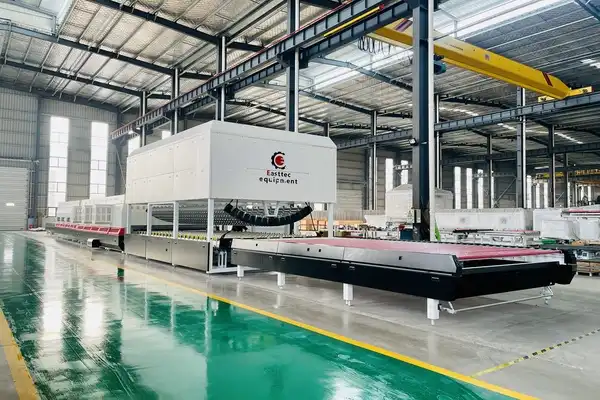
Comparing Radiation Flexible Roller Furnaces with Traditional Glass Tempering Solutions
There are two main types of traditional glass tempering equipment: flat convection ovens and fixed-mold press-bending systems. When a plant needs both flat and curved products from the same line, each has well-known problems.
Heating Method and Temperature Consistency
Hot air is moved around in convection furnaces to heat glass. This works well for flat panels but doesn't work as well for curved surfaces because the airflow doesn't follow the shape of the glass evenly. Radiation heating, on the other hand, heats the glass immediately, no matter what shape it is. Tests done by outside groups and published in Glass Technology: European Journal of Glass Science and Technology show that radiant systems are better at keeping the temperature even across curved platforms than forced-air flow alone.
Mechanical Flexibility vs. Fixed Mold Systems
Molds made of steel or ceramic that are shaped to a certain radius are used in press-bending furnaces. To change the shape, the mold has to be physically changed. This can take two to four hours and costs a lot of money in equipment. With the bendable Radiation Flat & Bend Glass Tempering Furnace of Flexible Roller method, this problem is completely solved. Each radius is saved as a digital recipe by servo-controlled roller positioning. This way, when the user calls up a saved parameter set, the machine instantly reconfigures itself. This is a real benefit for contract glass processors who work with a lot of different architectural specifications every shift.
Total Cost of Ownership
A basic flat tempering line costs less than a flexible roller radiation furnace when it comes to the initial capital investment. However, the payback period is shortened by a lot because of the lack of mold inventory, less work needed for changeovers, and 20% less heat loss thanks to high-density composite insulation. Because flexible roller bands can be replaced one at a time without taking the roller bed apart, maintenance costs are also usually lower.
Optimizing Custom Glass Production with Radiation Flexible Roller Furnaces
Processing Range and Compatible Glass Types
Easttec's radiation flat and bend furnace can work with glass that is 5 mm to 19 mm thick, which meets all commercial architectural needs and most automotive glazing needs. Clear float, colored, and patterned glass are all surfaces that can be used. Because it is approved for non-coated types, it is the best choice for normal curtain wall panels, skylight units, shower screens, and curved oven door glass that is curved.
Here are the main types of production that this machine can do, which describe its operating range:
- Variable Radius Technology: The adjustable flexible shaft achieves complex curves that rigid systems cannot reach, including high-curvature skylight profiles and modern facade corner units where the minimum bending radius can go as low as 450 mm depending on glass thickness.
- Multi-zone Matrix Radiant Heating: Easttec's signature heating layout ensures balanced glass softening across the full sheet width. This precise heat distribution prevents optical distortion and surface "ghosting," producing smooth surfaces that meet elite glass standards required by commercial facade contractors.
- IPC and PLC Recipe Management: A stable Industrial PC combined with a PLC interface stores and recalls hundreds of bending and heating parameters. Operators switch between flat and bent production modes without recalibration, which directly reduces per-shift downtime.
Many U.S. glass producers say they don't have enough output flexibility when they use separate flat and bending lines, which need their own operators and floor space.
Industry Applications
This type of furnace is used in the car industry for side windows and backlites, where the aerodynamic shapes have to meet strict standards for visual clarity. Commercial builders use curved corner curtain wall units on the outside of tall buildings because they need to be strong enough to withstand wind loads and keep the building's look consistent. Appliance makers depend on bent oven door glass that has to be able to handle high temperature changes without changing shape. There are different needs for the furnace in each of these situations, and the flexible roller system can meet all of them with just one piece of equipment.
Maintenance and Uptime Protection
Easttec gives the burner a gas emergency drive system and a UPS to back up the PLC. All the glass moves out of the hot room safely in case the power goes out. This protects both the product and the roller sleeves. Individual roller sleeves can be replaced in a fraction of the time it takes to change a sleeve on older monolithic Radiation Flat & Bend Glass Tempering Furnace of Flexible Roller beds because they don't need to be taken apart to get to them.
Procurement Guide for Radiation Flat & Bend Glass Tempering Furnaces with Flexible Rollers
Key Selection Criteria
Before asking for quotes, buyers should make sure of three basic things: the largest piece of glass the furnace can handle, all the bend radii they need for their products, and the facility's power and frequency standard. Easttec supports global industrial standards like 220V, 380V, and 415V at both 50 Hz and 60 Hz, which makes installation easier for U.S. buyers who buy from international manufacturers.
Evaluating Supplier Credibility
Make sure the supplier has CE certification, and the furnace meets EN 12150-1 or ASTM C1048 standards, depending on your target markets. Ask for written data on the yield rate from installations that are already in place, and ask for references from factories that work with similar types of glass. Easttec has been making glass thermal processing equipment since 1994. They have sites in several countries and a technical team with an average of more than 30 years of experience in the field.
Lead Time and After-Sales Support
Furnaces for hardening glass are built to order. It takes between 60 and 120 working days for delivery, depending on the type and level of customization. As part of the contract, make sure the supplier includes on-site installation, commissioning, and training for the operator. Easttec's techs offer online help 24 hours a day, 7 days a week after installation, and the logistics of spare parts are set up to keep crucial parts from being held up for too long.
Future Trends in Radiation Glass Tempering Technology
Smarter Control Systems
Industry 4.0 is being used in glass tempering through remote diagnostics, real-time process data logging, and alerts for preventative maintenance. IPC-based control systems, like the one used in Easttec's furnace, make it possible to add these features without having to update all the equipment.
Sustainable Manufacturing Pressure
Rules about energy are getting stricter in the U.S. and Europe. Easttec's high-density composite insulation cuts thermal energy by 20%. This not only saves money, but it also makes the furnace a legal asset for buildings that want to get LEED certification or meet their own carbon reduction goals.
Advanced Roller Materials
The goal of research into the next generation of bendable roller sleeve materials is to make them last longer at temperatures above 700°C while also lowering the friction on the surface to keep ultra-thin glass from getting tiny scratches. These changes will allow flexible roller systems to work with thinner materials, which will lead to new uses in making solar panel glass.
Conclusion
The radiation flat and bend glass tempering furnace with a Radiation Flat & Bend Glass Tempering Furnace of Flexible Roller system gives glass processors a single, flexible production line that can work with flat and curved items from 5 mm to 19 mm thick. When you put together matrix radiant heating, servo-controlled roller positioning, IPC-based recipe management, and 20% energy savings, you get rid of the four problems that most U.S. glass manufacturers have to deal with: consistent quality, production flexibility, high energy costs, and inefficient use of labor. This type of technology should be carefully considered by facilities that are thinking about buying capital equipment for making architectural, automobile, or appliance glass.
FAQ
1. How does the flexible roller prevent surface marks on bent glass?
The roller sleeves use heat-resistant Kevlar or ceramic-coated materials that conform to the glass surface without applying point pressure. Synchronized rotation speed matched to glass travel speed eliminates relative motion between the roller and the glass, which is the primary cause of surface marking.
2. Can the furnace process hard-coat Low-E glass?
The multi-zone radiation control allows adjusted heating curves for Low-E substrates. While radiation heating is slower on reflective coatings than convection, the zone-by-zone adjustment compensates for reduced thermal absorption without causing coating oxidation.
3. What is the changeover time between flat and bend mode?
Servo-controlled flexible rollers reconfigure to a saved radius in under five minutes through the HMI interface. No manual mechanical adjustment is required between jobs.
4. How is bending radius accuracy maintained during long production runs?
High-temperature-resistant encoders and real-time feedback loops continuously calibrate roller positions against measured thermal expansion variables, holding arc deviation within ±1 mm per meter throughout the shift.
5. What happens during a power outage?
The furnace includes a pneumatic emergency drive system and PLC UPS backup that safely ejects all glass from the heating chamber before temperatures can damage the rollers or the product.
Get a Custom Quote from EASTTEC EQUIPMENT — Radiation Flat & Bend Furnace Supplier
Since 1994, EASTTEC EQUIPMENT has been designing and making thermal processing equipment for glass. Their engineering is CE-certified, and they can make the equipment fit any voltage standard or production requirement around the world. You can get our Radiation Flat & Bend Glass Tempering Furnace of Flexible Roller with parameters that are already set up at the factory to work with your glass products. Please email our expert team at sales@easttecmachine.com to ask for a review of your specifications and a purchase plan that is specifically made for your facility's output needs.
References
1. Glass Technology: European Journal of Glass Science and Technology — Society of Glass Technology, 2022.
2. ASTM C1048-18: Standard Specification for Heat-Strengthened and Fully Tempered Flat Glass — ASTM International, 2018.
3. EN 12150-1: Glass in Building — Thermally Toughened Soda Lime Silicate Safety Glass — European Committee for Standardization (CEN), 2015.
4. Flat Glass Technology and Manufacturing — K. L. Loewenstein, Sheffield Academic Press, 1993.
5. Energy Efficiency in Industrial Furnaces — U.S. Department of Energy, Office of Industrial Technologies, 2004.
6. Automotive Glass: Technology and Performance — Society of Automotive Engineers (SAE International), 2019.

USER EVALUATE
Here is the customer's evaluation of us