




What Glass Applications Benefit from Convection Flexible Roller Flat & Bend Glass Tempering System?
The Convection Flexible Roller Flat & Bend Glass Tempering System serves a broad range of industrial glass applications, from architectural curtain wall panels and automotive windshields to appliance glass and solar cover panels. By combining forced convection heating with an adjustable flexible roller mechanism, this system handles both flat and curved glass on a single production line. It processes glass thicknesses from 4mm to 19mm, supports Low-E coatings with emissivity as low as 0.01, and delivers heating cycles approximately 30% faster than radiant-only furnaces—making it a practical choice for manufacturers who need consistent quality across multiple product types.
Understanding the Convection Flexible Roller Flat & Bend Glass Tempering System
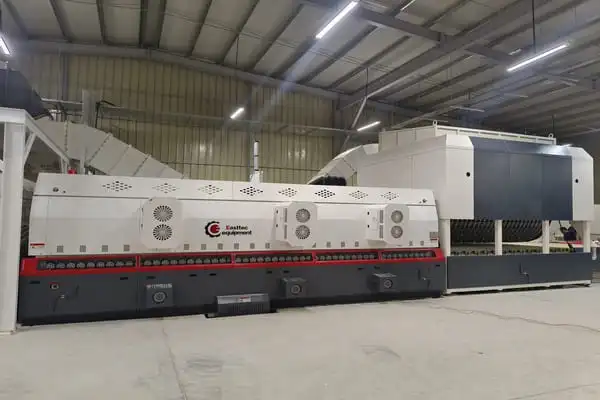
Before going over specific uses, it's helpful to know what makes this equipment different from regular tempering ovens. A high-pressure forced convection mechanism and a mechanically adjustable roller bed are built into the system. This lets processors switch between making flat and curved glass on the same line.
How Forced Convection Heating Works
A blower with a high-temperature fan moves fast, hot air around the heating chamber. This movement of air inside the glass better spreads out the Low-E coatings than passive radiation does, making the glass surface less likely to have hot and cold spots. The temperature stays the same, within ±2°C, which lowers the risk of thermal stress cracks during cooling.
The Role of Flexible Roller Mechanics
The high-strength, flexible roller mechanism can be adjusted so that roller curvature can be changed to make large-radius turns and complex curved shapes that stiff systems can't make. The bending radius stays accurate even during long production shifts, when heat expansion changes mechanical tolerances. This is because of real-time encoder input and servo-motor control.
Industrial Control Architecture
An Industrial PC (IPC) and a PLC link make the system work. The operators can digitally save and recall bending recipes, control the parameters for fan pressure, and see the arc deviation in real time. New operators usually learn how to do everything they need to know within a week. This directly addresses the problem that many U.S. glass factories are having with a lack of skilled workers.
Glass Applications Best Suited for Convection Flexible Roller Tempering
This technology can be used for more types of products than most single-mode furnaces. The best fit is in the following areas.
Architectural Glazing and Curtain Wall Glass
Architectural glass companies that make curtain wall panels, building faces, and big business windows need both flat tempered sheets and bent corner units. The Convection Flexible Roller Flat & Bend Glass Tempering System can bend large spans of metal that regular bending furnaces can't, and the convection heating makes sure that the stress is spread evenly across panels that are too big. Products meet the safety standards set by EN 12150-1 and ASTM C1048; these standards are needed for commercial construction projects in the US.
Automotive and Specialty Vehicle Glass
Side windows, backlites, and specialty vehicle glass need to be precisely and repeatedly curved to fit aerodynamic body frames. The minimum bending radius for the servo-controlled bending device is as low as 450 mm, based on the thickness of the glass. The arc stays within ±1 mm per meter across the whole batch. For car OEM supply lines, this level of accuracy is needed because dimensional tolerance has a direct effect on how well the parts fit together.
Home Appliance and Furniture Glass
This machine can process glass that is 4 mm to 19 mm thick. This includes oven door glass, refrigerator panels, range hood glass, and furniture tabletops. For appliance glass to work, it has to be able to handle being heated and cooled many times. This means that the stress levels at the top must always be higher than 90 MPa. The architecture of convection heating provides the even temperature needed to meet that goal across large production batches.
Benefits of Using This System Over Traditional Methods
If you switch from a heated roller hearth furnace or a regular press-bending oven to a convection flexible roller system, your operations will run more smoothly. For factory owners and production managers, these are the main benefits that matter:
- 30% faster heating cycles: Convection-assisted heating shortens the production cycle compared to radiant-only models, which is especially significant for thick glass and coated glass where radiant energy transfer is slower.
- 20% reduction in thermal energy loss: Easttec's proprietary high-density insulation and inverter-controlled fans reduce energy waste during each production cycle, lowering monthly electricity overhead without sacrificing throughput.
- Single-line flat and bend capability: Transitioning between flat and curved production modes takes less than five minutes through the HMI interface, eliminating the equipment redundancy costs of running two separate furnaces.
- Low-E coating protection: The convection system penetrates Low-E coatings with emissivity as low as 0.01 without causing film oxidation, preserving the energy-performance characteristics of the finished glass.
- CE-certified compliance: The equipment is built to CE safety directives, allowing U.S.-based processors to supply international architectural and automotive projects without additional certification hurdles.
Because of these benefits, the cost per unit of output is lower and the time it takes to get a return on investment is shorter. No longer does a factory that makes a variety of products—some flat curtain wall glass and some curved automotive backlites—need separate furnace lines for each type of product.
Comparing Against Radiation-Only Flexible Roller Furnaces
Instead of forcing air through the furnace, radiation flat and bend furnaces use heating elements that are grouped in a grid. Radiation systems work well with regular clear glass, but they don't work well with Low-E finishes because the shiny surface bounces away the energy. The reflective qualities of the coating are bypassed by a device that moves hot air across the glass. This difference has a direct effect on yield rates and coating quality for companies that handle a lot of Low-E architectural glass.
Selecting the Right System for Your Business
It takes more than just looking at equipment specs to decide to buy a Convection Flexible Roller Flat & Bend Glass Tempering System. The following areas should be carefully looked at by procurement managers.
Matching Capacity to Your Product Mix
Make sure that the width, length, and configuration of the rollers in the furnace match the largest and smallest glass sizes in your order book. Easttec allows for a lot of customization, such as adapting the power system to work with 220V, 380V, 415V, and 50/60Hz U.S. electricity standards, so compatibility with local voltage is not a problem.
Evaluating Total Cost of Ownership
Energy use, the supply of extra parts, and how often upkeep is expected all affect the total cost of ownership (TCO). Inverter-controlled fans and a 20% drop in thermal energy loss make running costs much lower over the five to ten years that the equipment lasts. To reduce the risk of downtime, make sure that the supplier either keeps important parts like heating elements, roller sleeves, and blower assemblies in stock locally or can get them quickly.
Supplier Track Record and After-Sales Support
Easttec has been designing and making thermal processing tools for glass since 1994. They use Italian convection technology standards and a team of experts with more than 30 years of experience handling glass between them. The company offers online technical help 24 hours a day, seven days a week, as well as installation, setup, and training for operators. Standard software speaks multiple languages, such as English and Spanish. This makes teaching easier for a diverse group of workers in U.S. factories.
Troubleshooting & Maintenance Tips for Ensuring Long-Term Performance
Regular upkeep of a flexible roller tempering furnace keeps it working at its full potential and stops flaws from getting into the finished product.
Monitoring Temperature Uniformity
Regularly check the heater element zones and thermocouple accuracy. A heating element that isn't working right or an airflow path that is closed are usually the causes of uneven temperature distribution. If these problems are found during regular checks, they can be fixed before they lead to uneven tempering stress and field breakage or failed fragmentation tests.
Roller Surface Inspection and Replacement
High-strength roller covers can handle heat wear down over time when they are used continuously in production. "White haze" and roller mark flaws in finished glass can be avoided by checking it regularly for surface scratches, flat spots, or contamination buildup. The surface state stays within the range specified by matching the speed of the roller rotation with the speed of the glass movement and keeping the SO₂ dosing or roller cleaning cycle going.
Control System Diagnostics
Real-time problem logging is possible with the IPC and PLC design. Every week, look over the diagnostic logs to find mistakes that are happening more often before they cause unplanned downtime. The hydraulic emergency drive and UPS backup for the PLC make sure that any glass inside the heating chamber can be safely ejected if the power goes out. This keeps the rollers from getting damaged and the material from being lost.
Conclusion
The Convection Flexible Roller Flat & Bend Glass Tempering System solves the main problems that makers of building, automotive, appliance, and furniture glass have when making their products: heating that works with coatings, being able to work with different formats, keeping energy costs low, and making sure that the quality of the tempered glass is always the same. The system makes a strong case for manufacturers who want to increase their product line without adding more capital equipment because it can process glass from 4mm to 19mm on a single CE-certified line and has 30% faster heating cycles and 20% lower thermal energy loss compared to radiant alternatives
FAQ
1. Can the system process both flat and curved glass without a manual mold change?
Yes. The adjustable flexible roller mechanism reconfigures through the HMI interface in under five minutes. No manual mold changes are required when switching between flat and bend production modes.
2. What glass thicknesses does the system support?
The system reliably processes glass from 4mm to 19mm. This range covers decorative interior glass at the thin end and heavy-duty structural glazing at the thick end.
3. How does the convection system protect Low-E coatings?
High-velocity circulating air transfers heat uniformly across the glass surface, bypassing the reflective properties of Low-E coatings. This prevents localized overheating and film oxidation, preserving coating integrity and energy performance.
4. What is the minimum bending radius achievable?
Depending on glass thickness, the servo-controlled flexible roller mechanism achieves a minimum bending radius as low as 450mm, suitable for automotive and specialty architectural applications.
5. Does the equipment meet U.S. and international safety standards?
The system is fully CE compliant and supports glass products that meet EN 12150-1 and ASTM C1048 standards for fully tempered safety glass.
Request a Customized Quote from EASTTEC EQUIPMENT
Since 1994, EASTTEC EQUIPMENT has been providing thermal processing options for glass. They have a track record of success in the building, automobile, and appliance glass industries. You can make changes to our Convection Flexible Roller Flat & Bend Glass Tempering System so that it fits the needs of your production. As a reliable provider of Convection Flexible Roller Flat & Bend Glass Tempering Systems, please get in touch with us right away for a full technical consultation and price quote. You can email us at sales@easttecmachine.com.
References
1. Glass Technology International — Advances in Forced Convection Glass Tempering Technology, 2021.
2. ASTM International — ASTM C1048: Standard Specification for Heat-Strengthened and Fully Tempered Flat Glass, 2018.
3. European Committee for Standardization — EN 12150-1: Glass in Building — Thermally Toughened Soda Lime Silicate Safety Glass, 2019.
4. Glass Worldwide Magazine — Energy Efficiency Trends in Industrial Glass Tempering Furnaces, 2022.
5. Society of Automotive Engineers (SAE International) — Dimensional Tolerance Standards for Automotive Glazing Components, 2020.
6. American Ceramic Society Bulletin — Thermal Stress Analysis in Architectural Safety Glass Production, 2023.

USER EVALUATE
Here is the customer's evaluation of us