




Why Is Full Convection Flexible Roller Glass Tempering Machine Suitable for Premium Glass Processing?
A full convection flexible roller glass tempering machine is purpose-built for manufacturers who cannot afford compromises in glass quality. By circulating high-temperature air uniformly across every surface of the glass—including coated and curved varieties—this system eliminates the thermal hot spots that cause stress fractures and optical distortion. Paired with an adjustable roller bed that accommodates diverse bending radii, it processes glass from 4mm to 19mm with consistent stress distribution. For architectural, automotive, and appliance glass producers targeting premium markets, this combination of thermal precision and mechanical adaptability is a decisive production advantage.
Understanding Full Convection Flexible Roller Glass Tempering Machines
How the Heating System Works
A forced-air convection system actively moves hot air across both glass surfaces at the same time, unlike radiant-only heaters that only use infrared elements. This top-convection design gets through the thermal barrier that is built into Low-E coatings, which are made of glass with an emissivity as low as 0.01. It stops the film from oxidizing and makes sure that heat is absorbed evenly without hurting the coating. Because of this, the heating cycle goes up to 30% faster than with regular radiant models.
The Role of Flexible Roller Mechanics
In the bending part, high-tensile rollers that can be adjusted change the curve digitally through an IPC and PLC interface. Operators can instantly store and remember complicated bending recipes, which lets them quickly switch between different product standards without having to change the molds. This is very helpful for projects like curtain walls in buildings and windows in cars, where the bending radius changes a lot from one run of the product to the next.
Core Structural Features
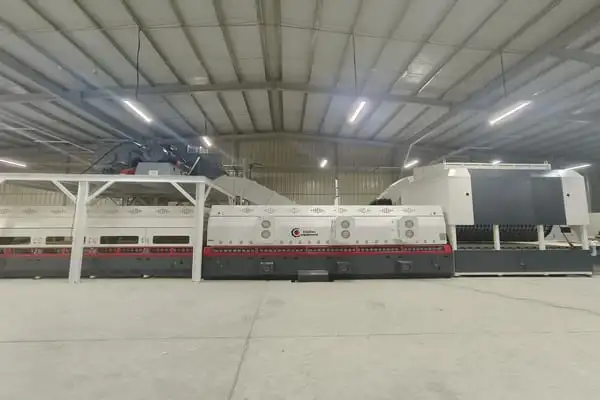
Adding high-density polymer insulation to the furnace shell of a Full Convection Flexible Roller Glass Tempering Machine can help reduce heat loss and improve thermal efficiency during production. According to the stated equipment specifications, this insulation design can reduce heat loss by about 20%, which may directly lower the amount of electricity required for operation. The Full Convection Flexible Roller Glass Tempering Machine can also be supplied with CE-certified construction to support applicable safety and compliance requirements for international projects and building applications. For buyers evaluating equipment for overseas bids or high-end architectural projects, the Full Convection Flexible Roller Glass Tempering Machine should be reviewed together with its certification documentation and applicable regional requirements. These structural and thermal design choices reflect an engineering approach focused on long-term usability, energy management, and measurable operating costs. By combining efficient insulation with controlled convection heating, the Full Convection Flexible Roller Glass Tempering Machine can provide a practical solution for manufacturers seeking stable production and better control of long-term operating expenses.
Advantages of Full Convection Technology in Glass Tempering
There is a big difference in performance between newer full convection systems and older semi-convection or radiant-only heaters. This has been seen many times in production settings. Here are the main benefits that quality glass makers can get from this technology:
- Low-E Coating Compatibility: The advanced top-convection system is engineered specifically for high-performance Low-E glass processing, protecting delicate silver-layer coatings while achieving the tempering temperatures required for structural safety certification under EN 12150 and ANSI Z97.1 standards.
- Thermal Uniformity Across Curved Surfaces: Because forced air reaches the underside, edges, and center of curved glass simultaneously, temperature variance across the glass surface stays within tightly controlled limits, reducing spontaneous breakage rates and improving yield.
- Energy Efficiency Through Insulation Design: Optimized thermal management, including high-density composite insulation, reduces energy loss by 20% compared to standard furnace configurations. For a mid-scale processing plant running two shifts daily, this translates into material monthly savings on electricity costs.
- Production Throughput Gains: Slashing heating cycle times by 30% means a factory can process significantly more square meters of glass per day without adding equipment or labor. This throughput gain directly improves return on investment calculations for capital equipment procurement decisions.
Cutting heating cycle times by 30% means that a factory can process a lot more square meters of glass every day without having to buy more equipment or hire more people. This increase in throughput directly leads to better calculations of return on investment when buying capital equipment.
Choosing Full Convection Flexible Roller Tempering Machines for Industrial Needs
Evaluating Thickness Range and Product Compatibility
A machine that can reliably work with glass from 4 mm to 19 mm can handle everything from thin interior panels for decoration to heavy-duty structural curtain wall glass. Check that the length of the heating zone and the pitch of the rollers are set up so that the furnace can handle both thin and thick glass in the same way, so that you don't have to set up different lines.
Assessing Control System Reliability
An Industrial PC and a PLC interface work together to make a process safer in two ways. The PLC is in charge of real-time pressure and temperature execution, and the IPC is in charge of storing recipes, logging historical data, and the operator interface. This architecture makes it easy to quickly recall recipes for complicated curved profiles and lowers the need for operators to make adjustments by hand during production.
Supplier Credibility and After-Sales Support
For capital equipment such as a Full Convection Flexible Roller Glass Tempering Machine, technical specifications and supplier credibility are both important when making a purchase decision. Buyers should pay attention to suppliers that provide installation supervision, commissioning assistance, and documented expert support available 24 hours a day, 7 days a week. When evaluating a Full Convection Flexible Roller Glass Tempering Machine, it is also important to confirm the scope of after-sales service, operator training, spare-parts support, and remote troubleshooting. Custom-configured Full Convection Flexible Roller Glass Tempering Machine projects usually have delivery lead times of 60 to 120 working days, depending on the equipment configuration and production schedule. Buyers should make sure this delivery window fits their planned production ramp-up before signing a contract for a Full Convection Flexible Roller Glass Tempering Machine. Careful planning of specifications, supplier support, commissioning, and delivery timing can help manufacturers integrate the Full Convection Flexible Roller Glass Tempering Machine into their production schedule more effectively.
Operational Best Practices and Maintenance Tips
Routine Mechanical Inspections
Plan to check the flexible roller assembly once a week, making sure to focus on the servo motor tuning and the state of the heat-resistant bearings. The accuracy of the curve relies on these parts staying in the right place. Even small wear on the bearings can cause the radius to deviate more than the allowed 0.5 mm, which can lower the quality of curved architectural glass orders.
Heating Element and Insulation Care
As the high-temperature blower system works in places that get close to 700°C, check the ceramic material stability of the convection blower parts once a month. The ceramic material used to make convection parts can handle temperatures of up to 1300°C, but they should be checked on a regular basis to make sure there isn't any damage that goes unnoticed and causes heating problems in certain areas.
Operator Training and Software Proficiency
When working with a well-designed multilingual interface, new workers can usually get up to speed quickly enough to do their jobs within a week. Make sure that training covers how to make recipes, how to handle deviation alarms, and how to stop the process in an emergency. Keeping a written process log for each type of glass that is handled also helps clients who need certification paperwork track the quality of the work.
Future Outlook and Industry Trends in Glass Tempering Technology
IoT Integration and Predictive Maintenance
Modern glass manufacturing plants often use production tracking systems to monitor furnace temperature profiles, roller speed data, and energy consumption in real time. When integrated with a Full Convection Flexible Roller Glass Tempering Machine, these monitoring functions can give operators a clearer view of key production parameters throughout the tempering cycle. Maintenance teams can use the data generated by the Full Convection Flexible Roller Glass Tempering Machine to identify changes in temperature, roller performance, or energy use before they develop into larger process issues. For manufacturers operating a Full Convection Flexible Roller Glass Tempering Machine, continuous monitoring can also support preventive maintenance and help reduce the risk of batch failures or unexpected downtime. By combining real-time production tracking with the control functions of the Full Convection Flexible Roller Glass Tempering Machine, manufacturers can improve process visibility and respond to potential equipment problems at an earlier stage.
Regulatory Pressure Toward Energy-Efficient Processing
According to building energy rules in the US and Europe, architectural glass standards are moving toward Low-E products that work better. As the use of coated glass in curtain walls and commercial facades grows, being able to cool these items without damaging the coating is no longer a nice-to-have, it's a must-have.
Automation and Labor Reduction
Glass making plants across North America are having trouble finding skilled workers. To make things easier, equipment with simple software and automatic setting adjustments can be used instead of hiring experienced staff. Automation in loading, choosing recipes, and quality logging cuts down on mistakes and makes production more consistent from shift to shift.
Conclusion
Premium glass manufacturers face practical production challenges such as coating protection, thermal uniformity, bending flexibility, energy consumption, and yield consistency. The Full Convection Flexible Roller Glass Tempering Machine is designed to address these requirements through a combination of high-density insulation, forced-air heating, adjustable flexible roller mechanics, and IPC/PLC control. With controlled convection heating, the Full Convection Flexible Roller Glass Tempering Machine can support more consistent heat transfer across different glass products while helping protect sensitive coatings during the tempering cycle. The adjustable roller system of the Full Convection Flexible Roller Glass Tempering Machine also provides greater flexibility when manufacturers need to process both flat and curved glass with different specifications. For architectural, automotive, appliance, and solar glass applications, the Full Convection Flexible Roller Glass Tempering Machine can provide an integrated production solution that combines heating, bending, tempering, and process control. For companies evaluating long-term capital equipment investments, the Full Convection Flexible Roller Glass Tempering Machine can be assessed in terms of production flexibility, energy management, maintenance requirements, and overall operating costs.
FAQ
How does full convection heating differ from radiant-only tempering?
Radiant systems mostly move heat around by heating parts giving off infrared light. High-pressure air movement is added by full convection systems to actively spread heat across the whole glass surface. This difference is very important for coated glass like Low-E because coatings reflect radiant energy, making heating uneven. Forced air gets around this barrier and achieves the even temperature profile needed for even stress distribution during tempering.
What glass types are compatible with a flexible roller bending furnace?
This kind of machine works with tempered glass that is flat or curved, Low-E coated glass, clear architectural glass, and safety glass for use in cars and appliances. Between 4mm and 19mm in width, there is a range that can meet both cosmetic and structural needs. It works especially well with cylindrically curved glass that is used in curtain wall facades and industrial refrigerator show cases.
What is the realistic delivery and installation timeframe?
Depending on how complicated the specifications are, it usually takes 60 to 120 working days to deliver a custom-built stove after the order is confirmed. Installation and testing usually take one to two weeks on-site. After that, the operators are trained. Include this whole schedule when planning the project to avoid breaks in the production schedule.
Can the bending radius be adjusted mid-production?
Yes. The PLC-controlled flexible roller system lets you change the radius digitally without having to change the mold. This makes it easy to switch between different curved glass specifications during the same production shift.
Partner With EASTTEC EQUIPMENT for Your Next Full Convection Flexible Roller Glass Tempering Machine
Since 1994, EASTTEC EQUIPMENT has been a leader in thermal processing for glass. Our engineering team brings more than thirty years of real-world knowledge to every kiln they set up. Our Full Convection Flexible Roller Glass Tempering Machine can work with Low-E glass that has an emissivity as low as 0.01, and it can handle glass from 4mm to 19mm. It is fully CE certified so it can be sold all over the world. As a reputable Full Convection Flexible Roller Glass Tempering Machine maker, we offer full customization, technical help 24 hours a day, and written installation training. Send your requirements to sales@easttecmachine.com, and we'll send you a technical proposal that fits your production needs.
References
1. Glass Processing Days Conference Proceedings — Advances in Convection Heating Technology for Architectural Glass, GPD Finland, 2019.
2. Glass Technology: European Journal of Glass Science and Technology — Thermal Uniformity in Forced-Convection Tempering Furnaces, Society of Glass Technology, 2021.
3. Journal of Non-Crystalline Solids — Stress Distribution Analysis in Tempered Curved Glass Products, Elsevier, 2020.
4 American National Standards Institute — ANSI Z97.1: Safety Glazing Materials Used in Buildings, ANSI, 2015.
5. Energy and Buildings — Energy Consumption Benchmarking in Industrial Glass Processing Operations, Elsevier, 2022.
6. European Committee for Standardization — EN 12150-1: Thermally Toughened Soda Lime Silicate Safety Glass, CEN, 2015.

USER EVALUATE
Here is the customer's evaluation of us