




Why Invest in Top Convection Curved Glass Tempering Machine with Flexible Roller Technology?
If you process curved glass at scale, you already know how unforgiving the production environment can be. A single thermal inconsistency can ruin an entire batch. That is precisely why investing in a top convection curved glass tempering machine with flexible roller technology is one of the most consequential equipment decisions a glass processor can make today. This machine category directly addresses the three pain points costing factories the most money: inconsistent heating, rigid forming limitations, and excessive energy consumption.
Understanding Convection Curved Glass Tempering Machines and Flexible Roller Technology
How the Convection Heating Principle Works
A high-pressure blower system moves hot air around inside the furnace chamber of a convection curved glass tempering machine to heat the glass. This moves hot air around inside the glass, covering its surface much more evenly than pure radiation heating. This makes the temperature level more even, which greatly lowers thermal stress gradients, which are the main reason why finished curved glass panels break and distort light.
The Role of Flexible Roller Technology
Flexible roller technology bends glass into any shape by using an adjustable, multi-point roller bed. This is different from fixed-mold bending systems, which need expensive new tools for every new radius. The rollers are wrapped with heat-resistant materials that keep the contact friction low. This keeps glass surfaces from getting scratches from the rollers. Small-batch curved glass production has high mold costs. This design gets rid of those costs and lets processors switch between radius shapes digitally, without stopping the production line.
The Step-by-Step Tempering Process
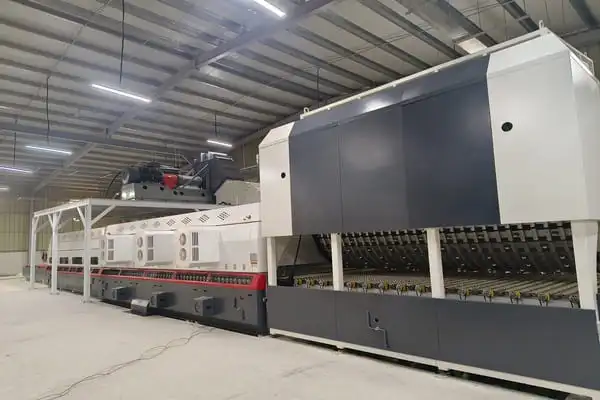
The process starts when flat glass is loaded into the heating chamber of a top convection curved glass tempering machine with flexible roller. Forced airflow helps ensure that the glass reaches its softening temperature evenly across the panel. The flexible roller bed then gradually shapes the glass to the specified radius, allowing the top convection curved glass tempering machine with flexible roller to process curved panels with controlled forming conditions. The glass then moves directly into a high-pressure quench section, where it cools rapidly and evenly, helping establish the compressive surface stress that gives tempered glass its strength. An Industrial PC and PLC system controls and monitors the entire process while allowing the top convection curved glass tempering machine with flexible roller to store production recipes for quick retrieval. By integrating controlled convection heating, flexible roller forming, and automated process management, the top convection curved glass tempering machine with flexible roller supports consistent curved glass production and efficient recipe-based operation.
Key Benefits of Investing in Advanced Convection Curved Glass Tempering Machines
When processors switch from standard radiation-only furnaces to forced convection systems, they always see improvements in a number of output measures. The benefits of the technology directly lead to better quality and financial outcomes that make the capital investment worthwhile.
Here are the main benefits of this type of equipment:
- 30% Faster Heating Cycle: The high-pressure convection system accelerates heat absorption, cutting cycle times by approximately 30% compared to radiant-only models. For a busy architectural glass plant processing curtain wall panels, this speed advantage compounds into measurable daily output gains across a full production month.
- Low-E Coating Protection: The machine is engineered to process Low-E glass with emissivity as low as 0.01. The convection air circulation prevents localized overheating that causes film oxidation, ensuring coating integrity is preserved through the entire thermal cycle.
- 20% Reduction in Energy Loss: Optimized furnace insulation and intelligent thermal management reduce energy loss by around 20% compared to conventional designs. For a factory running multiple shifts, this translates directly into lower monthly electricity overhead and a smaller carbon footprint.
- 4mm to 19mm Thickness Capability: The processing window covers decorative thin glass panels used in furniture and appliances all the way through heavy structural architectural glass, giving processors the flexibility to serve multiple market segments with one machine.
All of these benefits take care of the problems that production managers and factory owners in the glass processing industry most often complain about. There is a faster return on capital investment when there are higher yield rates, lower energy bills, and more types of products made on the same line.
Comparing Top Convection Curved Glass Tempering Machines with Flexible Rollers
Convection vs. Traditional Radiation Heating
Infrared elements are commonly used to heat glass in traditional radiation furnaces. While radiation-only systems can work well for flat glass, they may have greater difficulty managing the temperature distribution required for curved glass, especially when processing Low-E coated glass. A top convection curved glass tempering machine with flexible roller addresses this challenge by using forced convection to circulate heated air around the glass and improve heat distribution. This convection-based approach can help create more uniform surface temperatures and reduce the risk of thermal stress during processing. For manufacturers working with demanding curved glass applications, a top convection curved glass tempering machine with flexible roller can provide more controlled heating conditions than a radiation-only configuration. The combination of convection heating and flexible roller forming also allows the top convection curved glass tempering machine with flexible roller to support more consistent processing of curved panels. For plants seeking greater flexibility in curved glass production, the top convection curved glass tempering machine with flexible roller provides an integrated approach to heating, forming, and tempering.
Flexible Rollers vs. Fixed Mold Systems
When you use fixed mold bends, you need a separate mold for each radius. Mold costs, storage needs, and downtime during changeovers make this method pricey for processors who handle a wide range of orders. The flexible roller method replaces physical molds with a digitally adjustable roller bed. This cuts down on changeover time and eliminates the need to buy molds for most standard radius profiles.
What to Look for in a Supplier
When purchasing curved glass tempering machines, procurement teams should look at suppliers that have CE certification, a history of good after-sales support, and the ability to adapt equipment to local voltage standards. When ordering expensive capital equipment, it is safer to go with suppliers who have been around since the mid-1990s and have clear records of their production sites.
Making an Informed Purchase Decision for Your Business
Evaluating Production Capacity Against Your Order Volume
Before you choose a machine, you should make a list of the different types of orders you get each month along with the thickness range and radius variety. If you have a machine that can handle 4mm to 19mm glass and has radius options that can be changed, you can take on new types of contracts without having to buy new equipment.
Balancing Price Against Total Cost of Ownership
One part of the total cost of ownership is the price of the bent glass tempering kiln itself. The real cost per square meter of treated glass is based on how much energy is used, how easy it is to get replacement parts, how long it takes to train operators, and unexpected downtime. Over the course of five years, the costs will be very different if there is a machine that cuts energy loss by 20% and teaches a new operator how to use it in just one week.
Lead Time and Delivery Planning
Glass tempering furnaces are configured according to the customer's production requirements. For a top convection curved glass tempering machine with flexible roller, delivery usually takes between 60 and 120 working days, depending on the equipment configuration and any customization required. Buyers should consider this lead time when planning procurement to ensure that the installation of a top convection curved glass tempering machine with flexible roller aligns with production schedules. Including the expected delivery window in the purchasing plan can help prevent unnecessary delays when a facility is expanding capacity or replacing older equipment. For manufacturers with specific curved glass processing requirements, confirming the configuration and lead time of a top convection curved glass tempering machine with flexible roller before placing an order can support smoother project planning. Careful scheduling of a top convection curved glass tempering machine with flexible roller can help production teams coordinate equipment delivery, installation, commissioning, and capacity expansion more effectively.
Ensuring Long-Term Success with Convection Curved Glass Tempering Machines
Operator Training and Software Usability
The IPC and PLC control system keeps track of complicated bending recipes, so operators can quickly access output factors. Menu options in more than one language, like English and Spanish, make it easier for people from other countries to use international facilities. Easttec's design theory is to have all operators fully trained within one week of installation. This keeps output from dropping as much as it usually does when new equipment is brought online.
Maintenance Practices That Protect Uptime
The main maintenance chores that determine how reliable a machine will be in the long term are regularly calibrating the servo motors that control the roller curve, inspecting the heat-resistant roller bearings on a regular basis, and reviewing the performance of the convection blower on a regular basis. Easttec technicians are available online 24 hours a day to help maintenance teams with diagnostics and parts questions.
CE Certification and International Market Access
Every curved glass tempering furnace made by Easttec is built to meet CE standards. This certification is not just a formality; it is needed to supply glass for high-end business projects in North America and Europe, where building rules are making recorded compliance more and more important. Equipment that is CE-compliant protects both the person working with the glass and the customer.
Conclusion
Curved glass production is a highly demanding area where equipment capability directly affects production capacity, energy consumption, and the ability to serve new markets. A top convection curved glass tempering machine with flexible roller combines flexible roller technology with convection heating and cooling to address key production requirements such as uniform temperature distribution, controlled shaping, and efficient heat transfer. For processors producing glass for buildings, automobiles, appliances, and solar panels, a top convection curved glass tempering machine with flexible roller can provide a versatile platform for different curved glass applications. According to the equipment specifications, the system can offer faster heating speeds, reduced thermal energy loss, and a broad processing range of 4 mm to 19 mm. These capabilities make the top convection curved glass tempering machine with flexible roller suitable for manufacturers seeking greater flexibility across different product specifications. When purchasing capital equipment, selecting a CE-certified supplier with established manufacturing experience and reliable after-sales support can also help reduce operational risks associated with a top convection curved glass tempering machine with flexible roller. For glass processors planning to expand curved glass production, the top convection curved glass tempering machine with flexible roller provides an integrated equipment option for improving process flexibility and supporting diverse market requirements.
FAQ
What glass types can this machine process?
Between 4mm and 19mm thick, the machine can work with clear float glass, Low-E coated glass, tinted glass, and solar glass. Its convection heating method works especially well with covered glass because it keeps the film from oxidizing, which can happen with radiation-only heating.
How does flexible roller technology reduce defects?
Instead of putting all the stress on a few fixed points, the adjustable roller bed spreads mechanical contact across many points. This cuts down on surface marks, makes it easier to control the radius of the bend, and lowers the amount of optical distortion that usually comes with gravity bending or pneumatic pressing.
What certifications does the machine carry?
The bent glass tempering kilns made by Easttec are in line with CE guidelines and meet the stress requirements for tempering set out in EN 12150 and SGCC standards. Companies that process glass for industrial building projects in the US and Europe need these licenses in order to do business.
Can the machine be customized for different voltage standards?
Yes, Easttec can change the power system to meet global industrial voltage and frequency standards. This includes 220V, 380V, and 415V at both 50Hz and 60Hz. This means that the equipment can work with facilities in both North America and Europe.
What after-sales support is available?
Easttec technicians offer online support 24 hours a day, seven days a week. This support includes installation help, process commissioning, operator training, and help with fixing problems. As part of the standard service commitment, spare parts are available and diagnostics can be done remotely.
Request a Quote for Your Curved Glass Tempering Line — EASTTEC EQUIPMENT
Since 1994, EASTTEC EQUIPMENT has been making thermal processing equipment for glass. Our convection curved glass tempering machine with flexible roller was designed to solve the real production problems that architectural glass processors, automotive glass suppliers, and appliance glass manufacturers in North America face. Our team is ready to give you technical details, customization options, and a detailed quote for a Top Convection Curved Glass Tempering Machine with Flexible Roller, whether you are looking for a supplier-qualified capital purchase or looking at your options for a new production line. Send us an email at sales@easttecmachine.com to start a discussion.
References
1. Glass Processing Technology Review — Glass International, 2022
2. Energy Efficiency Standards in Industrial Glass Tempering — Glass Worldwide, 2023
3. Advances in Curved Glass Manufacturing for Architectural Applications — Journal of Building Engineering, 2021
4. Thermal Processing Equipment Market Report: Glass Sector Analysis — FEVE European Container Glass Federation, 2023
5. EN 12150-1: Thermally Toughened Soda Lime Silicate Safety Glass Standard — European Committee for Standardization (CEN), 2020
6. Low-Emissivity Coatings and Tempering Compatibility in Architectural Glass — Solar Energy Materials and Solar Cells, Elsevier, 2022

USER EVALUATE
Here is the customer's evaluation of us