




How Does Convection Flexible Roller Flat & Bend Glass Tempering System Improve Glass Tempering Results?
The Convection Flexible Roller Flat & Bend Glass Tempering System improves tempering results by combining high-pressure forced convection heating with an adjustable flexible roller mechanism. This design delivers uniform heat absorption across both flat and curved glass surfaces, reducing optical distortion and breakage. The convection airflow penetrates Low-E coatings without causing oxidation, while the flexible roller configuration supports glass thicknesses from 4mm to 19mm. Compared to conventional radiant furnaces, this approach shortens heating cycles by approximately 30% and reduces thermal energy loss by 20%, producing consistently higher yield rates across architectural, automotive, and appliance glass applications.
Understanding the Challenges in Traditional Glass Tempering Methods
In the U.S. market, many glass processors still use basic roller conveyor furnaces or older furnaces that use radiation. On the factory floor, these systems cause real problems every day.
Uneven Heating and Surface Defects
Normal radiant heaters have trouble spreading heat evenly across treated glass surfaces like Low-E glass. This makes hot spots in certain places that cause stress cracks, haze, or surface lines. For architectural curtain wall projects that need very tight optical tolerances, even small distortions can lead to expensive product rejections.
High Energy Consumption and Rising Operating Costs
Traditional tempering kilns use a lot of electricity because they only use radiant heat transfer, which works less well for thicker or covered glass and takes longer to do. Electricity costs a lot of the money that goes into making glass, and equipment that doesn't work well cuts into profits on every production run.
Limited Flexibility for Complex Shapes
Older flat tempering lines often cannot process bent architectural glass panels efficiently because they require manual adjustments or completely different tooling. By contrast, a Convection Flexible Roller Flat & Bend Glass Tempering System is designed to handle both flat and bent glass within one production setup, reducing the need for major equipment changes between different product types. For manufacturers producing a wide variety of products, the Convection Flexible Roller Flat & Bend Glass Tempering System can make it easier to switch between flat glass and curved glass production with less manual intervention. This flexibility is particularly useful for applications such as shower enclosures, automotive backlights, and other products with different shape requirements. With a Convection Flexible Roller Flat & Bend Glass Tempering System, manufacturers can streamline production planning and reduce the downtime associated with changing between separate flat and bent glass processing equipment. The Convection Flexible Roller Flat & Bend Glass Tempering System therefore provides a practical solution for glass processors that need greater flexibility while maintaining consistent tempering performance across different product specifications.
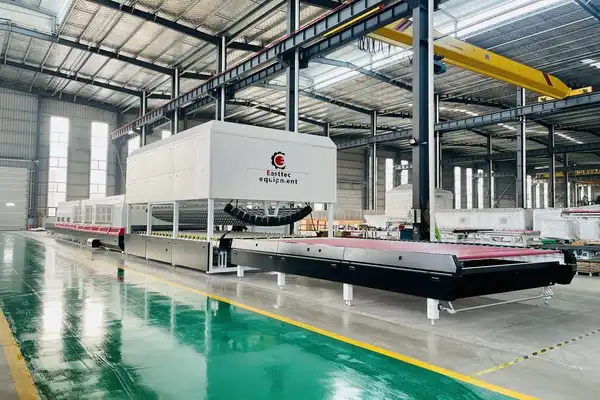
How the Convection Flexible Roller Flat & Bend Glass Tempering System Works
Each of those problems is dealt with in a specific way by the engineering behind this system. Procurement engineers can make smart choices about tools when they know how the system works.
Forced Convection Heating Mechanism
Easttec's device has a forced convection module on top that moves hot air quickly through the furnace room. Instead of waiting for radiant heat to reach the glass surface on its own, this airflow actively moves heat to it. This makes the heating go faster and more evenly. This is especially important for Low-E glass with an emissivity as low as 0.01, since the coating would normally block radiant energy and make temperature differences that aren't even.
Adjustable High-Strength Flexible Roller Design
The flexible roller system has high-strength, heat-resistant roller bands that can be changed using servo motors to make them flat or bent. This means that the same production line can make both large-radius ornamental bends and flat structural panels without having to change the molds by hand. Digitally controlling the roller arc settings through the IPC and PLC link keeps the arc deviation within tight limits during long production shifts.
Integrated Thermal Insulation and Inverter Control
Easttec combines its own high-density insulation panels with fan motors that are controlled by an inverter. About 20% less heat is lost from the furnace body because of the insulation, and the inverter fans change the airflow pressure in real time to meet the needs of each glass recipe. With this set-up, production managers can directly control how much energy is used at the recipe level as well as at the machine level.
Key Benefits of This System in B2B Glass Manufacturing
When glass manufacturers look at capital equipment, they look at how much it will produce, how consistent the quality will be, and how much it will cost them in the long run. In all three directions, this method works very well.
Here are the main benefits of production that B2B buyers care about the most:
- 30% Faster Heating Cycles: Convection-assisted heating reduces cycle time by approximately 30% compared to radiant-only furnaces. For factories processing Low-E architectural glass or thick structural panels, this directly increases daily output without adding labor or floor space.
- 4mm to 19mm Processing Range: The system handles the full commercial glass thickness spectrum reliably. Whether a factory produces decorative interior glass at 4mm or heavy-duty structural glazing at 19mm, the same equipment delivers consistent tempering quality meeting EN 12150-1 and ASTM C1048 standards.
- 20% Reduction in Thermal Energy Loss: Easttec's insulation technology and inverter-controlled fans work together to cut energy waste at the furnace level. Over a 12-month production year, this reduction translates into measurable savings on electricity overhead for medium-to-large processing operations.
- CE-Certified for International Projects: Full CE compliance means U.S. and international glass processors can bid confidently on projects requiring certified equipment documentation. This is particularly relevant for architectural facade contracts and government building specifications.
These benefits directly fix the problems with output that were talked about earlier. The throughput bottleneck is fixed by shorter cycle times, the wide range of thicknesses gets rid of the need for multiple specialized lines, and the energy savings boost the return on investment (ROI) on what is usually a capital investment that lasts for many years.
Comparing This System with Other Glass Tempering Technologies
It is helpful for purchasing teams to see how a Convection Flexible Roller Flat & Bend Glass Tempering System compares with the other glass tempering options they usually evaluate. When assessing different equipment configurations, buyers can consider how a Convection Flexible Roller Flat & Bend Glass Tempering System handles both flat and curved glass within one production line. The Convection Flexible Roller Flat & Bend Glass Tempering System can also provide greater flexibility for manufacturers that need to process different glass shapes and specifications. Comparing heating methods, roller configurations, glass thickness ranges, and production requirements can help buyers determine whether a Convection Flexible Roller Flat & Bend Glass Tempering System fits their manufacturing needs. For companies looking to handle both flat and bent glass products efficiently, the Convection Flexible Roller Flat & Bend Glass Tempering System offers an integrated option worth considering.
Radiation-Only Flat & Bend Furnaces
Radiation flat and bend stoves use heating elements grouped in a matrix to move heat. For regular glass, they can heat to temperatures between 680°C and 720°C with good evenness. Low-E coated glass, on the other hand, partially blocks direct heat transfer. This means that the coating needs to soak for longer periods of time, and there is a higher chance that it will oxidize. Because convection systems can get through Low-E coatings better, they are the best choice for high-performance exterior glass lines.
Infrared Tempering Systems
Infrared systems can quickly heat glass, but they don't have the even temperature or mechanical freedom that curved building glass needs. Infrared heat tends to gather at the top of the glass, which can cause stress differences in panels that are thicker. When factories process a wide range of products, infrared systems often need extra equipment for curved work, which adds to the cost of the system and the space it takes up on the floor.
Why Convection Flexible Roller Systems Win on Total Cost
A convection movable roller system usually costs more to buy at first than basic radiant equipment. But over the course of a typical equipment's 10+ year life cycle, the 30% faster cycles, 20% less energy loss, and lower rates of scrap make for a strong return on investment. Factories that work with quality coated glass or regularly handle both flat and bent orders can make up the difference in cost just by being more efficient in their production.
Selecting and Procuring the Right System for Your Operation
To choose the right tempering furnace, you need to make sure that the equipment's specs match your production needs.
Assess Your Glass Product Mix and Thickness Range
Make a list of all the types of glass you work with before you start. If you work with Low-E architectural glass, laminated panels, or curved safety glass along with flat goods on a daily basis, a Convection Flexible Roller Flat & Bend Glass Tempering System with a 4 mm to 19 mm processing range can handle a wide variety of applications without requiring a separate heating system. For manufacturers that regularly switch between flat and curved products, the Convection Flexible Roller Flat & Bend Glass Tempering System provides a flexible production solution within one integrated line. The Convection Flexible Roller Flat & Bend Glass Tempering System can be configured to process different glass thicknesses and shapes, helping reduce the need for additional equipment when production requirements change. Before selecting a Convection Flexible Roller Flat & Bend Glass Tempering System, buyers should confirm that its thickness range, heating configuration, and flexible roller system match their actual glass production needs. With the right configuration, the Convection Flexible Roller Flat & Bend Glass Tempering System can support manufacturers producing Low-E architectural glass, laminated panels, curved safety glass, and other flat or bent glass products.
Evaluate Customization Requirements
Easttec offers a wide range of customization options for customers around the world. These include adapting the power system to U.S. voltage and frequency standards (415V/60Hz), creating custom heating curves, and providing HMI software in English and other languages. This is important for U.S. buying teams that work with foreign production engineers or that run operations with different operator teams during different shifts.
Confirm After-Sales Support Capabilities
Customized tempering kilns usually take between 60 and 120 working days to deliver, but this depends on the specifics. Make sure that as part of the procurement package, your supplier offers on-site installation, commissioning support, and operator training. Easttec's expert team is available online 24 hours a day, 7 days a week to help keep output running smoothly after the equipment is set up.
Conclusion
This Convection Flexible Roller Flat & Bend Glass Tempering System fixes real production issues like uneven heating on coated glass, high energy costs, and not being able to change between flat and curved orders quickly. It has shorter cycle times, more thickness compatibility, and lower running costs than other options because it combines forced convection technology with customizable flexible roller mechanics. This method is a good investment for glass companies that work with architecture, cars, appliances, and solar panels because it works well and has been used in the real world. This technology has been used by Easttec to help glass processors since 1994. It is backed by Italian convection engineering standards and CE certification.
FAQ
What glass thickness range does this system support?
Glass from 4mm to 19mm can be safely processed by the device. This range includes decorative interior glass, standard architectural panels, automotive safety glass, and heavy-duty structural glazing. This means that factories can use a single production line to make a lot of different types of glass.
How does convection heating protect Low-E coatings?
Forced convection moves hot air around, transferring energy evenly to the glass surface, even through Low-E coatings that have an emissivity of as little as 0.01. This stops the localized warming that leads to coating oxidation in systems that only use radiation, so the coating stays intact and the optics work well.
How long does it take to switch between flat and bend production modes?
With servo-controlled flexible rollers and digital recipe management through the IPC/PLC interface, switching between flat and bend setups usually takes less than five minutes. This keeps production running as smoothly as possible as orders change.
What energy savings can I realistically expect?
When compared to normal furnace designs, Easttec's insulation technology and inverter-controlled fans cut heat energy loss by about 20%. When the 30% faster heating cycle is added, most businesses see a measurable drop in the amount of electricity used to process one square meter of glass.
Does Easttec support custom voltage configurations for the U.S. market?
Yes, Easttec can make power systems that meet world voltage and frequency standards. These can include designs that work with U.S. industrial power supply standards. The procurement package comes with full technical training and support after the sale.
Partner with EASTTEC EQUIPMENT for Your Next Tempering Furnace Investment
EASTTEC EQUIPMENT has been providing glass tempering furnace solutions to companies on several continents since 1994, based on high standards of Italian convection engineering and quality that is CE-certified. You can get our Convection Flexible Roller Flat & Bend Glass Tempering System from a supplier that sets it up for you. You can change the power systems, production parameters, and software language preferences, among other things.
Please email our technical team at sales@easttecmachine.com to talk about your production needs and get a full quote on the tools you need. Our techs are here for you 24 hours a day to help you with technical issues and set up your system so it works best for your business.
References
1. Glass Technology Europe. Advances in Forced Convection Heating for Coated Glass Tempering. Glass Technology Europe, 2021.
2. American Society for Testing and Materials. ASTM C1048: Standard Specification for Heat-Strengthened and Fully Tempered Flat Glass. ASTM International, 2018.
3. European Committee for Standardization. EN 12150-1: Glass in Building — Thermally Toughened Soda Lime Silicate Safety Glass. CEN, 2015.
4. Glass International. Energy Efficiency Trends in Industrial Glass Tempering Furnaces. Quartz Business Media, 2022.
5. LandGlass Technology. Convection vs. Radiation Heating in Architectural Glass Processing. Industry Technical Report, 2020.
6. Pilkington NSG Group. Technical Reference Manual for Low-Emissivity Glass Processing and Thermal Treatment. NSG Group Technical Publications, 2019.

USER EVALUATE
Here is the customer's evaluation of us