




Why Do Glass Manufacturers Choose Convection Flexible Roller Flat & Bend Glass Tempering System?
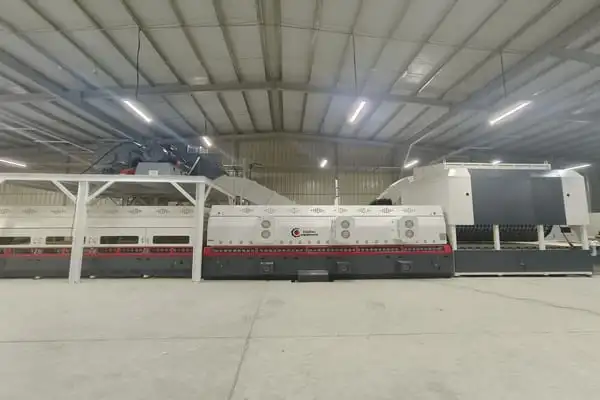
Glass manufacturers across architectural, automotive, and appliance sectors are actively shifting toward the Convection Flexible Roller Flat & Bend Glass Tempering System because it solves two longstanding production challenges at once: processing both flat and curved glass on a single line while maintaining consistent thermal performance. By circulating high-velocity hot air through an advanced convection mechanism, this system achieves uniform heat absorption across Low-E coatings, complex curvatures, and varying glass thicknesses — making it a technically and commercially sound investment for modern glass processors.
Understanding the Convection Flexible Roller Flat & Bend Glass Tempering System
It is vital to have a good grasp of the specific characteristics that exist between this procedure and other tempering methods that are used more often before moving on to the assessment of any capital equipment. This is particularly important before moving on to the evaluation of any capital equipment. Before moving on with the evaluation of any piece of capital equipment, it is of the highest importance to take this into mind.
How Convection Heating Works in Glass Tempering
Traditional radiation-only furnaces transfer heat through infrared elements, which work well for standard clear glass but struggle with Low-E coated glass. A forced convection system deploys a high-temperature blower to form internal circulating hot air, which penetrates reflective coatings and delivers consistent heat absorption across the entire glass surface. This directly reduces optical distortion and surface defects that typically drive rejection rates upward.
The Role of Flexible Rollers in Curved Glass Processing
The flexible roller mechanism is the mechanical core of this system. Unlike rigid roller configurations, the adjustable high-strength flexible rollers transition between flat and arched positions, enabling the furnace to produce both flat architectural panels and large-radius curved glass without manual mold changes. This significantly reduces changeover time — advanced servo-controlled systems can switch from flat to bend mode in under five minutes through the HMI interface.
Why Flat and Bend Processing on One Line Matters
Running separate production lines for flat and curved glass multiplies capital expenditure, floor space requirements, and labor costs. A combined flat and bend tempering furnace allows glass processors to consolidate output, respond faster to mixed orders, and reduce idle equipment time — all of which directly affect factory profitability.
Key Benefits Driving Glass Manufacturers to Choose This System
When factory owners and production managers look at new tempering equipment, they always put three things at the top of their lists: quality output, energy costs, and operational flexibility. Here are the main benefits that this method brings to all three.
- 30% Faster Heating Cycle: The high-pressure Convection Flexible Roller Flat & Bend Glass Tempering System shortens production cycles by approximately 30% compared to radiant-only furnaces. For factories processing thick or coated glass, this translates directly into higher daily output without additional shifts or headcount.
- 20% Reduction in Energy Loss: Easttec integrates proprietary high-density insulation with inverter-controlled fans, cutting thermal energy loss by 20%. In a glass tempering operation running multiple shifts, this reduction in electricity overhead becomes a measurable monthly saving.
- 4mm to 19mm Processing Range: The system reliably tempers glass across this full thickness window, covering decorative thin glass, standard architectural panels, and heavy-duty structural glazing within a single equipment configuration.
- Low-E Coating Compatibility: Engineered to process Low-E glass with emissivity as low as 0.01, the convection heating design prevents film oxidation and ensures uniform thermal absorption — a requirement that radiation-only systems frequently fail to meet.
- CE Certified Production: Full CE compliance means processors can bid on international architectural tenders with confidence, knowing their finished products meet recognized safety and quality benchmarks.
These benefits directly address the production issues that cost the most money in glass processing: damage to coatings, inconsistent tempering, high energy costs, and rigid equipment that can't handle different product requirements.
Convection Flexible Roller vs. Traditional Glass Tempering Systems
A straight comparison helps procurement teams make the right choice about where to spend.
Traditional radiation ovens work fine for clear float glass, but they have problems when they try to work with coated or bent glass. Line-of-sight infrared light is needed for heat transfer. Low-E surfaces reflect energy instead of absorbing it, which makes cycle times longer and raises the risk of thermal unevenness. The optical distortion and roller wave defects that happen as a result are well-known problems in the production of curved glass.
The convection flexible roller method gets around these problems at the process level. The coating's reflectivity is fixed by moving hot air around, and the servo-motor-controlled flexible rollers keep the arc's accuracy within very tight limits. Fully tempered glass must have surface stress values higher than 90 MPa according to EN 12150-1 and ASTM C1048 standards. This method consistently meets this standard by controlling temperatures precisely across multiple zones.
To make maintenance easier, Kevlar or ceramic-coated sleeves on Convection Flexible Roller Flat & Bend Glass Tempering System s keep the surface from getting scratched and cut down on wear cycles. With an Industrial PC and PLC-based control interface, operators can quickly call up saved bending recipes. This cuts down on setup mistakes and shortens the time it takes to train new employees.
Making an Informed Procurement Decision
When the glass business makes choices about new capital equipment, it usually takes three to twelve months and a lot of technical reviews. When looking at suppliers, procurement managers and technical directors should put these things in order of importance.
Evaluate True Convection Capability
Not all methods of flow work the same. All of Easttec's convection parts are made of ceramic materials that can withstand temperatures of up to 1,300°C. This makes sure that the flow of hot air inside stays stable during long production runs. Ask each provider to show you data on temperature uniformity, especially whether they can keep the difference in temperature across the heating room to less than ±2°C.
Confirm Customization Depth
For each market, the tools need to be set up in a different way. Easttec helps power systems shift to different voltage levels around the world, such as 220V, 380V, and 415V at 50Hz and 60Hz. The size of the equipment, the heating curves, the cooling parameters, and the language of the program (among others, English, Spanish, Russian, Korean, and Portuguese) can all be changed to fit the needs of the plant.
Assess After-Sales Support Infrastructure
Easttec offers online technical help 24 hours a day, seven days a week. New workers usually learn how to use and maintain equipment within a week. Depending on the type, personalized tempering furnaces can be delivered anywhere from 60 to 120 working days after they are ordered.
Future Outlook: Why This Technology Will Continue to Lead Glass Tempering
The global market for architectural glass keeps growing because business buildings need to be more energy efficient and people want curved facade features more and more. More and more building glazing requirements call for low-E glass, and this directly supports technologies that temper by convection over those that temper by radiation alone.
Integration of Industry 4.0 is also speeding up. The data infrastructure for predictive maintenance, remote diagnostics, and production analytics is already built into PLC- and IPC-driven furnace control systems. As companies move toward digital manufacturing, stable industrial control tools for tempering equipment will easily fit in with their overall automation plans. With its IPC and PLC design, the Convection Flexible Roller Flat & Bend Glass Tempering System lets glass makers take part in these changes without having to buy new core equipment.
Conclusion
The move toward convection-based Convection Flexible Roller Flat & Bend Glass Tempering System is not just a matter of preference for technology; it is also a matter of practical production needs. There is a clear return on investment when heating cycles are shorter, energy use is lower, more types of glass can be used, and flat and bent goods can be processed on the same line. This category of equipment helps glass manufacturers meet their quality and cost goals at the same time, whether they are in the architectural, automotive, appliance, or deep-processing markets. Easttec's lineup, which is built to CE standards and backed by decades of engineering experience since 1994, is a technically sound choice for factories that want to add new production lines or increase their capacity.
FAQ
1. Can this system handle both flat and curved glass without manual mold changes?
Yes. The flexible roller system can be adjusted, and the HMI interface lets it instantly switch between flat and bent positions. This switch is done in less than five minutes by advanced servo-controlled systems. This lets companies handle mixed orders during the same shift without stopping production.
2. How much energy can a convection tempering furnace save compared to a radiation furnace?
Easttec's system uses special high-density insulation and inverter-controlled fans to cut down on thermal energy loss by 20%. When you add in a 30% shorter heating cycle, the overall energy efficiency gain is big, especially for factories that have several shifts every day.
3. Is this equipment compatible with Low-E coated glass?
Yes. The forced convection heating system is designed to work with Low-E glass that has an emissivity of as little as 0.01. Hot air moving around the surface of the glass makes up for the coating's ability to reflect light, which keeps the film from oxidizing and makes sure that the glass absorbs heat evenly.
4. What after-sales support does Easttec provide?
Easttec provides online expert support 24 hours a day, 7 days a week, as well as on-site installation and setup help, operator training programs, and services to change the way equipment works. New workers usually get up to speed in one week, which cuts down on the loss of production during staff changes.
Ready to Upgrade Your Glass Tempering Line? Contact EASTTEC EQUIPMENT Today
From 1994 to the present, EASTTEC EQUIPMENT has provided manufacturers on several continents with glass tempering solutions. As a maker of the Convection Flexible Roller Flat & Bend Glass Tempering System, we know how to make fully customized designs for building, automobile, and appliance glass uses. Please email our expert team at sales@easttecmachine.com to get a product specification sheet, a plant tour, or a quote that is specifically made for your production needs.
References
1. Glass Technology Europe. Advances in Forced Convection Heating for Low-E Glass Tempering. Glass Technology Europe, 2022.
2. American Society for Testing and Materials. ASTM C1048: Standard Specification for Heat-Strengthened and Fully Tempered Flat Glass. ASTM International, 2018.
3. European Committee for Standardization. EN 12150-1: Glass in Building — Thermally Toughened Soda Lime Silicate Safety Glass. CEN, 2015.
4. Glass International. Energy Efficiency in Industrial Glass Tempering Furnaces: Current Trends and Technologies. Glass International, 2021.
5. US Department of Energy. Industrial Decarbonization Roadmap: Glass Manufacturing Sector. Office of Energy Efficiency & Renewable Energy, 2022.
6. China Building Materials Academy. Thermal Processing Technology for Architectural Coated Glass. China Building Materials Press, 2020.

USER EVALUATE
Here is the customer's evaluation of us