




Top Convection Curved Glass Tempering Machine with Flexible Roller Enhances Curved Glass Manufacturing Accuracy
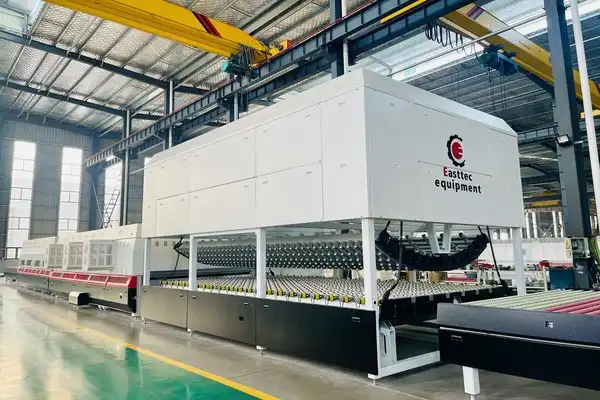
The Top Convection Curved Glass Tempering Machine with Flexible Roller represents a significant shift in how glass processors approach curved glass production. By combining forced convection heating with an adjustable flexible roller bed, this equipment type eliminates the optical distortion and mold-cost burdens that plague traditional fixed-mold bending systems. For procurement professionals evaluating advanced tempering solutions, understanding how this technology affects yield rates, coating integrity, and daily throughput is the foundation for a sound capital equipment decision.
Understanding Convection Curved Glass Tempering Machines with Flexible Rollers
How Forced Convection Differs from Radiant Heating
In traditional radiant-only stoves, heat is only transferred through infrared elements, which makes curved glass surfaces have uneven temperature changes. A forced convection system uses a high-temperature ceramic fan to move hot air around inside the system. This makes the heating cycle up to 30% faster and much more even. When working with Low-E glass that has an emissivity as low as 0.01, this is important because uneven heat absorption leads to layer rust and surface flaws.
The Role of the Flexible Roller Mechanism
A digitally adjustable roller bed is used instead of hard, set molds in the flexible shaft system. Through a PLC interface, operators can change the curvature parameters without having to physically switch molds. This greatly reduces the time it takes to change tools. This feature makes it possible for one production line to work with large-radius curtain wall panels in the morning and smaller-radius auto glass in the afternoon, all without losing accuracy below 0.5mm.
Automation and Certification Standards
An Industrial PC (IPC) in a well-designed convection curved glass tempering furnace keeps full production recipes on it. These include temperature curves, conveyor speed, and cooling pressure. Instant memory of recipes lowers the need for operators and the number of mistakes they make. When machines are built according to CE guidelines, they meet the safety standards for international bids. For example, they meet EN 12150 standards for tempered glass and ISO 9001 quality management protocols. This gives buyers confidence in buying things across borders.
Advantages of Using Flexible Roller Convection Tempering Machines in Curved Glass Manufacturing
This technology solves three problems that keep coming up in the production of curved glass: coating damage, wasted energy, and production that can't be changed easily. Here are the main benefits of this type of equipment:
- Low-E Coating Protection: The high-pressure convection system distributes heat evenly across glass carrying delicate Low-E coatings. Because there are no hot spots, film oxidation risk drops sharply, and uniform heat absorption is maintained across the full glass surface throughout the tempering cycle.
- Versatile Thickness Processing: A glass thickness window from 4mm to 19mm means the same machine handles thin decorative panels for furniture and interior applications as well as heavy structural glazing for commercial facades. Processors serving multiple industries no longer need separate production lines for different specifications.
- Energy Cost Reduction: Optimized thermal insulation and an intelligent heat management design reduce energy loss by 20% compared to conventional tempering furnaces. For a mid-size glass processing plant running two shifts daily, this translates into measurable monthly savings on electricity overhead.
- Flexible Bending Freedom: The adjustable high-strength Top Convection Curved Glass Tempering Machine with Flexible Roller system accommodates large-span and diverse curvatures, giving processors the mechanical adaptability needed for modern architectural glass designs that require custom radii rather than standard curves.
These benefits directly address the production issues that architectural glass makers and car glass suppliers most often complain about, namely, high scrap rates due to coating damage, high energy costs, and the inability to quickly switch between product types.
Market Comparison and Decision-Making Guide for Procurement
Flexible Rollers vs. Fixed Molds: A Performance Comparison
For fixed-mold bending devices to work, each radius needs its own mold. Molds can cost up to tens of thousands of dollars each, and the time it takes to switch them out is often longer than two hours. A movable roller convection system, on the other hand, can be changed digitally, which means that almost no mold investment is needed and switching time is cut down to minutes. This difference has a direct effect on how profitable the job is for processors who handle small-batch special orders, which are a growing part of the building glass market.
Key Procurement Factors to Evaluate
Before making a choice, procurement managers and technical leaders should look at the following factors when reviewing suppliers:
- Lead Time: Convection curved tempering furnaces are custom-built equipment. Delivery windows typically run 60 to 120 working days depending on configuration, so project timelines must account for this production period.
- After-Sales Support: A supplier offering 24-hour online technical support reduces the operational risk of equipment downtime, which can cost a glass plant thousands of dollars per production hour.
- Customization Depth: Equipment should support global voltage and frequency standards (220V, 380V, 415V, 50/60Hz), multi-language operating menus (English, Spanish, Russian, Korean, Portuguese, and others), and process parameter adjustments for specific product specifications.
- Certification Readiness: CE compliance is a baseline requirement for entry into European and many North American high-specification project tenders. Verify this before signing a purchase agreement.
After-Sales Support: A supplier that offers online technical support 24 hours a day, seven days a week lowers the risk of equipment breakdowns, which can cost a glass plant thousands of dollars per hour of production.
How to Operate and Maintain Your Convection Curved Glass Tempering Machine
Startup and Temperature Management Protocols
Before adding glass, operators should make sure that all of the heating zones have hit their set temperatures and that the IPC system has loaded the right production mix for the type of glass that is being processed. If you set up the zone PID settings correctly, you can control the temperature to within ±1°C of accuracy. With the right training from the equipment seller, new workers can usually learn how to operate and maintain the equipment within a week.
Flexible Roller Calibration and Handling
To keep the radius accuracy below 0.5mm, the servo motors that control the curvature of the Top Convection Curved Glass Tempering Machine with Flexible Rollers need to be calibrated on a regular basis. At regular maintenance times, operators should also check the heat-resistant bearings and roller surface materials, which are usually high-grade aramid or Kevlar sleeves. These parts lower the contact friction with the glass surface, which is what leads to optical "roller wave" flaws when nothing is done.
Preventive Maintenance to Minimize Downtime
A regular preventive maintenance plan checks the integrity of the ceramic fan, makes sure the quench tip is aligned for even cooling pressure, and looks through the IPC data logs for any strange heating curve behavior. Equipment providers should promise that extra parts will be available and write down repair methods in the language that the production team speaks.
Future Trends and Innovations in Curved Glass Tempering Technology
IoT Integration and Predictive Maintenance
Manufacturers of glass-making equipment are putting IoT monitors into furnace systems more and more so that heating zone performance, roller pressure, and energy use can be tracked in real time. Predictive maintenance algorithms can find worn parts before they stop production, which cuts down on unplanned downtime in operations with multiple shifts.
Advanced Flexible Roller Materials
Making roller sleeve compounds through material science makes bending sections last longer and lowers the chance of surface marking on high-value treated glass. New materials are being tried to see if they can handle higher temperatures so that they can be used to make multi-layer glass systems that are more complicated.
Sustainability and Energy Regulation Compliance
In both the US and the EU, rules are putting more and more pressure on businesses to use less energy. Glass processors can get ahead of upcoming efficiency rules by using equipment that already cuts energy loss by 20%. This lowers both compliance costs and carbon footprint measures that are now being used in business project bids.
Conclusion
The accuracy, efficiency, and adaptability needs of modern curved glass production are met by a forced convection heating system and an adjustable Top Convection Curved Glass Tempering Machine with Flexible Roller mechanism. This type of equipment makes a noticeable difference in yield rate, layer protection, and energy use, whether it's used for curtain wall glazing in buildings, windshields for cars, or device glass panels. When processors invest in this technology, they can make more products that meet a wider range of customer needs and project types without having to pay more for operations.
FAQ
1. What glass thicknesses can a convection flexible roller tempering machine process?
The range of thicknesses that can be processed is from 4mm to 19mm, so it can handle both thin decorative glass and heavy structural panels used in commercial buildings.
2. How does forced convection protect Low-E coatings during tempering?
Forced convection keeps heat from concentrating in hot spots by using internal airflow instead of direct radiation. This keeps film oxidation from happening on Low-E coatings with emissivity values as low as 0.01.
3. Can bending radius be changed without replacing molds?
Yes. The PLC link lets the flexible roller system be changed digitally, so workers can switch between different radii during a production run without having to change the molds physically.
4. What is the minimum achievable bending radius?
The machine can usually reach a minimum radius of between 450mm and 1000mm, but this depends on how thick the glass is.
5. How long does operator training take?
New users usually become proficient in using the system within a week with the help of Easttec's organized training and the multilingual IPC interface.
Partner with EASTTEC EQUIPMENT for Your Next Curved Glass Tempering Investment
EASTTEC EQUIPMENT has been making thermal processing systems for glass since 1994. They use Italian convection technology standards and have more than thirty years of experience in the field. Our Top Convection Curved Glass Tempering Machine with Flexible Roller can be fully customized to meet the needs of your factory's power, language, and process. It is built to meet CE standards. To set up a project meeting, please email our technical team at sales@easttecmachine.com right now.
References
1. Glass Technology Europe. Advances in Curved Glass Tempering Processes. Glass Technology Europe, 2022.
2. Journal of Materials Processing Technology. "Thermal uniformity in forced convection glass heating systems." Elsevier, 2021.
3. International Glass Review. Low-E Glass Processing: Coating Integrity Under Thermal Load. International Glass Review, 2023.
4. Energy and Buildings Journal. "Energy consumption benchmarks for industrial glass tempering furnaces." Elsevier, 2020.
5. Glass Worldwide Magazine. Flexible Roller Bending Technology in Architectural Glass Production. Glass Worldwide, 2023.
6. Construction and Building Materials Journal. "Mechanical and optical performance of tempered curved architectural glass." Elsevier, 2022.

USER EVALUATE
Here is the customer's evaluation of us