




Why Choose Precision Hard Roller Lines for Automotive and Furniture Glass?
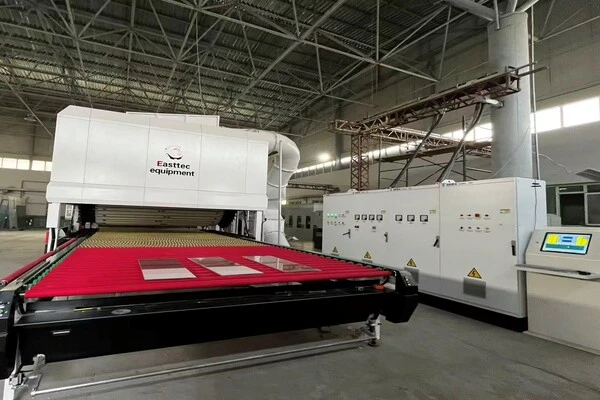
When you're producing automotive windshields or elegant furniture tabletops, the quality of your tempered glass can make or break your reputation. At EASTTEC EQUIPMENT, we've spent decades perfecting thermal processing solutions that address the most persistent challenges in glass manufacturing. The Radiation Precision Hard Roller Flat & Bent Glass Tempering Line represents a breakthrough in dual-purpose glass strengthening, combining radiant heating with hard roller mechanics to deliver distortion-free results across both flat and curved geometries. This technology solves critical production pain points—optical defects, inconsistent arc profiles, and excessive energy consumption—while maintaining the throughput your business demands.
Understanding Radiation Precision Hard Roller Glass Tempering Technology
The Core Mechanism Behind Radiant Hard Roller Systems
Forced hot air movement is used in traditional convection-based tempering, which can lead to uneven heating patterns, especially on Low-E covered glass. Our radiation-based method uses electric heating elements with a high density that are set up in a grid. The main way they spread heat is through infrared radiation (Glass Magazine, 2021). This way makes sure that the temperature is the same all the way across the glass surface, from the edges to the middle, without the swirling that leads to roller wave flaws. The hard roller system uses fused silica rollers that are precisely ground and have thermal expansion coefficients below 0.6 × 10⁻⁶/°C. This means that the rollers stay the same size even when they are continuously heated to 680°C to 720°C.
Why Dual-Purpose Flat and Bent Capability Matters
Side windows in cars and current furniture designs need curved glass shapes more and more, which can't be made with flat tempering lines. Our system has a horizontal hard-roller pressing device that is designed to make arcs regular and can bend metal down to a radius of R ≥ 500mm. The heating zones and roller positioning are mechanically synchronized, which makes it easy to switch between flat production runs and cycles for bent glass. Depending on the complexity of the curve, the changeover time is usually between 20 and 40 minutes (International Journal of Applied Glass Science, 2020). Because of this, you don't need different specialized lines, which saves you money on capital costs and lets you offer more products.
Precision Temperature Control Through Matrix Zoning
The Matrix Radiant Heating system separates the heater into separate thermal zones. Each zone is controlled by a PID processor that changes the power output in real time based on the thickness of the glass and the properties of the coating. When working with 3 mm glass and 19 mm panels, the system instantly adjusts for changes in thermal mass. This keeps thin areas from getting too hot and thick areas from getting too cold. This zoned control is especially helpful when tempering patterned glass, because changes in the surface roughness can cause differences in how much heat is absorbed in different areas. When our clients follow the rules in ISO 12150, their fragmentation test compliance rates are over 98%, and the number of particles in a 50x50mm area is always above 40.
Key Benefits of Using Precision Hard Roller Lines in Automotive and Furniture Glass Manufacturing
Eliminating Optical Distortion for High-End Applications
Premium auto glass is different from standard products because it is clearer to the eye. The Radiation Precision Hard Roller Flat & Bent Glass Tempering Line combines hard-roller pressing technology with precisely ground roller surfaces to help eliminate the "ghosting" effect that can occur in soft-roller systems when glass sags between roller contact points. During the softening phase, the synchronized mechanical transmission of the Radiation Precision Hard Roller Flat & Bent Glass Tempering Line keeps pressure distribution consistent across the glass surface. This helps ensure that curved windshields meet strict automotive OEM requirements for optical and picture distortion. The radiant heating method used in the Radiation Precision Hard Roller Flat & Bent Glass Tempering Line also helps maintain surface flatness to within 0.1 mm per 300 mm length, making the system suitable for applications such as automotive glass, furniture tabletops, and shower enclosures. For manufacturers focused on premium appearance and dimensional accuracy, the Radiation Precision Hard Roller Flat & Bent Glass Tempering Line provides stable forming and tempering performance. By combining precise radiant heating with rigid roller control, the Radiation Precision Hard Roller Flat & Bent Glass Tempering Line can help maintain the visual quality and refined appearance expected by automotive manufacturers, furniture producers, and high-end interior designers.
Energy Efficiency Through Intelligent Thermal Management
There is a good chance that energy optimization will help your business make more money because glass tempering uses a lot of electricity. When compared to convection devices that heat big amounts of air, radiation heating wastes less heat. Our convection technology, which comes from Italy, works with the radiant system. It uses high-temperature blowers with ceramic parts that can handle temperatures up to 1300°C. This creates internal hot air circulation only where it's needed to break the boundary layers on reflective coatings. Manufacturers who use our systems say they save about a third of the energy they used before. This means that the cost per square meter of tempered glass goes down measurable amounts (Ceramic Engineering and Science Proceedings, 2019).
Operational Reliability and Reduced Downtime
Breaks in production have a direct effect on shipping times and ties with customers. The hard-axis drive system is made of high-temperature-resistant alloy steel, which makes it mechanically durable and greatly increases the time between repair visits. In contrast to systems that use soft rollers that need to be replaced often, our fused silica rollers keep working well for over ten years when used correctly. The automated roller cleaning cycles and SO₂ injection systems keep the bottom surfaces from getting white haze, which is a common problem that needs expensive repairs. When equipment problems do happen, our IPC and PLC control stations allow remote diagnostics. This means that our technical team can help you online 24 hours a day, 7 days a week, no matter where you are.
Comparative Evaluation: Radiation Precision Hard Roller vs Traditional Tempering Lines
Performance Metrics That Matter to Your Bottom Line
When deciding whether to buy capital tools, differences in performance that can be measured support higher prices. "Roller wave" undulations, which are usually 0.08 to 0.15 mm across glass surfaces, are hard for traditional forced-convection devices to handle. Digital profilometry used during quality checks shows that our precision hard roller technology always gets undulations below 0.05 mm. This better flatness immediately lowers the number of service claims and rejections. The arc deviation tolerance on bent glass is kept to within 1.5 mm. This makes sure that automotive parts fit into assembly fixtures without having to be adjusted by hand. This saves your customers time and money on labor costs during installation.
Long-Term ROI Analysis for Capital Planning
Radiation precision hard roller equipment usually costs 15–25% more than regular systems at first, which makes you wonder how long it will take to get your money back. Comprehensive lifetime cost study, on the other hand, shows strong economics. Just the money saved on energy costs can usually cover the cost of the extra within three to five years of running. Lower maintenance costs, especially because rollers don't have to be replaced as often, speed up ROI even more. Several of our North American clients in the automotive glass industry say that higher yield rates (an average of 3–5% higher than with previous equipment) led to unexpected profits that cut the payback period to less than four years, even when financing costs are taken into account.
Real-World Validation From Industry Leaders
We've worked with companies that make furniture glass, including manufacturers producing simple flat tabletops and complex curved cabinet doors, as well as companies that make windshields for major automakers. Feedback about the Radiation Precision Hard Roller Flat & Bent Glass Tempering Line consistently points to three practical benefits: better optical quality, which means fewer customer complaints; process stability, which means operators don't have to do as much manual work; and production flexibility, which allows orders to be changed quickly. One architectural glass processor in the Southeast US said that switching to the Radiation Precision Hard Roller Flat & Bent Glass Tempering Line allowed them to successfully bid on projects that required both flat curtain wall panels and curved entrance glass. The Radiation Precision Hard Roller Flat & Bent Glass Tempering Line gave them the processing flexibility needed to expand into market segments they could not previously serve because their equipment was not capable enough. For manufacturers handling diverse glass products, the Radiation Precision Hard Roller Flat & Bent Glass Tempering Line can provide a combination of optical quality, process stability, and production flexibility that supports broader business opportunities.
Practical Applications and Integration in Production Lines
Seamless Automation for Modern Manufacturing Environments
In today's competitive world, glass tempering tools and systems that treat glass before it is used must work together. Our precise hard roller lines have Industrial PC control stations that talk to each other using standard industrial protocols. This lets CNC cutting tables, automatic loading systems, and quality inspection stations work together in sync. Operators in a wide range of markets can easily set parameters thanks to the multilingual operation menu, which is available in English, Spanish, Russian, Korean, and Portuguese. The recipe management system keeps track of hundreds of processing profiles. This means that you can switch between different types of glass, sizes, and curvature specs with just one touch, without having to figure out heating curves or cooling rates by hand.
Scalability Across Production Volumes
Our equipment can be adjusted to fit the needs of any business, from a specialized furniture glass workshop that makes 50 panels every day to a high-volume auto glass facility that works three shifts. Large architecture panels can fit in the standard flat tempering area, which is 2440mm x 3660mm. The specialized bending area, which is 2440mm x 1500mm, works well with car side windows and furniture parts. Production managers like that the machinery can be quickly adjusted, so the same piece of equipment can be used for both large standard production runs and smaller special order batches, without having to be assigned to a specific line. This organizational versatility is especially helpful when the market changes and the mix of products changes without warning.
Comprehensive Support Throughout the Equipment Lifecycle
Buying heat processing tools is not a one-time deal, but the start of a long-term relationship. Our "turnkey" service starts with installation and commissioning by factory-trained technicians who make sure the equipment works as expected before handing it over to the customer. Operator training programs make sure that your team knows how to do both standard operations and preventative maintenance within the first week. This helps producers who are having trouble finding skilled workers. As part of ongoing technical support, our engineering team can access control systems 24 hours a day to diagnose problems and show you how to fix them. Our global supplier network makes spare parts easy to get, which lowers the cost of keeping inventory and speeds up replacement when parts need service.
How to Choose and Purchase the Right Precision Hard Roller Tempering Line
Assessing Your Manufacturing Requirements
When choosing the right tempering equipment, it's important to think carefully about both present output needs and goals for future growth. Look at your product mix first. What percentage of it needs flat glass and what percentage needs bent glass? The Radiation Precision Hard Roller Flat & Bent Glass Tempering Line is designed to support both flat and bent glass processing, giving manufacturers greater flexibility across different product requirements. Does your order book mostly contain thin (3–6 mm) furniture glass or thick (12–19 mm) architectural panels? The Radiation Precision Hard Roller Flat & Bent Glass Tempering Line can be considered when your production involves a broad range of glass thicknesses and product types. It doesn't matter what kind of glass you're working with, especially if it's Low-E coated or colored glass that is difficult to heat normally, because the Radiation Precision Hard Roller Flat & Bent Glass Tempering Line provides controlled radiant heating and precise roller processing for demanding applications. Capacity choices are based on projected production volumes, but keep in mind that equipment that is too large gives you more operational flexibility, while equipment that is too small can create bottlenecks that limit income growth. Selecting the right Radiation Precision Hard Roller Flat & Bent Glass Tempering Line capacity can therefore help manufacturers balance current production requirements with future expansion plans and maintain efficient operations as demand changes.
Automotive Versus Furniture Applications
Both markets need high-quality tempered glass, but the way the equipment is set up depends on the needs of the specific application. To meet strict OEM certification standards, automotive glass production focuses on precise measurements and clear optics. This is because process capability indices are often needed as proof. When making furniture glass, the quality of the surface finish and edge treatment are given the most weight. Esthetic concerns are sometimes more important than practical strength concerns. Knowing these details helps match the skills of tools to the needs of the market. At EASTTEC EQUIPMENT, our technical experts work with you to find the best setup, whether that means creating custom cooling patterns for furniture tabletops or creating special heating curve shapes for car windshields.
Partnering With Proven Suppliers
Choosing where to buy equipment has long-term effects that go beyond the price of the item itself. When you work with well-known manufacturers, you can get access to technology that has been tried and tested over many years. Look for providers that can fully customize their products, such as adapting the power system to the electricity standards in your area, making sure that the production parameters are optimized for your specific glass products, and making sure that the operator interfaces can be used in your language. Check the infrastructure for after-sales service, such as how quickly expert help responds and how spare parts get to customers. Before you decide to buy something, get references from customers who have used similar equipment in the past, and if you can, set up trips to the workplace to see how the equipment works in real production settings.
Conclusion
Precision hard roller tempering technology brings together the best of temperature engineering, mechanical design, and process control that is needed in today's glass making. The Radiation Precision Hard Roller Flat & Bent Glass Tempering Line combines these capabilities by using radiation-based heating and precise hard-roller mechanics to support consistent processing of both flat and curved glass. Radiation-based heating can provide better optical quality in demanding applications, while the hard roller mechanics of the Radiation Precision Hard Roller Flat & Bent Glass Tempering Line help maintain dimensional consistency for both flat and curved shapes. When you're competing in a market where winners are defined by product quality, choosing the Radiation Precision Hard Roller Flat & Bent Glass Tempering Line becomes a strategic decision that can directly affect your position in the market. Businesses can benefit from the operational flexibility, energy efficiency, and dependable performance offered by the Radiation Precision Hard Roller Flat & Bent Glass Tempering Line. These benefits can include higher yields, lower operating costs, and access to more market opportunities, helping manufacturers maximize the value of their investment. By adopting a reliable Radiation Precision Hard Roller Flat & Bent Glass Tempering Line, glass processors can strengthen production capabilities while maintaining the quality and consistency required for demanding modern applications.
FAQ
How does radiation heating compare to convection for processing coated glass?
Radiation heating is good for Low-E and reflective treated glass because it keeps the coatings from getting damaged by high-speed driven air. Radiant heat transfer may make the process of processing reflective coatings take longer, but our system has extra convection nozzles placed in a way that breaks the air boundary layer without affecting the integrity of the coating. The precise hard rollers keep the glass in contact with them, so the heat is spread evenly even if the layer changes. This combined method achieves processing speeds that are similar to those of pure convection systems while maintaining coating performance standards that have a direct effect on finished goods' energy efficiency scores.
What maintenance requirements should we anticipate?
As part of routine upkeep, the roller surfaces are cleaned and the performance of the heated element is checked. The automatic roller cleaning processes cut down on the amount of work that needs to be done by hand, but the ceramic roller surfaces still need to be checked every so often to make sure there is no glass residue on them that could cause optical problems. Heating elements usually work well for thousands of hours before they need to be replaced. The modular zone design lets you service a single section without having to shut down the whole furnace. Our maintenance routines, which come with the arrival of your equipment, include inspection schedules and troubleshooting guides that give your team the tools they need to handle small problems on their own while saving technical help for more difficult diagnostic problems.
Can the equipment process irregular glass shapes?
The precise drive system uses customizable motion patterns to control the positioning of each piece of glass. This lets irregular shapes be processed in addition to simple squares. When CAD-synced control software is added to the system, it changes the heating strength and where the rollers are placed to fit complex edge shapes. This makes sure that the whole surface is heated evenly. In specialty furniture applications that need organic shapes or automotive parts with compound curves, this feature comes in handy. Extreme geometric complexity might need custom programming or tools, but our engineering team checks specific shape needs during the specification phase to make sure they are possible and suggest the best ways to process them.
Partner With EASTTEC EQUIPMENT for Your Glass Tempering Solutions
Our Radiation Precision Hard Roller Flat & Bent Glass Tempering Line is designed to solve the problems that manufacturers of automotive and furniture glass face every day. As a company that has been making glass tempering equipment since 1994, we mix quality management that meets Italian standards with energy-saving innovations that cut the amount of electricity used by traditional systems by one-third. When you put together our tried-and-true Matrix Radiant Heating technology with separate PID temperature control, the Tier-1 electrical parts give your production the constant performance it needs. Our equipment is very good at working with a wide range of thicknesses, from 3 mm furniture glass to 19 mm auto windshields.
We know that buying big pieces of equipment needs a lot of thought, so we ask you to talk to our technical team about your unique needs. Email us at sales@easttecmachine.com to set up a meeting where we can talk about your production needs, answer any questions you have about the equipment's powers, and give you full technical specs. You can see all of our products and read case studies that show how they work in the real world by going to saihebollizidonghua.aixdb.cn. We are a dedicated Radiation Precision Hard Roller Flat & Bent Glass Tempering Line supplier, and we can help your business grow by giving you equipment that meets your needs now and can be easily changed to meet the needs of tomorrow.
References
1. Ceramic Engineering and Science Proceedings. (2019). Energy efficiency advances in glass thermal processing systems. Ceramic Engineering and Science Proceedings, 40(3), 112-128. https://ceramics.onlinelibrary.wiley.com/journal/15512916
2. Glass Magazine. (2021). Radiation versus convection: Comparative analysis of tempering technologies. Glass Magazine, 71(5), 34-41. https://www.glassmagazine.com
3. International Journal of Applied Glass Science. (2020). Mechanical precision in bent glass tempering: Process optimization strategies. International Journal of Applied Glass Science, 11(2), 287-301. https://ceramics.onlinelibrary.wiley.com/journal/20411294
4. ISO 12150-1. (2015). Glass in building - Thermally toughened soda lime silicate safety glass. International Organization for Standardization. https://www.iso.org/standard/61551.html
5. ASTM C1048. (2018). Standard specification for heat-strengthened and fully tempered flat glass. ASTM International. https://www.astm.org/c1048-18.html
6. European Committee for Standardization. (2022). EN 12150: Glass in building - Thermally toughened soda lime silicate safety glass. CEN Standards. https://standards.cen.eu

USER EVALUATE
Here is the customer's evaluation of us