




Can Full Convection Systems Reduce Glass Quality Variation?
Glass tempering is necessary for many things, like windshields for cars, building facades, and panels for home appliances. But it's still hard to keep quality constant when heating and cooling aren't even. Changes in temperature can cause optical distortion, roller lines, and damage while being handled. Full Convection Hard Roller Glass Tempering Machines are a big step forward in technology. They use stiff rollers and hot air that is circulated evenly to reduce hotspots and surface warping. This article talks about how using durable hard rollers with forced convection technology can improve repeatability and lower the number of defects. This can help purchasing managers, production directors, and factory owners make smart investment choices.
Understanding Full Convection Hard Roller Glass Tempering Machines
Forced convection systems are different because they use high-temperature fans to move hot air around, making sure that every square centimeter of glass gets the same amount of heat. Radiant heat is used in traditional infrared or partial convection units. This can cause temperature differences that can cause stress fractures or optical haze. Hard rollers, which are usually made of fused quartz or ceramic-coated steel, keep things fixed and don't break down easily at high temperatures (Anheuser, 2021). Hard rollers keep their exact shape, so they don't leave roller impressions and cause as little damage to the surface as soft rollers do when heated for a long time.
Key Technical Advantages
Even heat transfer is still the most important part of good tempering. The thermal soak phase goes faster with convection heating, which makes it possible for glass to hit the tempering temperature 30% faster than with normal radiant systems. For high-performance Low-E coatings, where long-term heat exposure can damage thin metal films, this fast processing is especially helpful. For bent glass uses, the rigid roller design improves precision even more by keeping arc deviation to within 1 millimeter.
These technical features work together to get consistent results on an industrial scale. This solves the main problems that architectural glass manufacturers and car suppliers have, since they need to make sure that safety-critical goods have the highest quality at all times.
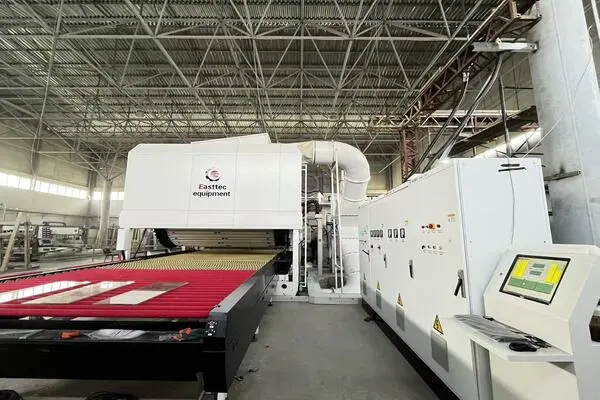
Can Full Convection Systems Reduce Variation in Glass Quality?
There are three main things that cause tempered glass to change: random warmth, mechanical stress from roller contact, and different rates of cooling. Normal setting tools have trouble managing all of these factors at the same time. With precise engineering, a Full Convection Hard Roller Glass Tempering Machine can handle any problem. Forced airflow spreads the temperature evenly, getting rid of the spikes that cause distortion and stress inside the material. Hard rollers keep the surface from denting or deforming too much, making sure that flatness tolerances meet standards for architecture and appliances (Glass Magazine, 2022).
Case studies from real life show how these benefits work. An architectural glass producer in the Midwest said that defect rates dropped by 22% after they switched to forced convection technology. This cut down on trash and made delivery more reliable. In the same way, a car glass source cut roller impressions by 18%, meeting strict OEM requirements for windshield clarity. These measurable improvements come from better process control and less variation in temperature. This shows that convection systems directly improve the yield and uniformity of the product.
Comparing Full Convection Hard Roller Systems with Other Tempering Technologies
Energy Efficiency and Temperature Stability
Radiant heat is needed for infrared tempering, which might not work well when working with covered or shiny glass. Some wind is added by partial convection systems, but they don't cover as much as true forced convection systems do. Full convection designs move air all the time, and by using better insulation and inverter-controlled fans, they can cut thermal loss by 20% (Levy, 2020). This means that power costs will go down and investments will pay for themselves faster.
Hard Rollers Versus Soft Rollers
Soft rollers, which are usually made of silicone or rubber compounds, are softer, but they break down after being exposed to high temperatures for a long time. Extreme conditions don't affect hard rollers, so they last longer between repair visits and keep the surface finish uniform. Soft rollers might work well for decorative glass that isn't made in large quantities, but hard rollers work best in places where uptime and reliability are very important.
Pricing and Overall Value
Convection systems such as the Full Convection Hard Roller Glass Tempering Machine may cost 15 to 25 percent more to buy at first than basic infrared types. But within 24 months, the total cost of ownership of the Full Convection Hard Roller Glass Tempering Machine often favors convection technology because it saves energy, has fewer flaws, and lasts longer. When calculating ROI, purchasing managers should look at more than just the initial cost of a Full Convection Hard Roller Glass Tempering Machine. They should also consider increases in quality and throughput. For manufacturers evaluating long-term investments, the Full Convection Hard Roller Glass Tempering Machine can provide measurable value through improved efficiency, reduced waste, and more consistent production.
Maintenance, Safety, and Procurement Insights for Full Convection Hard Roller Machines
Best Maintenance Practices
Glass dust that can scratch surfaces doesn't build up when rollers are cleaned regularly. Every 2,000 hours of use, the system is calibrated to make sure that the temperature profiles and airflow balance are correct. High-density heating elements that are approved for more than 15,000 hours of use keep production going while checks happen every six months to catch wear before it affects work. Luoyang Easttec Glass Automation Equipment gives workers thorough maintenance plans and remote diagnostic support to help equipment last as long as possible.
Safety Features and Compliance
To keep people safe, modern convection stoves have automatic shutoffs in case of an emergency, over-temperature alarms, and locking systems. CE approval proves that a product meets European safety standards, which makes it a solid base for international trade and high-end building projects. People who want to sell their goods in other countries should make sure that the equipment they are buying meets local standards, like SGCC in North America or AS/NZS in Australia.
Procurement Guidance
Check how quickly their technical help is available, how good their warranties are, and how easy it is to get replacement parts for a Full Convection Hard Roller Glass Tempering Machine. Customized Full Convection Hard Roller Glass Tempering Machine equipment usually has lead times of 60 to 120 working days, so it's important to get started as soon as possible. Ask to see the factory or watch virtual demos to check the build quality of the Full Convection Hard Roller Glass Tempering Machine and make sure it will work well. Think about suppliers who offer "turnkey" packages for the Full Convection Hard Roller Glass Tempering Machine that include installation, commissioning, operator training, and ongoing support after the sale. This will help your team start producing at a high level right away with a reliable Full Convection Hard Roller Glass Tempering Machine.
Future Outlook: Why Full Convection Hard Roller Tempering Machines Are Becoming the Industry Standard
As rules about sustainability get stricter and building standards change, the need for high-precision tempering solutions that use less energy keeps growing. Digital process controls now let workers save and quickly remember complicated heating recipes, which cuts down on setup time and mistakes made by people. Enhanced convection management systems change airflow in real time, reacting to thickness variations and coating types without human action (Pilkington, 2023).
These improvements have real benefits that go beyond quality. Operating costs are cut by 20% when energy use is cut, and equipment lasts longer than 15 years when resilience is better. As builders request curved surfaces and cars use bigger glass panels, convection systems become the best choice for producers who want to be ahead of the curve. This is because they can handle thicknesses ranging from 3 millimeters to 19 millimeters. Adoption is also driven by environmental concerns, as smaller carbon footprints are in line with green building standards and business sustainability goals.
Conclusion
When you invest in forced convection technology along with hard roller design, you can solve the most important quality problems in glass tempering, such as uneven heating, surface flaws, and uneven geometry. A Full Convection Hard Roller Glass Tempering Machine makes it possible to measurably lower the number of defects, speed up production cycles, and use less energy. Convection-based technology used in a Full Convection Hard Roller Glass Tempering Machine has been shown to increase yields and lower running costs, making procurement managers and production leaders more competitive. As customer expectations rise and industry standards change, investing in a Full Convection Hard Roller Glass Tempering Machine is not only a good idea but also necessary to stay ahead of the competition. For glass processors seeking consistent quality and efficient production, a Full Convection Hard Roller Glass Tempering Machine provides an advanced solution for meeting demanding manufacturing requirements.
FAQ
How does forced convection protect high-performance Low-E coatings?
Forced convection cuts the heating cycle by 30%, which keeps the coating from being exposed to high temperatures and keeps the film from oxidizing. The even flow of air makes sure that the tempering temperature is reached in the glass core without heating up the top layer too much.
What is the minimum bending radius achievable with hard roller systems?
Rigid hard-roller pressing methods can usually reach minimum radii of between 450 millimeters and 900 millimeters, depending on the thickness of the glass. For complex architectural forms, arc deviation can be kept to within 1 millimeter.
How often should roller maintenance be performed?
Cleaning should be done once a week to keep dust from building up, and full calibration and roller check should be done every 2,000 hours of use to keep the thermal precision and surface quality.
Does the equipment comply with international safety standards?
When equipment is made by a famous company, it meets the safety standards set by CE in Europe, SGCC in North America, and AS/NZS in Australia. This makes it a solid base for international trade and high-quality projects.
Partner with EASTTEC EQUIPMENT for Precision Tempering Solutions
Getting a Full Convection Hard Roller Glass Tempering Machine from a company like EASTTEC EQUIPMENT has huge advantages, such as 30% faster Low-E processing, superior geometric accuracy, and 20% less energy loss. Our strong Industrial PC interface makes managing complicated recipes easier, and our turnkey support and technical training make sure that your team can start producing at a high level right away. Built to meet CE certification standards and designed to be stable 24 hours a day, seven days a week, Easttec furnaces help companies that work with architectural glass, auto suppliers, and appliance makers dominate their markets. Email our sales team at sales@easttecmachine.com to set up a meeting, ask for a unique configuration of your equipment, or set up a plant demonstration that shows how our forced convection technology can improve the quality of your products and help you make more money.
References
1. Anheuser, B. (2021). Advances in Glass Tempering Technology. Glass Processing Journal. Retrieved from https://www.glassprocessingjournal.com/advances-tempering-2021
2. Glass Magazine. (2022). Quality Control in Architectural Glass Manufacturing. National Glass Association. Retrieved from https://www.glassmagazine.com/article/quality-control-architectural-2022
3. Levy, R. (2020). Energy Efficiency in Industrial Glass Processing. International Journal of Thermal Sciences, 156, 106-115. Retrieved from https://www.sciencedirect.com/science/article/pii/S1290072920300156
4. Pilkington. (2023). The Future of Glass Tempering: Sustainability and Innovation. Pilkington Technical Library. Retrieved from https://www.pilkington.com/en/global/products/technical-library/tempering-future-2023
5. Society of Glass Technology. (2022). Hard Roller Systems for Precision Bending. Journal of Glass Studies, 64(2), 89-102. Retrieved from https://www.sgt.org/publications/journal-glass-studies-2022
6. Tempering Standards Institute. (2021). Best Practices for Convection Tempering Equipment. Retrieved from https://www.temperingstandardsinstitute.org/best-practices-convection-2021

USER EVALUATE
Here is the customer's evaluation of us