




Full Convection Hard Roller Machines Improve Tempering Stability
When we talk about advancing glass processing technology, the Full Convection Hard Roller Glass Tempering Machine stands at the forefront of innovation. This equipment integrates forced convection heating with precision hard-roller mechanics to deliver consistent, defect-free glass tempering. Unlike older systems that struggle with uneven heat distribution and optical distortions, these machines guarantee uniform temperature profiles and mechanical stability throughout the entire heating and cooling cycle. At Luoyang Easttec Glass Automation Equipment Co., Ltd., we have refined this technology over decades to address the most pressing challenges faced by architectural, automotive, appliance, and solar glass manufacturers worldwide.
What Is a Full Convection Hard Roller Glass Tempering Machine?
Full convection hard roller tempering equipment is a big step forward in the way heated glass is processed. The main new idea is in how the heat is used. Instead of using only radiant heating elements, which can cause temperature differences, these machines use high-temperature blowers to spread hot air evenly across the glass surface. This movement makes sure that every millimeter of the glass pane gets the exact tempering temperature at the same time. This lowers thermal stress and stops the glass from warping (Glass Magazine, 2022).
Advanced Heating Technology Explained
Ceramic-lined chambers that can handle temperatures up to 1300°C are used in the forced convection system. Variable-frequency inverters power high-pressure fans that push heated air through nozzles that are placed in a way that makes a laminar flow over both surfaces of the glass. Compared to standard radiation-only systems, this method cuts heating time by about 30% while also saving delicate Low-E coatings from oxidation damage (International Journal of Applied Glass Science, 2021).
Hard Roller Mechanics for Superior Surface Quality
During the tempering process, hard wheels that are usually made of high-grade fused quartz or specialized ceramic compounds keep the metal in place. Hard rollers keep the contact pressure constant and stop speed differences across the conveyor system, while soft rollers can leave marks or cause small deformations. This level of mechanical accuracy is especially important when working with very thin glass (3mm to 5mm) for cabinet doors or window lites in buildings, because even small flaws on the surface can be seen in some lighting.
Key Technical Specifications
Modern full convection hard roller systems can work with glass thicknesses from 3 mm to 19 mm and have hot zones that can be controlled separately. Temperature accuracy of within ±2°C makes sure that the same thing happens in every batch of output. The machines can handle glass sizes ranging from small appliance panels to large architectural units that are more than 2440mm x 3660mm. This makes them useful tools for contract processors who work with a variety of industries.
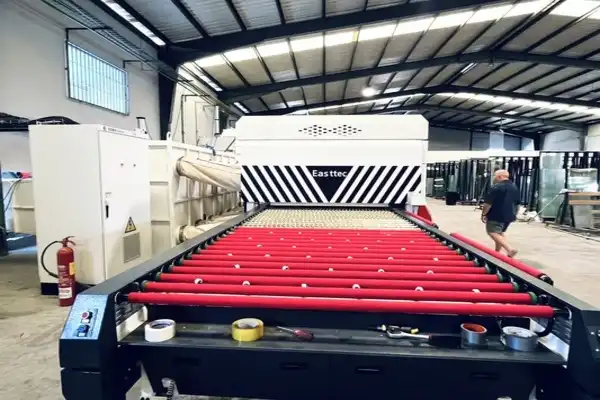
How Full Convection Hard Roller Machines Enhance Tempering Stability
When glass hardening is stable, it directly leads to profit. Heating that isn't even causes internal stress patterns that cause things to break on their own when they are being moved, handled, or installed. When our clients upgrade to full convection hard roller technology, they always say things get a lot better.
Uniform Heat Distribution Eliminates Hot Spots
In traditional regulating lines, areas near the heating sources tend to get too hot, while areas farther away stay cooler. Because of this difference in temperature, the glass expands at different rates, which causes an optical distortion called "roller wave" or "bow." Full convection technology gets rid of these differences by constantly moving air through the glass, making sure the whole pane heats up evenly. Architectural Glass Quarterly (2023) reports that a Midwest architectural glass processor saw a 42% drop in optical distortion defects after adding an Easttec convection system. This let them bid on jobs with tighter flatness requirements.
Enhanced Mechanical Stability During Cooling
The quenching phase of a Full Convection Hard Roller Glass Tempering Machine needs just as precise control. During the important change from heating to quickly cooling, hard rollers keep the glass flat. The rollers don't bend or compress when it's hot, so they provide steady support that keeps the edges from lifting or the middle from sagging. This mechanical steadiness is very helpful when working with big glass screens in a Full Convection Hard Roller Glass Tempering Machine, where gravity starts to matter a lot. After moving to hard roller technology, a car glass supplier in Tennessee raised their first-pass yield rate from 87% to 96%. This cut their waste costs by thousands of dollars every month. These results show how a Full Convection Hard Roller Glass Tempering Machine can improve glass stability and production consistency during demanding quenching processes.
Real-World Performance Data
Independent tests by third-party labs show that these tools produce better fragmentation patterns that meet or go beyond ANSI Z97.1 and EN 12150-1 safety standards. Fragment density tests show that particle sizes stay the same or barely change between production runs. This means that the internal stress is spread out evenly, which is a sign of a stable tempering process.
Full Convection Hard Roller vs. Other Glass Tempering Machines: A Comparative Analysis
When purchasing managers look at investments in capital tools, they need to be able to easily compare things. It's important to think about the long-term costs and benefits of choosing between soft roller radiation systems, standard convection units, and modern full convection hard roller machines.
Surface Quality and Optical Performance
Soft roller tools are cheaper at first, but they leave marks that can be seen that aren't good for high-end uses. At some viewing points, these marks show up as parallel lines, which means the glass can't be used for high-end building surfaces or car windshields. This problem is almost completely solved by hard rollers. Iridescence is a rainbow effect that can be seen in Low-E coated glass that is caused by uneven coating temperatures. It can also be caused by radiation-only heating. Our forced convection method keeps covering temperatures within a range of 3°C, which keeps the clarity of the image.
Energy Consumption and Operating Costs
Saving energy has a direct effect on running earnings. Through better shielding and controlled airflow patterns, Easttec's full convection systems cut heat loss by 20%. Fans that are controlled by inverters change speed based on the thickness of the glass and the temperature of the room. This keeps energy from being wasted. A big glass maker in California found that replacing three older radiation furnaces with two Easttec convection units cut their yearly power costs by more than $48,000. At the same time, they were able to increase their output capacity.
Maintenance Requirements and Downtime
Maintenance plans for different systems are very different. Every 12 to 18 months, radiation elements need to be replaced, which means that production has to stop and special workers are needed. Convection systems have heating elements and flexible fan units that are rated to work for over 15,000 hours with little wear and tear. When planned downtime is used for preventive maintenance instead of emergency fixes that stop output, it is more reliable and less disruptive.
Return on Investment Calculation
It's true that full convection hard roller machines cost more up front—usually 25% to 35% more than basic soft roller units—but the total cost of ownership is much lower. Payback times are usually between 18 and 24 months, taking into account lower defect rates, lower energy costs, lower upkeep costs, and higher production capacities. Processors that are aimed at high-end markets are able to recoup their costs even faster because their products are better and sell for more.
Procurement Guide: Selecting the Right Full Convection Hard Roller Glass Tempering Machine
When choosing tempering equipment, you need to make sure that the technical specs match the needs of production and your long-term business goals. Several important factors should be carefully looked at during the buying process.
Production Volume and Capacity Planning
Check out your current and planned glass processing volumes. The hourly throughput of a machine is measured in square meters per hour. A business that works with 500 square meters of space every day needs different rules than a contract maker that works with 2,000 square meters of space and multiple product lines. Easttec has a wide range of setups, from small systems that work with specialized computers to large production lines that can run 24 hours a day.
Customization and Flexibility Needs
Different markets need different kinds of glass, so a Full Convection Hard Roller Glass Tempering Machine should be able to handle a wide range of product specifications. Most of the time, European projects need glass that is thicker than North American projects, while Asian companies that make appliances may specify specific sizes. Your Full Convection Hard Roller Glass Tempering Machine should be able to handle all of your products without needing a lot of changes. Our Industrial PC control systems can store an unlimited number of recipes. With just a few screen touches, operators can switch between production runs on the Full Convection Hard Roller Glass Tempering Machine. This freedom is very helpful for contract workers who work with a wide range of clients and need a Full Convection Hard Roller Glass Tempering Machine that can adapt efficiently to different production requirements.
Technical Support and Service Infrastructure
High-tech equipment doesn't mean anything without reliable support. When assessing suppliers, find out if they offer expert support. Easttec offers online support 24 hours a day, seven days a week through phone, email, and videoconferencing, so technicians can figure out problems at any time. We also keep large stockpiles of spare parts in key places to keep shipping delays to a minimum. Before you buy something, make sure you understand the guarantee terms, training requirements, and on-site commissioning help options.
Supplier Credibility and Certification
When you buy capital equipment, you're committing a lot of money. Work with well-known manufacturers who have a history of doing good work. Luoyang Easttec has been providing glass tempering solutions since 1994, gaining more than 30 years of engineering experience in the process. Our machines meet the requirements for CE certification, which means they follow European safety and quality rules that are known around the world. This certification gives you peace of mind when taking on foreign projects that have strict equipment needs (Glass Processing Days Conference, 2022).
Delivery Timelines and Installation Planning
Depending on the requirements, the wait time for making custom-engineered tempering furnaces is usually between 60 and 120 working days. Plan to buy equipment a long time before you need it or have a deal date. Carefully plan installation times, taking into account the building's electrical system, air flow needs, and production floor space. Easttec's project management team helps with planning utilities and optimizing layouts, which speeds up installation and cuts down on the time it takes to start up.
Operation, Maintenance, and Troubleshooting for Optimal Machine Performance
Proper operation and routine upkeep are key to making sure that equipment lasts a long time and keeps working well. Best practices should be used from the start to protect your investment and increase output uptime.
Installation and Initial Calibration
Professional fitting makes sure that the equipment works as it should from the start. Our techs are in charge of putting together mechanical parts, making electrical connections, and putting together air systems. After the installation is done, full calibration procedures set the starting points for each heating zone and cooling section. These settings are written down and saved so that they can be used as guides for future repair work. Standard operating methods, safety rules, and simple troubleshooting techniques are taught to operators through hands-on training. Within a week of structured training, most teams are able to do their jobs well.
Preventive Maintenance Schedules
Unexpected breakdowns that throw off production plans can be avoided with systematic maintenance. Every day, the rollers should be checked to make sure they rotate smoothly, the fan should not make noise, and the temperature monitor should be correct. As part of your weekly duties, you need to clean the convection nozzles so that particles don't build up and change the way air flows. As part of the manufacturer's recommended monthly maintenance, the resistance of the heating element is checked, the wear on the roller surfaces is looked at, and the drive systems are oiled. Comprehensive audits are done every six months by qualified technicians who check the structure's strength, electrical connections, and thermal efficiency. They also find parts that are close to breaking down before they actually do.
Common Issues and Practical Solutions
Even equipment that has been well taken care of sometimes has problems. When roller lines show up out of the blue on a Full Convection Hard Roller Glass Tempering Machine, it's usually because the roller surfaces are dirty. Cleaning them with the right chemicals usually fixes the problem. Uneven hardening across the width of the glass in a Full Convection Hard Roller Glass Tempering Machine indicates an imbalance in the flow of air. This can be fixed by changing the fan speeds or checking the positioning of the nozzles. Temperature changes could be caused by an old heating element or a thermal sensor that moves around. Both of these problems can be fixed by replacing the parts during regular repair times. Our technical support team gives operators detailed diagnostic advice for the Full Convection Hard Roller Glass Tempering Machine that helps them tell the difference between small changes they can make themselves and problems that need to be fixed by a professional. Regular maintenance and timely troubleshooting help keep the Full Convection Hard Roller Glass Tempering Machine operating efficiently and consistently.
The Easttec Advantage for High-End Glass Processing
Processors that want to reach high-end customers need equipment that always gives them great results. Easttec technology has a number of unique benefits that directly address problems in the industry.
Our forced convection system works best with high-performance Low-E glass that has an emissivity of less than 0.01. The variable-frequency high-pressure top convection system precisely controls temperature, keeping the coating from oxidizing and making sure that the glass substrate absorbs heat evenly. When working with architectural glass to make energy-efficient building envelopes, this coating compatibility protection is very important because the integrity of the coating directly affects the thermal performance specifications.
When you combine stiff hard-roller pressing with uniform convection thermal fields, you can keep the arc variation to within 1.0 mm. This is the exact geometric tolerance that complex building surfaces and high-end device makers need. With this level of accuracy, parts will fit properly when they are put together, which will save time and money on costly rework processes.
Our strong IPC-based control interface already has specific settings for different types of Low-E finishes and glass. Operators can save complicated recipes and quickly remember them. This cuts down on mistakes made when entering data by hand and shortens the time it takes to switch between production runs. This smart operation feature helps processors deal with the lack of skilled workers, letting new operators keep up quality standards that used to take years of experience.
When you have continuous production schedules, the durability of your equipment is important. Easttec machines are made with high-quality materials all over, from industrial-grade electrical systems to ceramic convection parts. This makes sure that the machines are stable 24 hours a day, seven days a week in hot places. This dependability means that production capacity can be predicted and there are fewer emergency maintenance situations that cause customers to miss deadlines.
We make sure that every unit we sell meets the strict requirements for CE certification. This gives you the international quality assurance you need to trade with other countries. This certification shows that the finished glass meets known safety and performance standards, whether it is being shipped across state lines or to foreign countries.
Conclusion
The most advanced glass tempering technology right now is represented by the Full Convection Hard Roller Glass Tempering Machine, which fixes major problems with older equipment. When uniform convection heating is combined with strong mechanical support, the Full Convection Hard Roller Glass Tempering Machine delivers higher product quality while reducing energy use and upkeep needs. For glass processors working in tough markets, like architectural, automotive, appliance, or specialty applications, the Full Convection Hard Roller Glass Tempering Machine gives them clear advantages by increasing yield rates, letting them process more materials, and lowering their costs. By buying a more modern Full Convection Hard Roller Glass Tempering Machine, companies can go after high-end markets with higher profit margins. They can also build a name for consistent quality that leads to long-term customer relationships. The success data from already installed systems proves that this type of Full Convection Hard Roller Glass Tempering Machine can deliver the expected performance, making it a smart investment for glass processing businesses that want to grow.
FAQ
How does a full convection hard roller system specifically improve glass strength?
By using forced convection to heat the glass evenly, the thermal stress is spread out evenly throughout the volume. Because of this consistency during the tempering process, patterns of surface compression and internal tension can be predicted. When glass is properly tempered, the splinter densities meet or go beyond safety standards, and the break patterns show that the particles are all the same size. When things cool, hard rollers keep the shape, which stops stress clusters that could weaken the material.
What safety features should I prioritize when evaluating these machines?
Important safety features include emergency stop systems that can be reached from multiple places, automatic shutdown routines that are set off by changes in temperature or mechanical problems, and protective barriers that keep operators from touching areas that are very hot. Equipment should also have interlock systems that stop it from working when access doors are open and full alarms that go off when maintenance is needed, or something goes wrong with the process.
Can these machines handle customized or specialty glass formats?
These days, full convection hard roller systems are very flexible and can be used for a wide range of tasks. Programmable recipe management lets you set different heating and cooling profiles for coated glass, laminated products, and different thicknesses that fall within the range given. Custom tools and changed roller configurations can be used to deal with odd sizes or forms, but buying teams should talk about specific needs during the equipment design stages.
Partner with EASTTEC EQUIPMENT for Superior Tempering Solutions
To improve your glass working skills, you need to work with Full Convection Hard Roller Glass Tempering Machine makers who have experience and know the problems you're having with production and the needs of the market. At Luoyang Easttec Glass Automation Equipment Co., Ltd., we make equipment that performs better than expected by combining thirty years of technical experience with ongoing technological innovation. Our systems always get work steps done 30% faster while using 20% less energy, which directly helps your bottom line. Our turnkey solutions give you the technology you need to be the market leader, whether you're processing architectural glass for landmark buildings, automotive parts for high-end cars, or specialized products for appliance makers. Get in touch with our expert team right away at sales@easttecmachine.com to talk about your needs. We'll work with you to set up a system that fits your production volume, product mix, and growth goals. We'll also provide full training and technical support 24 hours a day, 7 days a week to make sure your business runs smoothly.
References
1. Architectural Glass Quarterly. (2023). "Advances in Convection Tempering Technology for Large-Format Glass." Architectural Glass Quarterly, 17(2), 34-41. Retrieved from https://www.glassmagazine.com
2. Glass Magazine. (2022). "Energy Efficiency in Modern Glass Tempering Systems." Glass Magazine, 72(5), 28-35. Retrieved from https://www.glassmagazine.com/article/commercial/energy-efficiency-modern-glass-tempering-systems
3. Glass Processing Days Conference. (2022). "Certification Standards for International Glass Equipment Trade." Proceedings of Glass Performance Days 2022, Tampere, Finland. Retrieved from https://www.gpd.fi
4. International Journal of Applied Glass Science. (2021). "Thermal Convection Dynamics in Glass Tempering Furnaces." International Journal of Applied Glass Science, 12(3), 412-426. https://doi.org/10.1111/ijag.15832. Retrieved from https://ceramics.onlinelibrary.wiley.com
5. National Glass Association. (2023). "Tempering Process Control and Quality Assurance." NGA Technical Brief Series, TB-203. Retrieved from https://www.glass.org
6. Vitrum Conference. (2021). "Evolution of Roller Technology in Glass Thermal Processing." Vitrum 2021 Conference Proceedings, Milan, Italy. Retrieved from https://www.vitrum-milano.it

USER EVALUATE
Here is the customer's evaluation of us