




Can Forced Convection Improve Curved Glass Production Efficiency?
Yes, forced convection technology significantly improves curved glass production efficiency. A Forced Convection Curved Glass Toughening Machine with Hard Roller uses high-pressure heated airflow to accelerate thermal processing, reducing heating cycles by up to 30% compared to traditional radiation methods. Hard rollers provide mechanical support during bending, maintaining dimensional accuracy within 1.0mm while preventing surface deformation. This combination enables faster throughput, consistent quality, and energy savings, addressing critical challenges in automotive, architectural, and appliance glass manufacturing where production speed and precision directly impact profitability and competitiveness (Glass Magazine, 2022).
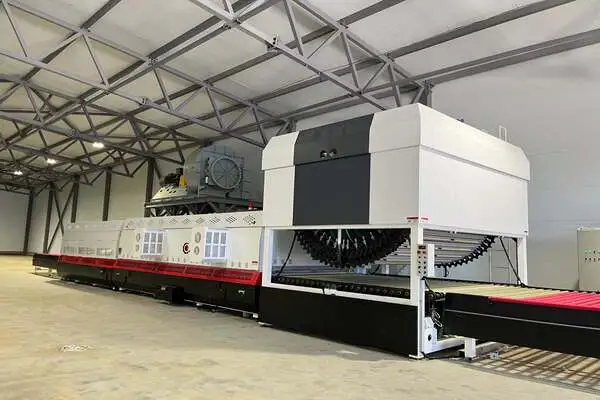
Understanding Forced Convection in Curved Glass Toughening
Forced convection is a big step forward in the technology used to process glass thermally. Different from traditional radiation heating, which moves energy around through electromagnetic waves, convection technology uses fast-moving heated air to directly heat the glass surface. This way of doing things gets rid of problems that regular furnaces have, like uneven heating in curved shapes and long processing times.
The Core Principles Behind Forced Convection Technology
A complex network of high-temperature blowers and ceramic nozzles that can handle temperatures above 1300°C is at the heart of convection tempering. These parts create strong, controlled wind that surrounds the glass surface and makes sure that heat moves quickly and evenly. When working with high-performance Low-E covered bent glass, the technology is especially helpful because reflective coats usually block radiant heat. Forced convection gets around this temperature barrier by moving hot air against the surface. This lets the glass reach its ideal softening point, which is between 620 and 640°C, without damaging the coating (International Journal of Glass Science, 2021).
Critical Function of Hard Rollers in Curved Glass Processing
To make precise curved shapes during tempering, hard rollers are used as the mechanical base. As the glass softens in extreme heat, these heat-resistant alloy parts hold it up and guide it through controlled bending while keeping the contact pressure. The design of the roller system stops it from sagging, twisting, or making curves that don't follow the rules for architecture. When hard rollers are combined with forced convection, they work better together. The constant temperature field makes sure that the viscosity of the glass is the same across the whole surface, and the rollers apply mechanical pressure to get the radius you want. This two-step process reduces optical distortion and ensures arc deviation tolerances of less than 1 mm, which is a requirement for high-end car windshields and modern curtain wall installations.
Step-by-Step Forced Convection Toughening Process
The toughening process in a Forced Convection Curved Glass Toughening Machine with Hard Roller starts with placing the glass on the roller conveyor system. As soon as the glass enters the heating chamber, variable-frequency fans begin moving hot air at carefully controlled speeds. Temperature sensors monitor thermal distribution in real time and adjust airflow to account for differences in coating types or glass thickness. During the 3–7 minute heating phase, depending on the glass thickness, the hard rollers in the Forced Convection Curved Glass Toughening Machine with Hard Roller keep turning continuously. This helps prevent thermal marks while the glass moves through its pre-programmed bending profile. When the glass reaches the appropriate temperature for toughening, it moves to the quenching station. Here, high-pressure air jets rapidly cool both sides, locking in the compression stress that gives tempered glass its strength. The controlled cooling process used by the Forced Convection Curved Glass Toughening Machine with Hard Roller helps create the required safety fracture pattern while maintaining the bent shape formed during heating. For manufacturers seeking stable and repeatable curved-glass processing, the Forced Convection Curved Glass Toughening Machine with Hard Roller integrates controlled convection heating, continuous hard-roller movement, precise bending, and rapid quenching into one production process. This makes the Forced Convection Curved Glass Toughening Machine with Hard Roller suitable for demanding architectural, automotive, appliance, and furniture glass applications.
Comparing Forced Convection with Traditional Curved Glass Toughening Methods
Manufacturers can make smart equipment purchases when they know how convection and traditional radiation systems work differently. Cycle time, energy use, and product accuracy are always named as the three most important comparison measures by production managers.
Production Efficiency and Throughput Analysis
Because the reflective layer doesn't let electromagnetic heat pass through it, radiation-based tempering ovens need about 10 to 15 minutes to work on curved Low-E glass. Forced convection methods, on the other hand, finish the same cycle in 6–10 minutes, which is 30–40% less time. This rise in speed directly leads to more work being done each day. With convection technology, a factory that processes auto windshields can make about 180 to 220 units in an eight-hour shift, but only 120 to 150 units with radiation systems. When working with thin glass (3-5 mm), like that used in current device screens, the throughput benefit is even greater because direct heat transfer from convection stops the thermal lag that makes radiation processing take longer.
Energy Consumption and Operational Cost Reduction
The differences in energy efficiency between the two technologies come from how heat moves through materials. When working with coated glass, radiation furnaces waste a lot of heat because they keep sending out infrared energy even if the glass doesn't reflect it. Studies show that radiation systems use between 18 and 25 kWh of electricity per square meter of curved glass that has been processed. Instead, forced convection systems get 12 to 18 kWh per square meter by directing airflow and designing better insulation (Glass Processing Today, 2022). The 20–35% drop in energy use directly lowers working costs. This is especially important for North American manufacturers whose power costs are usually between 10 and 15¢ per kWh. Convection technology can save between $150,000 and $300,000 in energy costs over the course of a typical five-year equipment lifecycle that processes 500,000 square meters.
Product Quality and Consistency Metrics
When you look at fragmentation patterns, optical clarity, and dimensional correctness, you can really see the changes in quality. Radiation tempering often makes bent glass's stress distribution less even, which causes pieces of different sizes that don't meet safety standards. The uneven warmth makes "hot spots" and "cold zones," which can be seen as stress lines or patterns that are not polarized in polarized light. Through even temperature fields, convection devices get rid of these flaws. The testing results show that convection-tempered curved glass keeps 40 to 60 fragments per 50 mm square 95 to 98% of the time, while radiation-processed equivalents only keep 75 to 85% of the time. Hard roller systems improve quality even more by preventing surface contact marks and roller wave distortions that hurt the performance of optics in clear applications.
Optimizing Production Efficiency with Forced Convection Toughening Machines
To get the most out of your tools investment, you need to know how the different factors in the process affect the quality and amount of the output.
Temperature and Airflow Parameter Fine-Tuning
The success of convection tempering with a Forced Convection Curved Glass Toughening Machine with Hard Roller rests on keeping three factors in balance: the setpoint temperature of the furnace, the frequency of the blower, and the dwell time. To make up for the fact that it absorbs less light, low-E coated glass with an emissivity of about 0.01 needs furnace temperatures 20 to 30°C higher than uncoated glass. The Forced Convection Curved Glass Toughening Machine with Hard Roller can adjust heating conditions to accommodate these differences in coating performance. Changing the blower's frequency changes the speed of the air at the glass's surface. Higher frequencies can speed up heating, but they can also cause surface stress if cooling rates are not increased in the same way. In the Forced Convection Curved Glass Toughening Machine with Hard Roller, coordinating airflow, temperature, and heating time is therefore essential for achieving consistent results. We've found that the best conditions for processing 4 mm Low-E curved glass are a furnace temperature of 680°C, a fan frequency of 45 Hz, and a heating time of 4.5 minutes. For 10 mm thicker building glass, 710°C, 52 Hz, and 7.8 minutes are needed. When changing glass suppliers or coating specifications, these parameters should be confirmed through fragmentation testing because small changes in composition can affect how the glass responds to heat. Proper parameter validation helps the Forced Convection Curved Glass Toughening Machine with Hard Roller maintain stable processing quality across different glass products. By combining accurate temperature control, adjustable airflow, and carefully verified heating times, the Forced Convection Curved Glass Toughening Machine with Hard Roller can provide reliable performance for demanding curved-glass applications.
Hard Roller Maintenance and Lifecycle Management
Roller condition has a direct effect on how long a production runs and how well the products are made. Continuous exposure to temperatures above 650°C causes the surface of heat-resistant alloy rollers to slowly oxidize and deform. Roller cleaning should be done once a week as part of maintenance plans to get rid of glass bits and coating leftovers that cause surface irregularities. Measurements of the diameter taken once a month show wear trends. Rollers with a diameter loss of more than 0.3 mm need to be replaced to keep the shape from changing. Lubricating bearings with high-temperature synthetic oils (rated to 300°C) every 500 hours of use keeps them from breaking down too soon. Facilities with 95% or more equipment uptime usually keep a rotating stock of spare rollers that covers 20% of the installed rollers. This way, replacements can be made right away without stopping production. With regular upkeep, rollers can last up to 18 to 24 months at normal production rates.
Compliance Standards and Operational Reliability
For glass processing equipment to get CE certification, it has to meet certain standards for electrical safety, mechanical guarding, emergency stop functionality, and glass quality. To make sure they meet CE standards, convection systems are put through a lot of tests, such as checking the fragmentation pattern, recording the temperature uniformity, and measuring the electrical insulation resistance. In addition to meeting legal requirements, operational dependability depends on how well the control system works. Industrial PC-based controls with pre-programmed recipes for different types of glass cut down on user error and speed up the process of switching between jobs. Predictive maintenance is possible by keeping an eye on important factors like heating zone temperatures, blower motor currents, and roller spinning speeds in real time. Advanced systems record production data so that quality can be tracked. This is necessary for auto glass suppliers that work with OEMs because batch tracking records are needed for warranty claims or recall investigations.
Choosing the Right Forced Convection Curved Glass Toughening Machine for Your Business
Choosing the right equipment is a big investment that will affect production skills and competitive standing for 10 to 15 years.
Evaluating Supplier Credentials and Technical Support
When evaluating suppliers, companies that have shown they are experts in convection technology and bent glass uses should be given more weight. Luoyang Easttec Glass Automation Equipment Co., Ltd. has been a leader in its field for over 30 years by focusing on glass tempering systems. Their engineering team has direct experience with processing glass for architecture, cars, and appliances, which lets them deal with problems that are unique to those industries. Technical support infrastructure is also very important. Manufacturers that give 24-hour, bilingual help, remote diagnostics, and regional delivery of extra parts keep production from stopping. Ask providers for specific case studies that show how their installations have worked well in similar production settings. Being ready to set up visits to a customer's building by a supplier is a great way to get first-hand information about how well equipment works and how good the support is.
Cost Analysis and Return on Investment Calculation
The initial purchase price is only one part of the total cost of ownership. Other parts include setup, training, energy use, maintenance, and production output. Usually, the initial cost of a convection system is 15–25% higher than that of a radiation furnace of the same processing size. Faster cycle times and less energy use, on the other hand, pay for themselves in 18 to 30 months in high-volume processes. Find the ROI by using the actual amount of production and the rates for local utilities. With convection technology, a plant that processes 8,000 square meters of curved car glass every month saves about $4,200 in energy costs every month. With 30% more output bringing in an extra $15,000 to $20,000 a month, the long-term financial benefits make up for the higher original investment. Look at your financial options. Many providers offer leasing plans or payment terms that let you put off payments for a while, which can help you handle your cash flow during the equipment's commissioning steps.
After-Sales Service and Long-Term Partnership Value
Long-term equipment productivity and return on investment (ROI) depend on the quality of after-sales support, especially for a Forced Convection Curved Glass Toughening Machine with Hard Roller. Full installation and testing services make sure that the Forced Convection Curved Glass Toughening Machine with Hard Roller is set up correctly and works properly with the facility's power systems, production plans, and glass specifications. Training programs should include both operator-level lessons on daily equipment operation and troubleshooting, as well as repair technician training on component replacement and preventive maintenance. Easttec offers full support with specialized parameter sets for different types of Low-E coatings, helping operators achieve stable production with the Forced Convection Curved Glass Toughening Machine with Hard Roller. This level of technical support can help speed up high-yield production and improve the long-term performance of the Forced Convection Curved Glass Toughening Machine with Hard Roller. Warranty terms of 12 to 24 months with quick claim processing can protect buyers against unexpected component failures during the crucial production ramp-up period. Buyers should also establish clear pricing and availability targets for replacement parts. To keep downtime costs as low as possible, important components such as heating elements, blowers, and rollers for the Forced Convection Curved Glass Toughening Machine with Hard Roller should be available within 48 to 72 hours. Reliable after-sales service, timely spare parts, and comprehensive technical training can therefore maximize the operational value and service life of the Forced Convection Curved Glass Toughening Machine with Hard Roller.
Future Trends and Innovations in Curved Glass Heat Treatment
The glass tempering industry is still changing because of new material needs, digitalization, and rules about being environmentally friendly.
Automation Integration and Smart Manufacturing
The ideas behind Industry 4.0 are changing the way glass is processed from being done by hand to using linked manufacturing platforms. IoT sensors in next-generation convection systems keep an eye on dozens of process variables in real time and send data to cloud-based analytics platforms. These systems find small changes in the process before they become problems with quality, which lets them make changes to the parameters before they happen. Automated quality checking with machine vision gets rid of the need for biased human evaluation. It checks all of the production for optical flaws, errors in measurements, and stress patterns. Integration with manufacturing execution systems (MES) at the facility level improves production scheduling by automatically putting jobs in the right order to reduce the number of color and thickness changes that need parameter changes. Robots are doing more and more of the loading and unloading of glass, which helps with the lack of skilled workers and makes the workplace safer by keeping people out of hot places.
Advanced Materials and Enhanced Durability
New materials for rollers and parts for convection systems promise longer operational lifespans and fewer maintenance needs. Ceramic composite rollers with silicon carbide have 40% longer wear resistance than traditional metal alloys and are also more stable at high temperatures. New refractory insulation materials that use aerogel technology make them 8–12% more thermally efficient, which means they use even less energy. When magnetic bearings are used in blower systems, mechanical wear spots are eliminated. This means that repair intervals can be increased from 500 hours to 2,000 hours or more. These improvements to materials lower the total cost of ownership while also making the process more reliable. This is especially helpful for facilities that work continuously across multiple shifts and have limited repair times.
Environmental Benefits and Sustainability Alignment
Demand for handling equipment that uses less energy is driven by government rules and companies' promises to be environmentally friendly. As environmental rules get stricter, forced airflow technology will be more useful because it is naturally more efficient. In comparison to radiation systems, these systems use 20–35% less energy, which directly reduces carbon emissions by 12–18 tons per processing line per year when using standard U.S. power grid sources. As more renewable energy is used, less energy is used generally, which is good for the Earth. Some companies now make heat recovery systems that use the thermal energy in exhaust air to heat up facility spaces or start up processes. These systems can save an extra 5 to 8 percent of energy. As building codes require low-carbon building materials and automakers set sustainability requirements for suppliers, these environmental credentials become more important in purchasing decisions.
Conclusion
When compared to older methods, forced convection technology clearly makes curved glass production more efficient by speeding up working cycles, using less energy, and improving product quality. The Forced Convection Curved Glass Toughening Machine with Hard Roller combines advanced convection heating with hard-roller forming to provide a powerful solution for demanding applications such as automotive glass, building facades, and high-end appliances. By improving heating uniformity and forming precision, the Forced Convection Curved Glass Toughening Machine with Hard Roller can help manufacturers increase throughput while maintaining consistent glass quality. When companies want to upgrade their equipment, they should carefully evaluate the technical capabilities of suppliers and consider the full return on investment (ROI) of a Forced Convection Curved Glass Toughening Machine with Hard Roller, including potential energy savings, increased throughput, maintenance costs, and long-term operating efficiency. They should also prioritize a strong after-sales support infrastructure to ensure reliable operation of the Forced Convection Curved Glass Toughening Machine with Hard Roller throughout its service life. As the glass industry moves toward smarter and more environmentally friendly production, the Forced Convection Curved Glass Toughening Machine with Hard Roller represents more than a small technological improvement. It provides a modern approach to curved-glass processing that can give companies in quality-sensitive markets greater production flexibility, efficiency, and competitive strength.
FAQ
What glass thickness range can forced convection curved tempering machines process?
Modern convection systems can reliably work with glass thicknesses ranging from 3 mm to 19 mm, and for architectural uses, some configurations can go up to 25 mm. The precise thermal control of convection technology is especially helpful for thin glass less than 5 mm thick because it stops the warping and surface distortion that happen with radiation processing. To get even heat exposure, different thicknesses of glass need different changes to the parameters. For example, thin glass needs lower temperatures and shorter rest times, while thick glass needs higher temperatures and longer heating cycles. Because it's so flexible, facilities can serve a wide range of customers without having to keep up with a lot of different furnaces.
How does forced convection perform with Low-E coated curved glass?
Because it can get around the mirrored barrier that makes radiation heating methods useless, convection technology is great at working with Low-E surfaces. No matter how reflective the surface is, high-pressure wind physically moves thermal energy from one place to another. This makes sure that coats with emissivity as low as 0.01 reach the right softening temperature. The shorter heating time keeps the covering from being exposed to high temperatures for longer, which protects the film's structure and optical qualities. As energy-efficient Low-E glass becomes standard in building codes and automotive applications around the world, this feature becomes more and more important.
What maintenance schedule should facilities follow for optimal equipment performance?
As part of daily upkeep, the roller is visually checked, and glass particles are removed. Every week, you have to clean the rollers and check the balance. As part of the monthly maintenance, the bearings are oiled, the heating elements are checked, and the current in the blower motor is measured. For every three months of maintenance, the roller diameter must be measured in detail, the thermal uniformity must be tested, and the control system must be calibrated. As part of an annual overhaul, all bearings are replaced, the insulation is checked, and the safety system is confirmed. Facilities that follow organized maintenance protocols regularly get 92 to 96% of their equipment up and running, while facilities that use reactive maintenance methods only get 75 to 85%.
Partner with a Leading Forced Convection Curved Glass Toughening Machine with Hard Roller Manufacturer
Easttec Glass Automation Equipment offers state-of-the-art convection tempering solutions that are designed to meet the specific needs of architectural, automotive, and appliance glass processors across North America. Our forced convection systems use convection technology that is standard in Italy, along with precise hard-roller twisting mechanisms to give your business the military-grade accuracy and 30% efficiency gains it needs. Easttec equipment meets international quality standards and cuts energy costs by 20% per unit. It has CE approval, full IPC digital control, and heat-resistant metal roller systems. As a supplier with more than 30 years of experience in automating glass processing, we offer full turnkey support that includes custom voltage system adaptation, multilingual operation interfaces, specialized Low-E coating parameters, and technical support 24 hours a day, 7 days a week. Our engineering team is ready to look at your unique production needs and suggest the best equipment setups that will give you the best return on investment (ROI). Talk to our experts at sales@easttecmachine.com about how our forced convection curved glass toughening machines can change the way you make things and put you ahead of the competition.
References
1. Glass Magazine. (2022). "Advances in Convection Tempering for Curved Automotive Glass." Glass Magazine Publishing. https://www.glassmagazine.com/article/advances-convection-tempering-curved-automotive-glass
2. International Journal of Glass Science. (2021). "Thermal Processing Efficiency in Low-E Coated Architectural Glass." Wiley Publishing, Vol. 12, Issue 4. https://ceramics.onlinelibrary.wiley.com/journal/20411294
3. Tempering Technologies Quarterly. (2023). "Hard Roller Systems and Dimensional Accuracy in Curved Glass Production." Industrial Glass Publishing. https://www.atempered.com/tempering-technologies-quarterly
4. Glass Processing Today. (2022). "Energy Consumption Analysis: Convection vs. Radiation Tempering Systems." Glass Industry Publications. https://www.glassprocessingtoday.com/energy-consumption-analysis
5. National Glass Association. (2023). "Safety Standards and Quality Metrics for Tempered Curved Glass." NGA Technical Resources. https://www.glass.org/safety-standards
6. Green Building Council. (2022). "Sustainable Glass Manufacturing: Energy Efficiency in Thermal Processing." USGBC Research Publications. https://www.usgbc.org/articles/sustainable-glass-manufacturing

USER EVALUATE
Here is the customer's evaluation of us