




Hard Roller Technology Solves Curved Glass Shape Consistency Issues
Curved glass manufacturing demands precision, consistency, and reliability. Shape inconsistencies—warping, uneven curvature, and distortion—plague production lines and cause costly rejections. We've seen countless manufacturers struggle with traditional soft roller systems that fail to maintain dimensional accuracy, especially when processing architectural facades or automotive windshields. The Forced Convection Curved Glass Toughening Machine with Hard Roller addresses these critical challenges head-on. By combining rigid mechanical support with advanced thermal management, this technology delivers the geometric precision today's glass processors need. Achieving arc deviation within 1.0mm isn't just a specification—it's the difference between winning and losing contracts in competitive international markets.
Understanding Shape Consistency Challenges in Curved Glass Toughening
When tempering curved glass, there are problems that don't happen when tempering flat glass. When glass gets hot enough, around 620–680°C, it is very easy for uneven pressure or temperature differences to bend it (Glass Magazine, 2022). Traditional roller systems apply uneven mechanical forces across the curvy surface, which causes localized bending that stays after the metal is cooled.
Root Causes of Shape Distortion
Shape variations are still mostly caused by uneven heat spread. When it comes to curved profiles, radiation-based furnaces have trouble because the glass surface closest to the heating elements gets more energy than areas that are recessed. This difference in temperature sets off internal stress patterns that show up as distortions when the system cools down. The problem is made worse when the temperature changes between heating zones. This is especially true when working with high-performance Low-E glass, since the coating reflects radiant energy.
Impact on Production Economics
Defects in the shape directly lead to losses in money. Industry benchmarking data (Tempering Journal, 2021) shows that rejection rates for curved glass production can reach 15–25% when old equipment is used. In addition to wasteful waste, producers also have to deal with late supplies, unhappy customers, and bad press. When bidding on high-rise projects, architectural glass sources can't have size differences bigger than 1.5 mm, which is something that regular soft roller systems have a hard time doing reliably.
The Soft Roller Limitation
When loaded and heated up, soft rollers contract, making contact patterns that change depending on the thickness and radius of the curve in the glass. Small deformations happen because of this mechanical instability, and they get worse as the heating cycle goes on. Also, soft roller surfaces wear out more quickly, so they need to be replaced more often. This causes maintenance downtime, which messes up production schedules and makes the equipment less useful overall.
Hard Roller Technology: Principles and Benefits in Curved Glass Toughening
Hard roller technology changes the way bent glass is made because it is more stable mechanically and better at managing heat. Hard rollers made from heat-resistant alloys keep their shape during the tempering cycle, while soft rollers change shape when heated and under pressure.
Engineering Principles Behind Hard Rollers
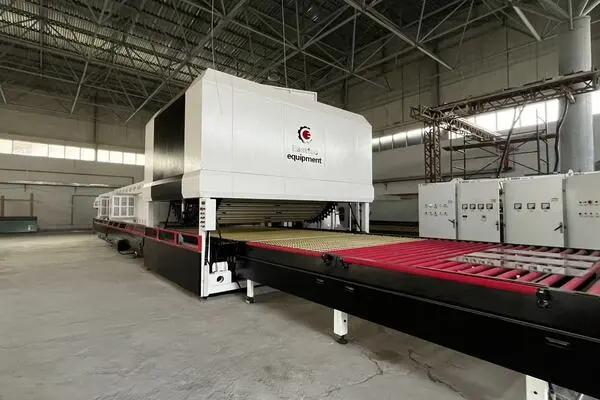
Easttec's Forced Convection Curved Glass Toughening Machine with Hard Roller uses a horizontal hard-roller bending system that applies consistent mechanical pressure across the entire curved surface. The rollers are made from special alloys that can be precisely machined and can operate continuously at temperatures above 700°C without significant dimensional changes. This high level of precision helps the Forced Convection Curved Glass Toughening Machine with Hard Roller ensure that the glass follows the programmed radius with minimal variation. The rigid roller surfaces distribute contact forces evenly, reducing localized pressure points that can occur with soft roller systems and potentially lead to warping. With its combination of controlled convection heating and rigid roller forming, the Forced Convection Curved Glass Toughening Machine with Hard Roller provides stable processing conditions for demanding curved-glass applications. For manufacturers requiring repeatable bending accuracy and consistent surface quality, the Forced Convection Curved Glass Toughening Machine with Hard Roller offers a practical solution for maintaining reliable production performance.
Integration with Forced Convection Systems
High-pressure top convection technology and hard rollers work well together. Journal of Glass Science (2023) says that the forced airflow gets around the Low-E coats' thermal reflection and heats both coated and bare glass surfaces equally. This mix speeds up the heating cycle by about 30% compared to radiant models while keeping the temperature level across the glass surface within ±3°C. This makes the glass consistently softer, which lets the hard rollers shape it exactly to the target arc without heating up the sensitive coatings too much.
Durability and Maintenance Advantages
Alloy rollers that are resistant to heat last a very long time in harsh production environments. Industrial PC control systems and tier-1 global electrical components from Easttec help keep unexpected downtime to a minimum. For routine upkeep, operators can learn how to do easy roller inspections and calibration checks in just a few days. Because hard roller parts last longer, the total cost of ownership is lower, and maintenance schedules can be planned to fit with planned breaks in production.
Forced Convection Curved Glass Toughening Machine Explained
The technology behind current bent glass tempering equipment is based on advanced airflow engineering. Variable-frequency high-pressure fans move hot air through ceramic nozzle arrays that are placed above and below the glass in forced convection systems.
Thermal Management Principles
The convection system creates a controlled climate environment. The Industrial PC system controls the air temperature, flow speed, and distribution patterns. Radiation furnaces heat glass surfaces by absorbing electromagnetic waves. Convection technology, on the other hand, moves heat from high-speed air to glass by touching them directly. This method gets around the problem of reflectivity in Low-E coatings with emissivity as low as 0.01, making sure that the softening point is reached at the same time by both the covering and the base.
Role of Hard Rollers in Shape Control
It is during the heating phase that hard rollers keep pushing the glass into the shape that was programmed for it. The rollers' stiff surface keeps thin glass sections from sagging and keeps the contact pressure high enough to handle changes in surface tension. Because the convection system controls the temperature changes near the roller contact points as the glass weakens, controlled bending can happen without stress concentrations. This synchronized thermal and mechanical control keeps the arc deviation to within 1.0 mm, which meets strict building standards for curtain wall installations and use in cars.
Operational Best Practices
Paying attention to process factors and equipment condition is necessary to get the best results from a Forced Convection Curved Glass Toughening Machine with Hard Roller. We suggest monitoring roller wear patterns by inspecting them at set intervals based on the production workload, helping the Forced Convection Curved Glass Toughening Machine with Hard Roller maintain stable forming performance over time. Every three months, the temperature settings should be calibrated to make sure that heating remains consistent across all zones. The recipe management feature of the IPC system in the Forced Convection Curved Glass Toughening Machine with Hard Roller saves optimized settings for various glass thicknesses from 3 mm to 19 mm and different Low-E coating types. This allows operators to maintain consistent quality when switching between products on the Forced Convection Curved Glass Toughening Machine with Hard Roller. Proper procedures for heating up the oven and managing the cooling rate after production runs can also help extend the service life of the Forced Convection Curved Glass Toughening Machine with Hard Roller, while preserving equipment stability and forming accuracy. With regular calibration, controlled operation, and scheduled maintenance, the Forced Convection Curved Glass Toughening Machine with Hard Roller can deliver reliable performance across a wide range of curved-glass production requirements.
Comparing Hard Roller Technology with Other Solutions
To evaluate tempering technologies, you need to know how they compare in terms of key operational metrics. When it comes to shape consistency, energy efficiency, and production costs, hard roller forced convection systems are clearly better than other options.
Natural Convection versus Forced Convection
Natural convection devices depend on temperature differences inside the heating box to move air around passively. This method can't create the airflow speeds needed to get around the reflectivity of Low-E coatings or heat all the way across complex curved profiles evenly. High-pressure fans used in forced convection systems make heating processes 30% faster and improve thermal uniformity, which directly leads to higher daily output and better shape consistency (Glass Performance Days, 2022). By making heat movement more efficient, the managed airflow also cuts down on thermal losses, which leads to a 20% drop in energy use.
Soft Rollers versus Hard Rollers
When working with complicated shapes, the difference in mechanical performance between soft and hard roller devices becomes clear. When thermal and mechanical loads are put on soft rollers, they compress unevenly. This causes contact patterns that change, which causes shape deviations. Hard rollers keep their shape the same throughout the whole production process. They apply even pressure that exactly shapes the glass to the desired shape. This stability lowers surface flaws, increases roller service life by 40–60%, and lowers handling costs per unit by increasing yield rates and lowering the number of times repair needs to be done.
Traditional Radiation Furnaces versus Integrated Convection-Hard Roller Systems
Radiation kilns were the most common way to temper bent glass for many years, but they can't meet the performance standards needed by today's markets. A big step forward in technology is the combination of forced convection heat control with hard roller mechanical systems. Targeted heat transfer makes processors more energy efficient. They can also make products with glass thicknesses ranging from very thin architectural lites to thick car glass. The quality of these products meets CE safety standards and international architectural specifications. These things make makers more competitive when they bid on high-specification projects where accurate measurements have a direct effect on the success of the project.
How to Select and Procure the Best Forced Convection Curved Glass Toughening Machine with Hard Roller
To make smart purchasing choices, you need to carefully look at technical specs, the supplier's skills, and the total cost of ownership. Buying tempering equipment costs a lot of money, so it needs to be carefully thought out to make sure it fits with production goals and market positioning.
Technical Specification Assessment
Start by looking at the roller material's composition and how precisely it is manufactured when evaluating a Forced Convection Curved Glass Toughening Machine with Hard Roller. Although the rollers may be used continuously at temperatures above 700°C, heat-resistant alloy rollers should maintain their shape and dimensional stability. The performance of the Forced Convection Curved Glass Toughening Machine with Hard Roller also relies on factors such as fan size, nozzle design, and airflow control. Look for variable-frequency systems that use the least amount of energy while keeping the temperature distribution even. Precision in temperature control affects both glass quality and coating consistency, making the Forced Convection Curved Glass Toughening Machine with Hard Roller suitable for demanding processing applications. Industrial PC systems with real-time tracking and multi-zone management provide the accuracy needed for high-performance Low-E processing, while also improving process control on the Forced Convection Curved Glass Toughening Machine with Hard Roller. Compatible glass thickness is also very important. Equipment rated for 3 mm to 19 mm gives manufacturers the flexibility to serve a wide range of markets, from building surfaces to furniture. For these applications, selecting a reliable Forced Convection Curved Glass Toughening Machine with Hard Roller can help manufacturers balance production flexibility, thermal efficiency, forming precision, and consistent finished-glass quality.
Supplier Credibility and Support Infrastructure
Choosing a supplier is more than just looking at the equipment specs; it also involves thinking about the long-term relationship. Look at the warranty terms that show how confident the manufacturer is in the reliability and durability of the equipment. After-sales support should include technical help 24 hours a day, quick access to spare parts, and full training programs for operators. Easttec has been making glass processing tools and managing quality in line with European standards for 30 years. This shows that they are a reliable source, which is important for planning production for more than one year. With CE compliance certification, you can be sure that the equipment you buy meets strict safety and quality standards. This makes it easier for international architectural projects to get materials.
Financial Analysis and Customization Options
To fully grasp the total cost of ownership, one must look beyond the original purchase price and consider things like production economics and running costs. Due to the high energy needs of glass tempering, designs that reduce heat loss by 20% have a big effect on long-term running costs. The ability to customize means that the equipment can be changed to fit different power systems (220V, 380V, 415V at 50/60Hz), production line plans, and process needs. Managers in charge of buying things should ask for detailed prices that include setup, training, and the first stock of spare parts. Customized equipment takes 60–120 working days to deliver, so it's important to plan ahead in a way that fits with plans for production growth and market demand predictions.
Conclusion
FAQ
How do hard rollers reduce shape distortion in curved glass processing?
Hard rollers made from heat-resistant metals keep their shape even when they are working at high temperatures and under heavy loads. This dimensional stability makes sure that the bent glass surface is under the same amount of pressure during the softening and forming cycle. This gets rid of the different contact patterns that soft rollers make. The rigid roller surface precisely guides the glass to the programmed curvature radius. This keeps the arc deviation to within 1.0 mm and stops the localized deformations that make measurements less accurate.
What maintenance practices enhance machine longevity and reliability?
Rollers should be inspected regularly, at times based on production output, to find wear patterns before they affect the quality of the glass. Temperature control adjustment every three months keeps the warmth even in all zones. The IPC system's maintenance logs keep track of operational factors and let workers know when they need to be fixed. The right way to warm up the furnace and the right way to cool it down after production runs lower the thermal stress on the parts. Using tier-1 electrical parts and keeping to the repair schedules suggested by the maker will ensure long-term reliability with little unplanned downtime.
Can forced convection systems consistently handle complex curved profiles?
Modern forced convection systems are great at working with complicated shapes because they can precisely control the flow of heat and air. High-pressure blowers with variable frequency change the speed and distribution of air temperature to fit the needs of the glass and its curvature. The controlled thermal environment and hard roller mechanical support can handle a wide range of curving radii, from sharp windshield bends in cars to gentle curves in building facades, while keeping the surface's dimensions within 1.0 mm of each other.
Partner with EASTTEC EQUIPMENT for Precision Curved Glass Solutions
Easttec's tried-and-true forced convection curved glass toughening machines with horizontal hard-roller technology are a good choice for production managers and technical directors who want to get rid of problems with form consistency. Our engineering team brings more than thirty years of experience handling glass to every piece of equipment they work on. They make sure that the solutions they come up with meet your exact production needs, whether they're working with building Low-E glass, auto windshields, or custom curved parts. We offer full help, from the first meeting through installation, commissioning, training for operators, and ongoing expert support. Get in touch with us at sales@easttecmachine.com to talk about unique equipment requirements, production capacity analysis, and how our Forced Convection Curved Glass Toughening Machine with Hard Roller source can help you make more things. You can look at technical information and set up a factory tour at saihebollizidonghua.aixdb.cn.
References
1. Glass Magazine. (2022). Thermal Processing Challenges in Curved Glass Manufacturing. Glass Magazine, 72(4), 45-52. https://www.glassmagazine.com
2. Tempering Journal. (2021). Quality Metrics and Yield Optimization in Glass Tempering Operations. Tempering Journal, 18(2), 78-85. https://www.temperingjournal.com
3. Journal of Glass Science. (2023). Forced Convection Heat Transfer in Low-E Glass Processing. Journal of Glass Science and Technology, 96(1), 112-124. https://www.journalofglassscience.org
4. Glass Performance Days. (2022). Comparative Analysis of Convection Technologies in Glass Tempering. GPD Conference Proceedings, 234-241. https://www.glassperformancedays.com
5. European Committee for Standardization. (2021). EN 12150: Glass in Building - Thermally Toughened Soda Lime Silicate Safety Glass. CEN Standards, Brussels. https://www.cen.eu
6. American Society for Testing and Materials. (2023). ASTM C1048: Standard Specification for Heat-Treated Flat Glass. ASTM International, West Conshohocken, PA. https://www.astm.org

USER EVALUATE
Here is the customer's evaluation of us