




Why Choose a Radiation Flexible Roller Furnace for Large Glass Manufacturing Applications?
When glass manufacturers ask which furnace technology delivers the best combination of quality, flexibility, and operating economy at scale, the answer increasingly points to the radiation flexible roller furnace. This thermal processing system uses long-wave infrared radiation elements arranged in a multi-zone matrix to heat glass directly and uniformly, while an adjustable roller transport mechanism carries sheets smoothly through the heating and quenching stages. The result is tighter temperature control, lower energy draw, and the ability to process both flat and curved glass on a single production line — a combination that rigid or batch-style kilns simply cannot match.
Understanding Radiant Flexible Roller Furnaces
Before being able to do a comparison of technologies, it is vital to have a full understanding of the differentiating traits that divide this sort of furnace from the ones that it is meant to replace, as well as the ones that are already accessible on the market. This is to ensure that one is able to make an informed decision.
How the Heating System Works
A radiant tempering burner doesn't use hot air to move heat around; instead, it sends infrared energy straight into the glass mass. The soak time is cut down, and the thermal difference between the glass's surface and core is lessened. This is what causes most optical distortion and surface stress flaws in big screens.
The Flexible Roller Mechanism
The changeable high-strength flexible shaft design is what makes the machine unique. Rollers can change from a flat shape to a calculated arc, so the same line can make flat safety glass one shift and curved architectural glass the next. For each curve, rigid roller systems need to make actual changes to the mold, which takes time that adds up over thousands of production cycles.
Key Technical Parameters
Easttec's radiation flat and bend glass tempering kiln with flexible rollers can work with 5 mm to 19 mm thick glass. The accuracy of the temperature control stays at ±1 °C over a temperature range of 680–720 °C. Clear float, tinted, and patterned glass are all compatible, so the platform can be used in the architectural, furniture, and specialty industrial segments.
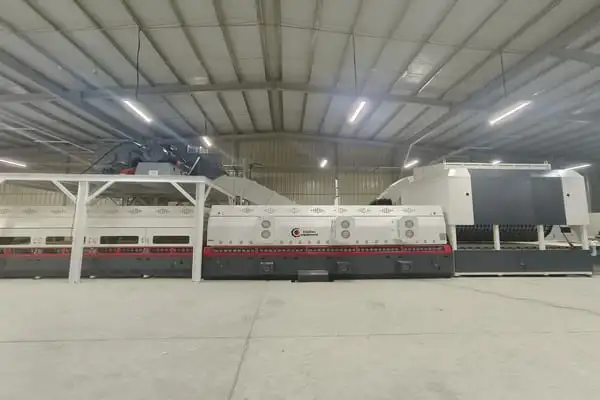
Comparing Radiation Flexible Roller Furnaces to Traditional Furnace Solutions
When procurement teams have a better understanding of the areas in which the technology that is presently available is superior to earlier versions of the technology, it is to their benefit to construct a stronger internal business case on their own. This is because it is to their advantage to develop a more solid internal business case.
Versus Batch Furnaces
Batch kilns process glass in discrete loads, which means heating and cooling energy is consumed at the start and end of every cycle. A radiation flexible roller system runs continuously, so thermal energy stays in the Radiation Flexible Roller Furnace environment rather than being discharged between loads. That alone can reduce cycle-related energy waste significantly across a production shift.
Versus Rigid Conveyor and Continuous Furnaces
Conventional continuous furnaces achieve throughput, but their fixed roller geometry limits them to flat glass. Any curved product requires a separate line or time-consuming manual reconfiguration. By contrast, the flexible roller mechanism switches between flat and bent production in minutes using saved PLC recipes, protecting throughput on mixed-order production schedules.
Total Cost of Ownership Comparison
When procurement teams calculate total cost of ownership over a five-to-seven-year equipment life, the factors that shift the numbers are energy consumption, breakage rate, and changeover downtime. Easttec's advanced insulation engineering reduces thermal energy loss by 20% compared to conventional models. Lower breakage rates from uniform heating translate directly into fewer rejected panels and lower raw material cost per square meter shipped.
Benefits of Radiation Flexible Roller Furnaces for Large Glass Manufacturing
The best things about this type of furnace are that it can handle the most common problems that glass processing plants have, like high energy costs, inconsistent quality, and limited production options. In a production setting, these are the main benefits this technology brings:
- Precision Matrix Thermal Control: Easttec's multi-zone matrix radiant heating distributes thermal energy uniformly across the full glass surface. This precise distribution prevents "ghosting" and optical distortion, producing smooth, stress-balanced panels that meet elite architectural and automotive glass standards. Manufacturers serving curtain wall projects or windshield suppliers particularly benefit from this consistency.
- 20% Thermal Energy Savings: High-density composite insulation retains heat within the furnace chamber more effectively, reducing operating costs across the equipment's service life. For a mid-size glass processing plant running two shifts per day, this reduction in energy draw represents a measurable contribution to annual overhead reduction.
- Exceptional Bending Versatility: The adjustable flexible roller system handles a wider range of curvatures and smaller bending radii than rigid alternatives. Processors can take on architectural skylight profiles, shower enclosure shapes, and specialty industrial glass designs that competitors with fixed-geometry equipment cannot quote.
- Robust IPC and PLC Reliability: The Industrial PC and PLC interface provides 24/7 operational stability. Operators store and recall hundreds of bending recipes, making the transition between flat and bent production fast and repeatable without relying on manual parameter entry.
These four benefits work together to cut down on energy waste and rejected glass, which are the two main causes of production loss. They also make it possible for a single line to handle a wider range of products.
Key Considerations When Procuring Radiation Flexible Roller Furnaces
It is just thirty percent of the choice that is made when it comes to selecting the appropriate equipment. The selection of the appropriate supplier is the decisive element in determining whether or not the equipment really functions in accordance with the description that was obtained from the very beginning of the process.
Supplier Credentials and Certification
Easttec's radiation flexible roller furnace is built in strict compliance with CE safety standards, providing a certified technical foundation for global export. CE certification matters to North American and European buyers because it documents that the electrical, mechanical, and thermal systems meet verified safety benchmarks — not just manufacturer claims.
Customization and Delivery Timelines
Glass tempering Radiation Flexible Roller Furnaces are purpose-built capital equipment. Easttec supports full customization of power system configurations (220 V, 380 V, 415 V, 50/60 Hz), heating curves, cooling parameters, equipment dimensions, and software language (English, Spanish, Russian, Korean, Portuguese, and others). Standard delivery windows run 60–120 working days depending on configuration, which procurement teams should factor into project schedules.
After-Sales Support and Training
Easttec's technical team provides 24-hour online support. New operators typically master both operation and routine maintenance within one week of commissioning — a practical advantage for plants managing a constrained labor pool. Spare parts availability and remote diagnostics reduce the risk of extended unplanned downtime affecting delivery commitments.
Future Perspectives and Industry Trends
The glass processing industry is moving in two directions simultaneously: larger panel formats for commercial construction and more complex curved profiles for automotive and specialty applications. Both trends favor the radiation flexible roller platform.
Industry 4.0 Integration
PLC-based recipe management is already a form of production data control, and the architecture is compatible with broader plant monitoring systems. As manufacturers connect equipment to factory-wide dashboards, the ability to log process parameters automatically becomes a quality assurance asset, not just a convenience.
Sustainability Pressures
Energy regulations in the United States and Europe are tightening. Equipment that already delivers a 20% reduction in thermal energy loss gives manufacturers a compliance buffer and a cost advantage that grows as energy prices rise. The global flat glass market was valued at approximately USD 90 billion in 2023 and continues to grow, with architectural and automotive segments driving the largest share of capital investment in new tempering capacity.
Long-Term ROI
It is very uncommon for decisions about the acquisition of capital equipment to take anywhere from three to twelve months to be made. Manufacturing businesses that have made investments in radiation-based flexible systems are now setting their production lines to satisfy the product mix and energy restrictions that will define their level of competitiveness over the next ten years. These rules will decide how competitive you are in the manufacturing industry.
Conclusion
The Radiation Flexible Roller Furnace meets the three most important needs of glass factories in 2024: low energy costs, high product quality, and flexible production. The thermal differences that lead to optical flaws are taken care of by its grid radiant heating system. Its bendable roller system breaks down the wall between making flat and curved glass. Its engineered insulation also keeps costs down over the whole life of the equipment. If a company that makes glass for buildings, cars, appliances, or furniture is thinking about investing in capital, they should really think about this tool.
FAQ
1. How does radiation heating improve glass quality compared to convection systems?
Radiation doesn't heat the air around the glass first; it goes straight into the glass itself. The temperature difference between the glass's surface and core is lowered by this direct absorption. This is important because the temperature difference is what causes big panels to stress, warp, and lose their visual clarity. The end result is finished glass that is flatter and has more consistent fragmentation patterns.
2. Can one furnace handle both flat and curved glass production?
Yes. Using saved PLC recipes, the system can change between flat and curved configurations thanks to the flexible roller mechanism that can be adjusted. Operators don't have to change molds by hand, which cuts switching time for mixed-order production plans by a large amount.
3. What glass thicknesses does this system support?
The furnace works with glass that is 5 mm thick up to 19 mm thick, which includes everything from furniture tops to heavy architectural panels and car windshields.
4. What is the typical maintenance cycle for the radiation heating elements?
High-quality clay radiation plates are made to last for about 10 years, as long as they are cleaned of dirt once a year. Condition tracking is another feature of the IPC-based control system that helps repair teams find worn parts before they stop production.
5. What certifications should I verify before purchasing?
CE certification is the most important sign of safety compliance. The kilns made by Easttec are built to meet CE standards and EN 12150-1 standards for breaking up and flattening thermally toughened glass.
Partner With EASTTEC EQUIPMENT for Your Next Radiation Flexible Roller Furnace Investment
Since 1994, EASTTEC EQUIPMENT has helped glass processors in the architectural, automobile, and niche industries. Our Radiation Flexible Roller Furnace for sale has engineering that is CE-certified, saves 20% on thermal energy, and can be fully customized, from voltage configuration to software language. It also comes with 24-hour technical support from a team of experts with over 30 years of experience processing glass. Get in touch with our team right away to get technical specs, a factory tour, or a quote that is tailored to your project. Call us at sales@easttecmachine.com to start building a production line that works better and costs less.
References
1. Glass International. (2023). Global Flat Glass Market Outlook and Technology Trends. Quartz Business Media.
2. American National Standards Institute. (2021). ANSI Z97.1: Safety Glazing Materials Used in Buildings — Safety Performance Specifications and Methods of Test. ANSI.
3. European Committee for Standardization. (2019). EN 12150-1: Glass in Building — Thermally Toughened Soda Lime Silicate Safety Glass. CEN.
4. Glass Processing Magazine. (2022). Energy Efficiency Advances in Industrial Glass Tempering Furnace Design. Key Publications.
5. International Journal of Applied Glass Science. (2021). Thermal Uniformity and Optical Quality in Radiant Roller Tempering Systems. Wiley-American Ceramic Society.
6. Buildings Magazine. (2023). Architectural Glass Specification Trends: Curved and Large-Format Panels in Commercial Construction. Stamats Communications.

USER EVALUATE
Here is the customer's evaluation of us