




Radiation Precision Flexible Roller Flat & Bent Glass Tempering Line Meets Demands of Premium Glass Projects
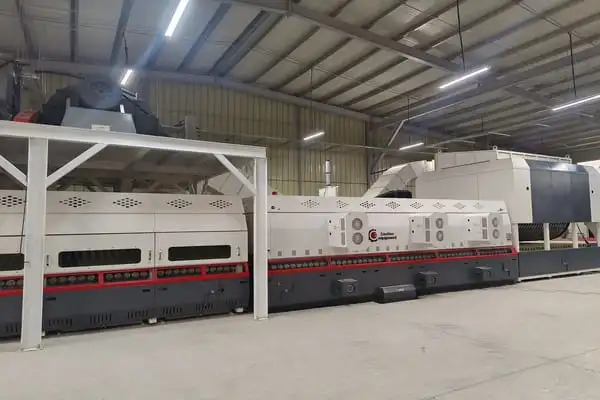
The Radiation Precision Flexible Roller Flat & Bent Glass Tempering Line addresses one of the most persistent challenges in modern glass manufacturing: processing both flat and curved glass to the same high standard without compromising efficiency or quality. By combining precision radiant heating with an adjustable flexible roller system, this equipment handles glass thicknesses from 5mm to 19mm across architectural, automotive, appliance, and decorative glass sectors. For procurement professionals evaluating capital equipment, this dual-function line offers measurable advantages in production flexibility, energy management, and long-term operational cost control.
Understanding Radiation Precision Flexible Roller Glass Tempering Technology
Before evaluating any tempering equipment purchase, it helps to understand exactly how the technology works and why the design choices matter for production outcomes.
How Radiation Heating Works in Tempering
Unlike convection-dominant systems that rely primarily on heated airflow, radiation tempering uses high-intensity heating elements to transfer thermal energy directly to the glass surface. This method delivers temperature accuracy within ±1°C across the furnace width, which significantly reduces the risk of uneven stress distribution. The result is glass with consistent mechanical strength that meets ASTM C1048 and EN 12150 fragmentation standards.
The Flexible Roller Architecture
The flexible roller assembly is built from high-temperature-resistant materials capable of dynamic curvature adjustment. This allows the equipment to process bending radii typically ranging from 400mm to 3,000mm, a specification range that rigid systems simply cannot match. The adjustable roller bed repositions automatically through the PLC control system, and operators can transition from flat to bent glass production in under 15 minutes.
Core System Components
The equipment's integrated control architecture runs on a stable Industrial PC (IPC) combined with a PLC interface. Operators store and recall hundreds of production recipes, which shortens changeover time between product runs. Compatible glass types include clear float, tinted, and patterned varieties. High-density composite insulation limits thermal energy loss by 20% compared to traditional furnace designs, maintaining a stable internal environment throughout production.
Advantages of Radiation Precision Flexible Roller Tempering vs Traditional Methods
A lot of companies still use hard roller systems that were only made for flat glass. These methods were useful for what they were made for, but the rising need for curved architectural glass and precision-formed car glass has made their flaws very obvious.
Because Radiation Precision Flexible Roller Flat & Bent Glass Tempering Lines can't handle different bending radii, manufacturers have to buy separate equipment just for projects that need to be bent. This means spending more on capital, needing more floor space, and having to pay more for maintenance. Systems that use a lot of convection also have a higher chance of "roller wave" distortion, which is a surface flaw measured in microns that blurs the view and can keep glass from meeting the strict requirements of high-end projects.
The radiation precision flexible roller system is better than other methods in the following ways:
- Two-in-One Processing Capability: The same line handles flat panels and high-curvature bent glass, eliminating the need for separate equipment. This consolidation directly reduces capital investment and simplifies maintenance scheduling for production teams.
- Precision Matrix Thermal Control: Easttec's multi-zone matrix radiant heating distributes heat uniformly across the entire glass sheet. This prevents optical distortion and "ghosting" artifacts, producing smooth, clear surfaces that satisfy the specifications of premium architectural and automotive glass projects.
- 20% Thermal Energy Savings: High-density composite insulation reduces heat loss by 20% compared to traditional models, lowering electricity consumption per production cycle. Over a full year of operation, this reduction translates into measurable cost savings that improve equipment ROI.
- Robust IPC and PLC Control: The system operates 24 hours a day without the reliability risks associated with consumer-grade touchscreen interfaces. Recipe storage and instant recall make product transitions fast and repeatable, which matters significantly for high-mix production environments.
These benefits directly address the issues that most buying teams bring up when they are looking at different pieces of equipment: the cost of energy, the uniformity of quality, the freedom of production, and the risk of downtime.
Practical Guide to Choosing Between Flat and Bent Glass Tempering Lines
To choose the right tempering line, you need to be honest about the products you already sell and where you see your order book going in the next three to five years.
A specialized flat glass tempering kiln may be less expensive at first if your plant only works with standard flat building glass that is all the same thickness and doesn't have any curved profiles. When your customers buy curtain wall corner units, side windows for cars, curved shower screens, or decorative internal glass, on the other hand, a flexible roller system is required rather than a choice.
Evaluating Production Flexibility Requirements
Look over the orders you've made in the last 12 months. A Radiation Precision Flexible Roller Flat & Bent Glass Tempering Line is likely to pay for itself in less than a year of production by cutting down on outsourcing and speeding up delivery times for orders with more than 20% non-flat profiles or custom curves.
Comparing Total Cost of Ownership
One thing that can change is the buying price. To figure out the total cost of ownership, you need to know how much energy is used per square meter of processed glass, how easy it is to get spare parts, and how often the tools need to be replaced. Global voltage standards, such as 220V, 380V, and 415V at 50/60Hz, can be used with Easttec's equipment. This means that US factories don't have to pay extra to adapt.
After-Sales Support and Certification
Make sure that your seller has CE certification and offers documented help after the sale. Easttec provides online technical support 24 hours a day, 7 days a week, as well as installation, commissioning, and operator training services. Within a week of training, most new operators are fully proficient in their duties.
Maintenance and Operational Best Practices for Radiation Precision Tempering Lines
A tempering furnace represents a significant capital investment. Protecting that investment requires consistent maintenance practices and a clear operating procedure for the production team.
Roller Calibration and Inspection
For high-precision applications, a weekly automated calibration check of the flexible roller assembly is advisable. A full mechanical audit every six months helps identify early signs of material fatigue before they affect glass quality. Digital scanning should confirm that peak-to-valley surface distortion stays below 0.05mm.
Radiation Element and Insulation Maintenance
Radiation heating elements should be inspected monthly for signs of degradation. The composite insulation lining requires periodic integrity checks to confirm that the 20% thermal retention advantage is maintained throughout the furnace's service life.
Quality Control Checkpoints
Production quality monitoring should cover four key vectors: roller wave measurement, fragmentation particle density per 50×50mm area, edge lift verification for bent glass (within 0.1% of total length), and anisotropy analysis using polarized light scanning to detect strain patterns. Differential pressure monitoring during quenching prevents glass warping from cooling imbalance.
Real-World Applications and Future Prospects of Radiation Precision Flexible Roller Tempering
This technology is being used in three high-demand areas where both function and surface appearance are very important.
In architectural facade projects, the system handles both custom-curved corner units and oversized flat panels for business buildings, making sure that the glass sharpness is the same throughout the whole installation. The flexible roller system is used to make side windows and sunroofs for cars, where precise curvature is needed for aerodynamic sealing and ECE R43 safety compliance. The system works without leaving any marks on the surface. When making high-end appliances, oven doors and curved refrigerator panels need to look good and be resistant to heat shock. This line regularly meets these requirements.
In the future, glass manufacturers who use IPC- and PLC-driven recipe management will already be ready to add monitoring features for Industry 4.0. Custom glass forms are becoming more popular in both home and business building. Production lines that can quickly switch between flat and complex profiles will have a big edge over their competitors.
Conclusion
The Radiation Precision Flexible Roller Flat & Bent Glass Tempering Line makes it possible for glass manufacturers to use a single production system to work with both flat and bent glass. With Easttec's multi-zone matrix radiant heating, changeable flexible roller assembly, IPC and PLC control design, and 20% thermal energy savings, the equipment meets the needs of high-end glass projects for quality, efficiency, and flexibility. This system is a good investment for factories that want to grow in the architectural, automotive, and specialty glass markets because it is CE-certified and comes with technical support 24 hours a day, 7 days a week.
FAQ
1. What glass thickness range does this system process?
The system processes both flat and bent glass from 5mm to 19mm, covering a wide range of architectural, automotive, and appliance applications.
2. How long does the transition from flat to bent glass production take?
The PLC control system adjusts the flexible roller bed and tempering parameters automatically. The transition typically takes under 15 minutes.
3. What is the minimum bending radius the flexible roller system can achieve?
Depending on the configuration, the system can typically achieve a minimum bending radius of 400mm for 4mm glass while maintaining high optical quality.
4. Can this line process Low-E coated glass?
Yes. The radiation precision control can be adjusted to manage the reflective properties of high-performance coatings, preventing over-firing during the heating cycle.
5. What certifications does the equipment carry?
The equipment meets CE standards, supporting export and installation in markets worldwide, including the United States.
6. What after-sales support does Easttec provide?
Easttec provides 24-hour online technical support, on-site installation, commissioning, and operator training. New operators typically master full operation within one week.
Request a Quote from EASTTEC EQUIPMENT for Your Tempering Line Project
Since 1994, EASTTEC EQUIPMENT has been making heat processing equipment for glass. Their production team has designed both flat and bent glass tempering furnaces before. Our team is ready to give you expert advice, thorough specifications, and a fair quote whether you are looking for a Radiation Precision Flexible Roller Flat & Bent Glass Tempering Line manufacturer for a new building or to increase the production capacity of an existing one. Get in touch with us at sales@easttecmachine.com to begin the talk.
References
1. Glass International – Annual Review of Flat Glass Processing Technologies, 2023.
2. ASTM International – Standard Specification for Heat-Treated Flat Glass (ASTM C1048), 2023.
3. European Committee for Standardization – EN 12150-1: Thermally Toughened Soda Lime Silicate Safety Glass, 2015.
4. Glass Worldwide Magazine – Energy Efficiency Trends in Industrial Glass Tempering, 2022.
5. Journal of Materials Processing Technology – Thermal Stress Distribution in Radiation-Tempered Curved Glass Panels, 2021.
6. Buildings and Cities Journal – Curved Glazing in Contemporary Facade Design: Performance Requirements and Processing Standards, 2022.

USER EVALUATE
Here is the customer's evaluation of us