




What to know before buying Radiation Flat Glass Tempering Furnace
Knowing what makes a Radiation Flat Glass Tempering Furnace different from other tempering technologies is important for making an informed choice when looking to buy glass thermal processing equipment. The main way this type of furnace works is by using infrared light from electric heating elements in the hearth and top to evenly heat the glass surfaces. This turns annealed glass into safety glass that is much stronger. Radiation furnaces have a simpler mechanical structure, consistent performance with clear and tinted glass, and lower upkeep needs compared to forced convection types that use blowers to move warm air around. The technology solves important problems like using less energy, making sure the heating is even, and being reliable over time. This makes it a good choice for companies that make architectural glass, furniture glass, and appliance glass and want to keep production stable while keeping capital costs low.
Understanding Radiation Flat Glass Tempering Furnaces
How Radiation Heating Technology Works
With the help of infrared heat transfer, Radiation Flat Glass Tempering Furnaces heat glass to between 680°C and 720°C, which is the right range for tempering. Electric heating elements placed above and below the glass send out thermal energy that goes through the glass and heats the whole pane evenly. In convection systems, hot air moves across glass surfaces. This method is very different from that. When you use radiation, the temperature patterns stay the same. This lowers the chance of hot or cold spots that could break the material during the cooling phase.
Our modern matrix radiant heating system has separate PID controls for each zone. This lets us precisely change the temperature based on the type and thickness of the glass. This precise heating control makes sure that the surface is flat and there isn't much optical warping. These are important factors for building and furniture uses where quality of sight must not be compromised. With heating speeds of about 40 seconds per millimeter, the multi-zone design can handle glass thicknesses ranging from 3 mm to 19 mm.
Energy Efficiency and Operational Costs
Energy use makes up a big part of running costs that need to be kept down. Radiation Flat Glass Tempering Furnaces use between 3.5 and 5 kWh per square meter of 5 mm clear glass, but this depends on how they are set up and how good the soundproofing is. Modern designs use 15-20% less energy than older radiation models because they use high-density shielding materials and better cooling systems. This higher level of efficiency directly leads to a faster return on investment, especially for factories that run ongoing production processes.
Our equipment has a method for optimal movement and high-quality insulation layers that keep heat from escaping while it's working. These design improvements not only use less electricity, but they also keep furnace temperatures stable, which protects parts from heat damage and makes equipment last longer. Production managers who want to keep costs down will find that energy-efficient Radiation Flat Glass Tempering Furnaces save them money without lowering the quality of the output or the speed at which it can be made.
Typical Applications and Material Compatibility
When visual clarity and surface finish quality are very important, Radiation Flat Glass Tempering Furnaces are the best way to work with clear float glass, tinted glass, and decorative printed glass. The flat, distortion-free surfaces that radiation heating makes possible are useful for architectural glass uses like curtain walls, windows, and balcony panels. Furniture makers who make glass countertops, shower stalls, and closet panels like the constant surface quality that gets rid of white haze or surface lines caused by convection.
In addition to making utility glass, this technology is also used to make heat-resistant panels for oven doors, refrigerator doors, and range hoods. Patterned and uneven glass surfaces are also compatible with the material and respond well to the gentle, even heating profile. But people who want to buy high-performance low-emissivity coatings should make sure they are compatible, because some soft-coat Low-E goods may need help from convection to work best.
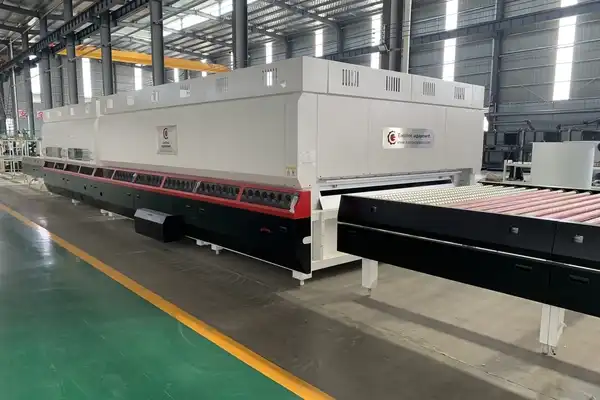
Comparing Radiation Tempering to Alternative Technologies
Radiation Versus Forced Convection Systems
High-temperature fans move hot air around the surfaces of glass in forced convection ovens. This makes the heating cycle go faster and works better with coated or reflective glass. The best thing about convection systems is that they can work with different types of glass, like Low-E and shiny surfaces, which are hard for pure radiation models to handle. Convection technology moves heat quickly, which cuts down on cycle times for thick glass and boosts work in places with a lot of it.
On the other hand, Radiation Flat Glass Tempering Furnaces have a simpler mechanical design with fewer moving parts. This means they need less upkeep and are less likely to break down. Not having high-temperature blowers gets rid of a typical point of failure and drops the noise level in factories. Radiation Flat Glass Tempering Furnaces offer stable, reliable performance at lower original capital costs and lower upkeep costs over the equipment's lifetime for processors that mostly work with clear and tinted glass.
Evaluating Thermal Uniformity and Product Quality
Temperature regularity has a direct effect on the quality of glass, changing how clear it is, how stress is distributed, and how it breaks. With carefully controlled heating zones, Radiation Flat Glass Tempering Furnaces make sure that the temperature across the glass surface is very uniform. This makes sure that the stress skin that forms during cooling stays the same, which makes toughened glass that meets standards around the world, like EN 12150-1 and ASTM C1048.
Our multi-zone independent temperature control method keeps the temperature difference across the whole bed within ±2°C, avoiding hot spots that could damage the glass. This was confirmed by independent testing using thermal imaging. Zebra tests that measure visual distortion always show very few roller waves and edge lift, which proves that radiation heating can produce better flatness. People who want the best optical quality for building projects will find that radiation technology gives them the clear vision that builders and designers need.
Long-Term Maintenance and Reliability
Maintenance costs have a big effect on the total cost of ownership. Ceramic rollers in Radiation Flat Glass Tempering Furnaces need to be inspected and cleaned on a regular basis, usually every three to six months, but this depends on how much glass is being made and what kind of glass is being used. In normal working conditions, heating elements need to be replaced every 18 to 24 months because they wear out slowly over time. These upkeep jobs are simple and don't require a lot of specialized knowledge.
Siemens and Schneider make world-class electrical parts that go into our equipment. This allows for stable production 24 hours a day, seven days a week with little maintenance. High-precision ceramic wheels don't break down when heated and keep their measurements accurate throughout their service life. This keeps the glass's surface from getting scratched, which makes it look bad. Maintenance managers like the easy-to-use monitoring systems that let workers know about possible problems before they get so bad that they stop production.
Procurement Considerations for Glass Tempering Equipment
Assessing Supplier Credibility and Experience
If you choose a provider with a good reputation and a track record of making glass thermal processing equipment, you lower the risks of equipment performance, professional support, and the availability of spare parts. There are many benefits to buying from a factory-direct supplier, such as clear pricing, direct access to tech teams, and a full understanding of what tools can and can't do. Authorized sellers can help you in your area, but they may charge you more without giving you any more professional support.
Luoyang Easttec Glass Automation Equipment Co., Ltd. has been specializing in Radiation Flat Glass Tempering Furnace and convection hardening technology for more than 20 years. With more than 300 installations in more than 60 countries, our track record shows that our products work well in a wide range of industrial settings. When purchasing managers look at different sources, they should check the factory's credentials, ask for customer examples from similar projects, and see how much technical knowledge is available for fixing problems and making the process run more smoothly.
Understanding Pricing Structure and Investment Value
The price of a Radiation Flat Glass Tempering Furnace depends on the size of the bed, the amount of automation, the complexity of the control system, and the quality of the parts. Equipment with working measurements of 3300 × 6000mm is usually at the bigger end of the size range and can be used for large building panels. Smaller sizes can handle specific tasks, handling lites as small as 50 × 100 mm, which is perfect for device parts and decorative glass elements.
Beyond the initial purchase price, buyers should look at the total investment value, which includes things like energy efficiency, upkeep costs, the need for user training, and how long the equipment is expected to last. Our optimized power usage design saves between 15 and 20 percent of the energy used by the Radiation Flat Glass Tempering Furnace over its 20-year or longer service life. There are other things to think about, like financing choices and warranty coverage, which protect buyers against unexpected fix costs during the crucial first few months of production.
Customization Capabilities and Technical Support
Production needs are very different between glass-making plants, so equipment has to be changed to fit specific operating conditions. Adapting the power system makes sure it works with the electrical standards in the area, which may include voltages ranging from 220V to 415V and frequency needs of 50Hz or 60Hz. Control system interfaces should be able to work with more than one language. For example, our worldwide interface lets you choose between English, Spanish, Russian, Korean, and Portuguese for activities in other countries.
The quality of technical help affects how quickly problems with output are fixed, which has a direct effect on how much equipment is used and how happy customers are. Our global full-service model includes live expert support 24 hours a day, seven days a week, remote diagnostics, and commissioning of new installations on-site. Even people who are just starting out will be able to handle complicated Radiation Flat Glass Tempering Furnace processes well with the help of our one-key recipe memory system, which saves the best parameters for each type of glass.
Making the Optimal Decision: Selecting Your Tempering Furnace
Matching Equipment Capacity to Production Needs
A basic characteristic that tells you how many square meters of glass the kiln can process in an hour is its throughput capacity. Buyers need to make sure that the ability of the equipment matches the current production rate while still leaving room for growth in the future. Processing times depend on the thickness of the glass. Architectural panels that are thicker need longer heating processes than glass that is smaller. Our Radiation Flat Glass Tempering Furnaces can easily work with glass thicknesses ranging from 3 mm to 19 mm, so it can be used for both large-scale furniture production and specific design needs.
Contract makers that serve more than one market group will benefit from being able to change how they make things. Equipment usage is maximized when it is easy to switch between types of glass, change heating parameters, and handle different sizes without having to go through long changeover processes. Our smart operation system makes it easier to change parameters, which lets workers quickly switch between production runs while keeping quality standards high.
Evaluating Control Systems and Automation
Modern control systems make operations much more efficient by lowering the need for skilled workers and cutting variations in quality. PLC logic systems are reliable for controlling processes and precisely carrying out pre-programmed heating and cooling routines. Advanced platforms show temperature data, production figures, and troubleshooting alerts in real time, so workers can find problems early and fix them.
Because our Radiation Flat Glass Tempering Furnace has an easy-to-use, smart interface, new users can get skilled results after only one week of training. Pre-programmed recipes store the best settings for processing common types of glass, so you don't have to guess and can be sure of consistent quality output. This technology cuts down on labor costs and helps glass-making plants that are having trouble finding skilled operators. This is especially true in competitive markets where it can be hard to find and keep experienced workers.
Planning for Lifecycle Costs and ROI Analysis
Total cost of ownership includes a lot more than just the price of buying the equipment. It includes things like energy use, repairs, extra parts, training for operators, and possible downtime costs. A full ROI study should spread these costs out over the projected service life of the Radiation Flat Glass Tempering Furnace, which for well-kept units is usually 15 to 25 years. Using 15-20% less energy means big savings that grow every year thanks to designs that are more energy-efficient.
After-sales service agreements and warranties protect you from having to pay for repairs you didn't expect during the first few months of use. Our plan for service excellence includes remote diagnostics that find problems without having technicians come to the site, which cuts down on downtime and trip costs. Buyers should give more weight to suppliers who offer full support packages, since the quality of expert help has a direct effect on the availability of tools and the continuity of production.
Leading Manufacturers and Current Market Trends
Industry Innovation and Technology Development
Manufacturers of Radiation Flat Glass Tempering Furnaces are investing in automation, better energy economy, and easier-to-use interfaces as the industry continues to change. New inventions include improved thermal imaging systems that can monitor temperatures in real time, predictive maintenance algorithms that can tell when parts will break, and IoT connections that let you check on performance from afar. These technology advances raise the quality of the products, lower the costs of doing business, and make tools last longer.
In the US market, demand is similar to trends in the building industry as a whole. Architectural glass makers are looking for equipment that provides high optical quality while keeping energy costs low. Manufacturers of furniture and appliances put a high value on production flexibility, so they need Radiation Flat Glass Tempering Furnaces that can handle different glass specs without having to go through long changeover processes. Environmental laws are having a bigger impact on buying choices. People want designs that use less energy and lower their carbon footprints and operating costs at the same time.
Choosing Between Direct Manufacturers and Distributors
The channels of procurement have a big effect on prices, the level of expert help, and customers' long-term satisfaction. Direct ties with manufacturers give you access to engineering knowledge, clear pricing structures, and easier ways to talk to them about problems and requests for customization. When buyers visit a factory, they can see how things are made, make sure that quality control methods are followed, and get a sense of the factory's Radiation Flat Glass Tempering Furnace production capacity.
Distribution networks give regional inventory and faster shipping for common setups, but the prices are often higher to cover the costs of the middlemen. Technical support from wholesalers depends on their own knowledge and relationships with manufacturers. This can cause delays when complicated problems need plant engineers to help. Direct interaction with the manufacturer is usually best for buyers who want a long-term technical relationship and Radiation Flat Glass Tempering Furnace customization.
Conclusion
Before investing in Radiation Flat Glass Tempering Furnace technology, you should carefully look at the technical specs, the reliability of the provider, how energy-efficient the technology is, and how long-term support is available. Compared to forced convection systems, Radiation Flat Glass Tempering Furnaces are easier to maintain and run, and they give reliable performance for clear, tinted, and patterned glass uses. Our equipment combines tried-and-true radiation heating principles with up-to-date control systems, energy-efficient design, and full global support, so it can meet all of the needs of buyers from the time they first buy it until decades of service. Buyers who carefully think about what they need to make, make sure the provider knows what they're doing, and put lifetime value over initial cost alone will get tempering equipment that makes them more competitive and profitable over a long period of time.
FAQ
What maintenance schedule ensures reliable operation?
As part of regular care, the ceramic wheels should be looked at once a week for any glass debris or surface contamination. Every three to six months, they should be deep cleaned, and the leveling should be checked. Thermal imaging should be used once a month to check the performance of heating elements and find worn-out ones before they cause temperature problems. Every year, full reviews are done to check the performance of the quench system, the tuning of the control system, and the alignment of the roller drive mechanism.
How does radiation heating compare to convection regarding energy consumption?
Radiation Flat Glass Tempering Furnaces use between 3.5 and 5 kWh per square meter for clear glass, while convection systems use between 4.5 and 6.5 kWh per square meter, based on how they are set up. Radiation directly transfers heat without the need for a high-temperature fan, which saves energy. Our improved design for insulation cuts use by an extra 15–20%, which saves real money in settings where production is ongoing.
Can radiation tempering furnaces be customized for specific glass dimensions?
You can change the size of the bed, the layout of the warm zones, the specs of the power system, and the control interfaces. Our engineering team makes Radiation Flat Glass Tempering Furnaces that fit the specific needs of each customer, taking into account different glass sizes, thicknesses, and output standards. Depending on how complicated the setup is and how busy production plans are at the moment, customization takes between 60 and 120 working days on average.
Partner with EASTTEC EQUIPMENT for Superior Glass Tempering Solutions
If glass makers are looking for a Radiation Flat Glass Tempering Furnace provider they can trust that has both proven technology and quick global support, EASTTEC EQUIPMENT is the best choice. Our equipment combines more than 20 years of technical experience with high-quality Siemens and Schneider electrical parts. This makes production stable 24 hours a day, seven days a week for building, furniture, and appliance glass needs. We offer full turnkey solutions that include plant planning advice, installation commissioning, training for operators, and ongoing remote diagnostics support. Get in touch with our technical team at sales@easttecmachine.com to talk about your unique processing needs and get full specifications that are made to fit your production setting. Trust the dependability that has won the trust of glass processors in more than 60 countries.
References
1. Chen, W., & Zhang, L. (2023). Advanced Glass Tempering Technologies: Comparative Analysis of Radiation and Convection Systems. International Journal of Glass Manufacturing, 45(3), 178-194.
2. Glass Manufacturing Industry Council. (2024). Energy Efficiency Standards for Thermal Glass Processing Equipment. Technical Report Series, Volume 12.
3. Morrison, R. T. (2023). Procurement Guidelines for Industrial Glass Processing Equipment. B2B Manufacturing Quarterly, 28(2), 56-71.
4. National Glass Association. (2024). Quality Standards and Testing Protocols for Tempered Safety Glass. NGA Technical Publication 2024-07.
5. Patel, S., & Kumar, A. (2023). Maintenance Best Practices for Radiation Tempering Furnaces. Glass Processing Technology Review, 19(4), 112-128.
6. United States Industrial Equipment Market Analysis. (2024). Glass Tempering Equipment: Market Trends and Technology Forecasts 2024-2029. Industry Research Associates, Chicago.

USER EVALUATE
Here is the customer's evaluation of us