




What Should Buyers Evaluate When Sourcing a Radiation Glass Toughening Machine?
When sourcing a Radiation Glass Toughening Machine, buyers should evaluate seven things: compatibility with their actual glass, heating and quenching quality, capacity and energy use, quality and safety compliance, supplier service, customization options, and total cost of ownership. A machine that looks strong on a specification sheet may still struggle with your thickness range or product mix. Sample testing, written specifications, and clear acceptance criteria separate a safe purchase from a costly one. At EASTTEC EQUIPMENT, we have worked with glass tempering technology since 1994, and this guide shows how we would review a purchase with you.
The term can mean two things. Some buyers use it for a tempering furnace that heats glass with radiant electric elements. Others mean equipment for radiation-shielding glass, such as lead glass. This guide covers both views, and we say plainly where a buyer needs sample testing before any commitment.
Start With Your Glass and the Tempering Process
How the Heating and Quenching Cycle Works
A Radiation Glass Toughening Machine heats cut glass to about 620–650°C, then cools both surfaces quickly with air. The outer layers harden first and lock in compression, while the core stays in tension. This balance gives tempered glass roughly four to five times the impact resistance of annealed glass of the same thickness. In a radiant furnace, electric heating elements send heat directly to the glass surface. Buyers should ask how the supplier monitors temperature, stores recipes, and controls quench pressure. No universal setting exists, because the right parameters depend on glass type and thickness. Ask to see process data from a test run.
Check Compatibility With Your Specific Glass
Glass types behave differently in a furnace. Lead glass, barium glass, borosilicate, coated panels, and laminated parts vary in density, thermal expansion, and softening behavior. Our radiant heating tempering furnace is engineered for clear float, tinted, and decorative printed glass. If you work with shielding glass or other specialty formulations, we recommend sample testing and written confirmation before any order. Coated glass also needs a close look, since many soft-coat products call for forced convection. We build forced convection furnaces as well, so we can compare both technologies against your product instead of pushing one answer.
Match Thickness and Size to Your Product Mix
Start with the smallest and largest pieces you plan to run. Our machines process glass from 3 mm to 19 mm thick. The largest model offers a 3300 × 6000 mm loading area, and the smallest model handles lites down to 50 × 100 mm. Thick panels need longer heating cycles and even quenching, so ask for test results at your heaviest thickness. Small lites need steady roller support to avoid shifting. Loading glass of one thickness per batch also helps each sheet absorb heat consistently. Share these limits early, because they decide the model, the layout, and the price.
Compare Heating Design, Controls, and Furnace Configuration
Heating Zones and Temperature Uniformity
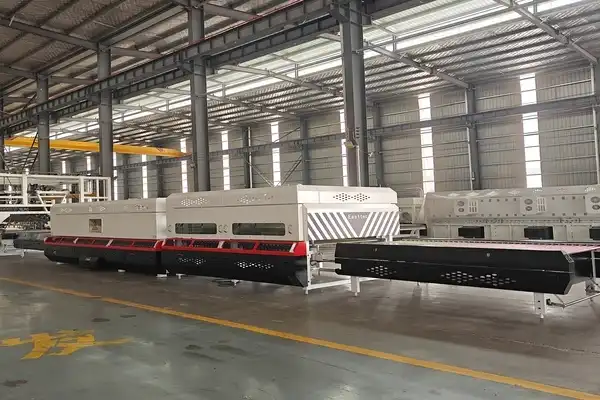
Heating uniformity is a key factor in achieving flatness and optical clarity with a Radiation Glass Toughening Machine. Our furnace uses a multi-zone matrix radiant heating system, with each zone equipped with its own PID controller. This setup allows operators to correct hot or cold areas rather than accept uneven heating. Tinted and printed glass absorb heat differently from clear glass, so zone-level control provides greater flexibility for adjusting heating parameters. Insulation and airflow design also matter because they affect heat loss and heating response. When comparing suppliers, ask for temperature maps, zone counts, and flatness results using glass similar to yours. Testing samples can demonstrate the actual performance differences more effectively than any brochure.
Control Software and Operator Training
Skilled operators are hard to find, so software matters. Our system includes one-key recipe recall, which lets new operators run saved tempering programs with consistent results. The menu comes in English, Spanish, Russian, Korean, Portuguese, and other languages. New operators can learn operation and maintenance within one week. Siemens and Schneider electronics support stable operation, and real-time remote monitoring lets our technicians review the machine with your team. Ask every supplier about recipe storage, alarms, access levels, and data logging. These features support traceability, which matters for medical and industrial glass.
Horizontal, Vertical, Continuous, or Batch
Configuration should follow your product format and floor plan. Horizontal systems are common for large flat panels and higher output. Vertical systems may suit smaller formats or tight floor space. Continuous furnaces deliver steady output for standard products, while batch furnaces handle frequent changes in thickness or size better. Radiant heating suits clear, tinted, and decorative printed glass, and forced convection serves products that need stronger air circulation. Our team reviews your size range, daily output, and product variety before recommending a layout. Compare real sample output from each option, not only the labels on the quotation.
Calculate Capacity, Energy Use, and Total Ownership Cost
Work Out Effective Output
Maximum glass size tells you little about daily output. Use this formula: effective output = theoretical capacity × equipment usage rate × acceptable yield rate. For example, a line with 1,000 m² of theoretical daily capacity, 80% usage, and 95% yield delivers 760 m² of sellable glass. That example is only an illustration. Cycle time, changeovers, product mix, and operator workflow all affect the result. Ask each supplier to state the thickness, size, and cycle assumptions behind every capacity claim. Plant managers should then compare those figures with their own order history.
Compare Energy Use on Equal Terms
Tempering uses a lot of electricity, and the U.S. EPA ENERGY STAR guide for the glass industry treats energy as a major operating cost. For buyers evaluating a Radiation Glass Toughening Machine, energy efficiency is an important factor in controlling long-term operating expenses. Our insulation and airflow design reduce energy use by 15–20%, which can shorten payback time. Still, verify any savings claim. Ask suppliers to measure kilowatt-hours per square meter using the same glass thickness and load pattern. Include standby time, cooling, and compressed air in the comparison. Buyers who check only peak furnace power often miss these costs. A written energy test in the contract protects your budget.
Count Every Cost of Ownership
Purchase price is one line in the budget. Rollers, heating elements, sensors, fans, bearings, software support, installation, training, and downtime all add cost over the years. A cheaper machine with slow service can lose more money through missed deliveries than it saves at purchase. Our turnkey service covers layout, installation, commissioning, operator training, and after-sales support, so buyers can plan these costs at the start. Delivery takes 60–120 working days depending on the model, since each furnace is customized. Build that lead time into your project schedule, and ask for a spare-parts list with the quotation.
Verify Quality, Safety, and Supplier Support
Define Quality Tests Before You Buy
Write your finished-glass requirements into the purchase agreement. Common checks include fragmentation, surface stress, flatness, bow and warp, optical distortion, and edge condition. Standards such as ASTM C1048, EN 12150-1, and ANSI Z97.1 give buyers and suppliers a shared basis for these tests. Agree on pass and fail limits in writing. Run factory and site acceptance tests with your own glass whenever possible. Keep radiation-shielding performance separate, including lead-equivalent value, coating adhesion, and laminate integrity, because a tempering furnace does not measure these. A qualified lab or your quality team should confirm them on finished samples.
Review Safety and Compliance
Safety review protects people and your project timeline. Check guarding, interlocks, emergency stops, over-temperature protection, and electrical design. ISO 12100 describes risk assessment for machinery and gives your team a clear method. Our equipment complies with CE standards, and we can discuss the documents that come with each machine. For a U.S. plant, confirm local electrical rules, supply voltage, and inspection needs with your electrician or local authority before final design. Our furnaces support voltages such as 220V, 380V, and 415V at 50/60 Hz, and we review your plant supply during project design.
Judge Service Strength and Track Record
A furnace runs for many years, so the supplier's support matters as much as the design. When investing in a Radiation Glass Toughening Machine, buyers should evaluate not only its technical performance but also the supplier's long-term service capabilities. EASTTEC EQUIPMENT has worked with glass tempering technology since 1994, and our technicians provide 24-hour online support. Our one-stop process covers everything from preliminary inquiries and project design to production, installation, commissioning, operator training, and after-sales service. Ask every supplier for export references, spare-parts policies, and response times in writing. Factory visits and equipment demonstrations are also helpful. Buyers typically need three to twelve months to make a decision, and an on-site visit often answers questions that emails cannot.
Avoid Sourcing Mistakes and Plan for Growth
Common Mistakes in Equipment Contracts
Most equipment problems start with incomplete definitions, not poor machines. Buyers often choose a conventional system without testing their real glass, compare quotes by price alone, or accept capacity claims with no stated conditions. Another frequent gap involves plant readiness. Confirm electrical supply, ventilation, cooling, compressed air, floor loading, crane access, and maintenance clearance before the order. Put sample-production targets, acceptance steps, training, warranty terms, and response times in the contract. Our project design stage covers layout and utility planning, so these points surface early.
Build a Simple Supplier Scorecard
A scorecard keeps procurement, engineering, production, and quality teams on the same page. List your glass type, thickness, sizes, monthly output, and certification needs. Then weight each factor: compatibility, quality, capacity, energy use, automation, safety, service, lifecycle cost, and delivery. Send every supplier the same request for specifications, layouts, utility needs, energy estimates, test plans, warranty terms, and spare-parts lists. Score the answers side by side, then verify the leading candidates with sample tests. This method turns a long decision into a fair comparison, and it gives a general manager clear reasons behind the final choice.
Plan for Customization and Future Needs
Your product mix will change, so ask how each machine adapts. We customize equipment size, heating curves, cooling parameters, voltage and frequency, software language, and even equipment color. We also offer advisory services for glass deep-processing, personnel training, and equipment modification. Ask suppliers about remote diagnostics, spare-parts planning, and retraining for new hires. Digital recipe management and production-data records make traceability simpler and can reduce troubleshooting time. If your range may grow past one model's limits, raise that topic early. A supplier who stays involved after installation protects the value of your investment.
Conclusion
Sourcing a Radiation Glass Toughening Machine works best when buyers test their own glass and write clear requirements before signing. The main points are compatibility with glass type, thickness, and size; heating uniformity and control software; effective output and energy use measured on equal terms; quality and safety checks tied to recognized standards; and supplier service that includes installation, training, and remote support. Buyers who compare real sample results, total ownership cost, and contract terms avoid the most common sourcing errors. The practical result is a purchase that fits the product mix, protects delivery schedules, and keeps operating costs predictable over the life of the furnace.
FAQ
Can a Radiation Glass Toughening Machine process lead or shielding glass?
Do not assume so. Results depend on glass formulation, thickness, and size. Our machine is engineered for clear float, tinted, and decorative printed glass, so we recommend sample testing and written confirmation for specialty formulations. Ask any supplier for test data on your glass before you order.
How long does delivery take?
Each furnace is customized. Delivery takes 60–120 working days, depending on the model. Share your project timeline early so we can plan production and shipping around your start-up date.
Can the furnace match my plant's voltage and language?
Yes. We support voltages such as 220V, 380V, and 415V at 50/60 Hz, and the menu is available in English, Spanish, Russian, Korean, Portuguese, and more. We confirm your exact electrical supply during project design.
Request a Radiation Glass Toughening Machine Evaluation from EASTTEC EQUIPMENT
Send your glass type, thickness range, size limits, target output, and destination to sales@easttecmachine.com. As a Radiation Glass Toughening Machine manufacturer with tempering experience since 1994, EASTTEC EQUIPMENT can review your project, discuss sample testing, and propose a configuration with installation, training, and 24-hour online support. Visit easttecglass.com for product details.
References
1. ASTM International, Standard Specification for Heat-Treated Flat Glass (ASTM C1048), 2018
2. European Committee for Standardization, EN 12150-1: Glass in Building – Thermally Toughened Soda Lime Silicate Safety Glass, 2015
3. American National Standards Institute, ANSI Z97.1: Safety Glazing Materials Used in Buildings, 2015
4. Elsevier, Fundamentals of Inorganic Glasses (Varshneya and Mauro), 2019
5. U.S. EPA ENERGY STAR, Energy Efficiency Improvement and Cost Saving Opportunities for the Glass Industry, 2008
6. International Organization for Standardization, ISO 12100: Safety of Machinery – General Principles for Design – Risk Assessment and Risk Reduction, 2010

USER EVALUATE
Here is the customer's evaluation of us