




How to Choose a Radiation Glass Toughening Machine for Architectural Glass Production?
To choose a Radiation Glass Toughening Machine for architectural glass production, start with your glass: type, thickness, size, and daily output. Then check the working dimensions, heating uniformity, zone control, energy use, and automation. Compare suppliers on customization, installation, training, and after-sales support. Finally, calculate total ownership cost, not just the purchase price. A machine that fits your product mix, helps you meet standards such as ASTM C1048 and ANSI Z97.1, and comes with responsive service will protect your yield and your delivery dates. Below, I walk through each step so you can decide with confidence.
Start With Your Glass, Application, and Production Requirements
A good machine decision begins with your product, not the brochure.
Define Your Glass Type, Size, and Output
List what you temper every week. Write down the glass type (clear float, tinted, or decorative printed), thickness, largest and smallest panel sizes, and monthly output in square feet. Architectural work often mixes 6 mm shower doors with 12 mm or 19 mm storefront panels, so note every thickness, not just the average. Add targets for flatness and optical clarity, plus downstream steps such as laminating or insulating. A one-page requirement sheet keeps every supplier quoting the same job. Our radiant tempering line handles 3 mm to 19 mm glass, which meets standard architectural and furniture requirements.
Understand How a Radiation Glass Toughening Machine Works
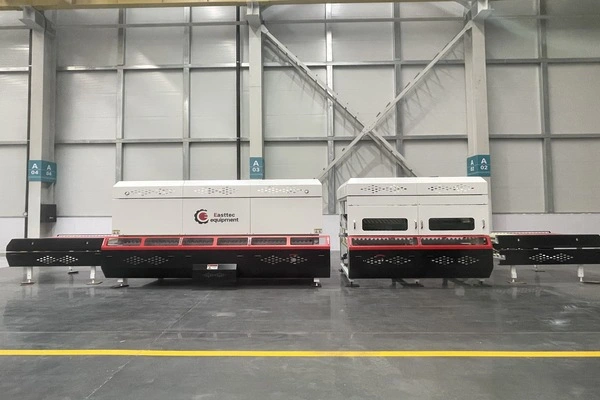
A Radiation Glass Toughening Machine heats glass with electric radiant elements to roughly 620–650°C, close to its transformation range. High-pressure air then cools the surfaces fast. The outside hardens first while the core stays hot, which locks compression into the surface. That stress pattern gives tempered glass about 4–5 times the impact resistance of annealed glass. The cycle runs from loading to heating, quenching, cooling, unloading, and inspection. One note on terms: "radiation" here means radiant heat, not radiation shielding. Lead-bearing shielding glass behaves differently in a furnace, so test samples before you commit.
Match the Machine to Your Application
Architectural work leans on clarity and flatness. Shower enclosures, interior partitions, and storefront glass show every wave in daylight. Furniture glass, such as tabletops and cabinet doors, needs clean edges and even strength. Appliance makers, for example, oven door producers, face sharp thermal gradients, and solar glass processors need steady output across long runs. A radiant furnace suits clear, tinted, and decorative printed glass. If your orders include soft-coat Low-E, a forced convection furnace usually fits better because it protects the coating. EASTTEC EQUIPMENT builds both types, so we can point you to the right one.
Technical Specifications That Matter Most
Spec sheets can look alike. These three areas separate machines that perform from machines that only quote well.
Check Working Dimensions and Thickness Range
When evaluating a Radiation Glass Toughening Machine, ask for the effective loading size, not just the nominal furnace size. Our largest model offers a 3300 × 6000 mm loading area (about 130 × 236 inches), while our smallest model handles glass lites as small as 50 × 100 mm. The processing thickness ranges from 3 mm to 19 mm. Compare these specifications with your largest and smallest orders. Also, ask about the maximum panel weight and conveying stability, since heavy 19 mm panels place significant loads on the rollers. Leave some capacity for future product requirements so the furnace does not limit your business growth over the next three years.
Evaluate Heating Uniformity and Zone Control
Uneven heat causes bow, roller wave, and breakage. Our matrix radiant heating system gives each zone its own PID controller, so the furnace adjusts heat across the load instead of using one average setting. Ask every supplier how many zones the furnace has and what temperature accuracy it holds, and get that figure in writing. Then check the results. For 4–12 mm float glass, EN 12150-1 requires at least 40 particles in any 50 × 50 mm area during fragmentation testing. ASTM C1048 sets minimum surface compression for fully tempered glass at 69 MPa (10,000 psi).
Compare Radiant and Forced Convection Systems
Radiant heating moves energy directly from the elements to the glass. That keeps the mechanical design simpler and works well for clear, tinted, and printed glass. Forced convection adds circulating hot air, which helps with heat-reflective glass such as soft-coat Low-E. If your mix leans toward coated glass, plan for convection. If it leans toward standard clear and tinted glass, a radiant machine can meet your quality targets with less mechanical complexity. Also compare layouts. Horizontal systems suit large architectural panels and are the usual choice for flat glass tempering.
Evaluate Manufacturers, Suppliers, and Export Partners
A strong machine still needs a strong team behind it.
Look for Application Experience and Credentials
Ask each Radiation Glass Toughening Machine manufacturer how long they have built tempering equipment and which glass types they run. Luoyang Easttec Glass Automation Equipment Co., Ltd. has worked in glass tempering technology since 1994, and our technicians have spent more than twenty years on glass deep-processing equipment. Our machines comply with CE standards. Request customer references, a factory tour, and a live demonstration. A supplier who welcomes technical questions and factory visits early usually keeps that openness after the sale. We welcome buyers from around the world at our factory.
Confirm Customization for Your Plant
Every plant has different power, floor space, and product lists. EASTTEC EQUIPMENT adapts furnaces to local electrical standards, including 220V, 380V, and 415V at 50/60Hz. We also configure equipment size, heating curves, cooling parameters, and color. The operating menu comes in several languages, including English and Spanish. For a US site, send us your voltage, frequency, ceiling height, and utility limits, and ask your local electrical inspector about NFPA 79 requirements for industrial machinery. Clear answers at this stage prevent costly changes during installation.
Test the After-Sales Service
Downtime costs more than most buyers expect, because late deliveries hurt customer trust. Ask what the supplier provides after shipping: installation, commissioning, operator training, spare parts, and troubleshooting. Our one-stop process runs from preliminary inquiry and project design through manufacturing, installation, training, and after-sales service. Our technicians offer 24-hour online support, and the machine supports remote monitoring and digital troubleshooting. Our software also helps new operators learn operation and maintenance within about a week, which matters when skilled labor is hard to find. Request the spare parts list for heating elements, rollers, blowers, and sensors before you sign.
Build a Practical Procurement and Cost Evaluation Method
Price is only one line in your budget. These steps help you compare offers fairly.
Look Beyond the Purchase Price
Total ownership cost includes equipment, shipping, installation, power use, spare parts, labor, and glass lost to rejects. Energy matters most over time because tempering runs many hours a day. Our insulation and airflow design reduces energy use by 15–20%, which shortens payback. Ask each supplier for installed power, estimated energy per load, and the output assumptions behind those numbers. Then compare every quote under the same conditions, such as identical glass thickness and daily output. A lower quote that leaves out accessories, commissioning, or training often ends up costing more.
Avoid Common Selection Mistakes
I see the same errors again and again when buyers select a Radiation Glass Toughening Machine. They pick a furnace based on maximum glass size and forget to consider weight, edge clearance, or thickness range. Some skip the facility check and later discover that transformer capacity, ventilation, or foundation strength falls short. Others judge distortion under shop lighting instead of daylight. Another common mistake is choosing the lowest bid without any process validation. Treat Low-E and lead-bearing glass as special cases, since they heat differently from clear float glass. Write down your most challenging product specifications and ask the supplier to confirm in writing that the machine can handle them.
Plan Delivery, Site Preparation, and Ramp-Up
Tempering furnaces are built to order. Delivery takes 60 to 120 working days, depending on model and configuration. Use that time to prepare the site: foundation, power supply, ventilation, compressed air, cooling, and a clear path for moving the furnace inside. Plan operator training before startup, and schedule trial runs with your real products. Ask the supplier for installation drawings early so your electricians and contractors can work in parallel. A good ramp-up plan takes you from commissioning to steady production without lost weeks.
A Step-by-Step Selection Process You Can Follow
Now let's turn the pieces above into a simple decision path.
Follow Five Clear Steps
First, document glass types, thicknesses, sizes, annual volume, and quality targets. Second, decide whether radiant or forced convection fits your coatings. Third, shortlist two or three suppliers and send each the same requirement sheet. Fourth, request process validation or a factory visit, and score each supplier on technical fit, energy use, delivery, warranty, and service. Fifth, write acceptance testing and an installation plan into the contract. This order keeps decisions factual and gives your team, from the general manager to the maintenance lead, the same data to review.
Choose a Configuration for Your Business Type
Small custom shops usually want flexible runs and quick recipe changes. Large architectural manufacturers care about wide loading areas, steady throughput, and links to cutting, edging, and washing lines. Glass deep-processing providers need fast changeovers across many thicknesses. Our one-key recipe recall lets entry-level operators call up stored tempering settings, so a thickness change takes less guesswork. Siemens and Schneider electrical components keep the control system stable. Tell us your product mix, and we will suggest a layout that fits your plant.
Run a Final Decision Checklist
Before you sign, confirm six points. The machine must handle your thickest and largest panels. Heating uniformity and flatness must meet your targets. The quote must list energy use, accessories, and spare parts. Installation, training, and warranty terms must appear in writing. The supplier must offer remote support. Finally, the controls and capacity must leave room for new products. Also check that your glass meets ANSI Z97.1 and the U.S. CPSC rule 16 CFR 1201 where they apply to your products. If every answer is yes, you are ready to move forward.
Conclusion
Choosing a Radiation Glass Toughening Machine for architectural glass starts with a clear picture of your products: glass type, thickness, size, and output. The main technical checks are working dimensions, thickness range, heating uniformity, and zone control, along with the choice between radiant and forced convection for coated glass. Supplier experience, customization, training, and service decide how well the machine performs after delivery. Total ownership cost, including energy use, matters more than price alone, and site preparation affects the startup schedule. A structured process with identical requirement sheets, validation, and a final checklist reduces risk and keeps decisions grounded in facts. The best machine is the one that matches your glass mix, quality standards, and production goals.
FAQ
What glass can a radiant tempering furnace process?
It processes clear float, tinted, and decorative printed glass from 3 mm to 19 mm. For soft-coat Low-E, a forced convection furnace usually fits better.
How long does delivery take?
Each furnace is built to order. Delivery takes 60 to 120 working days, depending on model and configuration.
What support do I get after purchase?
Our technicians provide 24-hour online support, along with installation, commissioning, operator training, and remote monitoring.
How much energy can I save?
Our insulation and airflow design reduces energy use by 15–20%. Actual savings depend on your glass mix and production schedule.
Can the furnace match my plant's power supply?
Yes. We configure furnaces for 220V, 380V, or 415V at 50/60Hz, and the menu language is selectable.
Request a Radiation Glass Toughening Machine Recommendation From EASTTEC EQUIPMENT
Looking for a Radiation Glass Toughening Machine manufacturer that listens first? EASTTEC EQUIPMENT builds radiant tempering furnaces for 3–19 mm glass, with 15–20% lower energy use, Siemens/Schneider controls, and 24-hour online support. Send your glass type, thickness range, maximum size, and daily output to sales@easttecmachine.com, and our engineers will recommend a suitable configuration. Learn more at easttecglass.com.
References
1. ASTM C1048, Standard Specification for Heat-Strengthened and Fully Tempered Flat Glass, ASTM International, 2018
2. EN 12150-1, Glass in Building: Thermally Toughened Soda Lime Silicate Safety Glass, Part 1: Definition and Description, European Committee for Standardization, 2015
3. ANSI Z97.1, Safety Glazing Materials Used in Buildings: Safety Performance Specifications and Methods of Test, American National Standards Institute, 2015
4. Safety Standard for Architectural Glazing Materials, 16 CFR Part 1201, U.S. Consumer Product Safety Commission, 1977
5. Fundamentals of Inorganic Glasses, Arun K. Varshneya, Society of Glass Technology, 2006
6. NFPA 79, Electrical Standard for Industrial Machinery, National Fire Protection Association, 2021

USER EVALUATE
Here is the customer's evaluation of us