




What Should Buyers Evaluate When Purchasing a Full Convection Flexible Roller Glass Tempering Machine?
When people buy a Full Convection Flexible Roller Glass Tempering Machine, they should think about seven things: how well it fits their glass range, how evenly the convection system heats coated surfaces, how accurately the flexible rollers repeat bending profiles, how well the specifications fit their target glass, how much energy it uses, how easy it is to operate, and how quickly the supplier responds after installation. Before you compare prices, I think you should ask each supplier for test samples on your own glass, written specifications, and service terms. This guide goes over each point so you can make an informed choice with confidence.
Introduction: Why the Evaluation Process Matters
Why Price Alone Misleads Buyers
A quote gives you a price, an installed power number, and a nominal capacity. These numbers don't show how the furnace handles a 6 mm sheet that has been coated or a 10 mm panel that has been bent. It's possible for two furnaces with the same rated power to have different heating uniformity, yield, and energy use per square meter. Since a Full Convection Flexible Roller Glass Tempering Machine is used for a long time, I think you should look at the total cost of ownership. Add up the cost of electricity, scrap, repairs, and downtime to the price you paid for the machine. That point of view changes which quote looks the cheapest most of the time.
Who Should Be Involved in the Review
In glass plants, making decisions about equipment involves a lot of different roles and questions. Capacity and return on investment are things that owners and general managers want to know. Managers of production keep an eye on output, energy use, and the stability of the process. Technical directors and process engineers check the design of the convection, the range of thicknesses, and the automation. Managers of procurement compare service terms, lead time, and the reliability of suppliers. Maintenance managers want to know about training and spare parts. I suggest that everyone use the same checklist so that everyone can write down their findings in the same file. A single record helps a team that works on a capital purchase for three to twelve months avoid objections that come up at the last minute and force the review to start over.
Check Service, Lead Time, and Support Terms
When the machine is down, deliveries are held up, so be very careful when choosing a supplier. Find out who sets up and starts up the line, who trains the operators, and how quickly technicians can help. Easttec Equipment offers installation, commissioning, operation training, and online support 24 hours a day, 7 days a week. Glass tempering furnaces are custom-made pieces of equipment, and delivery takes between 60 and 120 working days, depending on the model. Make sure the delivery date is written in the contract. Ask for a list of spare parts and find out what the supplier has in stock. Before signing, your team can meet the engineers and see how the equipment works by going to the factory.
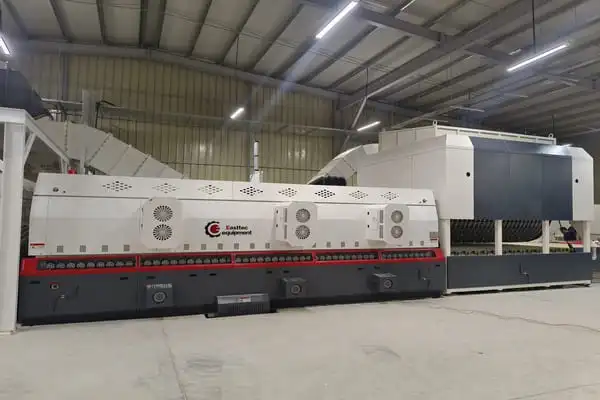
Define Your Glass Processing Requirements Before Comparing Machines
List Sizes, Thicknesses, and Coatings
First, create a table of requirements for a Full Convection Flexible Roller Glass Tempering Machine. Please give the largest and smallest sheet size, the applicable thickness range, bending radii and coating for each product. Our full convection flexible roller glass tempering machine is able to process Low-E glass with emissivity as low as 0.01, so buyers with similar needs can easily find out if their glass is compatible. The glass is available in thicknesses from 4 mm to 19 mm, so if your application requires glass outside of this range, please advise the supplier immediately. Only a supplier who knows the actual product mix and not just an average specification can recommend the right configuration for a Full Convection Flexible Roller Glass Tempering Machine. If you intend to produce shower doors, curtain wall panels, furniture glass or any other products, please list these applications clearly so that the supplier can configure the Full Convection Flexible Roller Glass Tempering Machine for your specific production needs.
Estimate Output and Changeover Frequency
Without a plan for production, nominal capacity doesn't mean much. Figure out how many square feet you cover each day, how much of each thickness you use, and how often you change recipes during a shift. Contract shops that change jobs every hour have different needs than plants that temper one thickness all day. Include your plans for growth as well. If you want to add bent or coated products in the next two years, you should list them now. This is because it is easier to run a furnace that is set up for the final product mix than one that has been changed later. Write up the plan and send it to the suppliers. Ask them to confirm how much work they expect to be done each shift.
Match Voltage, Site Conditions, and Customization Needs
Details about the site can change the price just as much as details about the glass. Check the amount of floor space, the height of the ceiling, the need for compressed air, cooling, and electricity. A US plant should say at the beginning what its voltage and frequency are, whether it's 220V, 380V, or 415V at 50 or 60 Hz. You can also change the color, heating curves, cooling parameters, equipment size, and the language used by the software. Check to see what standards your clients want. When people in the US work with safety glazing, they often use ASTM C1048, ANSI Z97.1, and the CPSC rule 16 CFR 1201. Ask how the supplier's paperwork backs up your audits.
Understand How Full Convection Glass Tempering Technology Works
Heating Principle and Quench Stress
When glass is tempered, it is heated almost to the point where it breaks. The surfaces are then quickly cooled with air jets. The edges get harder first and then get compressed, while the middle stays in tension. ASTM C1048 says that fully tempered glass must have a surface compression of at least 69 MPa. In a real convection furnace, hot air moves around the glass inside thanks to a high-temperature blower. Our design uses convection technology from Italy, and the convection parts are made of ceramics that can withstand temperatures up to 1300°C. This design cuts down on energy use that isn't needed and speeds up the heating of the glass.
Why Convection Helps With Low-E Glass
Low-E coatings reflect infrared light, which means that radiation alone can't heat them as easily. A coated surface that has an emissivity of 0.01 doesn't soak up much heat. Our top-convection system moves heat through that barrier because forced air moves heat by contact. We report that the heating cycle is 30% faster than with radiant-only models. The design also helps keep the film from oxidizing and supports even heat absorption. Check these claims out before you believe them. You should try it out on your own coated glass and then talk to your process engineer about the results.
Evidence to Request From Suppliers
Do not ask for descriptions, but for data. Heating-uniformity records, sample test results, break patterns, surface stress readings, and distortion measurements on your glass types are all useful pieces of evidence. ASTM C1279 describes a non-destructive photoelastic method for measuring edge and surface stress in tempered glass. Ask each supplier what method they use and if you can see the test. Ask for the same set of samples in the smallest, largest, and most common sizes. Visit the factory or watch a live demonstration to get a better idea of how well the product really works than just reading a brochure.
Evaluate the Flexible Roller System for Flat and Curved Glass
How Adjustable Rollers Create Curves
The flexible roller system allows the operators to adjust roller positions to make the different curves. One Full Convection Flexible Roller Glass Tempering Machine can process different bending radii. Our machine is equipped with high tensile rollers which can be adjusted for different bending configurations, large spans and different curve profiles. If you are looking at a Full Convection Flexible Roller Glass Tempering Machine, ask each supplier about the roller adjustments: are they continuous, recipe-controlled, partially automatic or manual. Also consider how often you need to change different bending profiles and how the adjustment method influences the changeover time. The recipe control lets the operator call up an approved bending profile, rather than resetting the rollers each time by hand. This will help you to maintain the same procedures for repeat orders and increases the efficiency of Full Convection Flexible Roller Glass Tempering Machine. IPC and PLC interface can store and manage approved settings for operators to find a specific bending recipe quickly, and help the Full Convection Flexible Roller Glass Tempering Machine deliver repeatable bending results across different production batches.
Roller Quality, Wear, and Glass Surface
Rollers touch hot glass, so the state of their surfaces shows up in the product. Find out about the rollers' material, diameter, spacing, runout, alignment, and how often they need to be replaced. Roller wave, scratches, or marks that show up in reflection can be caused by rollers that aren't in good shape, which is a big problem for facade glass. Ask for sample sheets and look at them against a dark background at an angle. Ask the supplier how they clean their products and how long it takes to change the rollers. Production stays on schedule when the furnace is easy to service, so your maintenance manager should check how easy it is to get to parts when they come to check on the furnace.
Flexible Versus Fixed Roller Hearth Equipment
Both fixed roller hearth furnaces and flexible systems can be used for different tasks. A fixed system is easier to understand and works well for flat glass that comes in steady amounts. A flexible system can bend and make more products, but it has more moving parts and needs more planning for maintenance. Being flexible can help you buy and store fewer molds if you get orders for curved wall panels or shower doors with different shapes. Do not buy an extra mechanism if you only temper flat glass. Ask the supplier what it does so you do not waste money on something you will not use.
Check Specifications and Compatibility With Your Target Glass
Core Specifications to Compare
Put the requirements for each supplier into a single table. It's important to look at the furnace length, bending limits, production speed, installed power, air pressure, cooling capacity, footprint, and loading method of different types of glass. Then make sure the data and control systems work. For digital control of pressure and bending, our model uses an industrial PC with a PLC interface. Data management is kept safe. Write down the numbers and conditions that each supplier gives you, such as the thickness of the glass and the type of coating. Ask all bidders to send you data in the same format. It's hard to compare quotes when they don't include conditions or specifics.
Coated and Low-E Glass Considerations
Extra care needs to be taken with coated glass. Results depend on the type of coating, the orientation of the coated side, the protection of the surface, and the optical standards. Find out how the furnace manages the temperature and airflow on the side that is coated, since Low-E film can oxidize if it is not heated properly. Our machine is designed to make high-performance Low-E curved glass more resistant to heat, and its top-convection system can get through the thermal barrier of coated surfaces. Ask for a test run with the coating supplier's product. Then, before you place the order, make sure that the finished glass meets the optical needs of your customer.
Quality Tests and Standards
Before any trial, agree on what the pass or fail criteria are. Some common checks are fragmentation, bow, roller wave, anisotropy, visual distortion, and tempering stress. If your customer wants thermally toughened safety glass, use the standards they give you, like ASTM C1048 or EN 12150-1. The machine we sell meets CE standards and can process glass for heavy-duty architectural use. When working on projects in the US, make sure you check any labels or certifications your clients need, as CE compliance does not replace local needs. Always write down the type of glass, thickness, and furnace recipe that went into each test so that you can repeat the process in production.
Compare Heating, Automation, Energy Efficiency, and Production Performance
Energy Use and Heat Retention
It takes a lot of electricity to temper, so energy performance has an effect on the cost of doing business for years. Not just the installed power, but also the kilowatt-hours per square meter at the thickness you usually use. 20% less heat is lost because of our high-density composite insulation, and our energy-saving design helps customers save one-third of their electricity. Anyone, even us, will be happy to tell you how and under what load those numbers were calculated. Then check them against the electricity rates in your area. Energy should be part of your return-on-investment calculation because even a small percentage saved adds up over thousands of hours of production.
Heating Speed and Daily Output
How much is produced depends on how long it takes to heat, move the rollers, and cool down. When compared to radiant-only models, our convection system cuts heating time by 30%. This increases the daily furnace capacity when heating is the limiting step. Because heating time goes up with thickness, ask the supplier to show you cycle times for your thickest and thinnest glass. Then, figure out how much you can make each day based on your actual product mix and compare that number to your order forecast. It doesn't matter how fast the heating cycle is as long as the loading, unloading, and cooling all happen at the same time. Look at the whole line, not just the furnace.
Automation and Operator Training
People with the right skills are hard to come by, so see how fast a new operator can run the line. Our software works with different thicknesses of glass and has automatic menus in English, Spanish, Russian, Korean, and Portuguese, among others. We say that new operators can learn how to run the business and do repairs in one week. The IPC and PLC work together to keep data safe and make it easy to recall complicated bending recipes. To show how the machine works, ask an operator who didn't make it to change a recipe and time each step. That test tells you more than a list of features.
Conclusion
When making a decision to buy a Full Convection Flexible Roller Glass Tempering Machine, it works best when the steps are clear. Before they buy, buyers should write down the sizes, thicknesses, coatings, output, voltage, and customer standards of the glass. Then, they should make sure that the convection system heats coated and Low-E glass evenly, that the flexible rollers can bend profiles over and over again without leaving marks on the surface, and that the test samples meet standards like EN 12150-1 or ASTM C1048. It's important to compare things like energy use, heating speed, software, training time, service terms, delivery schedules, and the total cost of ownership. Price doesn't tell you anything about yield, scrap, or downtime by itself. Each part of the plant has enough information to make a confident choice thanks to a structured evaluation and tests on real glass.
FAQ
How long does delivery take?
Customized tools are used to make glass tempering furnaces. Delivery takes between 60 and 120 business days, depending on the model. Make sure the schedule in your contract is correct.
Can the machine run on US power?
We change power systems so they work with 50 or 60 Hz 220V, 380V, or 415V. Tell our engineers the voltage and frequency of your plant so they can make sure the configuration is correct.
How long does operator training take?
We say that new operators can learn how to run the business and do repairs in one week. Menus in the software can be used in more than one language, and technicians are available online 24 hours a day.
Which glass thicknesses can it process?
The machine works with glass that is 4 mm to 19 mm thick and can handle Low-E glass with an emissivity as low as 0.01. In the trial stage, make sure you know your exact range.
Is the machine CE certified?
It does meet CE standards, yes. US buyers should also make sure they meet any local requirements that their inspectors or customers give them.
Request a Quote From EASTTEC EQUIPMENT
Since 1994, EASTTEC EQUIPMENT has worked in the field of glass tempering technology. We make Full Convection Flexible Roller Glass Tempering Machines with Italian convection technology, an energy-efficient design, controls that can be used in more than one language, and online support that is available 24 hours a day, 7 days a week. Send your voltage, glass thickness, and size information to sales@easttecmachine.com, and our engineers will help you figure out how to set it up. For more information, go to easttecglass.com.
References
1. ASTM International, Standard Specification for Heat-Strengthened and Fully Tempered Flat Glass (ASTM C1048), 2018
2. European Committee for Standardization, EN 12150-1 Glass in Building: Thermally Toughened Soda Lime Silicate Safety Glass, 2015
3. American National Standards Institute, ANSI Z97.1 Safety Glazing Materials Used in Buildings, 2015
4. ASTM International, Standard Test Method for Non-Destructive Photoelastic Measurement of Edge and Surface Stresses in Annealed, Heat-Strengthened, and Fully Tempered Flat Glass (ASTM C1279), 2013
5. U.S. Consumer Product Safety Commission, Safety Standard for Architectural Glazing Materials (16 CFR Part 1201), 1977
6. Society of Glass Technology, Fundamentals of Inorganic Glasses, 2006

USER EVALUATE
Here is the customer's evaluation of us