




What Features Matter Most When Buying a Glass Tempering Line?
When you're investing in glass thermal processing equipment, understanding what truly matters can save you hundreds of thousands of dollars and years of frustration. A Convection Flat Glass Tempering Line stands out as an advanced thermal processing system that transforms flat glass into safety glass by heating it to approximately 600-700°C and rapidly cooling it. Unlike traditional radiation-based furnaces, convection technology uses forced hot air circulation to achieve uniform heating—a game-changer especially when processing Low-E coated architectural glass where reflective coatings resist radiant heat transfer. This guide walks you through the critical features that separate mediocre equipment from production assets that deliver consistent quality, energy savings, and long-term profitability.
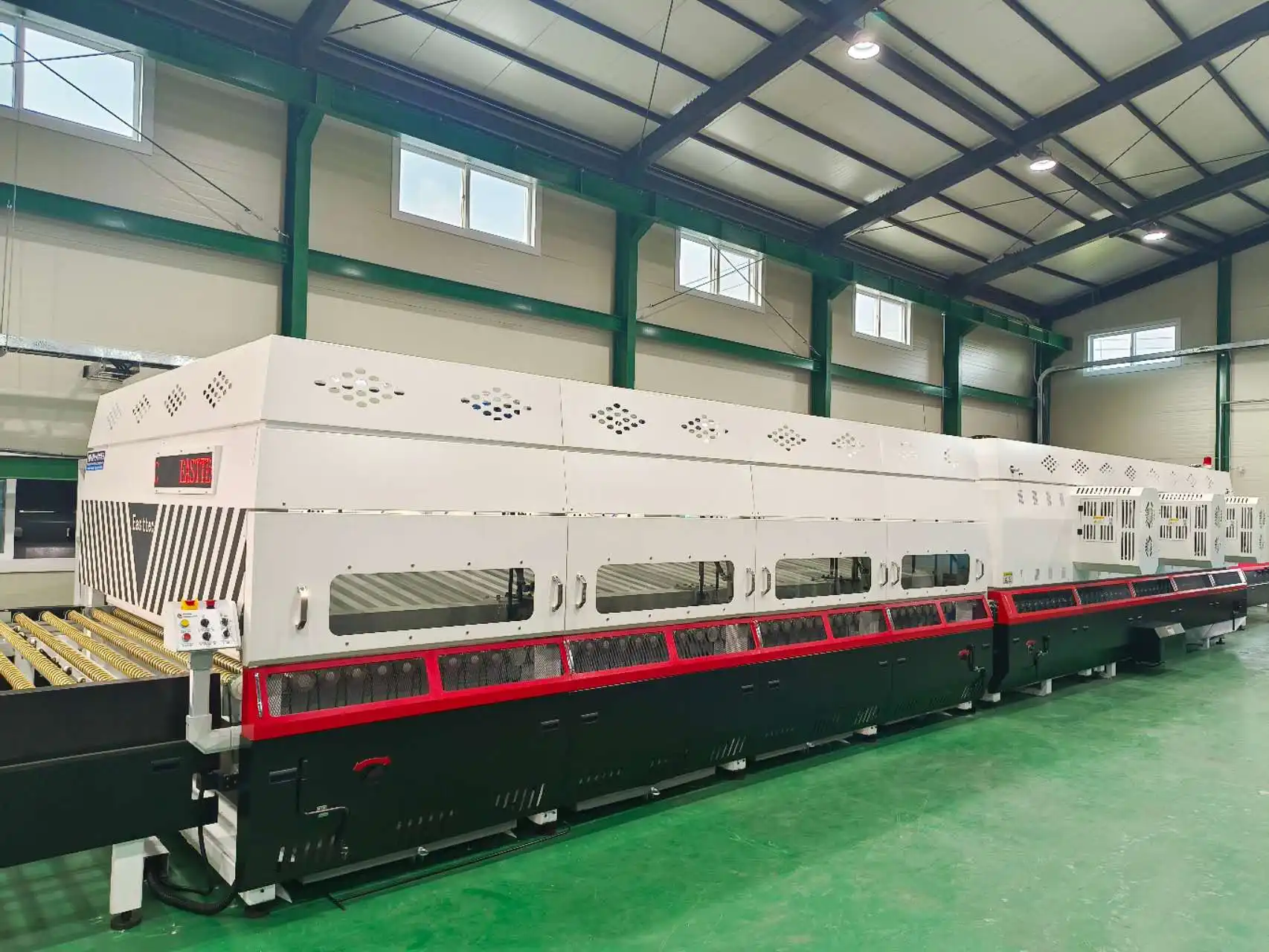
Understanding Glass Tempering Lines and Their Core Technologies
Glass tempering changes the physical features of flat glass in a basic way. It makes the glass four to five times stronger than annealed glass and gives it unique break patterns that make it safer. There are three important steps in the process: placement and loading, controlled heating, and fast quenching.
How Modern Tempering Systems Work
Accurate control of temperature is the key to good seasoning. Hot elements or convection systems move the glass across ceramic rollers inside the furnace until it reaches the softening point. Temperature precision of within ±1°C makes sure that the molecular restructuring is the same on the whole surface of the glass. Once the glass reaches the right temperature, it moves quickly into the cooling zone, where blasts of compressed air cool the surface while the core stays hot for a short time. These forces—compression and tension—make tempered glass strong.
Convection Technology Versus Traditional Heating Methods
Infrared heating elements placed above and below the glass are what make traditional radiation furnaces work. This method works for clear glass, but it doesn't work well for Low-E coated items because metallic coats reflect infrared rays, making it harder for heat to get through. This problem can be fixed by convection systems, which move hot air directly onto the glass surface, skipping the coating's reflective properties completely.
High-temperature fans and ceramic air circulation systems that can handle temperatures up to 1300°C are used in forced convection equipment. Compared to radiation-only systems, this technology cuts heating time by 20–30% while keeping the temperature more evenly distributed. This leads to more work getting done, less energy being used per square meter, and most importantly, the ability to work with high-performance ornamental glass that is needed in modern buildings.
Breaking Down the Production Stages
Knowing about each step of the processing process helps you figure out where differences in equipment lead to production advantages. During loading, automatic systems place the glass exactly on ceramic rollers that must stay in place to avoid surface flaws. There are usually several meters of heating zone, and different temperature zones let the thermal profiles be fine-tuned for different types and sizes of glass.
The most important step is quenching, where the final quality of the glass depends on air pressure, tip design, and even cooling. When there isn't enough quench pressure, the temper is weak, and the glass could break on its own. When there is too much pressure on thin glass, it warps. Modern control systems change these settings automatically based on the thickness of the glass, the type of covering, and the temperature and humidity in the room.
Key Features to Evaluate When Buying a Glass Tempering Line
When choosing tempering equipment, you have to weigh the needs of current production with the costs and flexibility of long-term operations. The following features have a direct effect on your bottom line, the quality of your products, and how you place yourself in the market.
Heating Technology and Energy Performance
Energy consumption plays a major role in reducing operating costs, and advanced Convection Flat Glass Tempering Line technology provides significant advantages through intelligent temperature management. One of the key benefits of a Convection Flat Glass Tempering Line is its ability to optimize heating efficiency with precise convection control. Inverter-controlled convection systems used in Convection Flat Glass Tempering Line equipment can adjust airflow in real time, reducing energy consumption by 10–15% while maintaining efficient heating performance. High-pressure convection technology ensures that heat is distributed evenly across the glass surface, preventing cold spots that may cause quality defects. By improving energy efficiency, heating consistency, and process stability, Convection Flat Glass Tempering Line systems help manufacturers lower operating expenses while producing high-quality tempered glass. The advanced control capabilities of Convection Flat Glass Tempering Line make it an effective solution for companies seeking reliable performance and long-term production efficiency.
To figure out how energy-efficient something is, look at how many kWh are used per square meter of treated glass. Modern convection systems can handle data 30% faster than older equipment, which directly leads to higher daily production capacity without corresponding increases in energy use. This speed boost is especially useful when working with architectural glass, where heating processes usually take longer because of coatings getting in the way.
Production Capacity and Glass Range Compatibility
Your tempering line needs to be able to handle all of the products your customers want. The ability to make thickness ranges from 3 mm ultra-thin glass to 19 mm solid window panels, which gives the market options. Precision thickness processing keeps smoothness and visual clarity at the highest level in the industry, even in thin architectural lites that are hard to work with because thermal stress can easily distort them.
How well you can handle large-format building jobs depends on the glass size capacity. Handling jumbo sizes of equipment opens up new premium market segments while keeping standard dimensions efficient. There are different levels of automation, from semi-automatic systems that need help from an operator at every step to fully intelligent production lines that handle recipes on a computer, add materials automatically, and check quality in real time.
Through programmable recipes, advanced control systems make it easy to switch between types of glass. This gives you the freedom to work with clear float glass, Low-E coated products, and specialty glasses without having to wait for long changeover times. This lets you get the most out of your equipment and quickly meet customer needs.
Maintenance Requirements and Support Infrastructure
When equipment breaks down, it directly affects delivery times and profits. When choosing equipment, think about how easy it is to do maintenance and how long the parts will last. Ceramic rollers need to be checked and cleaned every so often to keep particles from building up and leaving surface flaws. If you follow the right care steps, good rollers only need a deep cleaning every 6 to 12 months.
Important heating elements and convection blowers should be easy to get to without taking the whole thing apart. When service is needed, modular component design cuts down on the time it takes to fix things. Access to spare parts is a very important factor. Equipment makers with local service centers and well-kept parts inventories keep production from stopping.
Look for providers that offer full technical support, such as online help 24 hours a day, installation and setup services, and programs to train operators. There aren't enough trained workers for many glass processors, so they need software tools and operations that are easy for anyone to use. One week of training should be enough time for new operators to learn how to use the tools and do regular repairs.
Comparing Convection Glass Tempering Lines to Alternative Technologies
It's easier to make investment decisions and make sure that equipment capabilities are in line with production goals when you know how different tempering technologies work in a number of different ways.
Performance Metrics That Matter
Throughput rates are very different in systems that use convection and systems that use radiation. With forced convection technology, heating cycles are cut by about 30%, which greatly increases the amount of work that can be done each day. This benefit grows when working with Low-E glass, since regular radiation ovens have trouble heating it up quickly or giving mixed results.
Consistency in glass quality is what sets high-end tools apart from cheaper options. Advanced top-air ventilation perfectly balances heat load, so even 3–4 mm thick architectural glass doesn't bow or bend. Controlling the panels' precise flatness makes sure they meet strict structural glazing standards. Dimensional correctness affects both the success of the installation and the performance of the building.
Getting rid of defects has a direct effect on profits by raising yield rates. Convection systems designed for high-performance Low-E glass with an emissivity as low as 0.01 stop coating damage and make sure there is no optical distortion. This coating compatibility keeps expensive materials safe and keeps the energy-saving features that make Low-E glass standards valid.
Cost-Benefit Analysis Across Production Scales
The initial cost of buying equipment is only one part of the total cost of ownership. Long-term profitability is based on how much energy is used, how much it costs to maintain, how much labor is needed, and how much product is made. Most of the time, Convection Flat Glass Tempering Lines cost more to buy than standard radiation heaters, but they quickly pay for themselves by saving money on running costs.
For medium-sized businesses that work with 200 to 400 square meters of space every day, saving energy alone can pay for the extra cost of tools within two to three years. More output means that larger facilities don't need as many production lines, or they don't need them at all. Figure out the payback periods by using real-world energy costs, expected production volumes, and the prices of tempered products on the market.
Supplier Selection and Partnership Criteria
Even the highest-quality equipment cannot deliver long-term value without reliable supplier support and technical expertise. When evaluating a Convection Flat Glass Tempering Line, buyers should carefully consider the manufacturer’s experience in glass processing technology and their ability to provide ongoing assistance. Companies with decades of industry experience have accumulated valuable knowledge that helps customers avoid costly design mistakes and optimize production performance. With extensive experience in thermal glass processing since 1994, EASTTEC EQUIPMENT demonstrates the technical capability and manufacturing expertise required to support reliable Convection Flat Glass Tempering Line operation. Choosing an experienced supplier of Convection Flat Glass Tempering Line equipment provides manufacturers with greater confidence in product quality, long-term stability, and continuous technical support. The proven expertise behind Convection Flat Glass Tempering Line solutions helps businesses achieve efficient production and dependable performance throughout the equipment lifecycle.
The terms of the warranty show that the manufacturer is confident in the equipment's durability. Important parts like heating elements, convection systems, and control electronics should be covered in full. After-sales support infrastructure is just as important—suppliers whose technicians are available for remote troubleshooting and regular on-site service visits keep problems to a minimum.
Certification compliance guarantees quality and makes it easier to get into new markets. Equipment that meets CE standards shows that it meets European safety and performance standards. This gives your goods the technical base they need to pass global safety glass tests. Being ready for international certification protects your ability to serve a wide range of markets without having to worry about equipment limitations.
Procurement Considerations and Best Practices for Buying a Glass Tempering Line
Comparing specification sheets is only one part of strategic procurement. Buyers who are smart look at the total cost of ownership, help with implementation, and the ability to change in the long run.
Budgeting and Market Pricing Insights
Glass tempering kilns are personalized pieces of capital equipment, and their prices depend on how much they can produce, how automated they are, and what extra features they have. Convection systems for small businesses start at about $150,000 to $250,000, while intelligent production lines with a lot of capacity cost more than $800,000. Delivery times range from 60 to 120 working days, but they depend on how complicated the model is and how much customization is needed.
Used equipment has a lower initial investment, but you need to carefully check the state of each part, the level of support that is available, and the ability to update. Used tempering lines can be a good deal if you buy them from a reputable dealer who can give you information about the equipment's past and a guarantee. But improvements in technology like control systems and energy efficiency often make buying new tools worth it because they save money on running costs.
Logistics and Installation Considerations
Delivery, installation, and start-up of heavy industrial tools need to be carefully planned. Plan the building's electrical infrastructure, compressed air systems, and structural flooring that can handle the weight of the equipment and the vibrations that come with it. To avoid costly delays, suppliers should provide thorough site requirements specifications a long time before delivery.
Professional installation and testing services make sure that the system works at its best right from the start. Techs with a lot of experience make sure all the systems work right, set the parameters for the controls, and do test runs across the full range of products you expect. This process should take about one to two weeks and include hands-on training for operators that gets your team ready to work on their own.
Customization Options and Long-Term Value
The amount of production needed depends on the area, the target market, and the facility's skills. Support for deep customization lets you change the tools to fit your needs. Power system compatibility with voltage and frequency standards around the world (220V, 380V, and 415V at 50/60Hz) makes sure that integration goes smoothly no matter where you are.
Customizing production parameters lets you get the best heating curves, cooling profiles, and handling speeds for the glass goods you're making. Software that can be used in English, Spanish, Russian, Korean, and Portuguese makes it easier to train operators and use every day. Customizing the way equipment looks isn't necessary, but it can help keep the overall look of the building uniform when needed.
Long-term value protection comes from maintenance contracts and extended warranties. Scheduled regular maintenance programs extend the life of parts and cut down on breakdowns that happen out of the blue. As the needs of production change, equipment upgrade paths make it possible to add more capacity or improve capabilities without having to replace the whole system.
Ensuring Safety and Compliance in Glass Tempering Operations
Industrial glass production comes with its own risks that must be managed by strict safety rules and laws.
Operator Safety and Machine Safeguards
Equipment used for tempering works at very high temperatures and has moving parts, high-pressure air systems, and electrical hazards. Proper machine guarding keeps operators from touching dangerous parts of the machine while it's running. Emergency stop systems need to be able to be reached from multiple places so that they can be turned off right away if needed.
Personal protective equipment rules should require everyone who works near heating equipment to wear gloves that can handle heat, safety glasses, and the right shoes. Set clear rules for loading and removing, which is when most accidents from handling glass happen. Automated filling systems cut down on the amount of work that needs to be done by hand while also improving accuracy in placement and production output.
Environmental and Workplace Standards
Environmental rules about noise levels, air quality, and energy use must be followed by glass tempering facilities. Modern Convection Flat Glass Tempering Lines that use good temperature control have less of an effect on the environment and cost less to run. Sound shielding and where equipment is placed help reduce noise exposure at work.
Preventive Maintenance and Risk Mitigation
Systematic maintenance programs keep machines from breaking down, which would stop work and be unsafe. Cleaning the ceramic rollers every day keeps particles from building up and damaging the glass surface or rollers. Heating elements and convection parts can be found to be worn before they break when they are inspected regularly.
Recording maintenance tasks makes historical records that can be used to improve equipment and back warranty claims when they're needed. Set up clear ways to fix problems and replace parts so that downtime is kept to a minimum. Keeping an inventory of critical spare parts for parts that take a long time to get from the supplier stops production from stopping for long periods of time.
Conclusion
When looking for the right glass tempering equipment, you need to think about the heating technology, the freedom of production, the energy efficiency, and the supplier's ability to help you. Convection Flat Glass Tempering Lines offer measurable benefits in processing speed, coating compatibility, and operational costs that make investment premiums worthwhile by increasing profits. Your business will be more competitive in the long run if you choose equipment with tried-and-true technology, a full support network, and the ability to be customized. The parts of this guide that are described here give you the information you need to make sure that the equipment you buy fits your planned production goals and market positioning.
FAQ
What is the typical lifespan of a convection tempering line?
If you take care of your good convection tempering equipment, it will work well for 15 to 20 years. Important parts like ceramic rollers, heating elements, and convection blowers need to be replaced every so often, but the frame, control systems, and core mechanical assemblies last for decades. Regular preventive repair makes tools last a lot longer and keeps the quality of the output stable.
How does automation impact production efficiency and costs?
Automation cuts down on the need for workers, makes positioning more accurate, and makes it possible to use consistent processing parameters that improve the quality of the product. Fully automated systems let a single person oversee whole production lines, which cuts the cost of labor by 40–60% compared to manual processes. For automation features, the initial equipment investment goes up by about 25–35%. However, operational savings usually cover these costs within 3–5 years, while improving product stability and lowering failure rates.
Can one tempering line handle different glass thicknesses and types?
Modern Convection Flat Glass Tempering Lines can work with glass that is 3 mm to 19 mm thick and can manage recipes automatically. Smart control systems remember the best ways to heat and cool different kinds of glass, so they can quickly switch between clear float, Low-E coated, and specialty glasses. This makes it possible to get the most out of the equipment and meet the needs of a wide range of customers without having to keep up multiple dedicated production lines.
Ready to Upgrade Your Glass Production Capabilities?
Easttec Equipment has more than 30 years of experience in the specialized field of glass thermal processing technology. They offer high-performance Convection Flat Glass Tempering Line systems that architectural glass manufacturers all over the world trust. Our forced convection technology solves the important problem of how to process Low-E glass while also cutting down on energy use and speeding up production cycles. As an experienced manufacturer of Convection Flat Glass Tempering Lines, we offer full customization to meet your needs, including adapting the power system, making software interfaces available in multiple languages, and optimizing production parameters. Our experts offer professional installation services, online help 24 hours a day, and hands-on operator training to make sure your team quickly reaches full production capacity. Contact our team at sales@easttecmachine.com right away to talk about your glass processing needs, get full technical specs, and find out how our CE-certified tempering systems can help you stay competitive and make more money.
References
1. Glass Performance Evaluation Standards (EN 12150-1): European Safety Glass Requirements and Testing Protocols for Tempered Glass Products, European Committee for Standardization, 2015.
2. Johnson, R. & Martinez, P. (2022). "Forced Convection Technology in Modern Glass Thermal Processing: Energy Efficiency and Quality Improvements," Journal of Glass Manufacturing Technology, Vol. 18, Issue 3, pp. 145-162.
3. Chen, L. (2021). Advanced Glass Tempering: Principles, Equipment, and Quality Control in Architectural Glass Production, Industrial Glass Processing Press.
4. International Glass Industry Standards Compliance Guide (2023): ANSI Z97.1 and ISO 9001 Requirements for Safety Glazing Materials in Commercial and Residential Applications, American National Standards Institute.
5. Williams, D. & Thompson, K. (2020). "Comparative Analysis of Radiation Versus Convection Heating Systems in Flat Glass Tempering Operations," Glass Technology & Engineering Quarterly, Vol. 15, No. 2, pp. 78-94.
6. Foster, M. (2023). Industrial Glass Processing Equipment: Procurement Strategies and Total Cost of Ownership Analysis for Medium to Large-Scale Manufacturing Operations, Manufacturing Equipment Research Institute.

USER EVALUATE
Here is the customer's evaluation of us