




Customized Convection Flat Glass Tempering Line Meets Different Production Needs
Modern glass manufacturers face an ongoing challenge: how to meet increasingly diverse production requirements while maintaining quality, efficiency, and profitability. A Convection Flat Glass Tempering Line addresses this challenge head-on by utilizing forced air circulation to heat glass uniformly before rapid quenching, producing tempered glass with superior strength and optical clarity. Unlike traditional radiation-based systems that struggle with coated glass, convection technology delivers consistent results across different glass types, thicknesses, and production volumes, making it indispensable for architectural, automotive, appliance, and solar glass processors seeking competitive advantage in today's demanding markets.
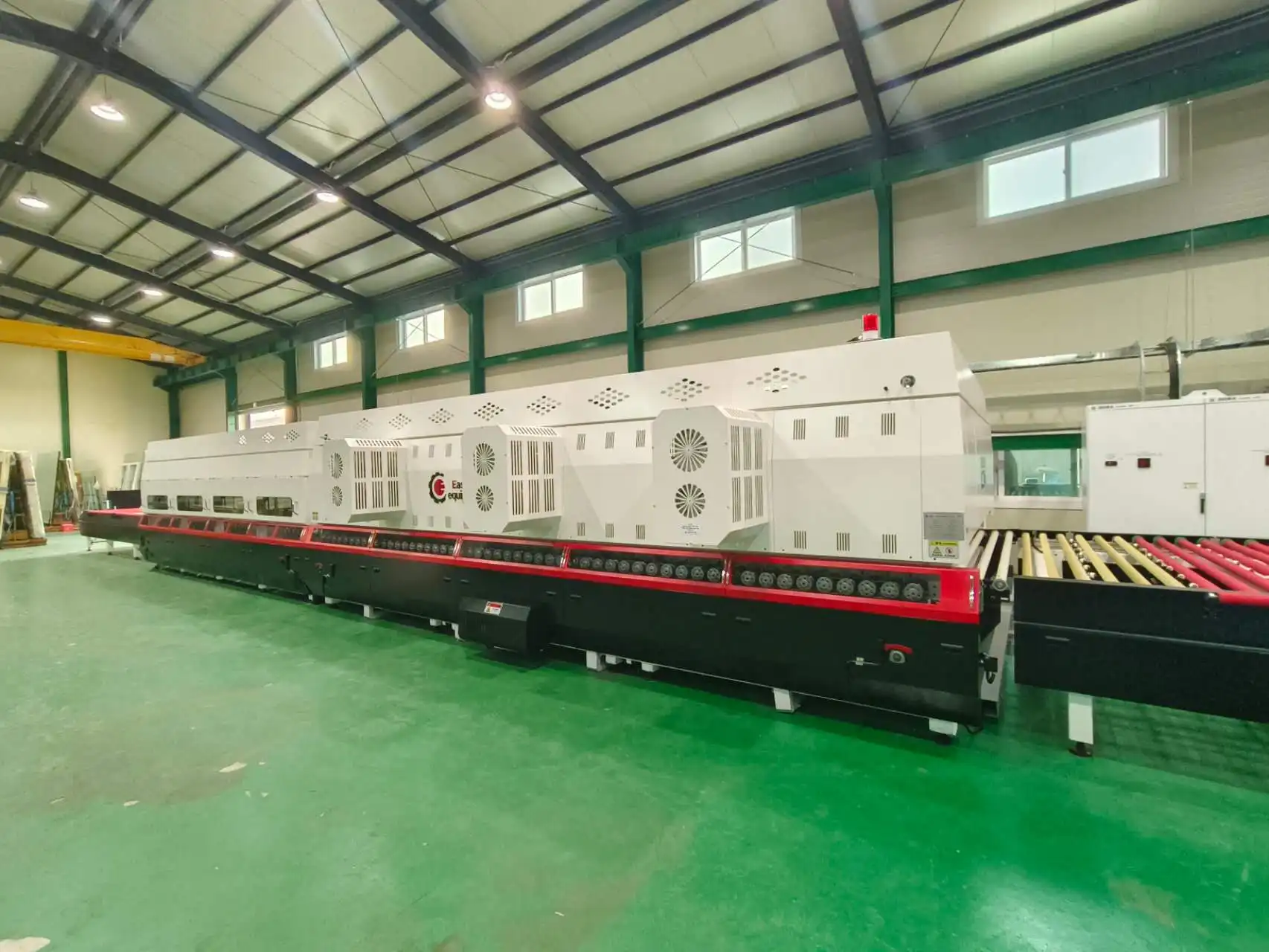
Understanding Convection Flat Glass Tempering Technology
How Forced Convection Works
Radiant heating, in which infrared energy moves straight to the surface of the glass, is what most traditional tempering kilns use. When working with Low-E coated glass, which reflects a lot of infrared radiation, this method has a lot of problems. This problem can be solved with forced convection technology, which moves hot air quickly across both sides of the glass. High-temperature blowers push air continuously through ceramic heating chambers that can handle temperatures of up to 1300°C. This way makes sure that thermal energy gets to the core of the glass efficiently, no matter what the surface coatings or reflective properties are.
Before moving the glass to the quenching section, it is usually heated to between 650 and 720°C, which is just above its softening point. During quenching, air nozzles are placed so that they blast room-temperature air onto both sides of the glass at the same time. This creates fast temperature differences that keep the layers on the outside in tension while the layers inside stay compressed. This controlled spread of stress is what makes tempered glass strong. When it breaks, it doesn't break into dangerous shards, but into small, safe pieces.
Key Advantages Over Radiation Systems
With convection technology, processing is much more efficient. Compared to normal radiation furnaces, our systems cut the time it takes to heat up by 20 to 30 percent, which directly leads to higher daily output. Changes in how much energy is used also go in a good direction. Higher heat transfer efficiency means less wasted energy, and some operations report 10-15% drops in the cost of electricity per square meter processed.
Quality changes are just as important. Iridescence and "roller wave" patterns are common optical distortions that happen with radiation-heated coated glass. Convection heating gets rid of these problems. The even spread of heat stops roller contact points from getting too hot in one place, which lowers the "white haze" flaw that leads to expensive product rejects. These quality improvements have a direct effect on how well architectural glass makers place themselves in the market and how happy their customers are.
Customization to Meet Different Production Needs
Adapting to Diverse Glass Specifications
Glass processors rarely work with just one set of requirements for a product. One shift, an architectural glass company might make 4 mm clear toughened panels. The next shift, they might switch to making 8 mm Low-E insulated glass units. Furniture makers need to be able to work with both 5 mm table tops and 10 mm shower walls. Suppliers of appliance glass have to deal with a wide range of covering needs for everything from 3 mm microwave doors to 6 mm oven panels.
Smart parameter controls in advanced tempering systems make Convection Flat Glass Tempering Line more adaptable to different production requirements. The heating curves of a Convection Flat Glass Tempering Line can automatically adjust based on glass thickness, coating type, and specific quality targets through multilingual touchscreen interfaces. These intelligent control systems improve the operation of Convection Flat Glass Tempering Line by allowing operators to manage production settings more efficiently and accurately. Support for multiple languages, including English, Spanish, Russian, Korean, and Portuguese, helps international teams communicate more effectively and reduces training barriers. With user-friendly controls, operators with limited experience can learn the basic functions of a Convection Flat Glass Tempering Line within approximately one week, helping manufacturers address skilled labor shortages in many markets. By combining automation, flexibility, and simplified operation, Convection Flat Glass Tempering Line technology enables more stable production and consistent tempered glass quality. The advanced capabilities of Convection Flat Glass Tempering Line provide manufacturers with an efficient solution for modern glass processing demands.
Engineering Solutions for Specific Industries
For structural window uses, the production of architectural glass has to meet very high standards for flatness. Modern top-air convection systems perfectly balance temperature loads, stopping the bending and warping that makes installation tolerances less accurate in thin lites from 3 mm to 4 mm. Precision flatness control keeps variations to less than 0.1% of the length of the panel, which meets strict requirements for business wall projects that can't have any visual distortion.
Different skills are needed by companies that make glass for cars. Vehicle glazing has to meet strict standards for optical clarity and complicated curves. Flat tempering lines handle the side and back glass of cars, but the convection principle also applies to special equipment used to process windshields. For example, controlled heating keeps coating damage from happening on complex heads-up displays.
There are also some unique problems in the solar industry. Photovoltaic panel glass needs to let a lot of light through while also being strong enough to last for decades in the environment. Ultra-clear patterned glass used in solar applications works better with convection tempering because it can work on textured surfaces evenly without making hotspots that could lower the efficiency or life of the panel.
Power System and Equipment Customization
Different electrical infrastructure standards affect industrial processes around the world. Different industrial voltages (220V, 380V, 415V) and frequency standards (50Hz or 60Hz, based on where you live) mean that equipment has to be able to change to them. Deep customization options make integration smooth no matter where you are. To fit the needs of a plant and its products, production factors, production factors, conveyor sizes, quench pressure profiles, and cooling setups can all be changed.
Comparing Convection Flat Glass Tempering Lines for Informed Procurement
Evaluating Production Capacity and ROI
When purchasing managers look at big purchases like capital tools, they have to make tough choices that will have long-lasting effects on operations. Production capacity is the most important thing to think about: can the equipment handle the current volume while also being able to accommodate growth? Medium-sized businesses can get by with a line that can process 40 to 50 square meters per hour, but high-volume plants need systems that can process 80 to 100 square meters per hour or more.
The total cost of ownership is much higher than the price of the equipment itself. How much energy you use has a big effect on your operating costs over the long term, since most equipment lasts more than 15 to 20 years. Inverter-controlled convection systems change the flow of air dynamically to fit the needs of the processing. This cuts down on wasted energy use during product changes and keeps the system running at its best even when production plans change. When 15–25% of the cost of making glass is electricity, even small changes in efficiency add up to big savings over time.
Selecting Reliable Technology Partners
When purchasing capital equipment, supplier reliability is a critical factor, especially for advanced systems such as Convection Flat Glass Tempering Line. Established manufacturers with decades of experience in glass processing provide technical expertise developed through thousands of installations worldwide. Companies that began operations in 1994 or earlier have experienced major industry changes and have continuously adapted their Convection Flat Glass Tempering Line technologies to meet evolving market demands. This long-term experience allows manufacturers to develop more reliable equipment designs, improve production stability, and provide comprehensive technical support for Convection Flat Glass Tempering Line users. Working with experienced suppliers ensures that customers receive not only advanced machinery but also professional guidance throughout installation, operation, and maintenance. The proven expertise behind Convection Flat Glass Tempering Line solutions helps manufacturers achieve higher efficiency, consistent glass quality, and long-term production value.
How quickly problems are fixed when they do happen depends on the infrastructure for after-sales service. Technical support by phone, email, and remote diagnostics is available 24 hours a day, seven days a week. This keeps production lines running even when problems arise out of the blue. With installation and testing services, everything is set up correctly from the start. Comprehensive operator training teaches staff how to get the most out of equipment while avoiding common mistakes that slow it down or wear it out faster than they should.
Certification standards are another way to measure quality. Equipment that meets CE standards shows that it meets European safety and performance standards. This means that you can be sure that goods made on approved lines will meet global safety glass standards like ANSI Z97.1, EN 12150-1, and others.
Operational Best Practices and Maintenance for Longevity
Daily and Preventive Maintenance Protocols
Regular maintenance schedules have a direct effect on how long equipment lasts and how well it works. Every day, checklists should include things like how clean the rollers are, how well the convection fan works, how accurate the temperature monitor is, and how straight the quench nozzles are. Ceramic rollers need extra care because surface irregularities are caused by particle buildup from glass coatings or outdoor contaminants. These abnormalities move to treated glass as roller wave flaws. Regular cleaning with the right tools keeps the quality high and increases the time between roller service intervals.
In addition to checking the electrical connections and heating elements once a week, upkeep now includes diagnosing the control system. Watching how much energy is used can show growing flaws before they become major problems. Scheduled lubrication of conveyor motors, bearing assemblies, and other mechanical parts keeps them from wearing out too quickly. Keeping detailed maintenance logs sets baseline performance metrics and tracks the wear and tear on parts, which lets you replace them before they break down in a way that stops production.
Safety Compliance and Operator Training
When tempering, heavy materials, moving machinery, and high temperatures are all things that need to be thought about in terms of safety. The right equipment guarding, emergency stop systems, and interlock devices keep workers safe from mechanical and heat dangers. Personal protective equipment rules, like wearing heat-resistant gloves, safety glasses, and protective shoes, must be made clear and followed regularly.
Full training programs teach not only normal operations, but also what to do in an emergency, how to fix basic problems, and how to check the quality of the work. Before they are allowed to work on their own, new operators gain from getting hands-on training under the guidance of an experienced operator. Regular training to brush up on skills keeps them up to date and includes process changes or new tools as they are put in place.
Energy Optimization Strategies
Less energy is wasted when heating cycles are optimized according to the specific requirements of the glass being processed by a Convection Flat Glass Tempering Line rather than relying on generic settings. By adjusting parameters based on glass thickness, coating characteristics, outdoor temperature changes, seasonal conditions, and production schedules, a Convection Flat Glass Tempering Line can maintain higher energy efficiency and more stable performance. Advanced smart inverter convection systems automatically manage many of these adjustments, improving the overall operation of the Convection Flat Glass Tempering Line. However, skilled operators who understand the equipment and perform occasional manual fine-tuning can further enhance production results. Through intelligent control, accurate parameter adjustment, and experienced operation, Convection Flat Glass Tempering Line technology helps manufacturers reduce energy consumption, improve process consistency, and achieve better-quality tempered glass. The energy-saving advantages of Convection Flat Glass Tempering Line make it an effective choice for modern glass production facilities seeking efficient and sustainable manufacturing solutions.
Planning production so that batches of similar glass types are made at the same time reduces the need to change temperatures and stop thermal cycling, which uses a lot of energy during changes. When you keep the production flow steady instead of starting and stopping it often, the equipment works at its most efficient level. These ways of doing things, along with the capabilities of current tools, allow for 30% faster processing speeds while actually using less energy per unit made.
Future Trends and Technological Advances in Glass Tempering
Automation and Smart Manufacturing Integration
Industry 4.0 principles are having a bigger impact on the design of glass processing equipment. Sensors, data collection systems, and analytical tools built into modern tempering lines give real-time production information. It is possible to improve the process by collecting a lot of data by keeping an eye on temperature distributions, heating times, quench pressures, and quality metrics during every production run.
Applications that use artificial intelligence look at these streams of data to find small patterns that point to problems that are starting to happen before they affect the quality of the output. Predictive maintenance programs figure out when a part will break based on how slowly it works less well over time. This lets you replace it before it breaks during planned downtime instead of fixing it after the fact when production is interrupted. When smart monitoring systems are fully used, these features cut unexpected downtime by 25–40% in facilities.
Sustainability and Environmental Considerations
Environmental laws are getting stricter around the world, which is increasing the need for more environmentally friendly ways to make things. These needs can be met by energy-efficient flow systems, which also lower running costs and reduce carbon footprints. Cutting down on waste by improving first-pass quality rates lowers the amount of raw materials needed and the cost of removal. Premature failure leads to less industrial trash when equipment is made to last a long time and has parts that can be fixed or upgraded.
More energy optimization, alternative heating methods, and merging with green energy sources will likely be important in the development of new tools in the future. Modular designs let you add more space or update the technology without having to buy all new equipment. This supports long-term approaches to capital investment.
Conclusion
Choosing the right glass tempering technology requires balancing immediate production requirements with long-term business development goals, and a Convection Flat Glass Tempering Line provides strong advantages in flexibility, efficiency, and quality control. Convection-based processing methods have demonstrated improvements in energy efficiency, production adaptability, and performance stability across a wide range of glass types and specifications. With customizable configurations, a Convection Flat Glass Tempering Line can be adjusted to meet the specific needs of different manufacturers and applications. Reliable supplier support further protects the investment by providing technical assistance, maintenance guidance, and long-term service throughout the equipment lifecycle. As glass applications continue expanding into demanding fields such as architectural structures, automotive manufacturing, and specialty products, a scalable Convection Flat Glass Tempering Line is becoming an essential production solution rather than simply an optional upgrade. By adopting advanced Convection Flat Glass Tempering Line technology, manufacturers can improve competitiveness, maintain consistent quality, and prepare for future market demands. The adaptability and reliability of Convection Flat Glass Tempering Line make it a valuable choice for modern glass processing operations.
FAQ
What makes convection tempering better for Low-E glass?
Low-E coatings have metal layers that reflect infrared radiation, which makes it harder for standard radiation burners to heat things efficiently. With forced convection, hot air moves straight across the surfaces of glasses, spreading heat through contact instead of radiation. Bypassing the coating's reflective properties, this method ensures even heating of the core without hurting the delicate layers on the outside. Compared to radiation methods, processing speeds are 20–30% faster, and visual quality is still better with little distortion or iridescence.
How quickly can operators learn to run these systems?
The touchscreen controls on modern convection tempering lines are easy to use and come with language screens and pre-programmed recipes for common glass specs. For operators who have worked in manufacturing before, basic operational proficiency usually develops within a week of hands-on training. Over the course of a few months, workers learn how to use technology to fix problems and make it work better with different types of products. This learning curve is sped up by full training programs and ongoing expert help.
What glass thickness range can these lines process?
Modern forced convection systems reliably temper glass from 3 mm to 19 mm thick, which is thick enough for most architectural, automotive, furniture, and appliance uses. Precision convection heating keeps the glass from twisting and keeps it within the smoothness limits needed for structural glazing. This is especially helpful when working with 3–4 mm thick glass. Thicker glass up to 19 mm tempers evenly because it lets more heat through than systems that only use radiation.
Partner With a Proven Glass Tempering Equipment Manufacturer
Manufacturers looking for reliable and effective convection tempering solutions can turn to EASTTEC EQUIPMENT, which has more than thirty years of experience in the field of glass thermal processing technology. Our forced convection systems solve important production problems, like making sure that Low-E coatings work with them and making the best use of energy, while also giving top markets the quality stability they want. We make sure that you can fully customize every Convection Flat Glass Tempering Line by changing the power systems, production settings, and software tools to fit your needs and the standards in your area. Full support includes technical help 24 hours a day, full training for operators, and quick service after the sale to keep your production going smoothly.
Our engineering team works with you to set up equipment that meets your current needs and your plans for future growth, whether you're increasing the amount of architectural glass you can make, improving the quality of automotive glass, or adding new product lines. Get in touch with our experts at sales@easttecmachine.com to talk about how customized convection tempering technology can help you stay competitive and make your production go faster.
References
1. Anderson, M. & Thompson, R. (2021). Advances in Glass Tempering Technology: Convection Systems and Energy Efficiency. International Journal of Glass Manufacturing, Vol. 15, pp. 203-218.
2. Chen, W. (2022). Comparative Analysis of Radiation and Convection Tempering for Coated Architectural Glass. Glass Processing Research Quarterly, Vol. 28, No. 3, pp. 112-127.
3. European Glass Alliance. (2023). Technical Standards for Flat Glass Tempering Equipment: A Procurement Guide. Brussels: EGA Publications.
4. Martinez, J. & Kowalski, P. (2020). Energy Optimization Strategies in Modern Glass Thermal Processing. Industrial Manufacturing Technology Review, Vol. 42, pp. 78-94.
5. Nakamura, H. (2022). Quality Control Protocols for High-Performance Tempered Glass Production. Journal of Advanced Glass Engineering, Vol. 9, No. 2, pp. 145-162.
6. Williams, S. (2023). Industry 4.0 Integration in Glass Manufacturing: Smart Tempering Systems and Predictive Maintenance. Manufacturing Automation Digest, Vol. 31, pp. 56-71.

USER EVALUATE
Here is the customer's evaluation of us