




What Buyers Should Check Before Choosing a Double Chamber Tempering Furnace
Before you choose a Double Chamber Tempering Furnace, check six things: your glass mix and daily output, the heating and quenching design, real energy data, sample quality results, service and training terms, and the full quotation. A two-chamber design pre-heats one batch while another finishes, so it suits plants that need high output. I recommend asking every supplier to test your own glass, confirm voltage and frequency, and put warranty and support in writing. This guide covers each check in plain language, so you can compare offers with confidence and avoid costly surprises after delivery.
Define Your Production Needs and Furnace Type
Start With a Clear Production Brief
Write the brief first, then ask for prices. Your daily square area, batch size, and the mix of goods you make should all be written down. So should the types of glass you use, their sizes and thicknesses. Keep track of whether your glass is clear, Low-E, or patterned. The type of glass will affect how much heat you need. Next, take a look at the plant. Check the floor load, the weight on the floor, the electrical capacity, the compressed air, the cooling needs, the airflow, and how the machine can be moved inside. Without a detailed brief, a supplier can only give you a quote based on the biggest glass size. They can also suggest a glass tempering furnace that fits your needs. The technical reviews are also done faster, which is helpful since it normally takes a few months to buy big pieces of equipment.
How Does a Double Chamber Tempering Furnace Work?
A Double Chamber Tempering Furnace breaks the cooking process into stages. In the first room, the glass is heated up. In the second room, it is heated to over 600°C. The next batch gets warmer in the high-temperature chamber while the first batch is done. The high-pressure air makes the glass cool down quickly when it gets to the quench area. Tempered glass is strong because it cools down quickly and keeps the stress in the outer layers. This is possible because of the stress theory that is discussed in "Fundamentals of Inorganic Glasses." For your thickness, ask each source to show you how temperature, load speed, and air pressure all work together.
Compare Double Chamber, Single Chamber, and Continuous Furnaces
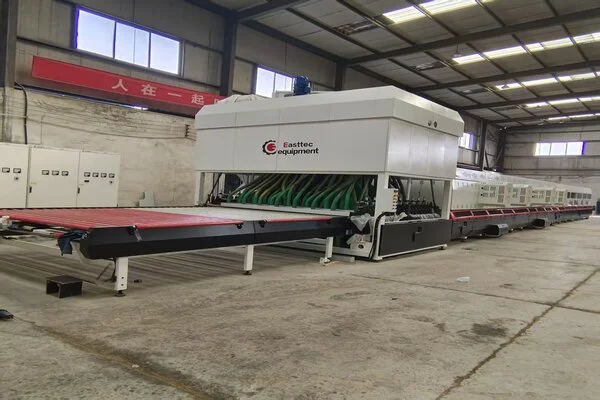
There are different styles that can be used in different stores. That is right; your furnace will cost less and heat less glass at a time if it only has one chamber. You can make a lot of the same thing at once in a continuous furnace. This type has two chambers and is in the middle. A single chamber can't keep up with an order book that is always changing, but this one can. Because it heats up faster, EASTTEC EQUIPMENT's Double Chamber Tempering Furnace can hold 1.8 to 2 times as much as a regular single-chamber furnace. Compare more than just price. You should also look at things like throughput per shift, energy per square foot, floor space, labor, and changeover time.
Check Specifications, Energy Use, and Product Features
Review the Core Technical Specifications
Make sure that each number works for you. Look at the glass's smallest and largest sizes, range of thicknesses, load weight per cycle, and ability to work with coatings. It can quickly temper glass from 4 mm to 19 mm thick for large orders of 4 mm to 6 mm architectural lites. This is what the Double Chamber Tempering Furnace from EASTTEC does. Next, check out how the heating zones are set up, how even the temperature is, how accurate the rollers are, how big the fan is, how much pressure there is at the quench, and how the air is spread out. The hot air inside the chamber is moved around by a high-temperature blower. This is real forced convection. Up to 1300°C can be reached by the ceramic parts that do the convection. Make sure the quote lists the parts that are included, the choices you have, and any restrictions on special glass.
Measure Energy Use and Insulation
It doesn't say much about how much power it has. You should ask how much energy is used per square foot based on the temperature, load density, glass thickness, and cooling demand that you give them. Add up the time spent resting, using the fan, and not doing anything. From the United States comes the process heater guide. The Department of Energy says that furnaces can use less energy by insulating them and letting less heat escape. This means that you should carefully check the quality of the insulation. Our Double Chamber Tempering Furnace loses 20% less heat than it should because of high-density insulation. The power management system controls how electricity moves between the chambers. Our plan saves more power, which helps people cut their power use by about a third. When you look at the total cost of ownership, you should think about things like repairs, downtime, labor, and scrap.
Features Worth Verifying in the EASTTEC EQUIPMENT Furnace
You can look over this list of our Double Chamber Tempering Furnace's best features during a technical review.
- Dual-stage heating: Two groups are worked on at the same time in a room that heats up first and a jar that holds hot food. Less time is spent heating, and more work gets done each day because the next load warms up while the current one finishes. You can ask any service provider to show you how long it takes to process your glass, no matter how big it is.
- Smart control: An industrial PC with a PLC link sets the time and makes sure that the two rooms and the quenching area are in sync with each other. Stable control makes sure that each batch is done on time. Check out the language options, recipe screens, and alarm logs that your operators will need.
- Consistent quality and safety: Precise temperature control stops stress spots and makes sure that all batches are treated the same way. The CE safety rules say that the furnace can be used when it's very hot. Ask for test samples and safety documents to be sure of both points on your glass.
These advantages address common problems such as slow cycles, uneven tuning, and stops that weren't planned.
Evaluate Quality, Uptime, and Production Risk
Set Measurable Quality Targets
Before you test, you should know what "good glass" means. In the US, ASTM C1048 says that the surface of flat glass must be pressed down by at least 69 MPa (10,000 psi). Building safety glazing is talked about in 16 CFR 1201 from the Consumer Product Safety Commission. Projects that need to meet European standards use EN 12150-1. You can choose your own goals for things like bow, optical distortion, shape, breakage rate, edge quality, and roller wave. It is easy to see if you passed or failed the acceptance test when you have written goals. This also keeps the test objective rather than subjective.
Insist on Sample Testing
Ask each supplier to use the same kind of glass, coating, thickness, and size. Ask for a written record of the cooling settings, cycle time, pass conditions, and temperature curves. While the light is reflecting off of something, look for fragmentation, stress readings, and good optical quality. When you have treated glass, like Low-E, you need to be extra careful because the coats change how the glass gathers heat. With our two-stage heating, the glass's temperature rises slowly. This keeps the surface flat and stops thermal shock and stress. A test result on your own glass tells you far more than a brochure does.
Inspect Components, Controls, and Safety
Heaters, sensors, rollers, fans, motors, PLC modules, and air pumps are just a few of the parts that affect uptime. Discover what brands the supplier sells, how long the parts usually last, and how fast you can get new ones. Make sure you look over the working guides, emergency stops, interlocks, and electricity safety. Follow local rules for electricity and safety at work if you're in the US. Check these rules with your tester before installation. CE compliance is linked to EU rules on plant safety, such as Directive 2006/42/EC. Check out how the control system keeps track of alarms and production data. This will help you quickly figure out what's wrong with your Double Chamber Tempering Furnace.
Review Service, Customization, and Supplier Terms
Installation, Training, and After-Sales Support
A Double Chamber Tempering Furnace is only useful if it has a base. Make sure that the foundation drawings, shipping, installation supervision, commissioning, and acceptance testing are all right before the machine leaves the factory. Our process at EASTTEC EQUIPMENT starts with a question and a plan for the project. After the sale, there is service after the sale, installation, commissioning, training operators, and making the machine. Our experts are online 24 hours a day, seven days a week to help you. It only takes one week for new operators to learn how to run and fix machines. Get written terms of the guarantee, response times, and a list of extra parts from each company. These parts should include heating elements, rollers, sensors, and control parts.
Customization for Your Plant
Because the power in each country is different, you should raise it early. We can make sure that our furnaces work with the power source at your place. They can handle voltage and frequency bands of 220V, 380V, 415V, and 50/60Hz. We can also change the equipment's size, color, and heating curves. In the function menu, you can use English, Spanish, Russian, Korean, and Portuguese, among other languages. Include drawings of all the custom items in the contract so that everyone knows how to do their job.
Compare Quotations and Delivery Terms
To get accurate quotes, you should include the furnace, heating and cooling systems, automation, loading equipment, installation, training, packing, shipping, taxes, replacement parts, and a guarantee. For your project, keep in mind that our glass tempering furnaces are made to order and delivery takes between 60 and 120 working days. Check out each provider's list of skills, past exports, quality standards, and customer reviews. Glass hardening technology has been used by EASTTEC EQUIPMENT since 1994. They use quality control and convection technology that are made in Italy and meet Italian standards. A simple evaluation is used to look at technical fit, energy use, delivery, service, and total cost, so the comparison is fair.
Match the Furnace to Your Application and Buying Process
Match the Configuration to Your Glass Products
Priorities are different for each business. Some of the things that architectural processors need are large sizes, the ability to work with different coatings, stable flatness, and a high output. Our range of 4mm to 19mm is great for heavy-duty industrial and building projects. Being able to quickly switch between sizes and amounts is important when making glass for furniture and gadgets because of this. Companies that make cars and solar panels need data and processing that can be used again and again. Some of the most important things for glass-processing companies to be able to provide are different thicknesses and shapes. Tell your provider if you need glass that is bent or has a different shape. They might have to change how the Double Chamber Tempering Furnace is set up.
Follow a Practical Buying Process
Do things the right way. To begin, you need to write the detailed needs paper. Next, make a short list of providers based on how well they can make things, their experience with similar projects, and their test scores and certifications. Third, make a list of all the drawings, guarantees of performance, items that are included, acceptance criteria, warranty terms, and service duties. Fourth, plan a trip to the plant or a show of how the equipment works. A lot of people want to see how a machine works before they buy it. Finally, agree on acceptance tests for both the factory and the site. These tests should look at the controls, safety features, sample quality, and cycle time before the final go-ahead. It's easier to understand during the decision-making process, which lasts between three and twelve months, with this order.
Common Buying Mistakes to Avoid
That's the same mistake I keep seeing. People pick the lowest price without seeing what it includes. The largest glass size is used instead of the daily output. They do not test samples, plan for shift time, or set aside money for training and installation. Some people trust energy claims without checking them out, and others forget to keep extra parts until one breaks. Every mistake can change a low price into more business costs and lost sales. After reading this, make a plan that you will then give to each seller and expect them to follow.
Conclusion
Before you choose a Double Chamber Tempering Furnace, you should make a list of the types of glass you make, the range of thicknesses you use, how much you make each day, and any other needs the plant has. The next best thing to do is compare furnace types based on how much they can heat and how long it takes to switch between them. You should also look at features like the range of thicknesses, the design of the convection fan, the insulation, and how much energy is used per square foot under different conditions. An ASTM C1048 quality goal and tests on your own glass samples will show if a machine does what it says it will do. How much service you get after delivery depends on the parts you choose, the safety paperwork, the installation, the training, the extra parts, and the guarantee terms. Customization and detailed quotes close the gap between what was expected and what was delivered. Both technical and business risk can be lowered by making sure the setup fits your needs and going through a staged buying process.
FAQ
How much can a double chamber furnace increase output?
Because one batch starts heating up while another finishes, EASTTEC EQUIPMENT's model can hold 1.8 to 2 times as much as a normal single-chamber furnace. Ask for cycle times on your goods because the results will depend on the thickness of the glass and its weight.
What glass thickness can it temper?
Our Double Chamber Tempering Furnace can temper glass from 4 mm to 19 mm thick. It can work especially quickly with ornamental glass from 4 mm to 6 mm thick. In your quote, make sure to include the size limits and finishing needs.
How long does delivery take, and what support follows?
Because each furnace is made to order, delivery takes between 60 and 120 working days, based on the type. Our experts are available online 24 hours a day, 7 days a week. The process includes setting up, commissioning, and training users.
Can the control menu and power system be adapted?
Yes. You can choose between 220V, 380V, 415V, and 50/60Hz for voltage and frequency. The menu language choices are English, Spanish, Russian, Korean, and Portuguese.
Request Your Double Chamber Tempering Furnace Quote from EASTTEC EQUIPMENT
Are you prepared to compare a Double Chamber Tempering Furnace source to your list? Send your glass sizes, thickness range, daily output, and local voltage to sales@easttecmachine.com. The EASTTEC EQUIPMENT team will get back to you with a configuration that fits your needs. It comes with forced convection heating, online help 24 hours a day, 7 days a week, and the design is CE-compliant. Find out more at easttecglass.com, or let us set up a factory tour for you.
References
1. ASTM International, ASTM C1048: Standard Specification for Heat-Strengthened and Fully Tempered Flat Glass, 2018.
2. European Committee for Standardization (CEN), EN 12150-1: Glass in Building – Thermally Toughened Soda Lime Silicate Safety Glass, 2015.
3. U.S. Consumer Product Safety Commission, Safety Standard for Architectural Glazing Materials (16 CFR Part 1201), 2023.
4. European Parliament and Council of the European Union, Directive 2006/42/EC on Machinery, 2006.
5. Varshneya, A. K., and Mauro, J. C., Fundamentals of Inorganic Glasses (3rd ed.), Elsevier, 2019.
6. U.S. Department of Energy, Improving Process Heating System Performance: A Sourcebook for Industry (3rd ed.), 2016.

USER EVALUATE
Here is the customer's evaluation of us