




Forced Convection Double Chamber Machine for Reducing Glass Defects
A Forced Convection Double Chamber Machine reduces glass defects by splitting heating into two controlled stages and moving hot air across the glass surface. The first chamber warms the glass gradually, and the second brings it to the final tempering temperature. This approach lowers thermal shock, improves temperature uniformity, and helps limit roller wave, bowing, and breakage. At EASTTEC EQUIPMENT, we build this design for architectural, appliance, furniture, and other glass processors. In this article, I explain where defects start, how the machine works, what benefits to expect, and how to evaluate a purchase.
Where Glass Defects Come From in Tempering?
The Most Common Thermal Defects
To temper glass, it is heated above 600°C and then quickly cooled to lock in the shape of the surface. Any warmth that isn't even shows up in the finished glass. When hot glass sags between the rollers, it makes a roller wave that looks like little wrinkles. Temp gaps between the top and bottom surfaces cause bowing and edge lift. If you don't control the heat well, it can lead to optical distortion, uneven stress patterns, and breaking. US buyers also need glass that meets ASTM C1048 and ANSI Z97.1, so a flaw that can be seen can become both a compliance issue and a look issue. If problems show up, the first thing to check is the uniformity of the heating. Then, the cooling and loading should be done.
Why Low-E and Coated Glass Raise the Difficulty?
It is infrared energy that a radiation-only furnace needs, and low-E coatings reflect it. The side that is coated may heat up more slowly or unevenly than the side that is not coated. The lite is bending because of that gap. Instead of radiation alone, convection moves heat through air contact, which means the covering doesn't matter as much. Both surfaces also get hot air, which makes the temperature difference smaller. Building energy codes in the US require more projects to use low-E glazing, so a furnace that can treat both coated and clear glass consistently saves time and effort.
What Defects Cost Your Plant?
Every lite that is turned down costs money in furnace time, energy, labor, and glass. The order is also pushed back in the plan, which makes it harder for contractors and OEM customers to meet their delivery times. It's easy to forget about furnace scrap because the cost is spread out over many shifts. For a few weeks, you should keep track of the defect rate by glass thickness, coating type, and furnace load. That record lets you know if the issue is caused by heating, cooling, or handling, and it gives you a standard against which to judge new equipment. According to the U.S. Department of Energy's profile of the glass industry, it uses a lot of energy. This means that a wasted heating cycle costs money.
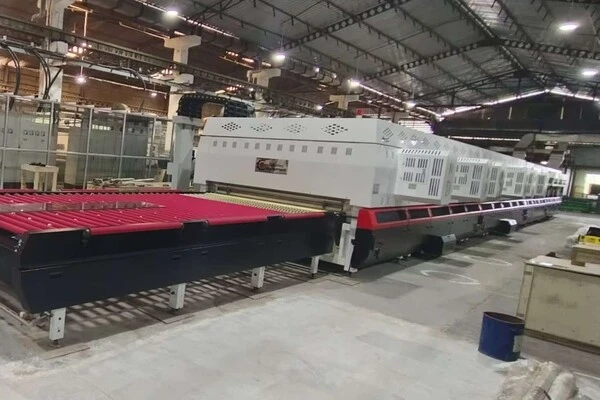
How Does the Forced Convection Double Chamber Machine Work?
True Forced Convection Heating
We use real convection technology in our design. Inside the burner, a high-temperature fan moves hot air around, and the air moves across the glass surface. The linked structures and parts for convection are made of ceramics that can handle temperatures up to 1300°C. This saves energy that isn't needed and heats the glass faster. The design is based on Italian quality management standards and convection technology from Italy. Easttec's matrix radiant heating technology makes both steps of heating more even in terms of temperature. When moving air and radiant heat work together, they heat the glass faster and more evenly than radiation alone. This is especially important for coated glass.
Two Chambers, Two Jobs
The Forced Convection Double Chamber Machine heats up two separate areas, one for pre-heating and one for high-heating. The first room slowly warms the glass. It is brought up to the final setting temperature in the second room. Two groups can be worked on at the same time since the stages are separate. The next batch warms up in the first room while the first batch finishes in the high-heat chamber. The heating cycle is half as long with this continuous flow as it is with regular lines. The two-step, slower temperature rise also lowers thermal shock and stress, which helps keep the surface flat and free of distortion better than rapid heating in one step.
IPC Control and Synchronized Timing
The timing between the two chambers and the quenching section is controlled by a professional industrial PC (IPC) workstation. People who work there can see both rooms at the same time, and there is no chance of computer lag. Our program can work with different sizes of glass, and the menu can be read in English, Spanish, Russian, Korean, Portuguese, and other languages. Controlling things at the same time is important because if one stage is moved later than the next, the glass may have to wait at room temperature and sag between the rollers. Also, stored heating curves make it easier for operators to work together, which is helpful when it's hard to find skilled workers. Within a week, new workers can learn how to run and fix things.
Measurable Benefits for Glass Processors
Higher Output Without Doubling Floor Space
Processing at the same time increases production by 1.8 to 2 times compared to standard single-chamber furnaces. When factories need more space, they don't have to double their floor space, which is helpful when building growth costs too much. The design runs a lot of 4mm to 6mm architectural lites at the fastest speeds, which is usually limited by the time it takes to heat them up. The steady flow is also good for contract processors who have a mix of orders and tight delivery windows. Compare the number of lights that go off each hour at the same glass thickness and failure rate to see how much gain your plant has. Quality is the most important thing, not output.
Core Advantages for Defect Control and Cost
There are a lot of good things about this equipment when it comes to preventing defects and keeping costs low.
- Gradual, uniform heating: Heating in two stages boosts the temperature of the glass more slowly than heating in one stage. This lowers thermal shock and internal stress, which helps keep the surface flat and prevents distortion. The thermal profile stays even during both heating stages, batch after batch, thanks to forced convection and the matrix radiant system.
- Lower heat loss: Specialized insulation cuts the loss of heat by 20%, and a clever power management system sends power to each room. This lowers the cost per square meter of running the business. Our design that saves energy also helps customers save one-third of the electricity they use. This means that their power bills go down while the heating works just as well in daily production.
- Safety and uptime: The parts are safe because they follow CE safety rules, which helps with high-power, continuous production. Technicians are available online 24 hours a day, 7 days a week, and the IPC workstation shows both chambers at the same time. All of these features work together to lower the chance of unexpected stops that slow down shipping and lower profits.
The three problems that plant managers bring up most often are bad glass, high power costs, and missed production time. These benefits solve all three of them.
How to Verify Energy Savings?
You should test energy claims on your own glass. To keep track of how many kilowatt-hours your current heater uses in a week, break down the numbers by thickness and coating type. During sample trials or acceptance testing on the new equipment, use the same mix of products. Then, compare the two sets of numbers. Because partial loads change the result, keep the load patterns, glass sizes, and cycle times the same. This number comes from two things: insulation that stops heat loss by 20% and faster warmth from moving hot air around. A written comparison also makes it easy for your finance team to figure out how much you will have to pay back.
Choosing the Right Configuration
Thickness Range and Applications
The Forced Convection Double Chamber Machine can work with glass that is between 4 mm and 19 mm thick, which includes glass for furniture, appliances, and structural or architectural uses. The fastest speeds are for 4mm to 6mm architectural lites with a lot of volume. Write down your thickness mix before you ask for a quote. Write down how much thin, medium, and thick glass there is, as well as the biggest lite size and the amount of covered to clear glass. Because thick glass takes longer to heat, a plant that mostly runs 12mm to 19mm will see different gains than one that mostly runs 4mm to 6mm. Our engineers set the heating and cooling curves with this mix.
Double Chamber or Single Chamber?
A single-chamber furnace is better for small amounts of products, tight budgets, or low volumes. It is best for plants that can't get enough done because of the long heating time or have problems that started because of the fast heating. Do this: Ask yourself three things. Does the cooling part do nothing while the glass gets hot? How often do you tint coat glass? Need will likely rise over the next few years. If you said yes to two of these questions, you should take a closer look at the double-chamber plan. In this arrangement, adding capacity without taking up extra floor space is also important.
Customization for US Plants
Deep OEM and ODM customization is possible with our glass tempering furnaces. The power system can work with 220V, 380V, 415V, and 50/60Hz, which are the world standards for industrial voltage and frequency. Please let us know early on how your company will get power. The size, heating curves, and cooling parameters of the equipment should all match the requirements of the product. The operating menu can be read in English, Spanish, and other languages, and the color of the equipment can be changed. Training and support after the sale are based on the configuration you pick. We will suggest a good setup based on your glass range, daily output goal, and building layout.
Buying, Installation, and Support
How to Evaluate a Supplier
It takes most people three to twelve months and a lot of technical reviews to decide to buy a tempering furnace because they are such a big investment. Talk to each provider about the heating curves for the types of glass you need, as well as a plan for a fragmentation test according to EN 12150-1 or ASTM C1048, sample trials, and a plant visit. ASTM C1048 talks about heat-strengthened and fully tempered flat glass, and EN 12150-1 talks about thermally toughened soda lime silicate safety glass. For more than twenty years, our experts have worked with glass deep-processing tools. Easttec has been working with glass tempering technology since 1994. We welcome visitors and shows of our equipment.
From Inquiry to Commissioning
We have a clear step-by-step process for everything we do: initial inquiry, project design, optimal design, partnership agreement, production manufacturing, installation and commissioning, operation training, and service after the sale. Delivery takes between 60 and 120 working days, depending on the model, because glass tempering furnaces are made to order. Early on, plan your spot. While the planning stage is still open, make sure there is enough floor space, power, and a plan for loading and unloading. Your team can make sure that commissioning starts on time by using a shared project schedule to plan the foundations, utilities, and hiring operators.
Training, Maintenance, and After-Sales Support
Support is just as important as specifications because downtime delays deliveries. Our techs offer online support 24 hours a day, 7 days a week. The design makes servicing easy, and new workers can learn how to use and fix it in just one week. We also offer consulting services for deep-processing glass, training for staff, modifications to equipment, and planning and design for deep-processing plants as a whole. Before you sign, make sure you get a list of spare parts that fit your setup and agree on how service requests will be handled. A clear answer to these questions will protect your uptime long after the installation is done.
Conclusion
Most problems with tempering glass start with uneven heating. Coated glass makes the problem worse because it reflects radiant heat. Warming and final heating are split into two stages in a Forced Convection Double Chamber Machine. This way, the glass rises in temperature more slowly, with less thermal shock and distortion. The two tanks and the quench area stay on schedule thanks to synchronized IPC control. The design can handle glass from 4 mm to 19 mm, increases capacity by 1.8 to 2 times, shortens the heating cycle by 50%, and lowers heat loss by 20%. All of these changes meet CE safety standards. The best outcome for buyers is to keep track of their thickness mix, test it on real glass against ASTM or EN standards, and make sure they understand the training and service terms before making a purchase.
FAQ
Can a Forced Convection Double Chamber Machine remove every glass defect?
No, the quality of the glass, how it is loaded, cooled, and handled, all affect the results. The machine fixes problems caused by uneven heating and thermal shock, and tests on samples and standards show that the increase is real.
What glass thickness can it process?
It works with glass that is 4 mm to 19 mm thick. It can be used on furniture, appliances, and architectural glass. For 4mm to 6mm architectural lites, it works best at the fastest speeds.
How long does delivery take?
Because every furnace is made to order, delivery takes between 60 and 120 business days, depending on the model.
Does it meet safety standards?
Yes. The equipment meets CE standards, and after installation, our experts offer online help 24 hours a day, 7 days a week.
Get a Forced Convection Double Chamber Machine Quote from EASTTEC EQUIPMENT
Looking for a company that makes Forced Convection Double Chamber Machines and offers flexibility, safety that meets CE standards, and online help 24 hours a day, 7 days a week? Email sales@easttecmachine.com with the range of glass thicknesses you need, the voltage you need, and the output target. EASTTEC EQUIPMENT will suggest a set-up for your plant. For more information, go to easttecglass.com and ask to be taken to the factory.
References
1. European Committee for Standardization, EN 12150-1: Glass in Building – Thermally Toughened Soda Lime Silicate Safety Glass, 2015
2. ASTM International, ASTM C1048: Standard Specification for Heat-Strengthened and Fully Tempered Flat Glass, 2018
3. American National Standards Institute, ANSI Z97.1: Safety Glazing Materials Used in Buildings, 2015
4. Shelby, J. E., Introduction to Glass Science and Technology, 2005
5. Button, D. and Pye, B., Glass in Building: A Guide to Modern Architectural Glass Performance, 1993
6. U.S. Department of Energy, Energy and Environmental Profile of the U.S. Glass Industry, 2002

USER EVALUATE
Here is the customer's evaluation of us