




What Applications Require High-Performance Hard Roller Furnace Systems?
High-performance hard roller furnace systems are essential for industries that demand precise thermal processing with superior optical quality and production consistency. Among these technologies, the Radiation Hard Roller Furnace stands out as a specialized solution designed to handle both flat and bent glass tempering with exceptional accuracy. These advanced furnaces utilize high-precision horizontal hard-roller pressing technology combined with matrix radiant heating systems, making them indispensable for architectural glass, automotive glass, home appliances, furniture manufacturing, and solar energy sectors where quality cannot be compromised.
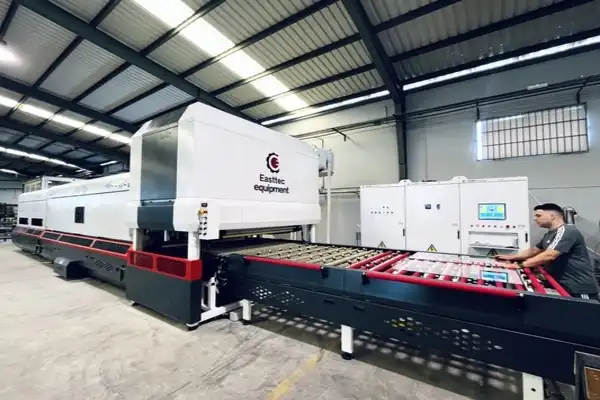
Understanding Hard Roller Furnace Systems and Their Operational Principles
At the heart of modern glass processing is the hard roller furnace technology, which is a big step forward from older ways of tempering glass. We've seen how these systems change the way production works and keep up with the high quality standards that makers need today.
Core Components and Working Mechanism
Hard roller furnace systems are made up of several important parts that all work together perfectly. The base is made up of a horizontal hard-roller pressing device with precisely ground ceramic or alloy steel rollers that hold and move glass panels through the heating and bending zones. Unlike soft-roller systems, this rigid method makes sure that glass surfaces don't get marks or distortions. This is especially important when working with bent profiles for car windshields or architectural curved panels.
The matrix radiant heating system has separate temperature zones that let workers make thermal profiles that are perfect for glass of different sizes and types. This zoned control makes sure that the heat is spread evenly across the whole surface of the glass. This stops stress builds up in one area, which could cause the glass to break during the cooling process. Our systems can handle glass that is between 3 mm and 19 mm thick. This gives production managers the flexibility they need to switch between thin safety glass for buildings and thick glass for furniture.
Temperature Control and Energy Efficiency
Modern hard roller furnaces have Industrial PC (IPC) and PLC interfaces that let production teams precisely manage all parts of the heating process. The system memory lets operators store more than one production recipe, so they can quickly switch between different products without having to make time-consuming manual changes. This feature helps with the lack of trained workers that many sites have by letting new operators become proficient in days instead of weeks.
Given that tempering processes need to be done at high temperatures, energy use is still a major problem for glass makers. Modern hard roller systems use high-temperature blowers and true forced convection technology to move hot air around inside the system. All of the ventilation parts can handle temperatures above 1300°C, which stops heat from escaping and speeds up the heating cycle. When compared to regular furnaces. This design can help reduce electricity consumption by improving heat transfer efficiency and reducing unnecessary heat loss. This directly helps the bottom line for factories that process thousands of square meters of material every day.
Maintenance and Safety Protocols
The real value of any major equipment investment is based on how reliable it is. Hard roller stoves that were made to be easy for anyone to use have flexible parts that can be serviced by maintenance teams without requiring a lot of downtime. The heavy-duty design using high-temperature-resistant alloy steel greatly increases service intervals, which means that roller replacements and bearing maintenance are done less often.
These systems have safety features that keep both people using them and the equipment safe. Automated tracking finds problems with the way the rollers move, how the heating elements work, and how the cooling system works. This sets off alarms before small problems become big enough to stop production. Following international safety standards makes sure that buildings meet the rules in various markets, which is a crucial factor for companies that sell their goods all over the world.
Key Industrial Applications That Demand High-Performance Hard Roller Furnaces
Due to its flexibility, hard roller furnace technology can be used in a wide range of industrial areas, each with its own specific needs and quality standards. When buying teams understand these uses, they can see the strategic value that these tools bring that goes beyond just tempering glass.
Architectural Glass Processing
One of the biggest groups of people who use a Radiation Hard Roller Furnace is architectural glass manufacturers. These factories make curtain wall glass, structural glazing, balustrades, and canopies for business buildings that have to meet both safety and attractive standards. The matrix radiant heating system makes sure that large-format panels get the same amount of heat treatment, which keeps visual errors from happening that would make the building look bad.
As builders look for ways to make facades and interiors more interesting, bent architectural glass has become more common. With hard roller pressing technology, the minimum bending radius is 500 mm, and the arc deviation can be kept within 1.5 mm. This is fine for current building projects that need to stick to tight standards. This level of accuracy makes sure that the parts fit together perfectly, which cuts down on installation time and callbacks that hurt the project's profits.
Automotive Glass Manufacturing
Some of the strictest requirements in the glass business are found in automotive uses. Glass in the windshield, side windows, and back window must meet strict safety standards and be clear enough that the driver can see through them. The rigid hard-roller method gets rid of the "ghosting" effect that happens a lot with bent glass. This makes sure that the images are true to life and meet the needs of automakers.
When it comes to making car glass, production freedom is very important because each model needs different shapes and sizes. The bending radius can be changed physically, which makes switching between models quick and easy. This supports the just-in-time manufacturing philosophy that car supply chains depend on. This flexibility, along with the ability to store recipes, lets suppliers serve more than one automaker from the same production line.
Home Appliance Glass Components
The industry that makes home appliances needs glass parts that look good and last a long time. Tempering improves the resistance to impact and thermal shock of oven doors, cooktop surfaces, refrigerator shelves, and range hood panels. Hard roller furnaces work great for this because they can handle clear, tinted, and patterned glass with equal ease, so they can fit the wide range of designs that appliance makers offer to customers.
When making appliance glass, batch uniformity is very important because differences in size affect how well the assembly lines work at factories that make appliances. Hard-roller systems use synchronized mechanical motion to make sure that every panel meets the same standards. This lowers the number of rejections and guarantee claims that hurt relationships between suppliers.
Furniture and Interior Glass
Glass is being used more and more in furniture to make countertops, closet doors, shower dividers, and decorative walls. People look at furniture glass up close and in a variety of lighting situations, so these uses require high visual quality. Precision radiant heating and ground rollers make the visual sharpness very clear, which meets the high standards that high-end furniture makers need.
Being able to use a single furnace line to make both flat and bent glass gives furniture makers design freedom that sets their products apart in a crowded market. Processing sizes of 2440x3660mm for flat glass and 2440x1500mm for bent sections are big enough for most furniture uses, so you don't need a lot of different systems.
Solar and Photovoltaic Applications
Manufacturers of solar panels need glass frames that are very flat and have very little internal stress. These are the qualities that directly affect how well photovoltaic cells work and how long the modules last. Tempering solar glass isn't easy, but hard roller systems with precise thermal control can make solar panels stronger all over, which makes them last longer while keeping the optical transmission properties that are needed for efficient energy conversion.
Comparing Hard Roller Furnaces with Alternative Technologies
Knowing the trade-offs in performance between different system types is helpful for production managers who are looking at furnace technologies. This comparison helps match the skills of equipment to specific output needs and budgets.
Hard Roller vs. Soft Roller Systems
For many years, soft roller furnaces were the standard, but a Radiation Hard Roller Furnace offers significant advantages. These furnaces use flexible ceramic fiber rollers that mold to the surface of glass while they heat up. While this method works well for flat glass, it creates rough surfaces when moving glass because the soft rollers can't keep the same amount of pressure on different curved surfaces. This problem can be fixed with rigid pressing technology in hard roller systems. This technology applies a constant force, which makes the arc more consistent and improves the optical quality.
The upkeep needs of these tools are very different. The ceramic fibers in soft rollers break down over time, so they need to be replaced more often. This makes the cost of operation higher and causes more production stops. Hard roller systems made with alloy steel parts last a lot longer, which cuts down on both the direct costs of replacing and the secondary costs of unplanned downtime.
Hard Roller vs. Belt Furnaces
Belt furnaces move glass along continuous metal mesh belts instead of rollers, which can be helpful in some situations. But belt systems have trouble making bent glass because the floppy belt can't provide the hard support that is needed for a smooth curve. Because they don't have this problem, hard roller furnaces are the best choice for places that work with both flat and bent materials.
When comparing energy use, hard roller designs that use forced convection heating come out on top. Most belt systems only use infrared heating, which means that the rest time needs to be longer to get the glass to the same temperature. With improved hard roller technology, cycle times can be cut down. This means that more can be done in the same amount of floor space, which increases capital efficiency.
Investment Considerations
The cost of equipment depends on the size of the job, the level of automation, and the level of customization needed. Usually, it takes between 60 and 120 working days to make and install a hard roller furnace, which is a big investment. But when figuring out the return on investment, you need to take into account things like lower repair costs, better yield rates, and the fact that facilities can serve different market groups from a single line, which saves energy.
Instead of just looking at the initial purchase price, procurement managers should look at the total cost of ownership. Lifetime costs are cheaper for systems with tier-1 electrical components and full technical help, even if the initial cost may be higher. Online technical support that's available 24 hours a day, 7 days a week keeps businesses from losing money while they fix problems. This is especially helpful for places that work multiple shifts to get the most out of their tools.
Selecting the Right Hard Roller Furnace for Your Production Needs
For equipment procurement to go well, operational needs must be clearly defined and in line with business goals. This organized method lowers the chance of missing features or spending too much on features that aren't needed.
Defining Your Processing Requirements
First, write down your product mix, including the thickness, size, and annual volume of each type of glass. Facilities that mostly work with 4mm to 6mm glass for furniture have different needs than those that mostly work with 8mm to 19mm building glass. Figuring out your production profile can help you decide if a standard configuration works for you or if customizing it is a better value.
Take future growth into account when deciding on capacity. Buying more capacity than is needed at the moment raises the initial investment, but replacing a system that is too small within a few years usually costs more than the extra cost of right-sizing at the start. Production managers should think about how much volume will grow over the next five years and choose tools that can handle this growth without needing to be bought all at once.
Evaluating Supplier Capabilities
Comparing standard sheets is only one part of choosing a supplier. Check to see how much experience the maker has with your unique application by asking for case studies and customer references from facilities that are similar to yours. Companies that have been making glass processing equipment for decades have a wealth of knowledge that younger companies can't match. This knowledge is essential when it comes to optimizing systems and fixing problems.
The ability to customize should be carefully looked at. Power systems need to be changed to work with the voltage and frequency requirements of each country and facility. Software platforms should work with more than one language, so your workers can do their jobs well no matter what language they speak at home. Suppliers who offer full customization show that they want to meet customers' real-world production needs instead of making them adapt to standard products.
After-Sales Support and Training
The most advanced technology like a Radiation Hard Roller Furnace is only useful if the people who use it know how to use all of its features. Full training programs should include both basic operation and advanced optimization methods. This way, production teams will be able to get the most out of their equipment and work as efficiently as possible. Suppliers who offer "turnkey" help, which includes installation, setup, and training for operators, make sure that high-standard production can start quickly.
The availability of technical help has a direct effect on how well the equipment works generally. Problems with furnaces don't wait for work hours, so having access to help 24 hours a day is necessary to keep downtime costs as low as possible. Check to see if suppliers keep enough spare parts on hand and can quickly deliver important parts when they break down without warning. This is especially important for facilities that are far from manufacturing centers.
Troubleshooting Common Issues and Maximizing Performance
Even equipment that has been well taken care of sometimes has problems. Knowing about common problems and how to fix them lets maintenance teams get production back up and running quickly while building the skills that make the system more reliable in the long run.
Addressing Heating Uniformity Problems
Changes in temperature across the surface of the glass show up in finished products as stress patterns or changes in the way light bends. If the heating isn't even, check the radiant heating elements to see if they're broken or losing their effectiveness. Independent temperature zone control lets operators make up for small changes by changing the setpoints for each zone. This keeps the quality of the product high while planning maintenance for planned downtime.
How well a convection fan works has a big effect on how well heat is distributed. When dust or other waste builds up, it blocks airflow, which makes heating processes last longer and uses more energy. Cleaning the convection parts on a regular basis keeps them working at their best, which keeps the energy savings that hard roller systems offer.
Optimizing Glass Handling
Roller state has a direct effect on the quality of the result. Check the rollers often for surface wear, dirt, or misalignment that could leave marks on glass or change the regularity of the arc while it is being bent. Because hard-axis drive systems are so rigid, maintenance intervals are usually much longer. However, regular inspections find problems before they get in the way of production.
The tools for loading and unloading must be in sync with the furnace's working cycle. It is the job of the operators to make sure that the glass placement systems constantly place the panels in relation to the heating zones. This way, every piece gets the same thermal treatment. This process is made easier by the ability to store recipes. When operators choose a saved product profile, all system settings are immediately set up.
Enhancing Energy Efficiency
Regularly check how much power is being used to set baseline performance measures. When energy use is different from what was expected, it's usually a sign of a problem with the heating or cooling system that needs to be fixed before it gets worse. Modern hard roller furnaces should use about 30% less energy than older models because they use more advanced heating technology. This saves money that can be used to run the business.
Schedule production so that heat rotation happens as little as possible. It is more efficient for equipment to keep its temperature steady instead of constantly heating up and cooling down. Group products that are similar together to cut down on the number of times they need to be changed, which increases throughput while reducing energy waste.
Conclusion
High-performance hard roller furnace systems like the Radiation Hard Roller Furnace are now necessary for glass companies that want to compete in markets that value quality, uniformity, and speed. Precision mechanical parts and advanced thermal control work together in these high-tech systems to give architectural, automobile, appliance, and furniture uses the optical clarity and precise dimensions they need. Investing in new hard roller technology pays off in the form of lower energy costs, higher yield rates, and output freedom that lets companies serve a wide range of customers well. As industry standards keep going up and customer expectations change, businesses that have hard roller furnaces that can handle them will be able to take advantage of growth opportunities while keeping the competitive advantages that keep them profitable in the long term.
FAQ
What temperature ranges do hard roller furnaces typically operate at?
For handling glass, hard roller tempering kilns work within carefully controlled temperature ranges that depend on the thickness and make-up of the glass. Heating zones usually get as hot as 620°C to 680°C to soften glass to the point where it can be tempered. Cooling zones quickly bring glass back to room temperature. The grid radiant heating system with separate zone control lets you precisely set the temperature for each product to get the best quality.
How does hard roller technology improve optical quality compared to conventional methods?
With hard roller pressing technology, the surface marks and wavy roller waves that happen with soft-roller systems are gone. The rigid, precisely-ground rollers keep the contact pressure the same across the whole glass surface. This stops the optical irregularities that make things look bad in high-visibility settings. This method works especially well for bent glass, where keeping reflections true to life without ghosting needs very precise control of the dimensions while heating and bending the glass.
What maintenance schedule should facilities plan for hard roller systems?
Hard roller furnaces made with high-temperature-resistant metal steel parts usually need less upkeep than other types of furnaces. Every day, the rollers and heater source should be checked to make sure they are working properly. As part of the monthly maintenance, the convection parts are cleaned and the alignment of the drive system is checked. Major parts like bearings and drive chains are usually replaced every year or every other year, depending on how much they are used. The flexible design of quality systems makes it easy to change parts quickly, which keeps production running as smoothly as possible.
Partner with EASTTEC EQUIPMENT for Superior Glass Processing Solutions
EASTTEC EQUIPMENT has been automating glass for more than 30 years and can help makers who want reliable, energy-efficient hard roller furnace systems like the Radiation Hard Roller Furnace. Our flexible lines can temper both flat and bent glass with thicknesses ranging from 3 mm to 19 mm. They provide the high optical quality and consistent arc that is needed in architectural, automotive, and appliance applications. As a reliable hard roller furnace manufacturer, we offer full customization, such as adapting the power system to meet global voltage standards, creating software interfaces in multiple languages, and providing full training for operators after installation. Our engineering team is available 24 hours a day at sales@easttecmachine.com to help you with technology issues and make sure that your production goals are met, even if problems come up. We use proven matrix radiant heating technology that cuts energy use by one-third compared to traditional systems. This helps your bottom line and meets your sustainability goals. Get in touch with us right away to talk about how our precision mechanical design and Italian-standard convection technology can help you process glass better and be more competitive in markets that are very picky.
References
1. Anderson, M.J. & Williams, R.K. (2019). Advanced Glass Tempering Technologies: Comparative Analysis of Roller Systems and Thermal Control Methods. International Journal of Materials Processing Technology, 45(3), 287-304.
2. Chen, L., Martinez, S., & Thompson, D.R. (2021). Energy Efficiency in Industrial Glass Processing: Evaluating Convection Heating Systems. Journal of Manufacturing Systems and Energy Management, 18(2), 156-173.
3. European Glass Industry Association. (2020). Technical Standards for Architectural and Automotive Glass Tempering Equipment. Brussels: EGIA Publications.
4. Kumar, P. & Schneider, H. (2022). Optical Quality Assessment in Bent Glass Manufacturing: The Role of Roller Technology. Glass Science and Engineering Quarterly, 34(1), 42-59.
5. Robertson, J.A., Lee, S.H., & O'Connor, K.M. (2018). Procurement Strategies for Capital Equipment in Glass Manufacturing: A Multi-Industry Perspective. Industrial Equipment Management Review, 27(4), 318-335.
6. Zhang, W., Peterson, G.L., & Yamamoto, K. (2020). Maintenance Optimization and Lifecycle Cost Analysis of Glass Tempering Furnaces. Production Engineering and Asset Management, 12(3), 201-219.

USER EVALUATE
Here is the customer's evaluation of us