




Top Convection Curved Glass Tempering Machine with Flexible Roller Supports Advanced Glass Applications
If your production line handles Low-E architectural glass, automotive windshields, or custom curved panels, you already know how much precision matters. A top convection curved glass tempering machine with flexible roller technology is one of the most capable solutions available for manufacturers who need consistent quality across diverse glass types and curvature profiles. This article walks through how this technology works, why it outperforms traditional systems, and what to look for when making a capital investment of this scale.
Understanding Convection Curved Glass Tempering Machines
How Convection Heating Works in Curved Glass Processing
High-temperature air is moved through the furnace room by convection heating, giving each piece of glass a uniform layer of heat. Forced convection spreads heat across the whole sheet area, while radiant-only devices only heat glass from one direction. This method works especially well for Low-E coated glass, which needs a way to heat it that makes up for the coating's lower thermal absorption without hurting the film layer because the emissivity can be as low as 0.01.
The Role of Flexible Roller Supports
The most important part of any curved glass bending furnace is its flexible roller supports. The roller bed doesn't use a set mold to shape the glass; instead, it digitally changes its curvature profile to fit the goal radius without having to change the mold itself. In other words, your production team can go from a tight 450mm radius to a wide architectural arc without having to stop the line to change tools.
Why This Combination Matters for Advanced Applications
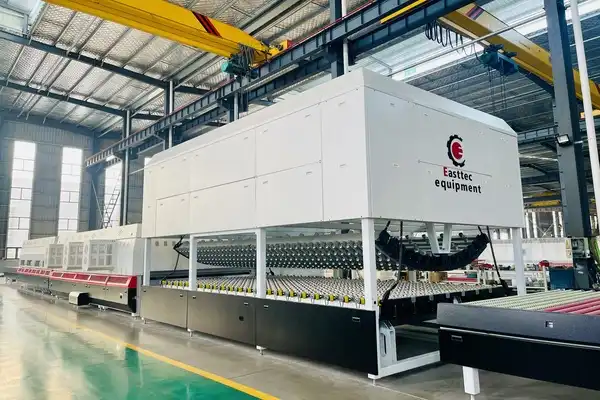
When you combine forced convection heating with a flexible roller system, you can address two key production challenges at the same time: uniform temperature distribution and accurate glass shaping. A top convection curved glass tempering machine with flexible roller uses controlled airflow to help heat the glass more evenly, while the flexible roller system supports precise forming of curved panels. When producing automotive glass, optical distortion must remain within tight limits, making the process control of a top convection curved glass tempering machine with flexible roller particularly important. For architectural applications such as large curtain walls, consistent panel shape and structural performance are also essential. The integrated heating and forming capabilities of a top convection curved glass tempering machine with flexible roller allow manufacturers to address these requirements within a single production process. For processors handling different curved glass applications, a top convection curved glass tempering machine with flexible roller can provide a flexible platform for maintaining consistent forming and tempering conditions.
Why Flexible Roller Technology Changes the Standards for Advanced Glass Applications
Fixed roller and gravity-bending systems have a built-in limitation: they can only bend in one radius. You have to buy a new mold, plan downtime, and retrain operators every time you need a different curve. With flexible roller technology, this loop is no longer needed at all.
Handling Complex Geometries Without Mold Costs
Easttec's curved tempering furnace has an adjustable high-strength flexible roller shaft system that lets processors work with big spans and different curvature patterns from a single machine. A single unique radius mold can cost anywhere from a few thousand to tens of thousands of dollars. If that cost is taken away from a normal product list, it's a good return on the equipment that was bought.
Reducing Mechanical Stress and Breakage Rates
Fixed systems put bending force on the glass surface in an uneven way, which creates stress concentration points. There is less mechanical stress during the forming process because the flexible wheels spread the contact pressure across many customizable places along the width of the glass. When there is less stress concentration, there are fewer breaks and more products are made from each batch.
Real-World Performance in Architectural and Automotive Sectors
Companies that make curved curtain wall panels for business towers need tempering equipment that keeps large glass sheets in line with EN 12150 or ASTM C1048 standards for fragment density. Automotive suppliers need tools that keep the integrity of the laminate during the bending cycle. Flexible roller bending furnaces can meet both needs, and they can also be used for more than one product line.
Comparing Convection Curved Glass Tempering Machines with Flexible Rollers and Traditional Systems
Performance Metrics: Quality and Energy Efficiency
A high-pressure convection system used in a top convection curved glass tempering machine with flexible roller can heat glass up to 30% faster than systems that rely only on direct radiant heating. This speed advantage can become more significant as daily production volume increases, especially in plants operating multiple shifts. The forced convection heating of a top convection curved glass tempering machine with flexible roller helps distribute heat more evenly across the glass while supporting efficient thermal processing. From an energy perspective, Easttec's improved insulation and thermal management design can reduce energy loss by 20%, according to the stated equipment specifications. This can help lower monthly power consumption in a process area known for high energy demand. For manufacturers seeking faster heating and improved thermal efficiency, a top convection curved glass tempering machine with flexible roller can provide an integrated solution for curved glass production. By combining convection heating, flexible roller forming, and optimized thermal management, the top convection curved glass tempering machine with flexible roller can support more efficient production in high-volume glass processing facilities.
Cost Considerations and Long-Term ROI
A flexible roller convection tempering furnace costs more to buy at first than a simple flat tempering line. But the cost savings from not having to deal with mold, less broken glass, and using less energy start paying off from the first month of production. The payback time is usually shorter for medium- to large glass processors that deal with different product specs than it is for fixed-configuration systems.
Certification and Compliance Standards
Every Easttec convection curved glass tempering machine is fully CE compliant. This means that it meets European safety standards and can be used in foreign supply chains where buyers only accept approved equipment. When a machine is CE-compliant, it also means that its electrical systems, guarding, and thermal controls meet certain safety standards. This is important when the equipment has to pass workplace checks by a third party.
Procurement Guide for Convection Curved Glass Tempering Machines with Flexible Rollers
It takes more than just comparing specification sheets to pick the right machine. The best setup for your business depends on the amount of glass you need to produce, the range of thicknesses you need, the shape you need, and the equipment at the site.
Key Factors Before You Buy
Before making a purchase, procurement teams should think about these main things:
- Glass thickness compatibility: Easttec's machine processes glass from 4mm to 19mm, covering decorative thin glass through heavy-duty structural panels. Confirm that any machine you consider matches your full product range.
- Curvature range: Define the minimum and maximum bending radius your product catalog requires. The flexible shaft mechanism on this machine accommodates large-span radii as well as tighter profiles, but verify specific limits with the supplier.
- Power system compatibility: Easttec supports global industrial voltage standards including 220V, 380V, and 415V at 50/60Hz. Confirm voltage adaptation before purchase to avoid costly site modifications.
All of these things together decide whether a machine works well in your production setting or causes constant problems. Taking care of them before you sign a contract saves the schedule for your investment.
Lead Times, Installation, and After-Sales Support
Depending on the configuration, a top convection curved glass tempering machine with flexible roller usually takes between 60 and 120 working days from order confirmation to delivery. As part of the delivery plan, Easttec provides on-site installation, setup, and operator training for the top convection curved glass tempering machine with flexible roller. After installation, technicians offer online support 24 hours a day, 7 days a week, helping operators address technical questions during daily production. The IPC-based control system of the top convection curved glass tempering machine with flexible roller can store complex production recipes so they can be quickly recalled when needed. This recipe-management function can help simplify operator training and make routine production tasks easier to learn. With proper training and system guidance, new operators can become familiar with the daily operation of a top convection curved glass tempering machine with flexible roller within a relatively short period.
Identifying a Trustworthy Supplier
Proof, not just claims, of a supplier's reliability shows. Check for ISO 9001 certification, records of CE compliance, workplace references that can be checked, and a clear policy for what to do after the sale. Easttec has been making thermal processing equipment for glass since 1994. They use European convection technology standards to make machines that have been used successfully in many international markets.
Maintenance and Best Practices to Maximize Performance
Daily and Weekly Maintenance Routines
As part of its daily care, a flexible roller bending furnace should have its roller surfaces inspected for wear or buildup of debris, its temperature zone readings compared to standard calibration data, and its conveyor drive system checked. The roller adjustment servo mechanisms should be oiled once a week, and the heat-resistant bearings in the bending section should be checked.
Diagnosing Common Issues Before They Become Downtime
Temperature changes are usually caused by a broken heating element in a certain area or a blockage in the path of the convection airflow. Radius errors are usually caused by servo motor tuning drift in the device that adjusts the flexible rollers. The IPC diagnostic tool records operational data constantly and alerts users to changes before they affect production yield, so both problems can be found.
Process Control and Smart Monitoring
Easttec's system has a safe Industrial PC and PLC interface that lets you handle data for complicated bending recipes. Operators can quickly save and load settings for various types of glass and curve profiles, which gets rid of setup mistakes between production runs. As IoT-based tracking becomes more common in glass factories, systems like this one that can log data are better suited to being integrated with software used for factory management.
Conclusion
Using flexible roller technology for convection curved glass tempering can give glass manufacturers greater production flexibility, improved coating protection, and better thermal efficiency in one integrated system. A top convection curved glass tempering machine with flexible roller is suitable for producing architectural, automotive, and specialty glass, with stated equipment specifications including 30% faster heating cycles, 20% less energy loss, and a processing range of 4 mm to 19 mm. For international buyers, selecting a top convection curved glass tempering machine with flexible roller with CE approval and comprehensive technical support can provide clearer equipment compliance documentation and after-sales assistance. The flexible roller design of a top convection curved glass tempering machine with flexible roller also allows manufacturers to process different curved glass shapes without relying on a separate mold for every configuration. For businesses looking to expand their product range, a top convection curved glass tempering machine with flexible roller can support more flexible production while helping simplify equipment operation and product changeovers. Before purchasing, buyers should carefully evaluate the specifications, certifications, service package, and production requirements of the top convection curved glass tempering machine with flexible roller to ensure that the equipment matches their intended applications.
FAQ
How much energy can I realistically save with a convection curved tempering furnace?
When compared to other cooling systems, Easttec's smart thermal control design cuts energy loss by about 20%. In businesses with a lot of work that run on multiple shifts, this drop saves a lot of money every month. It depends on the thickness of the glass, the amount being made, and the time it takes for the burner to turn.
Can flexible roller technology process both automotive and architectural glass on the same machine?
Yes. The roller shaft mechanism can be adjusted to fit a lot of different curvature profiles and glass thicknesses, from 4mm to 19mm. This includes side windows and windshields for cars as well as curtain wall panels for buildings. This means that the machine can be used by glass makers in more than one industry.
What is the standard lead time from order to delivery?
Lead times vary from 60 to 120 working days, based on how the machine is set up and what customizations are needed. When you place your order, Easttec's team will give you an approved plan as well as a timeline for installation and start-up.
Does the machine support Low-E coated glass processing?
Yes. The forced convection heating system is designed to work with Low-E glass that has an emissivity of as little as 0.01. It keeps the film from oxidizing and makes sure that the coated surface absorbs heat evenly without hurting the functional layer.
Connect with EASTTEC EQUIPMENT for Your Next Curved Glass Tempering Project
The right partner is the first step in your next plan to improve production. Since 1994, EASTTEC EQUIPMENT has sold thermal processing equipment for glass all over the world. Our Top Convection Curved Glass Tempering Machine with Flexible Roller is designed for processors who work in markets with strict requirements. Our engineering team will make a solution that fits your exact production needs, whether you are looking for a flexible roller curved glass tempering furnace for the first time or replacing old equipment. You can get a quote or download the product brochure right now by emailing sales@easttecmachine.com or going to saihebollizidonghua.aixdb.cn.
Get in Touch Now | Ask for a Quote | Download Brochure
References
1. Glass Technology International — Advances in Forced Convection Heating for Architectural Glass Tempering, 2022.
2. Journal of Materials Processing Technology — Stress Distribution in Curved Glass Under Flexible Roller Bending Conditions, 2021.
3. European Committee for Standardization — EN 12150-1: Thermally Toughened Soda Lime Silicate Safety Glass, 2015.
4. Glass Worldwide Magazine — Energy Efficiency Benchmarks in Industrial Glass Tempering Operations, 2023.
5. ASTM International — ASTM C1048: Standard Specification for Heat-Strengthened and Fully Tempered Flat Glass, 2018.
6. International Journal of Applied Glass Science — Thermal Processing of Low-Emissivity Coated Glass: Challenges and Equipment Solutions, 2020.

USER EVALUATE
Here is the customer's evaluation of us