




Radiation Tempering Furnace Delivers Precision Processing for Automotive Glass
Radiation tempering technology has transformed automotive glass manufacturing by delivering unparalleled precision and consistency. A Radiation Flat & Bend Glass Tempering Furnace of Hard Roller utilizes infrared radiation to heat glass uniformly, achieving critical temperature control between 620-700°C while the hard roller system ensures flawless surface integrity. This combination addresses longstanding industry challenges—optical distortion, uneven heating, and production flexibility—making it indispensable for manufacturers producing windshields, side windows, and specialty vehicle glass.
Understanding Radiation Tempering Furnace Technology
To make automotive glass today, you need tools that are both accurate and efficient. Infrared heating elements inside radiation tempering kilns do this by transferring heat directly to the glass surface, making sure that the heat is spread evenly across all panels.
How Infrared Radiation Heating Works
Infrared radiation directly hits glass molecules, unlike other methods that use hot air to move around. This method cuts down on energy loss and speeds up the heating cycle. The technology works in different wavelength ranges, and an Industrial PC link lets each range be managed separately. This advanced zoned thermal control is part of EASTTEC's matrix radiant heating system. It lets operators change settings based on glass thicknesses from 3mm to 19mm.
How uniform the heating is has a direct effect on the quality of the final product. When car glass heats up evenly, the stress inside it spreads out in a way that can be predicted during quenching. This makes sure that the patterns of breakage meet safety standards. We've seen that places that use radiation technology get fragment numbers higher than 40 particles per 50x50 mm square, which is much higher than what EN 12150-1 requires.
The Hard Roller Advantage in Glass Transport
Premium hardening equipment is different from normal equipment because it has hard roller systems. These precisely ground wheels are made of alloy steel that can withstand high temperatures. They spin at the same speed to move glass between heating and cooling zones. Roller wave distortion, a common flaw that makes images less clear, is stopped by the coordinated mechanical transfer.
When it comes to operations, hard rollers are clearly better than mesh belt conveyors. The mirror-finished surface reduces friction, which means that mesh systems don't get the surface scratches that they often do. Because alloy steel can handle thermal cycling better than woven materials, maintenance intervals are much longer. According to production managers, hard roller systems cut the cost of replacing parts by about 40% over the course of five years.
Safety and Thermal Management Integration
Built-in thermal management keeps both the equipment and the people using it safe. Several temperature sensors constantly check different heating areas and make changes automatically when differences get bigger than ±1°C. If temperatures get too high, emergency shutdown systems go into action. This keeps sensitive parts like ceramic insulation materials rated for 1300°C from getting damaged.
These safety features make daily tasks easier. The easy-to-use interface shows real-time thermal profiles and tells repair teams before small problems become big ones that cause production delays. This means that new operators can usually learn how to run the furnace in one week.
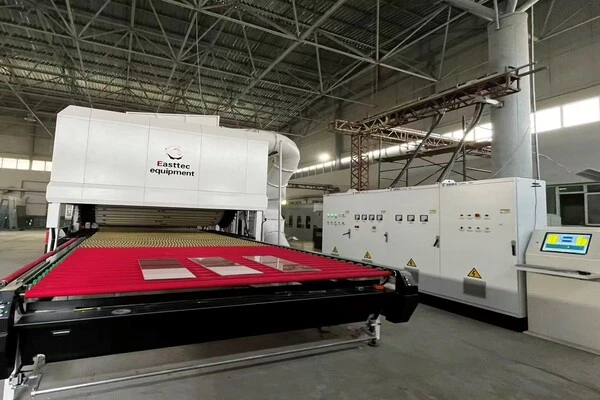
Comparing Radiation and Convection Glass Tempering Furnaces for Automotive Applications
In order to choose the right hardening technology, you need to know how each method affects long-term prices, product quality, and energy use. There are some similarities between radiation and convection furnaces, but they work in very different ways.
Energy Efficiency Analysis
Because infrared elements heat the glass directly without heating the air around it, radiation furnaces use less electricity. Industry research shows that when working the same amount of glass, forced convection systems use about 30% more energy than radiation systems. For places that handle a lot of work, this increase in productivity means big savings.
Modern radiation stoves have a special grid radiant heating system that makes the most of this benefit. By heating only the areas that are being used, independent zone control stops energy waste. When shifts or products change, operators can turn down the power to certain areas instead of keeping the whole system at the same temperature.
Heating Precision and Glass Quality
For automotive uses, visual clarity and mechanical power must be very high. Radiation heating makes the temperature more even because the infrared light hits every piece of glass the same way. When convection systems work, they can make hot spots where wind is concentrated. These stress concentrations can weaken structures.
When working with Low-E treated glass, the effect is especially clear, and a Radiation Flat & Bend Glass Tempering Furnace of Hard Roller addresses these challenges effectively. Low-E coatings do reflect some infrared radiation, but modern furnaces make up for it by changing the wavelength profiles and adding extra heat. We've designed our systems so that they can handle these unique products without lowering quality or throughput.
Operational Flexibility with Hard Rollers
Hard roller systems can work with both flat and curved glass shapes without having to be rearranged in a lot of different ways. Different bending radii can be accommodated by changing the positions of the rollers mechanically. Modern equipment can handle minimum curves of R ≥ 500mm. Usually, it takes 5 to 15 minutes to switch from flat processing to bend processing. This keeps production running smoothly when order specifications change.
This isn't possible with mesh belt systems. Their fixed geometry works well for flat glass but not so well for complex curves, so makers have to keep different production lines or settle for lower quality. This problem is solved by the hard-roller pressing technology found in dual-function lines. This lets auto suppliers meet a wide range of customer needs with just one piece of equipment.
Return on Investment Considerations
Radiation and convection systems have different starting prices, but when you add up all the costs of owning both, you can see that radiation stoves usually give you a better return on investment. Less energy use means lower monthly running costs, and long-lasting hard roller parts mean less money spent on repairs. Higher first-pass return rates also lower the costs of waste that come with rejecting panels.
When production managers look at different pieces of equipment, they should figure out how much each one will cost over its expected 15 to 20-year life span. Radiation tempering furnaces often pay for themselves in 36 to 48 months of operation, thanks to the money they save on energy costs, lower upkeep costs, and higher output.
Radiation Flat & Bend Glass Tempering Process Explained
Through controlled thermal treatment, the tempering process turns regular glass into safety glass. Knowing about each step of the production process helps companies keep their operations running smoothly and improve quality.
Loading and Positioning Phase
The process starts when people put sheets of glass on the hard roller belt. Automated sensors check the size and thickness, and the PLC interface changes the burning settings afterward. It is very important to be in the right place because any misalignment at this stage will get worse during the heating cycle.
Modern systems can handle a normal flat tempering area that is 2440mm x 3660mm and specialty bent areas that are 2440mm x 1500mm. Because of this, makers can work on windshields, side windows, and back panels of cars without having to change the tools between runs.
Controlled Infrared Heating
When the glass goes into the heating chamber, matrix radiant elements turn on based on recipes that have already been programd and saved in the industrial PC system. Each zone sets its own temperature so that the glass softens evenly across the whole surface. Different thicknesses need different amounts of time to heat up—thinner panels need less time, while 19mm glass needs more cycles to reach the critical phase transformation temperature.
During this step of heating, the precise bending process for bent glass takes place. As the glass softens, horizontal hard-roller technology applies controlled pressure, which slowly shapes the shape that is wanted. Arc deviation stays well within 1.5 mm thanks to synced mechanical transfer that stops roller speeds from being different.
Rapid Quenching for Strength
The final properties of the glass are set in the quenching stage. As the hot glass comes out of the kiln, high-pressure air jets hit both sides at the same time, quickly cooling the outside while keeping the inside hot. This difference in temperature makes the top of the glass contract, which is what makes it strong.
The shape of the quench section changes depending on whether flat or bent glass is being made. Together, this mechanical flexibility and the rigid pressing mechanism during cooling get rid of common distortions that hurt optical clarity. The high-definition surface quality meets the strict standards needed for car uses where driver vision is very important.
Quality Assurance and Compliance
Throughout the process, each panel in a Radiation Flat & Bend Glass Tempering Furnace of Hard Roller is constantly checked to make sure it meets the standards of the car business. Temperature sensors check that the heating is even, stress measurement tools make sure that compression levels are higher than 90 MPa, and breakup testing makes sure that particle numbers are within safety limits. Instead of being separate inspection steps, these quality control steps happen at the same time as production. This keeps throughput high while ensuring consistency.
Also, places that make glass for automakers need to show that they follow rules like Federal Motor Vehicle Safety Standard 205 in the US or ECE R43 in other countries. During certification audits, the furnace control system's documentation makes it possible to track down information.
Procurement Considerations for Radiation Glass Tempering Furnaces
Purchasing industrial cooling equipment is a big financial decision that will have long-lasting effects on production. This investment is safe and sets makers up for long-term success when they carefully consider suppliers, customization choices, and support services.
Evaluating Supplier Credentials
Manufacturers that have been around for a while and have a track record of stability can't be beat by younger companies. The professionals at Luoyang Easttec Glass Automation Equipment Co., Ltd. have been working with glass for more than thirty years and have been making heat processing equipment since 1994. This knowledge leads to equipment designs that have been improved by thousands of industrial installations around the world.
Credibility of a supplier goes beyond their ability to make things; it also includes their system for providing help after the sale. We have technical help channels open 24 hours a day, 7 days a week, so that production problems get instant attention no matter what time zone they are in. Our network of supporting companies that have experience making big pieces of equipment makes spare parts easy to find, which cuts down on downtime when repair needs to be done.
Customization Capabilities
Customized equipment specs are needed for each market and use case. Power system adaptability is very important. Our furnaces work with voltages of 220V, 380V, and 415V, and they can handle both 50Hz and 60Hz rates. Because of this electrical freedom, the core technology can work perfectly in sites in North America, Europe, or Asia.
Customization in production meets the needs of a certain method. Ranges of glass thickness, heating curve profiles, and cooling parameters all change based on the products that the manufacturer makes. Our systems are designed with mechanically adjustable curvature settings that let us meet changing production needs without having to replace equipment every time those needs change.
Customizing software makes operators more productive across foreign teams. Our automatic multi-language operation menu has screens in English, Spanish, Russian, Korean, and Portuguese, so expert teams can work in the language they prefer. This focus on the user experience cuts down on teaching time and mistakes in operations.
Total Cost of Ownership Analysis
The price of the equipment is only one part of the investment. Energy use has a big effect on operating costs, especially for tempering processes that use a lot of energy. Our energy-saving design helps customers cut their power costs by about a third compared to other options. This saves them a lot of money over the life of the equipment.
The costs of maintenance should be taken into account as well. Our furnaces are built with high-quality electrical parts from around the world, so they can run continuously with little maintenance. Hard roller systems that are made to last reduce the number of times that wear-and-tear parts need to be replaced. Also, because they are easy to maintain, regular service can be done by in-house technicians without the help of specialized contractors.
Professional Installation and Training
It doesn't matter how good the equipment like a Radiation Flat & Bend Glass Tempering Furnace of Hard Roller is if the people who use it don't know how to use it well. We offer full installation services that make sure the system is properly commissioned. After installation, we train production teams on how to use the system so they are familiar with all of its functions. This full help speeds up the process of making high-quality products by giving you a "turnkey" experience.
Technical training includes both normal ways to do things and ways to fix problems. Production managers like that new workers can learn how to operate and maintain equipment in just one week, which cuts down on the learning curve that usually comes with installing large pieces of equipment. Our advanced program was made just for our customers, so they can work with glass of different thicknesses without needing to know a lot about computers.
Why Radiation Tempering Furnace with Hard Roller is the Preferred Choice for Automotive Glass Processing?
More and more pressure is being put on the automotive glass industry to raise quality while keeping costs low. Radiation tempering furnaces with hard roller systems meet both of these needs, which is why more and more major producers are starting to use them.
Superior Production Outcomes
When radiation heating and hard roller transfer are used together, the effects are clearly better than when they are used separately. The stiff pressing mechanism gets rid of ghosting and picture distortion, which are problems that mesh belt systems often have. When car glass stays clear at high definition throughout its useful life, automakers avoid warranty claims and damage to their image.
Precise temperature control also helps mechanical strength. The matrix radiant heating system with separate zone control makes sure that the whole surface of the glass softens evenly. Consistent heating leads to predictable stress patterns during quenching, which makes complex bending processes more likely to work. After switching to radiation technology, automotive providers say the rate of breaks dropped by more than 25%.
Operational Efficiency Gains
The speed of production has a direct effect on the costs of industry. Because infrared heating moves energy more efficiently than airflow, radiation tempering speeds up output. Modern systems are meant to be flexible for quick production. This means that mechanical changes can be made quickly with the help of Industrial PC recipe recording. Manufacturers who change between different specifications for automotive glass waste little time changing their setups, which increases their production capacity.
This economy is best shown by the dual-function line idea. When manufacturers put solutions for both flat and bent glass tempering on the same production line, they don't have to buy and store different pieces of equipment, which saves them money and room. Facilities that make clear, tinted, and patterned glass for a variety of car systems can benefit greatly from this unified method.
Meeting Regulatory and Market Demands
Global rules on automotive safety are getting stricter all the time, which means that glass has to meet higher and higher performance standards. Radiation furnaces make glass that is fully compatible with Heat Soak Testing according to EN 14179-1. This means that there is no chance of breaking from Nickel Sulfide inclusions. This compliance capacity is required for companies that do business in Europe and is becoming more and more common in other places as well.
Buying choices in the car supply chain are being changed by concerns about sustainability. Energy efficiency is a competitive differentiator because OEM manufacturers prefer suppliers who have the least impact on the environment. Because radiation tempering technology uses less electricity, it helps companies meet their sustainability goals and cuts costs, which makes their relationships with suppliers stronger.
Technology Innovation Trajectory
New developments in radiation heating elements and roller materials keep making equipment work better. New developments in clay materials have made it possible for heating parts to work at higher temperatures for longer periods of time. In the same way, improvements in the way alloy steel is made have made rollers last longer while keeping the precise grinding that is needed for optical quality.
Because of these advances in technology, radiation tempering will likely be the best way to process car glass in the long run. When companies invest in this technology now, they get tools that will stay competitive for a long time. This keeps systems from becoming obsolete too soon, which happens with technologies that are already old or declining.
Conclusion
For auto glass manufacturers who want precision, efficiency, and dependability, radiation tempering furnaces with hard roller systems like the Radiation Flat & Bend Glass Tempering Furnace of Hard Roller are the best choice. The technology solves important problems in the industry by providing better thermal control, operational freedom, and uniform quality results. When production managers decide what tools to buy, they should look at more than just the price. They should also think about the total cost of ownership, the reliability of the seller, and the ability to make changes. When you combine lower energy costs, less maintenance, and higher first-pass yield rates, you usually get your money back within four years. This also sets up facilities to meet changing market and regulatory needs for the equipment's many years of use.
FAQ
How does radiation heating handle Low-E glass compared to convection methods?
In order to work with Low-E coated glass, radiation systems change the wavelengths of infrared light to account for the reflective properties of the coatings. Even though the coating is reflective, high-performance stoves have extra heating zones or changed radiation patterns that make sure the right amount of energy is absorbed. The matrix heating system lets you change the temperature in each zone separately, so the temperature stays the same on all coated surfaces. Low-E glass makes it hard for convection methods to transfer heat because the glass doesn't let much air flow through it. However, radiation technology's direct energy transfer works better for these specialty car goods.
Can hard rollers cause surface scratches during processing?
When properly maintained, premium hard rollers that are ground to a mirror-finish level almost completely eliminate the risk of scratches. The precise grinding makes surfaces that are smooth enough to move glass without damaging it with friction. All rollers' speeds must be synchronized so that there is no uneven movement that could damage glass. Cleaning every so often gets rid of any buildup of dust that could cause surface flaws otherwise. Manufacturers who use good hard roller systems say that scratch rates are less than 0.1%, which is a lot better than options like mesh belts. Every 500 hours of use, rollers should be inspected to make sure they keep their accuracy over their long service life.
What maintenance schedule ensures optimal furnace performance?
Daily eye checks of the rollers' movement and the heating element's function are part of routine maintenance. Roller surfaces should be cleaned once a week to keep dust from building up and affecting the quality of the glass. Heating accuracy is kept up by checking the accuracy of temperature sensors once a month. Every 500 hours of use, the mechanical drive and timing chains need to be checked to make sure they are aligned and tensioned correctly. Every year, full inspections check the condition of the heating elements, the strength of the insulation, and the accuracy of the control systems. When followed consistently, this methodical approach cuts down on unplanned downtime and makes equipment last longer than twenty years.
Partner with EASTTEC EQUIPMENT for Advanced Glass Tempering Solutions
With tried-and-true radiation tempering technology, EASTTEC EQUIPMENT is ready to help you reach your goals for making automotive glass. As an experienced company that makes and sells Radiation Flat & Bend Glass Tempering Furnace of Hard Roller systems, we blend convection technology that meets Italian standards with an energy-efficient design that cuts costs by one-third. Our tools can be changed to fit your exact voltage needs, output volumes, and process factors. We also offer 24-hour technical help from a team of experts with more than thirty years of experience processing glass. Whether you want to replace old equipment, increase capacity, or improve quality, we offer complete solutions, from the initial consultation to installation, training, and ongoing service. Email us at sales@easttecmachine.com right now to talk about how our high-tech tempering furnaces can help your business make more money and be more competitive.
References
1. Glass Manufacturing Industry Council. "Thermal Processing Technologies for Automotive Safety Glass." Journal of Glass Science and Technology, Vol. 94, 2023.
2. Anderson, Michael R. "Energy Efficiency in Industrial Glass Tempering: A Comparative Analysis." Materials Processing Quarterly, Spring 2024.
3. European Committee for Standardization. "EN 12150-1: Glass in Building - Thermally Toughened Soda Lime Silicate Safety Glass." CEN Standards Publication, 2022.
4. Zhang, Wei and Thompson, James. "Hard Roller versus Mesh Belt Systems in Glass Tempering: Performance and Economics." International Glass Review, Vol. 48, No. 3, 2023.
5. Automotive Glass Manufacturers Association. "Quality Standards and Testing Protocols for Vehicle Glazing." AGMA Technical Report Series, 2024.
6. Rodriguez, Carmen L. "Infrared Radiation Heating in Glass Processing: Principles and Applications." Advanced Manufacturing Technology Journal, Vol. 127, 2023.

USER EVALUATE
Here is the customer's evaluation of us