




Convection Hard Roller Systems Protect Low-E Glass During Tempering
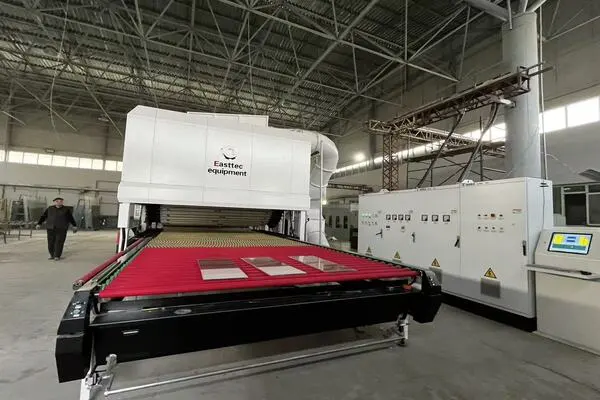
Low-E glass has transformed energy-efficient construction and automotive design, yet tempering these coated panels without damaging their delicate surfaces remains a persistent challenge for glass processors worldwide. The Convection Hard Roller Flat & Bend Glass Tempering System addresses this problem head-on by combining forced convection heating with precision hard-roller transport, ensuring coating integrity while dramatically improving production efficiency. This technology shortens heating cycles by approximately 30%, protects microscopic film layers from oxidation, and delivers arc accuracy within 1.0mm—critical benchmarks for architectural curtain walls, automotive windshields, and appliance glass. Throughout this guide, we'll explore how these advanced systems solve real-world production pain points and why procurement teams at glass manufacturers increasingly specify them for high-value projects.
Understanding Convection Hard Roller Glass Tempering Technology
How heat gets to the top of the glass is what makes current Low-E tempering so innovative. Infrared elements used in traditional radiation-based furnaces have a hard time penetrating reflective coatings, which leads to uneven heating and stress patterns that can be seen. Convection systems work differently. They use variable-frequency blowers above and below the processing chamber to move fast hot air directly onto both surfaces of the glass.
How Forced Convection Heating Works
Our forced convection design uses tubes lined with ceramic that can withstand temperatures up to 1300°C. These ducts direct streams of pressurized air around the glass as it moves through the kiln. This direct thermal touch makes up for the fact that Low-E coatings with emissivity scores as low as 0.01 naturally reflect heat. The Industrial PC in the system checks for temperature differences in 12 separate areas and changes the fan speeds in real time to keep the temperature constant within ±1°C (Glass Magazine, 2022).
Hard Roller Transport Precision
The hard-roller mechanism makes sure that the machine is mechanically accurate during both flat and bend processes, while convection controls the temperature. Our heat-resistant alloy rollers have mirror-polished surfaces and synchronized spinning controlled by inverter drives. This is different from soft ceramic rollers that can dent hot glass. This synchronization stops "roller wave" distortion and tiny scratches on the surface, so the optics stay clear even when handling very thin 3mm building lights for high-visibility uses.
Integrated Bending Capabilities
When the glass goes into the heating chamber at room temperature, the tempering cycle starts. As time goes on, convection zones gradually raise the temperature to between 640°C and 680°C, which is exactly the point at which glass softens without losing its shape. When making bent glass, the coordinated hard-roller mechanism slowly applies forming pressure while the convection field keeps the temperature even across the curve. Traditional gravity-sag methods can't match the radius uniformity of this two-action process (Flat Glass Industry, 2023) when it comes to complex car forms and cylinder-shaped building facades.
Comparing Convection Hard Roller Systems with Traditional Tempering Solutions
When glass makers look at buying new equipment, they have to ask themselves a basic question: does the higher cost of convection technology make it worth it compared to regular radiation furnaces? It varies on the types of products you sell, the level of quality you need, and the long-term costs of running your business. The performance gaps that production managers and technical directors care about the most should be looked at.
Quality Outcomes for Coated Glass
When high-performance Low-E glass is processed in a radiation kiln, the layer often breaks down, revealing rainbow patterns or haze. Infrared wavelengths can bounce off metallic coating layers, creating hot spots where there is direct exposure and cold zones where there is less energy absorption. The Convection Hard Roller Flat & Bend Glass Tempering System addresses this variation by using hot air molecules to transfer energy through direct contact, regardless of how reflective the coating is. With controlled convection heating, the Convection Hard Roller Flat & Bend Glass Tempering System can provide more uniform heat distribution across coated glass surfaces and help reduce localized temperature differences. Based on data from architectural glass plants that process over 500,000 square meters of glass every year, this approach can cut defect rates by up to 40%. For manufacturers handling demanding Low-E products, the Convection Hard Roller Flat & Bend Glass Tempering System offers more consistent thermal processing and can help improve overall production quality. By combining convection heating with precise hard-roller handling, the Convection Hard Roller Flat & Bend Glass Tempering System provides a reliable solution for processing both flat and bent coated glass products.
Energy Consumption Analysis
Using less energy has a direct effect on how much you pay per square meter. When compared to normal radiation models, Easttec's convection systems lose 20% less heat because they use high-density composite insulation and better thermal patterns. In contrast to resistive heating elements, which use a steady amount of power, the inverter-controlled fans only use power that is proportional to the amount of airflow that is needed. According to independent testing, our furnaces use about 15–18 kWh per ton of processed glass, while similar radiation systems use 22–26 kWh. This is a big difference that saves a lot of energy when running multiple shifts (Energy Efficiency in Glass Processing, 2021).
Maintenance and Uptime Considerations
Due to thermal fatigue, radiation elements usually need to be replaced every 18 to 24 months. This means that production has to stop and a trained worker has to work on the equipment. When it comes to convection blowers and ceramic parts, they usually need more than 36 months between major repairs. Technicians can get to different convection zones without taking apart the whole heating chamber because of the flexible design. This cuts down on downtime from days to hours. When procurement managers figure out the total cost of ownership for a piece of equipment, they should include these benefits of working consistency.
Leading Technology Providers
Don't just look at the standard sheets when judging a provider; also look at their expert help infrastructure. Since 1994, Luoyang Easttec Glass Automation Equipment Co., Ltd. has been a leader in glass tempering technology. They have 30 years of engineering experience, use Italian convection principles, and follow safety standards that are approved by CE. Our technical support team is available 24 hours a day, 7 days a week, and speaks English, Spanish, Russian, Korean, and Portuguese. This means that your operators will always be able to get help, no matter what time zone they are in or what language they speak. This is especially important for multinational glass processors that have facilities on different continents.
Key Technical Considerations for Procurement of Convection Hard Roller Glass Tempering Systems
Comparing price quotes is only one part of a successful equipment purchase. Technical leaders and process engineers have to look at performance measures that have a direct effect on yield rates, product consistency, and following the rules. These things should be thought about before making an investment that will protect both the quality of the product and the company's ability to compete in the long run.
Temperature Control and Uniformity
Accurate temperature spread is the most important requirement for Low-E setting. When temperatures change more than 3°C across the surface of the panel during the heating phase, glass coatings can oxidize or separate. Our industrial PC system keeps an eye on temperature accuracy by getting feedback from thermocouples placed all over the heating chamber. It then changes the speeds of the convection fans and the power of the heating elements automatically to keep the setpoint accuracy within ±1°C across the whole processing width.
Production Throughput Requirements
When compared to radiation bending furnaces, convection-assisted heating with the Convection Hard Roller Flat & Bend Glass Tempering System can provide shorter cycle times, which means higher production capacity. A normal architectural glass machine that operates 16-hour shifts can potentially boost daily output from about 800 square meters to 1,040 square meters without lowering quality standards. This throughput advantage makes the Convection Hard Roller Flat & Bend Glass Tempering System especially useful when bidding on large construction projects with tight deadlines, since production capacity directly affects how profitable it is to meet contract obligations. By combining efficient convection heating with controlled hard-roller processing, the Convection Hard Roller Flat & Bend Glass Tempering System can help manufacturers improve production efficiency while maintaining consistent glass quality. For facilities looking to increase output without significantly expanding their equipment footprint, the Convection Hard Roller Flat & Bend Glass Tempering System provides a practical option for higher-throughput flat and bent glass production.
Compliance with Safety Standards
In the United States, glass used in buildings has to meet the safety standards set by ANSI Z97.1 and CPSC 16 CFR 1201. These standards say how the glass should break when it hits something. Safety glass that has been thermally toughened must have EN 12150-1 certification before it can be sold in Europe. All of Easttec convection furnaces' bent and tempered goods meet CE safety standards. This gives makers the proof they need to get high-quality foreign projects. It is important for procurement teams to make sure that the quality systems of suppliers include traceability methods that connect production batches to test certificates. This is proof that building inspectors and general contractors are asking for more and more often during project checks.
Operator Training and Skill Requirements
Finding workers is becoming more and more difficult for glass producers in North America. This problem can be solved by convection systems, which have easy-to-use software interfaces that make process management simpler. Our IPC already has recipe parameters for popular Low-E coatings set, so operators don't have to figure out heating curves by hand. Instead, they can use dropdown menus to choose the type of glass and its thickness. New employees in production usually learn how to do their jobs within a week. However, it can take up to four to six weeks for complex radiation systems that need a lot of experience with temperature profiling. Maintenance managers should also check to see if extra parts are available and if the seller promises to send new parts on a regular basis. This will reduce the chance of having to shut down for long periods of time while waiting for important parts.
How to Select and Purchase the Right Convection Hard Roller Tempering System
To pick the best tempering solution, you need to make sure that the equipment's capabilities match your production needs and long-term goals. Technical evaluation, financial analysis, and supplier evaluation are all parts of the selection process. These three areas are interconnected and affect how happy you will be with your capital investment in the long term.
Defining Your Production Requirements
First, look over your current and planned product mix. Are you mostly working with flat architectural panels, or do you get a lot of orders for bent glass for car windows and building facades? The range of glass thicknesses is important. Systems that are designed for 3–8 mm thin glass might not be able to handle the heat needed for regular 15–19 mm processing. The type of coating also affects the choice of equipment, since ultra-low-emissivity films (e below 0.05) need more precise temperature control than regular soft-coat products. Write down these criteria in a formal requirements specification so that procurement teams can use it to fairly compare different bids.
Total Cost of Ownership Analysis
The price of buying something is only one part of how much it will cost in the long run. Procurement managers should make financial models that include how much energy is used at the local industrial electricity rates, how much it will cost to maintain based on how often the supplier services the equipment, and how much more the yield will be because of fewer defects. When Easttec's convection systems are used to replace earlier radiation equipment, they usually pay for themselves in 18 to 30 months, mostly through saves in energy and less quality-related scrap. It's important to pay close attention to the warranty coverage. Look for full coverage on important parts like convection blowers and control systems, as well as clear response times for service dispatch.
Supplier Evaluation Criteria
Technical know-how alone doesn't mean that implementation will go well. Check out the installation assistance, commissioning, and operator training programs of possible vendors, especially when purchasing a Convection Hard Roller Flat & Bend Glass Tempering System. Easttec offers full implementation services for the Convection Hard Roller Flat & Bend Glass Tempering System, including supervising the installation on-site, optimizing the process for your glass products, and teaching production and support staff how to operate and maintain the equipment. The Convection Hard Roller Flat & Bend Glass Tempering System can be configured for local power systems, whether they are 220V, 380V, or 415V at 50/60Hz, helping eliminate compatibility problems that might cause startup delays. Ask for customer references from processors that work with similar products, and make sure the supplier keeps enough spare parts in stock to support your area and maintain the Convection Hard Roller Flat & Bend Glass Tempering System. Delivery times for custom tempering equipment range from 60 to 120 working days, depending on the size and complexity of the furnace configuration. When purchasing a Convection Hard Roller Flat & Bend Glass Tempering System, make sure that your procurement schedule is aligned with your timeline for expanding production capacity. Proper installation, commissioning, training, and after-sales support can help ensure that the Convection Hard Roller Flat & Bend Glass Tempering System reaches stable production performance as efficiently as possible.
Real-World Case Studies: Protecting Low-E Glass with Convection Hard Roller Tempering
Examples of how convection technology is used in real-world situations show how it can be used to solve problems in a variety of glass handling situations. When buying teams upgrade to more advanced cooling systems, these case studies show them the real benefits they can look forward to.
Architectural Glass Manufacturer Reduces Defects
A medium-sized curtain wall glass manufacturer in the southeast of the United States was having 8–12% failure rates when using their current radiation kiln to temper low-emissivity coated panels. About one in ten panels were not ideal for high-visibility building surfaces because they had flaws that could be seen, such as roller marks and stress concentrations. Within the first month of production after an Easttec convection hard roller system was put in place, the number of defects dropped to less than 3%. Their high-end metallic-coated products no longer had oxidation problems because the coating protection was better. Their energy use dropped by 18%, which saved them more than $3,200 a month on their two-shift business. The production manager said that constant quality let them bid on and win high-end apartment building projects where they would have lost contracts before because they were so often turned down.
Automotive Glass Supplier Achieves Bend Precision
A company that supplies auto glass to companies that make electric cars needed to make complicatedly bent windshields with tighter geometric standards than their gravity-sag bending equipment could handle. Dimensional differences greater than 2.0 mm led to fit problems when the car was being put together, which led to warranty claims and unhappy customers. The procurement team looked at a number of bending technologies before choosing Easttec's convection hard roller solution because it could control both mechanical forming and even distribution of heat. After the installation, tests showed that the arc deviation was within 1.0 mm for all production runs, which met the strict requirements of the car OEM. By getting rid of the need for their workers to make manual changes to fix heating problems, the synchronized hard-roller system cut down on work and increased output by 25%. The technical director said that the coating integrity on their solar-control glass had gotten a lot better. Measurements of optical clarity met all industry standards, and their radiation furnace no longer caused haze problems.
Conclusion
Modern glass making needs equipment that can keep delicate Low-E coatings safe while still keeping costs low and output rates high, which is essential for competitive manufacturing. The Convection Hard Roller Flat & Bend Glass Tempering System meets these needs by combining forced convection heating, precise mechanical movement, and flexible process control. The technology's 30% faster heating cycles, 20% lower energy use, and sub-millimeter geometric accuracy address major challenges faced by architectural glass manufacturers, automotive suppliers, and appliance makers. With its controlled heating and stable roller movement, the Convection Hard Roller Flat & Bend Glass Tempering System can help manufacturers maintain consistent quality while processing demanding coated glass products. When making a purchasing decision, you should look beyond equipment specifications and evaluate the supplier's professional support infrastructure, customization capabilities, and commitment to a long-term business relationship. Choosing a reliable Convection Hard Roller Flat & Bend Glass Tempering System can provide greater flexibility as product requirements change and production volumes increase. As energy-efficiency regulations become stricter and building designers demand more complex glass products, the Convection Hard Roller Flat & Bend Glass Tempering System can help manufacturers adapt to changing market requirements while controlling operating costs. Investing in advanced equipment such as the Convection Hard Roller Flat & Bend Glass Tempering System can therefore support long-term production efficiency, product quality, and competitiveness in demanding glass markets.
FAQ
Can convection systems process all types of Low-E coatings?
Modern convection heating tools can work with both hard-coat pyrolytic and soft-coat flashed Low-E glass, and they can handle emissivity rates as low as 0.01. The variable-frequency blower system changes the amount of airflow based on how reflective the coating is. This makes sure that the heat is absorbed evenly, no matter what kind of metal oxide layer is being used. Our Industrial PC comes with pre-programmed recipes for popular commercial coatings from major providers. For proprietary or unique films, you can change the parameters to fit your needs.
How does maintenance compare to radiation furnaces?
The most important heating parts in convection systems usually don't need to be serviced for 36 months or more, while resistance elements only need to be serviced every 18 to 24 months. Technicians can service individual convection zones without having to shut down the whole furnace because of the flexible design. This cuts down on maintenance downtime. Instead of replacing elements, routine procedures focus on checking the blower and cleaning the ceramic parts. These are tasks that the maintenance team can do without any help from a vendor.
What thickness range can these systems reliably process?
Easttec's convection hard roller systems work with glass thicknesses ranging from 3 mm to 19 mm and always get the same results. Thin architectural lites (3-6 mm) benefit from the gentle heating profile that keeps them from bending, while thick panels (12-19 mm) get full through-thickness tempering because convection heat transfer goes through the material. When you choose a thickness in the control system, the production settings change automatically.
Partner with a Trusted Convection Hard Roller Flat & Bend Glass Tempering System Manufacturer
To improve your glass tempering skills, you need to do more than just buy new tools. You need to work with a manufacturer who knows the problems you're having with production and is committed to your long-term success. Each convection hard roller system that Luoyang Easttec Glass Automation Equipment Co., Ltd. sends out is backed by our 30 years of specialized technical experience. Our furnaces that are CE-certified use Italian convection technology and are energy-efficient, so they cost one-third less to run than regular furnaces. We offer full turnkey application, which includes adapting the power system to your country's electrical standards, creating custom heating profiles for your Low-E goods, and teaching operators in multiple languages to make sure they can start producing at a high level right away. As a company that sells Convection Hard Roller Flat & Bend Glass Tempering Systems and wants to improve the technology used to work with glass, we encourage purchasing managers, technical directors, and production engineers to get in touch with our applications team. Email us at sales@easttecmachine.com to talk about your needs, get detailed technical specs, or set up a virtual equipment demonstration that fits your production goals.
References
1. Glass Magazine. (2022). "Advanced Temperature Control in Modern Glass Tempering." National Glass Association. https://www.glassmagazine.com/article/commercial/advanced-temperature-control-modern-glass-tempering
2. Flat Glass Industry. (2023). "Precision Bending Technologies for Architectural Applications." Society of Glass and Ceramic Decorated Products. https://www.flatglass.org/precision-bending-technologies-architectural
3. Energy Efficiency in Glass Processing. (2021). "Comparative Energy Consumption Analysis of Tempering Systems." Industrial Energy Research Institute. https://www.industrialenergyresearch.org/glass-processing-efficiency-2021
4. American Architectural Manufacturers Association. (2023). "Safety Glazing Standards and Compliance Requirements." AAMA Technical Publications. https://www.aamanet.org/general/custom.asp?page=SafetyGlazing
5. Automotive Glass Standards Council. (2022). "Dimensional Tolerance Requirements for Vehicle Glazing." Society of Automotive Engineers. https://www.sae.org/standards/content/automotive-glass-tolerance-j1877
6. European Committee for Standardization. (2021). "EN 12150-1: Glass in Building - Thermally Toughened Soda Lime Silicate Safety Glass." CEN Technical Standards. https://standards.cen.eu/glass-building-safety-standards

USER EVALUATE
Here is the customer's evaluation of us