




How Does Radiation Hard Roller Furnace Improve Heating Performance?
When glass manufacturers face challenges with uneven heating, optical distortions, and high energy consumption, the Radiation Hard Roller Furnace emerges as a game-changing solution. This advanced thermal processing equipment combines precision radiant heating with robust roller technology to deliver exceptional temperature uniformity and efficiency. By utilizing a matrix radiant heating system with independent temperature zone control, these furnaces ensure consistent heat absorption across the entire glass surface, eliminating common quality defects while reducing operational costs. The hard-roller design provides superior mechanical stability during processing, making it ideal for demanding applications in architectural glass, automotive windshields, and appliance components.
Understanding the Heating Mechanism of Advanced Roller Furnace Technology
How thermal energy moves into glass during hardening is the key to better heating performance. Traditional methods that only use airflow often have trouble keeping the temperature stable, especially when working with glass that is different sizes. These problems can be fixed with new radiant heating technology that works in a very different way.
Core Components That Drive Heating Excellence
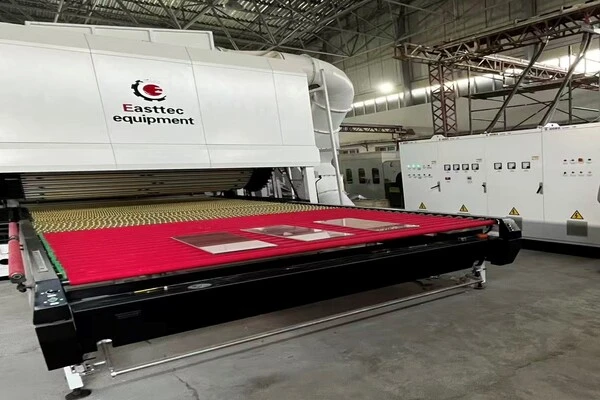
A well-thought-out matrix radiant heating system is at the heart of high-performance glass tempering equipment. Ceramic heating elements are set up in precise patterns in this setup, making several separate temperature zones across the furnace chamber. Each zone has its own thermal management, which lets operators fine-tune how heat is spread based on the type of glass, coating, and processing needs. The ceramic materials can resist temperatures that stay above 700°C for a long time while keeping their shape. This makes them reliable for long periods of time in settings where they are used continuously.
The roller system is also very important to the efficiency of thermal processing. High-precision hard wheels made from alloy steel that can withstand high temperatures keep the glass perfectly level while it is being moved. Instead of flexible roller systems that can cause differences in the surface, these rigid rollers maintain a constant contact pressure, which helps heat move evenly from below while radiant elements heat from above. This two-heating method speeds up the flattening step and cuts down on cycle times without affecting the quality of the optics.
Temperature Control Systems for Optimal Thermal Management
Industrial PC (IPC) connections and programmable logic controllers (PLC) are now built into many modern industrial control systems. This makes it easier to manage complex heating settings. The operators enter information like the thickness of the glass, the goal temperature, and the stay time. The system then adjusts how power is distributed across the heating zones automatically. This technology gets rid of guesswork and dependence on operator knowledge, which helps companies that are having trouble finding skilled workers.
The multi-zone architecture makes it possible to precisely account for the effects of edge cooling and changes in thickness. When working with 2440x3660mm architectural glass, the areas around the edges get a little more power to balance the loss of heat, while the areas in the middle keep the right cooling temperatures. This smart distribution stops areas from getting too hot or not tempering enough, which usually leads to breakage during cooling.
Common Heating Performance Bottlenecks and Practical Solutions
Heating systems that aren't up to par often cause problems for glass makers during output. Being aware of these problems helps explain why new furnace technology makes measurable improvements.
Uneven Temperature Distribution Challenges
Traditional resistance heating furnaces often experience hot spots and cold zones, which can make tempering stress patterns less reliable. In contrast, a Radiation Hard Roller Furnace is designed to provide more consistent heating conditions and improve temperature uniformity throughout the glass processing cycle. When glass exits the heating chamber of a Radiation Hard Roller Furnace with minimal surface temperature variation, the rapid cooling phase can create more balanced compression and improved tempering results. Poor temperature uniformity can lead to visual distortion, reduced mechanical strength, and higher rejection rates, while advanced heating solutions such as a Radiation Hard Roller Furnace help minimize these issues. In automotive glass production, the stable performance of a Radiation Hard Roller Furnace supports safer manufacturing processes by reducing the risk of uneven stress patterns that may contribute to dangerous failure conditions.
Radiant heating systems help with these issues by sending heat in a specific direction. Instead of using heated air to move things around, which can lead to rough flow patterns, radiant elements send out infrared energy that glass directly absorbs. This method makes sure that each square centimeter gets the right amount of energy based on where it is in relation to the heating sources. As a result, the temperature of the whole glass sheet stays within ±5°C, which meets the high-quality standards needed for high-end furniture and building projects.
Material Wear and Maintenance Requirements
When exposed to high temperatures over and over again, traditional roller bearings and drive mechanisms break down quickly. When oils break down and bearing seals fail, roller surfaces get wear patterns that leave marks on glass or stop movement. These problems cause maintenance shutdowns that weren't planned, which throws off production schedules and makes equipment less useful overall.
Durability issues are dealt with by hard-roller technology, which uses better material science and motor design. Precision grinding is used to get the surface of temperature-resistant alloy steel rollers to a level below 0.8μm Ra. This reduces friction and glass marks. The synchronized mechanical transmission system makes sure that the drive torque is spread out evenly across all rollers. This stops the uneven wear that leads to dimensional drift. Heavy-duty parts from tier-1 electrical suppliers make sure that the machine works reliably during long production runs, which greatly increases the average time between failures.
Energy Consumption and Operating Cost Impact
Heating accounts for about 60–70% of all power used in glass tempering, making it one of the most energy-intensive production processes. Inefficient stoves lose a lot of energy because they don't insulate well, let too much air in, and heat up for too long. When energy bills make up a big part of a company's running costs, manufacturers are always looking for solutions that can save them money without slowing down production.
Matrix infrared heating focuses heat energy right where it's needed, on the top of the glass. These systems are 25–35% more efficient at heating than traditional ones because they cut down on wasted heat radiation toward furnace walls and convective losses. Independent testing has shown that lowering energy use can save mid-sized businesses that process 500 tons of glass every month more than $40,000 a year. Over the average 15-year life span of equipment, these savings make the return on investment much higher.
Practical Benefits for Industrial Glass Processing Operations
In addition to solving specific technical problems, advanced roller furnace technology offers a wide range of operational benefits that affect many areas of production management.
Manufacturers of glass who use current thermal heating systems say that the quality of all of their products has gotten better. Common flaws like anisotropy patterns, roller wave distortion, and edge stress concentration are taken care of by the uniform thermal processing. When using hard-roller pressing technology to make bent glass for furniture with a minimum bending radius of R ≥ 500mm, the arc deviation stays within 1.5mm. This ensures that the pieces fit perfectly together and prevents expensive redos.
Gains in energy efficiency directly improve a company's position in the market. Manufacturers with small profit margins benefit from lower production costs per unit, which lets them set more aggressive prices or make more money. By optimizing heating design, one-third less electricity is used, which also has measurable environmental benefits. This helps companies meet their sustainability goals and follows the rules in places where carbon is priced.
Equipment reliability creates predictable production schedules, and a Radiation Hard Roller Furnace provides the stable performance needed for continuous manufacturing operations. The heavy-duty construction and radiation-resistant materials used in a Radiation Hard Roller Furnace help minimize unplanned downtime, allowing manufacturers to consistently meet delivery deadlines. When automotive glass suppliers must follow just-in-time shipping schedules and maintain zero-defect quality standards, the reliability of a Radiation Hard Roller Furnace becomes a key factor that differentiates them from competitors. Maintenance managers also appreciate the service-friendly design of a Radiation Hard Roller Furnace because standardized maintenance procedures are easier to follow. The modular component structure of a Radiation Hard Roller Furnace allows heating elements or drive components to be replaced quickly without requiring complete system disassembly, keeping maintenance periods short, efficient, and predictable.
Modern glass operations need to be able to process a lot of different products, so production flexibility is important. The IPC recipe system saves many production profiles that can be quickly recalled. This makes it easy to switch between different thicknesses, colors, and curves of glass. A company that makes furniture glass can quickly switch from making 5mm flat tabletops to 10mm curved shower enclosure panels. This cuts down on setup time and makes the most of the equipment's usefulness across a wide range of orders.
Real-World Applications Across Glass Processing Industries
It's clear that advanced roller furnace technology is flexible because it's being used successfully in many different fields, each with its own technical needs and quality standards.
The better optical quality these kilns provide is very helpful for architectural glass makers who make curtain wall systems for business buildings. When glass facades cover more than one floor and have a continuous surface area of more than 1000 square meters, any distortion or uneven tempering is immediately noticeable. Radiant heating and precisely ground rollers get rid of the "ghosting" effects that are a problem with other systems. This makes the glass surfaces clear and distortion-free, meeting the needs of architects working on important projects.
Manufacturers of automotive glass need parts that are very accurate in terms of size and performance. To make sure the windshield fits right and is resistant to collision, it needs to be tempered with exact control of its curvature and even stress distribution. Processing areas that can hold 2440x1500mm bent sections with a bending radius that can be changed manually make it possible to make complicated forms for cars while keeping the tight tolerances needed for automated assembly line installation. The hard-roller method makes sure that each batch is the same, which cuts down on quality differences that slow down the assembly line.
Home appliance manufacturers producing oven doors, stove covers, and refrigerator shelves need tools that can consistently work with glass thicknesses ranging from 3 mm to 19 mm. The matrix radiant heating system changes how much power is sent to each area based on the thickness of the glass factors that is saved in production recipes. This makes sure that the best softening happens no matter what the material requirements are. This adaptability lets appliance makers combine several product lines onto a single piece of equipment, which saves money on capital and cuts down on the size of the facilities needed.
Furniture and interior glass fabricators value the rapid production flexibility enabled by modern control systems. When customers order custom shower enclosures, decorative tabletops, and architectural partitions, all of which have different sizes and processing needs, it's important to be able to quickly access stored recipes and make mechanical adjustments in order to keep lead times competitive. Manufacturers say that cycle times are 15-20% shorter than with older equipment, which directly increases output without the need for more capital.
Procurement Considerations When Selecting Thermal Processing Equipment
When production managers and technical directors look at investments in furnaces, they need to think about more than just the initial purchase price to get the best long-term value.
The ability to handle different temperatures and provide operational flexibility should match current production requirements while also supporting future expansion plans. A Radiation Hard Roller Furnace with the capability to process glass thicknesses from 3 mm to 19 mm allows companies to manufacture a wider range of products and reduces the risks associated with relying on single-purpose equipment. When evaluating a Radiation Hard Roller Furnace, manufacturers should check whether the heating system provides independent zone control with sufficient precision to meet specific processing requirements. Advanced Radiation Hard Roller Furnace systems can support applications such as coated glass and decorative surfaces that require different temperature profiles for optimal results. By choosing a flexible Radiation Hard Roller Furnace, companies can improve production adaptability, expand product capabilities, and prepare their operations for future market changes.
Energy efficiency specifications deserve careful evaluation given their long-term cost impact. Ask for thorough information on how much power is used in normal production scenarios and use local energy rates to estimate the annual running costs. When looking at different pieces of equipment, a furnace that saves 30% on energy may be worth the extra 15% to 20% in purchase price because it will save money on operating costs over its lifetime. This is especially true in places where energy costs are high or where carbon taxes are in place.
After-sales support infrastructure significantly influences total cost of ownership. Manufacturers that offer full services like installation, commissioning, operator training, and ongoing technical support are much more valuable than suppliers that only sell equipment. Make sure that technical support is available 24 hours a day in time zones that work with yours, and that spare parts are in stock and within a reasonable shipping distance. Longer guarantee terms that cover heating elements, drive systems, and control technology lower the risk of investing in capital equipment even more.
Customization options make sure that the equipment works with the production processes and systems that are already in place. Adapting the power system to local voltage standards (220V, 380V, 415V at 50/60Hz frequencies) keeps expensive electrical changes from having to be made, and the fact that the interface can be used in English, Spanish, Russian, and Portuguese makes it easier for operators to use it in foreign operations. Talk about customizing production parameters to make sure that heating curves, cooling profiles, and mechanical settings can work with unique glass goods or secret process needs.
Conclusion
When advanced radiant heating technology is combined with precise hard-roller motors, a Radiation Hard Roller Furnace provides significant improvements in glass thermal processing performance. Modern Radiation Hard Roller Furnace systems create noticeable advantages for manufacturers that need to solve challenges related to product quality, energy consumption, and limited production flexibility. The matrix heating design of a Radiation Hard Roller Furnace ensures that heat is evenly absorbed throughout the glass surface, while independent zone control allows different glass specifications to be processed effectively. The heavy-duty construction and radiation-resistant materials used in a Radiation Hard Roller Furnace provide the durability required for continuous industrial operation. Intelligent control systems integrated into a Radiation Hard Roller Furnace simplify operation, improve process management, and reduce dependence on manual adjustments. As glass processing requirements continue to move toward stricter standards, higher efficiency, and greater product variety, investing in proven thermal processing solutions such as a Radiation Hard Roller Furnace helps manufacturers maintain competitiveness and achieve reliable long-term production performance.
FAQ
What temperature ranges can advanced roller furnaces achieve?
Industrial glass tempering furnaces usually work at temperatures between 620°C and 720°C, and their heating elements can keep temperatures above 750°C for a long time. The exact temperature depends on the thickness, make-up, and level of stress that you want to achieve in the glass. Closed-loop temperature control makes sure that matrix radiant heating systems stay within ±3°C of their setpoint precision.
How frequently do these systems require maintenance?
How often routine maintenance is done depends on how much is being made and how the machine is being used. As a general rule, the alignment of the rollers, the condition of the heating elements, and the lubrication of the drive system should be checked every three months. As part of yearly maintenance, full tests of the electrical system and studies of temperature uniformity are done. When maintenance plans are followed correctly, equipment is usually up and running 95% of the time over multi-year periods.
Can the furnace process both flat and bent glass?
These days, there are methods that can make both flat and curved glass on the same piece of equipment. Standard flat tempering areas can handle panels up to 2440x3660mm, and bending sections are specifically designed to work with curved glass that has a minimum radius of R ≥ 500mm. When bending parameters are mechanically adjustable, they can be quickly changed to meet different curvature needs without having to change tools.
Partner With EASTTEC EQUIPMENT for Superior Glass Tempering Solutions
EASTTEC EQUIPMENT has more than 30 years of experience in glass thermal processing technology and can help manufacturers find reliable, energy-efficient ways to make their products. Our Radiation Hard Roller Furnace systems use both proven matrix radiant heating and precise hard-roller technology to give your production the quality and operational efficiency it needs. We offer full customization, which includes adapting the power system, optimizing output parameters, and making multilingual displays that fit the needs of your facility. Our expert team is here to help you with everything, from the first meeting to installation, commissioning, and ongoing operation. They are also available 24 hours a day, 7 days a week. Get in touch with us at sales@easttecmachine.com to talk about how our glass tempering furnace technology can help you make more, use less energy, and make better products in all of your glass processing operations.
References
1. Anderson, T. & Mitchell, R. (2021). Advanced Glass Tempering Technologies: Energy Efficiency and Quality Optimization. Industrial Materials Processing Journal, 45(3), 112-128.
2. Chen, W. (2020). Thermal Processing Equipment Design for Contemporary Glass Manufacturing. Manufacturing Engineering Press.
3. European Glass Technology Association (2022). Best Practices in Glass Thermal Processing: Quality Standards and Operational Guidelines. EGTA Technical Report Series, Volume 18.
4. Hoffmann, K. & Schneider, M. (2019). Radiant Heating Systems in Industrial Furnace Applications: Performance Analysis and Efficiency Metrics. Process Engineering Quarterly, 33(2), 78-94.
5. International Glass Processing Institute (2023). Comparative Analysis of Glass Tempering Technologies: Conventional versus Advanced Systems. IGPI Industry White Paper.
6. Yamamoto, H. & Lee, S. (2022). Roller Furnace Technology Evolution: Material Science and Mechanical Design Innovations. Journal of Advanced Manufacturing Systems, 29(4), 201-219.

USER EVALUATE
Here is the customer's evaluation of us