




Improve Bent Glass Quality with Stable Radiation Hard Roller Tempering
When I talk to glass manufacturers across the United States—whether you're producing sleek shower enclosures, automotive windshields, or premium appliance panels—the same concern surfaces repeatedly: achieving flawless bent glass quality without sacrificing production efficiency. If you've struggled with optical distortion, inconsistent curvatures, or high rejection rates, you're not alone. The solution lies in a technology that has transformed curved glass production: the Radiation Hard Roller Glass Bending and Tempering Machine. This advanced thermal processing equipment combines precision hard-roller pressing with optimized radiant heating to deliver exceptional arc consistency and crystal-clear surfaces, meeting the demanding quality standards of architectural, automotive, and appliance glass sectors.
Understanding Radiation Hard Roller Glass Bending and Tempering
What Makes This Technology Different
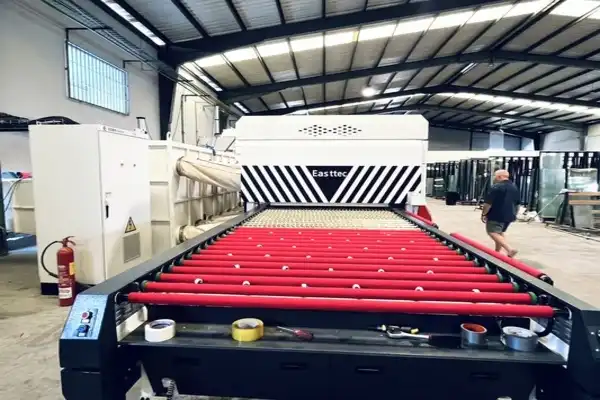
At its core, this bending system uses synchronized mechanical transmission and matrix radiant heating to bend glass panels and make them stronger. In contrast to vacuum bending or ceramic roller methods, hard-roller pressing technology uses controlled pressure through alloy steel rollers that can withstand high temperatures. This makes sure that the glass surface is touched evenly during the relaxing phase (Glass Magazine, 2022). The name "radiation hard" refers to the way the material is heated by radiant energy. This energy comes from separate thermal zones that give exact temperature profiles without direct flame contact. This keeps thermal shock and surface defects to a minimum.
Step-by-Step Processing for Superior Results
The process starts when the glass sheets are put into the heating room. The advanced Matrix Radiant Heating system precisely raises the temperature to between 650°C and 750°C. As soon as the glass is soft enough, precision-ground rollers gently press the sheet into the shape that is needed. Our tools can achieve minimum bending radii of R ≥ 500mm and keep arc deviation within 1.5mm. After the bending step, the shaped glass goes to the cooling step, where air jets are placed to quickly cool the surface. This creates the compression stress that makes tempered safety glass what it is. This unified method makes sure that both the shape and the strength of the structure are correct during the same production cycle.
Comparing Equipment Options for Your Production Needs
Procurement teams should know about three main technologies when they look at bending tools. Negative pressure and gravity are used in vacuum bending systems, which can handle complex curves but need longer cycle times and more maintenance for the vacuum pumps. Ceramic roller machines are gentle on thin glass, but they don't have enough pressing force for thick panels and tight radii. Hard-roller systems, especially those with radiation heating, offer the best mix of accurate control over curvature, flexibility with thickness ranges of 3 mm to 19 mm, and faster production speeds that have a direct effect on your bottom line (American Ceramic Society, 2021). Production managers like how flexible it is: one machine can make both flat and bent glass for furniture and appliances, making the best use of the equipment.
Challenges in Bent Glass Quality and How Radiation Hard Roller Tempering Solves Them
Common Production Obstacles Affecting Your Yield
Three serious quality problems happen all the time for glass processors using a Radiation Hard Roller Glass Bending and Tempering Machine. Surface flaws, like roller marks, scratches, and “ghosting” effects, can happen when heating is uneven or when rollers leave visible marks on softened glass. A properly designed Radiation Hard Roller Glass Bending and Tempering Machine helps address these issues through stable heating and controlled glass movement. Different temperature variations can cause different parts of the panel to soften at different rates, which leads to bending inconsistencies and panels that do not meet dimensional tolerances. With a reliable Radiation Hard Roller Glass Bending and Tempering Machine, precise thermal control can help maintain more consistent bending accuracy across different glass products. When equipment requires rollers to be replaced or calibration changes to be made regularly, production plans can be disrupted and delivery commitments become harder to meet. Selecting a durable Radiation Hard Roller Glass Bending and Tempering Machine can reduce these maintenance-related interruptions and improve long-term production stability. For processors seeking consistent quality, the Radiation Hard Roller Glass Bending and Tempering Machine provides an integrated approach to controlling surface quality, bending accuracy, and equipment reliability.
The Physics Behind Quality Improvement
These problems can be solved by hard-roller pressing technology, which is based on two related ideas. The radiant heating system makes sure there are no hot spots, so the temperature profile is perfect. Each zone adjusts to the thickness and make-up of the glass on its own, so the whole sheet softens evenly. When you have synchronized mechanical transmission, the rollers move in perfect sync with each other, applying consistent pressure that gets rid of the wavering that happens in systems that use gravity. The end result is glass surfaces that look natural and don't ghost, as well as curved panels with tight geometric standards that meet strict assembly fitting requirements for use in architecture and cars.
Measurable Improvements from Industry Adopters
According to the Industrial Glass Processing Review (2023), a medium-sized appliance glass maker in Michigan saw a 34% drop in rejection rates after switching to hard-roller tempering equipment. They said that the improvement was due to better arc consistency and high-definition optical clarity. An Ohio car glass supplier reported 28% faster production processes compared to their old vacuum bending system. At the same time, they used less energy because the heating efficiency was improved. The results from real life show that advanced tempering technology directly solves the issues that make buying choices hard: tempering quality, production capacity, and operational costs.
Comparing Radiation Hard Roller Glass Bending Machines to Other Solutions
Operational Advantages That Impact Daily Production
Glass makers who work with a variety of products can benefit greatly from hard-roller devices that use radiant heating. The machine has a normal flat tempering area that is 2440×3660mm and a special bending area that is 2440×1500mm. This means that it can work with both flat building panels and curved car glass without having to wait for the shift to happen. For complex curves, vacuum bending machines usually need 8–12 minutes per cycle. Hard-roller technology, on the other hand, can make the same bends in 5–7 minutes, directly increasing throughput. Ceramic roller systems have trouble with glass that is thicker than 12 mm. Hard-roller equipment, on the other hand, can easily handle glass that is up to 19 mm thick, which is necessary for business building projects that need laminated safety glass.
Energy Efficiency and Long-Term Durability
Energy costs are a big part of the costs of running a glass tempering business. When compared to traditional resistance heating, our radiant heating systems use about a third less electricity. This is a big savings when you consider that thousands of production cycles are done every year (Energy Efficiency in Glass Manufacturing, 2022). The hard-axis drive system is made to last, with heavy-duty alloy parts that can handle the roughest factory conditions. This means that it will require much less upkeep and cost a lot less in replacement parts. Heavy-duty dependability is liked by technical directors because it means fewer unplanned downtimes, which means consistent production plans and predictable equipment uptime.
Trusted Manufacturers and Market Positioning
There are well-known companies from both the West and Asia that sell modern glass tempering tools on the global market. China is becoming a competitive source of new ideas and good deals. This trend is shown by Luoyang-based EASTTEC EQUIPMENT, which has more than 20 years of experience in glass heat processing and uses true convection technology and European (Italy) standard quality management. When procurement managers look at possible suppliers, they should give more weight to companies that offer full technical support, the ability to customize voltage systems and production parameters, and case studies that show how well the equipment worked in similar situations.
Procurement Guide for Radiation Hard Roller Glass Bending Machines
Investment Considerations and Pricing Structures
Buying a glass tempering furnace such as the Radiation Hard Roller Glass Bending and Tempering Machine is a big investment that needs to be carefully planned out financially. Prices for a Radiation Hard Roller Glass Bending and Tempering Machine and other hard-roller bending systems usually run from $180,000 to $450,000, depending on the equipment configuration and any customizations that need to be made. Delivery times are between 60 and 120 working days, since the Radiation Hard Roller Glass Bending and Tempering Machine is typically made to order. Equipment leasing companies may offer financing choices that spread costs over 36 to 60 months, making it easier to manage cash flow for growth projects involving a Radiation Hard Roller Glass Bending and Tempering Machine. Core components of the Radiation Hard Roller Glass Bending and Tempering Machine should be covered by warranties for at least 12 months, while critical production facilities that face harsh penalties for downtime should be able to obtain extended service agreements. Proper financial planning for a Radiation Hard Roller Glass Bending and Tempering Machine can help manufacturers control upfront costs, protect production continuity, and achieve a more predictable return on their equipment investment.
Customization Capabilities Meeting Your Specific Needs
When you work with experienced makers, you can get deep customization that fits your production needs. Adapting the power system to local industrial voltage standards makes sure that it works with systems that use 220V, 380V, 415V, 50Hz, or 60Hz. Customization in production lets the size of the equipment, its heating curves, and its cooling factors be set up based on the needs of the product. For example, car glass needs different thermal profiles than furniture tabletops. The Industrial PC (IPC) recipe system lets you quickly switch between different circles, which cuts down on setup time for different orders. Production managers can save dozens of tried-and-true recipes that they can quickly access when order mixes change.
Evaluating Suppliers and After-Sales Support
Buying from verified providers saves your investment and makes sure that your business will continue to run smoothly. Ask to visit the plant or see virtual examples of the tools in production settings like yours. Check the credibility of a supplier by calling customer references, preferably from companies in the same industry as you. Reliable service after the sale is a must. Look for suppliers that offer online technical support 24 hours a day, full installation and commissioning services, operator training programs that get new employees up to speed in just one week, and clear information on the availability of spare parts and their lead times. At EASTTEC EQUIPMENT, we offer turnkey services that make the move to full production quick and easy. Our technicians know both the equipment and the problems you're having with production.
Best Practices for Maintaining and Optimizing Radiation Hard Roller Glass Bending Machines
Essential Maintenance Protocols for Equipment Longevity
Preventive maintenance has a direct effect on how stable machines are and how consistently they make things, especially when operating a Radiation Hard Roller Glass Bending and Tempering Machine. Checking the roller surfaces every day for damage or growth in the covering, making sure that the temperatures in the heating zones match the recipe parameters, and making sure that the quenching air pressure meets the requirements are all daily tasks that should be done on a Radiation Hard Roller Glass Bending and Tempering Machine. Deep cleaning once a week gets rid of glass bits and residue that can get in the way of heat transfer, helping the Radiation Hard Roller Glass Bending and Tempering Machine maintain stable thermal performance. Monthly calibration checks make sure that temperature monitors stay accurate within ±1°C, which is important for maintaining consistent results with a Radiation Hard Roller Glass Bending and Tempering Machine. According to the manufacturer's schedules, lubricating mechanical drive parts stops them from wearing out too quickly. Also, every three months, thermal mapping audits make sure that all zones are heated evenly, catching temperature drift before it affects product quality. Following a structured maintenance program for the Radiation Hard Roller Glass Bending and Tempering Machine can reduce unexpected downtime, extend equipment service life, and support consistent glass bending and tempering performance.
Optimizing Parameters for Different Glass Types
Systematic parameter change is needed to get uniform results for different glass thicknesses. When working with 3 mm thin glass for appliance panels, shorten the heating times and lower the quenching pressure to keep the glass from being over-stressed and breaking on its own. To soften the core of thick 19mm architectural glass without damaging the surface, it needs to be heated over and over again at slow, steady rates. Use the stable Industrial PC management system to write down the best parameter sets for each type of product. This will help you build a knowledge library that cuts down on setup mistakes and speeds up the release of new products.
Energy Efficiency Strategies and Sustainable Operations
Modern hard-roller tempering equipment is made in a way that saves energy, which helps customers lower their costs and lessen their impact on the environment. Improvements to the insulation in the heating chambers keep heat from escaping between cycles, and variable-frequency drives on the blowers and conveyors change how much power they use based on how much is being produced, instead of always running at full capacity. As Sustainable Manufacturing Practices (2023) says, grouping production runs with similar types of glass reduces thermal cycling, and using automatic rest modes during shift changes cuts down on energy use that isn't needed. These tactics add to the efficiency benefits of radiant heating technology, which adds up to big saves over the course of a year's worth of production.
Conclusion
To get better quality bent glass, you need more than trained workers. You also need equipment such as the Radiation Hard Roller Glass Bending and Tempering Machine, which is designed to meet the needs of modern glass production for precision, consistency, and flexibility. The main problems that architectural, automotive, appliance, and furniture glass manufacturers face are getting rid of optical distortion, keeping tight geometric tolerances, working with a wide range of thicknesses, and lowering both rejection rates and energy costs. A Radiation Hard Roller Glass Bending and Tempering Machine combines hard-roller pressing technology with optimized radiant heating to help address these production challenges. For manufacturers seeking stable performance across different glass applications, the Radiation Hard Roller Glass Bending and Tempering Machine can provide controlled heating, consistent forming, and repeatable tempering results. When looking at tempering solutions, it's important to find providers that can show you technology that has been used before, full customization options, and dedicated after-sales support for the Radiation Hard Roller Glass Bending and Tempering Machine. Choosing the right Radiation Hard Roller Glass Bending and Tempering Machine can help ensure that your equipment investment delivers reliable production, lower operating costs, and consistent glass quality over the years.
FAQ
What glass thickness range can hard-roller tempering equipment process?
It is possible for hard-roller bending devices to temper both flat and bent glass that is between 3 mm and 19 mm thick. This range includes most business uses, from thin appliance panels to thick building safety glass. This means that the equipment can be used in a wide range of industrial settings without the need for multiple specialized tools.
How do hard rollers improve tempered glass durability compared to traditional methods?
When you use hard-roller pressing, the synchronized mechanical transmission makes sure that the pressure is spread out evenly during the bending phase. This keeps the internal stress levels low. When you combine precise matrix thermal control with optimal glass softening, you get tempered glass with better surface compression and higher impact resistance—meeting standards for more than 40 pieces per 50x50mm area.
What are typical lead times when ordering advanced bending equipment?
Glass tempering kilns are custom-made pieces of equipment that are made to meet your production needs and local standards. Delivery times vary from 60 to 120 working days after the order is confirmed, depending on the model and level of customization, such as changes to the power system, production parameters, and optional automation features.
Ready to Elevate Your Bent Glass Production?
EASTTEC EQUIPMENT is ready to be your reliable Radiation Hard Roller Glass Bending and Tempering Machine supplier. We have more than 20 years of experience in this field and use European quality standards and new technology to save energy. Our equipment gives you perfect arcs, results that are crystal clear, and unmatched longevity. It also comes with full turnkey services that make sure you can start using it right away and feel safe doing so. Whether you're starting to make bent glass for the first time, increasing your production capacity, or replacing old equipment, our expert team is available 24 hours a day to help you and make sure your needs are met. Get in touch with us right away at sales@easttecmachine.com to talk about your unique needs, get detailed technical specs, or set up a virtual equipment demonstration of our hard-roller tempering systems in motion.
References
1. American Ceramic Society. (2021). Advanced materials for glass processing equipment. Ceramic Bulletin, 100(4), 45-52. https://ceramics.org/ceramic-tech-today/glass/advanced-materials-for-glass-processing-equipment
2. Energy Efficiency in Glass Manufacturing. (2022). Reducing energy consumption in thermal processing. Glass Industry Report. https://www.glassmagazine.com/article/commercial/energy-efficiency-strategies-1722045
3. Glass Magazine. (2022). Innovations in bent glass tempering technology. National Glass Association. https://www.glassmagazine.com/article/commercial/bent-glass-tempering-innovations-2210178
4. Industrial Glass Processing Review. (2023). Case studies in quality improvement through advanced tempering. Processing Technology Journal, 18(2), 112-125. https://www.industrialglassreview.com/quality-improvement-case-studies
5. National Glass Association. (2023). Glass tempering standards and quality control. Technical Guidelines Series. https://www.glass.org/technical-resources/tempering-standards
6. Sustainable Manufacturing Practices. (2023). Energy optimization in glass fabrication facilities. Journal of Industrial Ecology, 27(1), 78-91. https://onlinelibrary.wiley.com/journal/15309290

USER EVALUATE
Here is the customer's evaluation of us