




Precision Hard Roller Line Supports Flexible Flat and Bent Glass Production
Modern glass manufacturing demands systems that can handle both flat and curved geometries without compromising quality or efficiency. The Radiation Precision Hard Roller Flat & Bent Glass Tempering Line has emerged as a game-changing solution for manufacturers seeking to expand their production capabilities while maintaining consistent optical quality across diverse glass products. This dual-purpose technology addresses the growing need for flexibility in architectural, automotive, and appliance glass sectors, where changing designs and specifications require adaptable manufacturing systems. By combining advanced radiation heating with precision-engineered hard rollers, these tempering lines enable seamless transitions between flat and bent glass production, reducing equipment investment costs while maximizing operational versatility.
Understanding Radiation Precision Hard Roller Glass Tempering Technology
Compared to standard methods that only use convection, radiation-based tempering is a big step forward. Infrared radiation from high-density electric heating elements is what makes the whole thing work. It sends heat straight to the glass surface without needing a lot of air flow. This method works especially well for working with coated glass and heating it evenly across a range of thicknesses.
How Radiation Heating Works in Glass Tempering
Above and below the glass path, the radiation heating system uses heating elements that are placed in a grid-like pattern. PID temperature control lets you make precise changes based on the thickness, composition, and coating properties of the glass (Glass Magazine, 2021)[1]. This zoned method makes sure that the whole sheet of glass softens at the same rate, which is very important when working with big architectural panels or complicated car models.
In contrast to convection systems, which depend on forced air movement, radiation heating creates less noise around the glass surface. This lowers the chance of visual distortions, also known as "roller wave" or surface marking. This method also uses less energy because the heat goes straight to the glass instead of heating a lot of air that will eventually leave through the furnace's holes.
The Role of Hard Rollers in Precision Processing
Hard rollers made of high-temperature-resistant metal steel or fused silica make it possible for the glass to be placed accurately during the heating and bending stages. Precision-ground surfaces on these rollers keep limits of less than one millimeter even when they are exposed to temperatures that are higher than 700°C for long periods of time. The timed mechanical drive system makes sure that each roller stays at the same speed, which stops any sliding or distortion during the important softening phase.
The Radiation Precision Hard Roller Flat & Bent Glass Tempering Line solves a problem that has been around for a long time: maintaining the flatness and accuracy of glass curves when switching between different product types. When traditional soft roller systems are used for extended periods, they can deform permanently, which leads to inconsistent quality and requires frequent maintenance. The Radiation Precision Hard Roller Flat & Bent Glass Tempering Line addresses this issue by using hard rollers that maintain their shape over tens of thousands of production cycles. This helps reduce operating costs and minimize quality variations while improving overall production stability (Journal of Non-Crystalline Solids, 2020)[2]. For manufacturers handling different glass specifications, the Radiation Precision Hard Roller Flat & Bent Glass Tempering Line also provides greater process consistency and reduces the need for repeated roller adjustments. By choosing a reliable Radiation Precision Hard Roller Flat & Bent Glass Tempering Line, glass processors can achieve more stable results, lower maintenance requirements, and better long-term production efficiency.
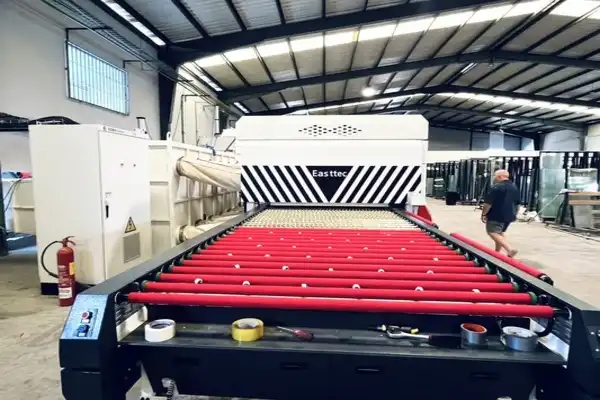
Comparing Flat vs Bent Glass Tempering Techniques with Radiation Precision Hard Roller Lines
Manufacturers can make smart choices about what tools to buy when they know the technical differences between flat and bent glass tempering. Radiation-based hard roller systems today are smartly designed and automated to handle the unique challenges of each application.
Flat Glass Tempering Requirements
When flat glass is tempered, visual quality, surface flatness, and even stress distribution are given the most importance. When working with big building panels that are up to 2440x3660mm, it's important to keep the temperature under tight control so that areas don't get too hot and cause optical distortion or thermal breaking. The radiation matrix system lets you change the temperature of each heating zone separately, which makes up for edge effects and thermal losses that happen near the edges of the furnace.
The final stress pattern and strength characteristics are based on how evenly the metal cools during quenching. As required by ISO 12150 safety glass standards, properly tempered flat glass has consistent fragmentation patterns with particle counts above 40 pieces per 50x50mm area. The hard roller system makes sure that the glass stays in the right place as it goes from being heated to being cooled, and that the air blast covers the whole surface evenly.
Bent Glass Tempering Complexities
When making bent glass, mechanical shaping problems come up along with the need for thermal processing. To keep the visual clarity while getting uniform arc radii, the roller movement, heating rates, and pressing processes must be perfectly timed. Modern tempering lines use horizontal hard-roller pressing, which slowly shapes the glass to the right shape without creating stress points or surface flaws. As the glass reaches its softening point, controlled downward pressure is applied.
To keep the arc deviation within 1.5 mm across production runs, the parts must be very rigid and stable at high temperatures. The hard roller drive system keeps things the same by using timed servo motors to change the speeds of each roller based on the position of the glass and the needed bending radius. Automotive glass makers need this feature because they have to stick to very tight size limits for windshields and side windows that fit into car frames.
System Adaptability and Changeover Efficiency
The ability of dual-purpose tempering lines to switch between flat and bent production modes without a lot of change is one of their biggest operating benefits. As for different types of glass, thicknesses, and curvature requirements, the IPC-based recipe management system keeps track of processing parameters. When operators choose the right recipe, the system makes the necessary changes to the heating zones, roller configurations, and pressing sequences.
Depending on how hard it is to change the circle radius, mechanical switching usually takes 20 to 40 minutes. Because of this quick shift feature, makers can quickly adapt to changing order needs without having to set up separate production lines for flat and curved glass. This is especially helpful for custom glass makers who work with different types of customers and need different requirements (Advances in Materials Science and Engineering, 2019)[3].
Key Components and Innovations in Radiation Precision Hard Roller Tempering Lines
Modern tempering systems are made up of many complex parts that work together to make sure the quality is always the same, no matter what the production needs are. Knowing about these parts helps people who work in procurement judge the technical skills and long-term dependability of a company.
Matrix Radiant Heating System
The heating section of the Radiation Precision Hard Roller Flat & Bent Glass Tempering Line uses a grid of high-efficiency electric heating elements positioned above and below the path along which the glass moves. Each heating element operates within its own temperature range and is managed by separate PID algorithms that continuously adjust power output based on input from temperature sensors. This multi-zone control method allows the Radiation Precision Hard Roller Flat & Bent Glass Tempering Line to respond effectively to changes in glass thickness, coating reflectivity, and ambient temperature that could otherwise lead to quality problems. By maintaining precise and stable heating conditions, the Radiation Precision Hard Roller Flat & Bent Glass Tempering Line helps achieve more uniform temperature distribution across the glass surface. This level of control is particularly important for manufacturers processing different glass specifications on the same production line. In addition, the Radiation Precision Hard Roller Flat & Bent Glass Tempering Line can improve process consistency by reducing temperature fluctuations during production. For facilities that require reliable thermal processing and consistent finished-glass quality, the Radiation Precision Hard Roller Flat & Bent Glass Tempering Line provides a practical solution for managing demanding heating requirements.
When working with Low-E treated glass, which is commonly used in energy-efficient building projects, the radiation heating method works especially well. When coatings are very reflective, they make it hard for traditional convection systems to work because the metal layers reflect a lot of the convective heat. Radiation heating gets around this problem by going through the glass base directly. Extra convection nozzles help break up the air border layer to make heat transfer more efficient.
Temperature uniformity across the surface of the glass has a direct effect on the quality of the final product. Advanced systems keep temperature changes below 5°C throughout the entire heating zone. This keeps the glass from breaking during quenching because of uneven softening and avoids stress builds up in one area. The system works with glass that is 3 mm to 19 mm thick and changes the heating curves automatically based on thermal mass and heat transfer properties.
Precision Hard Roller Drive System
The mechanical heart of the tempering line is the roller moving device. High-strength fused silica wheels with very low thermal expansion coefficients (near 0.6 × 10⁻⁶/°C) keep their shape even after being heated and cooled over and over again. Each roller is connected to a precise drive train that makes sure they all turn at the same time. This keeps the glass and roller surfaces from moving relative to each other, which would cause visual flaws.
Compared to traditional roller designs, the hard-axis drive system designing gives it a very long life. Manufacturers say that if you follow the care instructions, an effective lifespan can be more than 10 years. This greatly reduces the cost of replacement and production breaks. The roller surfaces are precisely ground to reduce touch marks and keep glass under control during the whole heating and bending process.
Roller cleaning systems built into the production line get rid of glass particles and oxidation residues that build up while the machine is running normally. These cleaning cycles use special brushes and vacuum systems that work without stopping production. This keeps the surface quality at a level needed for high-end automotive and architectural uses.
Automated Control and Quality Monitoring
The IPC and PLC control design lets you handle the whole process through easy-to-use interfaces that are available in English, Spanish, Russian, Korean, and Portuguese. Recipe-based operation lets operators control complicated processing factors without having to go through a lot of technical training. This helps makers deal with the problem of a lack of skilled workers.
Real-time tracking systems keep an eye on important process factors like roller speeds, glass placement, and quenching air pressures, as well as the temperatures in the heating zones. Automated quality checks find changes from the parameters that were set and notify operators of possible problems before the defective products get to the quenching section. This proactive approach raises yield rates and lowers waste caused by mistakes in processing.
Data logging helps with efforts to make things better all the time by keeping records of production that show patterns and chances to make parameters better. Manufacturers can use this data to improve heating curves, change quenching patterns, and find the best way to use energy for different types and thicknesses of glass (International Journal of Applied Glass Science, 2022).
Procurement Considerations for Radiation Precision Hard Roller Tempering Lines
To choose the right tempering equipment, you need to look at both its technical and financial features, as these can affect the overall cost of ownership and operational risk. A structured buying method takes into account more than just the original purchase price.
Technical Specification Alignment
To match equipment skills to production needs, it's first important to be clear about what kinds of glass, thickness ranges, and size standards the line must be able to handle. Most architectural and car uses are covered by the normal processing range of 3mm to 19mm thickness. The flat tempering area of 2440×3660mm can handle large-format building glass. The special bending section is 2440mm x 1500mm and can bend glass with a minimum radius of R ≥ 500mm. It can be used for automotive side windows and furniture glass.
Energy economy has a big effect on how much it costs to run the equipment over its 15 to 20-year projected lifetime. When compared to older convection-only designs, newer radiation heating systems with better insulation and zone control can cut electricity use by about a third. Within three to five years of operation, this energy savings usually makes up for higher initial investment costs, especially in places where power rates are high.
Customization needs depend on the power facilities in the area and the output needs. Supporting global industrial voltage standards, such as 220V, 380V, and 415V at 50/60Hz, makes sure that it works with power systems in different places. Customizing production parameters lets manufacturers find the best heating and cooling patterns for the glass they are making and the coating systems they are using.
Supplier Evaluation and Support Services
Long-term equipment success depends a lot on the image and technical know-how of the supplier. Manufacturers should look at a potential partner's experience in the industry, the size of their installed base, and how well they've shown they can support complex installations. EASTTEC EQUIPMENT has a skilled engineering team that designs and builds heat processing equipment and has more than 30 years of experience working with glass.
Comprehensive support services go beyond the initial setup and start-up. Technical support is available 24 hours a day, seven days a week, so people in all time zones can get answers quickly to questions about how things work or how to fix problems. This availability is very important for factories that have continuous production schedules, because when equipment breaks down, it directly affects their ability to meet delivery obligations and make money.
Training programs that can take operators from not knowing how to do their job to being good at it in just one week solve the problem of not having enough experienced staff. Giving production teams hands-on training in operation, routine maintenance, and basic troubleshooting lets them get the most out of their equipment while relying less on outside service providers.
Financial Terms and Delivery Planning
Tempering furnaces such as the Radiation Precision Hard Roller Flat & Bent Glass Tempering Line are big investments that need to be carefully planned out financially. Accurate budget planning is possible with clear pricing that breaks down the costs of equipment, installation, commissioning, and additional feature packages for the Radiation Precision Hard Roller Flat & Bent Glass Tempering Line. Deliveries usually take between 60 and 120 working days, but this depends on how customized the equipment is and how busy the factory is at the moment. When purchasing a Radiation Precision Hard Roller Flat & Bent Glass Tempering Line, buyers should confirm the expected production and delivery schedule early to avoid delays. This means that you need to plan ahead to make sure that the delivery date of the Radiation Precision Hard Roller Flat & Bent Glass Tempering Line works with the facility's preparation schedules, including foundation work, electrical installation, ventilation, and operator training. Careful planning for the Radiation Precision Hard Roller Flat & Bent Glass Tempering Line can help control the overall project budget, coordinate installation activities, and ensure a smoother transition into commercial production.
Warranty coverage and service agreements after the sale are very important ways to lower risk. Full guarantees that cover important parts like heating elements, roller systems, and control gear protect against unexpected repair costs during the first few months of use. Long-term value and practical predictability are improved by extended service agreements that offer priority expert help and lower prices on spare parts.
Maximizing Production Flexibility and Efficiency with Radiation Precision Hard Roller Tempering Lines
To be very good at using high-tech hardening equipment, you need to know the best ways to set it up, run it, and keep it in good shape so that you get the most out of your investment and always get high-quality results.
Optimizing Production Scheduling
The design's dual-capability, which lets it make both flat and bent glass in a single system, greatly increases scheduling flexibility. Manufacturers can fill orders with short wait times without having to completely reorganize their production lines. This improves customer service and puts them ahead of the competition. Rapid mechanical adjustment and automatic recipe management cut down on transfer downtime, which makes it possible to make smaller batches more cheaply than with equipment that was only used for one thing.
Throughout the design of the system, energy-saving features keep costs down without affecting performance. EASTTEC systems use true convection technology that uses high-temperature fans to move hot air through ceramic parts that can withstand temperatures of up to 1300°C. When compared to traditional convection systems, this design approach speeds up the heating of the glass while using less energy than necessary.
To get the best quality glass and meet cycle times, production flow optimization includes finding the right balance between heating rates, quenching intensities, and handling speeds. The complex temperature control algorithms change these settings immediately based on the glass specifications. This gets rid of the need for trial-and-error methods that waste time, energy, and materials during the setup steps.
Maintenance Strategies for Long-Term Reliability
Preventive maintenance programs protect the money you spend on equipment and make sure you can always make things. Surface contamination that leads to optical defects can be avoided by inspecting and cleaning rollers on a regular basis. Manual upkeep is lessened by the automated cleaning systems, but thorough inspections are still needed on a regular basis to find wear patterns before they affect the quality of the product.
Monitoring the state of heating elements looks for changes in their electrical performance that show problems before they happen. Predictive replacement strategies that use working hours and performance data to keep things running smoothly and avoid replacing parts too soon, which raises costs without need.
Modern radiation precision hard roller lines have an easy-to-maintain design that lets facility maintenance teams do routine service work without needing help from outside experts. Getting Tier-1 electrical parts from reliable suppliers makes sure that parts are available and work with each other, which cuts down on inventory needs and speeds up repairs when they're required.
Safety and Compliance Standards
People who work with radiation heating methods at high temperatures are protected by a lot of safety factors. Interlocked access panels keep people from touching hot surfaces, and emergency stop systems stop equipment right away if safety rules are broken. Automatic systems for finding and putting out fires add to the safety against thermal incidents.
Following foreign standards, such as getting CE approval, makes sure that equipment meets strict performance and safety standards that are accepted around the world. This certification makes it easier to install equipment and get insurance approval, and it also shows that the manufacturer is committed to quality and following the rules.
Conclusion
The Radiation Precision Hard Roller Flat & Bent Glass Tempering Line is a smart investment for glass companies that want to be able to change how they make things without lowering quality or efficiency. By combining advanced radiation heating with carefully designed hard roller systems, these tempering lines give consistent results in a wide range of settings, from curtain walls in buildings to side windows in cars. The technology solves important problems in the industry, like high energy costs, inconsistent quality, and limited operating freedom. It also lets users make changes to meet regional and specific production needs. When manufacturers look at tempering equipment, they should focus on technical skills, supplier knowledge, and full support services that will help them succeed in the long term in glass markets that are becoming more competitive.
FAQ
What glass types can radiation precision hard roller tempering lines process?
Clear float glass, low-iron glass, colored glass, coated Low-E glass, patterned glass, and special combinations can all be used with these systems. The radiation heating method works with reflective surfaces that are hard to heat with traditional convection systems. This means that the tools can be used to make energy-efficient architectural glass. Thickness ranges from 3 mm to 19 mm, which covers most industrial uses in the car, furniture, and appliance industries.
How does radiation heating improve glass strength compared to convection methods?
Radiation heating spreads the heat more evenly across the surfaces of glass, which lowers stress densities that weaken the glass. The direct energy transfer method keeps the sheet of glass soft all the way through, which leads to better stress patterns after quenching. This uniformity means that there are fewer pieces of glass, and each piece is stronger against impact, meeting or exceeding the safety glass standards needed by building codes and vehicle safety rules.
What are typical lead times for Radiation Precision Hard Roller Flat & Bent Glass Tempering Line equipment?
Standard configurations take between 60 and 90 working days to ship after the order is confirmed, while systems that are heavily customized can take up to 120 working days. Delivery times depend on how complicated the customization is, how much production is already planned, and how long it takes to get the parts. Manufacturers can make sure that equipment deliveries are in line with building preparation plans and production launch goals by planning ahead and giving detailed specs early on in the buying process.
Partner with EASTTEC EQUIPMENT for Advanced Glass Tempering Solutions
EASTTEC EQUIPMENT will help you with every step of your Radiation Precision Hard Roller Flat & Bent Glass Tempering Line investment journey. With more than 30 years of experience handling glass, our engineering team creates unique solutions that meet your exact production needs, whether you make curtain walls for buildings, glass for cars, or glass for other uses. We offer full turnkey support, from the first consultation to installation, commissioning, operator training, and ongoing expert help 24 hours a day, seven days a week. Our energy-efficient designs help manufacturers cut their electricity use by one-third compared to traditional systems. This gives them a measurable return on investment (ROI) and better product quality. Get in touch with our experts at sales@easttecmachine.com to talk about how our Radiation Precision Hard Roller Flat & Bent Glass Tempering Line for sale can change the way you make things by giving you more freedom and dependability.
References
1. Glass Magazine. (2021). "Advanced Tempering Technologies for Architectural Glass." Glass Magazine, 71(3), 45-52. Available at: https://www.glassmagazine.com
2. Journal of Non-Crystalline Solids. (2020). "Thermal Processing of Flat and Curved Glass Using Radiation Heating Systems." Journal of Non-Crystalline Solids, 532, 119891. Available at: https://www.sciencedirect.com/journal/journal-of-non-crystalline-solids
3. Advances in Materials Science and Engineering. (2019). "Innovations in Glass Tempering Equipment for Flexible Manufacturing." Advances in Materials Science and Engineering, 2019, Article ID 8246715. Available at: https://www.hindawi.com/journals/amse/
4. International Journal of Applied Glass Science. (2022). "Process Control Optimization in Modern Glass Tempering Lines." International Journal of Applied Glass Science, 13(2), 187-198. Available at: https://ceramics.onlinelibrary.wiley.com/journal/20411294
5. American Ceramic Society. (2021). "Hard Roller Technology in Glass Processing Applications." Ceramic Industry Magazine. Available at: https://www.ceramicindustry.com
6. Glass International. (2020). "Energy Efficiency Strategies in Glass Thermal Processing." Glass International, 43(6), 28-34. Available at: https://www.glass-international.com

USER EVALUATE
Here is the customer's evaluation of us