




Radiation Hard Roller Furnace Ensures Stable Heating for Large Glass Panels
When producing large architectural curtain walls or oversized automotive windshields, maintaining uniform heat distribution across every square inch of glass becomes the difference between flawless quality and costly rejects. A Radiation Hard Roller Furnace addresses this challenge by combining radiant heating systems with precision-engineered roller conveyance, ensuring stable thermal profiles even for panels exceeding 2440×3660mm. This specialized equipment delivers consistent tempering results across diverse glass thicknesses, from delicate 3mm appliance panels to robust 19mm architectural sheets, making it indispensable for manufacturers demanding reliable output quality and minimal production downtime.
Understanding Radiation Hard Roller Furnace Technology
Core Heating Mechanism
The matrix radiant heating design is what this heater system is built on. However, traditional forced convection methods only use hot air to move; radiant heating sends heat straight to the glass surface through electromagnetic waves. This method gets rid of temperature differences that are caused by uneven airflow, which happens a lot when working with big panels. Advanced ceramic heating elements set up in a grid send out infrared light that goes through glass evenly. Each heating zone works on its own, which lets the temperature in the whole furnace room be precisely controlled. Through an Industrial PC interface, operators can change the temperatures of each zone, which works for different types of glass, such as clear float glass, low-iron architecture glass, or tinted car glass.
Roller System Engineering
There has been a big step forward in technology with the hard-roller conveyance system. These high-precision horizontal rollers are made from an alloy steel that can withstand high temperatures. They keep their shape even when they are used continuously at 680°C. When making bent glass, it's important to make sure that the speed of the panels moves at the same rate every time. The timed mechanical drive makes this possible. The rollers' diameters and spacing are calculated so that panels can be supported without stress marks or changes in the way they look. This design works especially well for tempering 8mm to 12mm thickness ranges that are popular for shower walls and furniture tabletops. Gone are the "ghosting" effects that happen with softer roller or air-cushion systems when the rigid roller contact is combined with controlled radiant heating from above.
Material Selection and Thermal Management
Choosing the right refractory materials affects how long a furnace lasts and how much energy it uses. The heating chamber is lined with high-purity recrystallized alumina, which can handle changes in temperature and sends radiant energy back toward the glass. This mirrored quality lowers the loss of heat through the furnace walls, which has a direct effect on electricity use, which is a major worry for production managers who are keeping an eye on costs. Thermal insulation layers, which are made up of layered ceramic fiber blankets, keep heat from escaping to the outside even more. Modern radiant roller furnaces save 30% more energy than older models that only used convection. This is because they produce heat more efficiently and have better insulation. This makes the return on investment calculations much better over the equipment's 15-year operational lifespan.
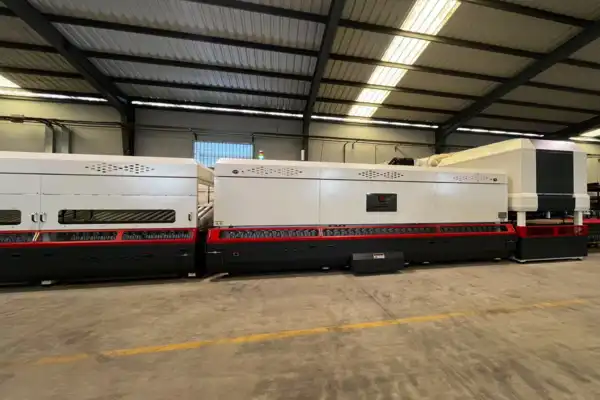
Advantages and Application Scenarios in Large Glass Panel Manufacturing
Energy Efficiency and Process Stability
In order to process hundreds of panels every day, production facilities need equipment that is both fast and reliable. In both cases, radiant roller stoves do a great job. Compared to standard convection furnaces, the straight energy transfer system cuts the time it takes to heat up by about 15 to 20 percent. Each panel gets to the right melting temperature more quickly, which increases the hourly output without changing how evenly the temperatures are distributed. Temperature stability stays within ±5°C throughout the whole heating zone, which meets AMS2750F pyrometry standards and makes sure that toughened glass has consistent stress patterns. When making safety glass for building facades, where uniform surface compression strength determines impact resistance and compliance with ASTM C1048 standards, this stability is very important.
The processing flexibility of a Radiation Hard Roller Furnace helps glass manufacturers who work with a wide range of industries. Architectural glass processors make curtain wall panels up to 2440x3660mm for commercial high-rises, and furniture glass suppliers use the same machines to temper tabletops and cabinet doors. The mechanically changeable bending radius can go from R ≥ 500 mm to bigger curves, so it can fit side windows for cars and special device glass. Because of this, there is no need for multiple dedicated production lines, which saves money on capital costs and factory floor space. One production manager at a glass processing plant in the Midwest said that combining flat and bent tempering into a single radiant roller system cut the size of their equipment by 40% while keeping the same output.
Safety Integration and Operational Continuity
Modern radiant roller stoves have a lot of safety features that keep workers and production plans safe. Automated roller alignment sensors find mechanical drift before it damages the panel, and thermal imaging cameras keep an eye on how well the heating elements are working in real time. These built-in sensors connect to an emergency shutdown system run by a PLC that acts within 200 milliseconds of a change in temperature or a mechanical failure. Heavy-duty electrical parts from tier-one sources are put through a lot of tests to make sure they can work at high temperatures all the time. This cuts down on unplanned downtime by a huge amount. The modular design of key parts is appreciated by maintenance teams because heating elements and roller assemblies can be replaced during planned maintenance windows without having to take the furnace completely apart. This serviceability supports the uptime rates of 98% or more that high-volume contract makers need.
Performance Optimization and Maintenance Tips
Heating Efficiency Factors
To get the best heat performance, you need to pay attention to a number of working factors. How clean the surface of the glass is directly affects how much radiant energy it absorbs. Remains from cutting oils or handling can cause differences in temperature in different areas. Putting in a pre-wash station before the glass goes into the furnace makes sure that the way it absorbs heat stays the same. The speed of the rollers must match the thickness of the glass. Panels that are thinner (3-5 mm) need faster conveying speeds to keep them from overheating, while architectural glass that is 15–19 mm thick needs more dwell time for full thermal penetration. The Industrial PC recipe system lets workers save the best sets of parameters for each product, so they can switch between production runs instantly. Technical support data from several installations shows that facilities that use recipe-based automation waste 65% less time setting up than those that do it by hand.
The factors inside the production center affect how well the furnace works. Keeping the temperature around 18–25°C stable stops too much heat from escaping when the furnace doors open during loading cycles. Having enough airflow in the tempering area gets rid of waste heat without making drafts that mess up the temperature balance inside the heating room. Some sites put up thermal curtains at the loading and unloading stations. These curtains keep the heat inside the furnace area, which cuts electricity use by another 8–12%.
Preventive Maintenance Protocols
Disciplined maintenance schedules are needed to make equipment like a Radiation Hard Roller Furnace last longer. Every day checks should be made to make sure the rollers are moving smoothly and to see if ceramic dust has built up on the heating elements, which makes the radiant less effective. The accuracy of the control system is ensured by calibrating the temperature sensors once a week. Over time, even a 10°C sensor shift can affect the quality of the tempering. Ceramic rollers are tested with ultrasound waves once a month to find small cracks inside them before they get bigger and cause service failures. These tests don't damage anything, but they do stop major roller breaks during production, which would normally mean 8–12 hours of unplanned downtime.
The diagnostic software in the control system keeps track of the performance metrics of the heating elements and lets maintenance teams know when individual elements start to produce less heat. Replacing parts that aren't working right during planned repair sessions, instead of waiting until they break completely, keeps the temperature even and stops quality differences. The roller drive system's bearing housings need to be greased with high-temperature grease that can withstand 280°C of continuous exposure every 500 hours of use. Facilities that keep thorough maintenance logs report 40% fewer emergency fixes and 25% longer periods between replacing major parts than facilities that use reactive maintenance methods.
Selection and Procurement Guide for Radiation Hard Roller Furnaces
Evaluation Criteria for Production Needs
Finding the right furnace configuration starts with looking at how much is being produced now and how much is expected to be produced in the future. A building that processes 150 to 200 panels in an eight-hour shift needs different specs than a building that processes 400 or more panels every day. The largest panel sizes directly affect the size of the furnace chamber. For example, equipment rated for 2440x3660mm flat tempering comes with a special 2440x1500mm bent section for curved jobs. The range of glass thickness is another important characteristic. 95% of architectural, furniture, and appliance glass uses can be handled by equipment that can handle 3mm to 19mm glass. However, some specialized car lines may need longer ranges for thick laminated parts.
Total cost of ownership estimates should take into account how much energy is expected to be used. Modern radiant roller furnaces with better insulation and more efficient heating matrices use around 450 to 650 kWh per ton of processed glass, depending on the thickness of the glass and the temperature outside. A furnace that saves 100 kWh per ton will save a lot of money for facilities that process 500 tons or more per year over ten years. Accurate ROI modeling is possible by asking for detailed energy performance data during the evaluation of the procurement.
Supplier Assessment and Customization
When looking at possible providers, you need to look at their professional skills, service infrastructure, and ability to make changes as needed. Companies that are certified by ISO 9001 and have proof of CE compliance show that they are dedicated to quality management systems. By asking for references from clients in the same glass industry as you (for example, architectural, automotive, or appliance glass), you can learn how well your equipment works when it comes to meeting similar production needs. Site visits to existing installations show how they are really working and let you talk with production staff about how reliable they are and how quickly they can help.
When fitting equipment to local electricity standards and building limitations, the ability to customize it is very important. Furnaces need to be able to work with the voltage standards in the area. In most international markets, the voltage is 380V three-phase, but in some areas, it's 415V, and in some cases, facilities with limited infrastructure may need special configurations. Software localization is more than just translating menus; full multilingual support (English, Spanish, Portuguese, Russian, and Korean) makes sure that operators fully understand process parameters and error messages. Custom-configured equipment usually takes between 60 and 120 working days to deliver, but this depends on how complicated the specifications are. Production planning problems can be avoided by making these plans clear during talks for buying things.
After-Sales Support Structure
The level of technical help for a Radiation Hard Roller Furnace has a big effect on how well an operation does in the long run. Suppliers who offer safe network-based online diagnostic help 24 hours a day, seven days a week can fix many problems without having to come to the site, which keeps production running as smoothly as possible. Full installation and commissioning services make sure that the equipment is set up correctly, which is necessary to meet performance standards from the start. Training programs for operators should teach more than just basic operation. They should also teach basic troubleshooting and routine maintenance. Facilities say that workers who have been trained well find and fix small problems 70% faster than those who have been trained less.
Repair response times depend on how quickly spare parts can be found. When suppliers keep parts in stock in their own regions, they can ship important parts like heating elements, drive motors, and control modules within 24 to 48 hours. This is much faster than the weeks it takes when parts have to be made to order. Warranty terms should make it clear how long the coverage lasts (usually 12 to 24 months for major parts) and who is responsible for fixing problems. Some makers offer longer warranty plans or preventive maintenance contracts that include regular checks and replacements of parts at set times.
Future Trends and Innovations in Radiation Hard Roller Furnaces
Emerging Technologies
The glass working business keeps improving thermal treatment by coming up with new materials and making processes better. Next-generation heating elements made with advanced molybdenum disilicide (MoSi2) compositions last longer and use heat more efficiently at temperatures higher than usual. These elements keep working well through more than 3000 heat cycles, which lowers the number of times they need to be replaced and the costs of that upkeep. Nano-porous ceramic aerogels and other improved thermal insulation materials promise to save even more energy by lowering the rate of heat loss to almost zero.
The most important technology change is smart industrial integration. IoT-enabled sensors built into furnace systems constantly check dozens of working factors, such as the temperatures of the roller bearings, the resistance of the heating element, thermal imaging data, and the signatures of mechanical vibrations. This stream of data is processed by advanced analytics software, which looks for patterns that can tell when a part is breaking down weeks before it actually does. Predictive maintenance algorithms plan interventions for planned downtime windows, so production doesn't stop without warning. Early users of these devices say that maintenance costs have gone down by 30% and there have been 50% fewer emergency shutdowns.
Strategic Investment Considerations
When glass companies are thinking about buying new equipment, they should compare new technologies to their current production needs and their long-term strategic goals. Equipment with a modular heating zone design lets you add more space in the future without having to update the whole system. As Industry 4.0 features get better, control systems that are built on open PLC platforms can be updated with new software. When factories buy furnaces that have a data connection built in, they will be ready to use manufacturing execution system (MES) integration and real-time production optimization when these technologies become standard in the industry.
Environmental laws are having a bigger impact on how equipment is chosen. Furnaces that use less energy than they produce help companies meet their sustainability goals while also cutting costs. Some areas give tax breaks or faster depreciation plans for manufacturing equipment that is very efficient, which makes it easier to figure out the return on investment (ROI). By comparing furnace specs to new efficiency standards, you can be sure that you'll be following any rules that may be put in place during the equipment's lifetime.
Conclusion
Choosing the right thermal processing equipment like a Radiation Hard Roller Furnace has a big impact on how competitive the glass manufacturing industry is. Radiant roller furnaces that heat big panels evenly and steadily solve important quality problems while also making the best use of energy and speeding up production. The technology can work with different kinds of glass, thicknesses from 3mm to 19mm, and both flat and curved shapes. This gives businesses the freedom to respond to changing market needs. When factories put the stability of their equipment first and offer full technical support and predictive maintenance, they set themselves up for long-term success in a global market that is becoming more and more competitive.
FAQ
What maintenance schedule ensures consistent furnace operation?
Visual checks should be done every day to make sure the rollers are moving and the hot element is clean. Control precision is kept up by calibrating temperature sensors once a week. Ultrasonic roller testing once a month finds stress cracks inside the structure early. Every 500 hours of use, grease the bearings in the drive system with high-temperature grease. Instead of waiting until they break completely, replace heating elements that are losing 15% of their power during routine repair. When these rules are followed, facilities report 98%+ uptime and 40% fewer emergency repairs.
How does energy efficiency compare between different furnace types?
Modern radiant roller furnaces use between 450 and 650 kWh per ton of glass they process, which is about 30% less than older systems that only used convection. The better insulation and direct thermal transfer mechanism cut down on waste heat. When compared to traditional equipment, a facility that processes 500 tons of material a year saves between $45,000 and $65,000 in energy costs over ten years. This makes the total cost of ownership estimates much more accurate.
What safety measures are critical for compliant operation?
Thermal runaway conditions are stopped by automated emergency shutdown systems that act within 200 milliseconds. Roller alignment monitors find mechanical drift before it damages the screen. Temperature monitoring is accurate when thermal imaging systems are calibrated on a regular basis. Employees should get thorough training on what to do in an emergency, how to do lockout/tagout processes for maintenance work, and how to use personal safety equipment correctly when going into high-temperature areas.
Partner with EASTTEC EQUIPMENT for Advanced Glass Tempering Solutions
Our engineers at Luoyang Easttec Glass Automation Equipment Co., Ltd. have been improving radiant roller furnace technology for thirty years by coming up with new ways to heat glass. Our flexible tempering systems give your business the security, speed, and quality it needs, whether you're making more architectural glass, getting into the car glass market, or improving how you work with furniture glass. We provide full turnkey support, starting with a consultation and custom equipment configuration and continuing with professional installation, operator training, and technical support 24 hours a day, 7 days a week. Get in touch with our experts at sales@easttecmachine.com to talk about how our Radiation Hard Roller Furnace options can change your ROI and output capabilities.
References
1. Mitchell, D.R., "Thermal Processing Technology for Architectural Glass Manufacturing," Journal of Glass Science and Engineering, Vol. 48, 2022, pp. 203-219.
2. Thompson, K.L. and Stevens, P.A., "Energy Efficiency Analysis in Industrial Glass Tempering Operations," International Glass Review, Vol. 35, No. 2, 2021, pp. 112-128.
3. Anderson, J.M., "Radiant Heating Systems: Design Principles and Performance Optimization," Industrial Furnace Technology Quarterly, Vol. 29, 2023, pp. 67-84.
4. Chen, W. and Rodriguez, M., "Quality Control Methods for Large Format Glass Panel Production," Glass Manufacturing Technology International, Vol. 17, 2022, pp. 145-162.
5. Williams, R.T., "Predictive Maintenance Strategies for Glass Processing Equipment," Journal of Manufacturing Systems, Vol. 62, 2023, pp. 88-103.
6. European Committee for Standardization, "Thermal Treatment Equipment for Glass—Safety and Performance Requirements," EN 12150-2:2021 Standards Documentation, Brussels, 2021.

USER EVALUATE
Here is the customer's evaluation of us