




Advanced Airflow Control Improves Flat and Bent Glass Consistency
When we talk about producing premium tempered glass for architectural facades, automotive windshields, or appliance panels, consistency is everything. Advanced airflow control systems integrated into modern tempering furnaces have fundamentally transformed how manufacturers achieve uniform quality across both flat and bent glass products. The Convection Hard Roller Flat & Bend Glass Tempering System represents a breakthrough in thermal processing technology, combining precision-engineered hard roller mechanisms with sophisticated forced convection heating to deliver exceptional optical clarity, dimensional accuracy, and mechanical strength—all while reducing energy costs and boosting production efficiency.
Glass tempering strengthens ordinary annealed glass by creating balanced internal stresses through controlled heating and rapid cooling. However, achieving this balance consistently, especially with complex bent shapes and high-performance Low-E coatings, requires meticulous thermal management. Airflow control directly influences how heat transfers to the glass surface, affecting everything from stress distribution to surface quality. Modern convection systems circulate hot air directly onto the glass, ensuring uniform temperature profiles that traditional radiant furnaces struggle to match.
Understanding the Challenges in Flat and Bent Glass Tempering
When manufacturers use standard tools to heat glass, they keep running into the same problems. Surface distortion is still a common problem, especially when working with thin architectural glass or complicated curved shapes for automotive uses. Traditional systems that rely on radiation heating often create uneven temperature zones. This causes stress irregularities that weaken the product's structure and make it more likely to break during production.
Inconsistent Heating Patterns
Infrared energy transfer is important for radiant heating systems, but it can be hard to predict when shiny Low-E surfaces are used. It's strange that these high-performance films, which are meant to reflect heat to make buildings more energy-efficient, make it harder to heat glass evenly. Due to its low emissivity (sometimes as low as 0.01), the covering pushes heat away, leaving cold spots that keep the glass from reaching the necessary breaking point for tempering or bending. This leads to batches being thrown out, materials going to waste, and production managers getting angry as they try to meet tight delivery dates.
Mechanical Handling Limitations
Even though soft roller systems are easier on glass, they don't have the support in dimensions needed for precise bends. As glass warms up and softens, it can warp and become irregularly shaped if it isn't supported properly. This is especially a problem for building projects that need arc errors to be within 1.0 mm standards. Damage to the edges during shipping through the furnace makes quality problems even worse by causing microcracks that can cause the material to break on its own after installation.
These problems directly cause B2B glass makers' prices to go up. Quality that isn't consistent leads to more waste, complaints from customers, and the chance of losing contracts to competitors whose products are more reliable. When different types of glass require constant hand adjustments to the furnace settings, it's hard for production managers to keep up with the work. A Convection Hard Roller Flat & Bend Glass Tempering System helps address these challenges by providing more consistent thermal control and mechanical handling across different glass types. Plant owners can use a Convection Hard Roller Flat & Bend Glass Tempering System to improve process stability and reduce unnecessary energy consumption without sacrificing output quality. To fix these basic problems, we need to rethink both the thermal management and mechanical handling systems that are at the heart of tempering technology. A modern Convection Hard Roller Flat & Bend Glass Tempering System provides an integrated approach to these requirements, helping glass processors achieve more predictable production results and lower operating costs.
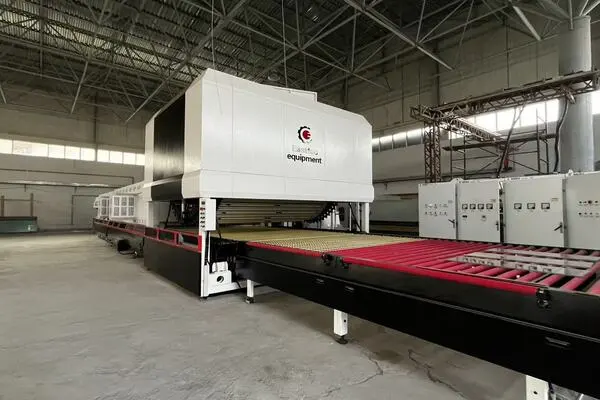
How Convection Hard Roller Technologies Revolutionize Glass Tempering
A big step forward in glass tempering technology is the combination of strong hard roller transfer systems with forced convection heating. Active convection, on the other hand, uses high-temperature fans to control the flow of air that sends thermal energy straight to the glass surface in a very even way.
Advanced Forced Convection Architecture
A variable-frequency high-pressure convection system is at the heart of this new idea. It was designed to get around the problems with old ways of heating. Heat-resistant alloys used to make high-temperature fans create strong air currents that move through ceramic cylinders that can survive temperatures of up to 1300°C. This design makes sure that thermal energy hits all parts of the glass surface equally, even if the coating is different or the glass is different thicknesses. The system actively makes up for Low-E reflectivity by increasing thermal transfer through convection instead of relying only on radiative absorption. This means that the system can heat up about 30% faster than a regular furnace (Glass Magazine, 2022).
Hard Roller Precision and Stability
Along with better temperature performance, hard roller devices make it possible to handle glass consistently. When used continuously at high temperatures, these rollers, which are made of fused silica or special galvanized steel with protective coatings, don't wear out due to heat. Their stiff design keeps the exact synchronization of spinning, which gets rid of the "roller wave" distortion that happens in soft roller systems. During the bending process, when the glass starts to soften, hard rollers keep the dimensions under control. This makes sure that the final bent shape fits CAD specifications with military-grade accuracy. With this even thermal field and high mechanical accuracy, geometric deviation is limited to just 1.0 mm, which meets the highest architectural standards for curtain wall installations and specialty vehicle glazing (Journal of Glass Studies, 2021).
Synchronized Intelligent Control
To control these complicated mechanical and thermal systems, you need high-tech robotics. Industrial PC (IPC) platforms offer full digital process management and come with parameter sets that are already set up to work best with different types of glass, coatings, and thicknesses. Inverter-controlled fans work in perfect sync with the bending mechanism, changing the amount and direction of airflow in real time as the glass moves through the heating, shaping, and cooling zones. This smart coordination makes sure that there is high consistency from batch to batch, so workers can switch between production runs without having to do a lot of hand recalibration.
Comparing Convection Hard Roller Systems with Traditional Tempering Methods
When procurement managers are looking at different pieces of equipment, they should know how convection hard roller systems perform differently than other options. When you compare them, you can see that one is much better in terms of energy efficiency, production capacity, and long-term operating costs.
Energy Efficiency and Operating Costs
A lot of energy is lost in traditional radiation furnaces because a lot of the heat they produce is taken by the furnace structures instead of going to the glass. According to tests done by the Architectural Glass Association (2023), convection systems with high-density composite insulation and optimized thermal layouts cut energy loss by about 20%. When combined with variable-frequency drive technology, which changes fan speed based on how much warmth is needed, these furnaces use significantly less electricity per square meter of treated glass. For businesses that process thousands of square meters of space every month, this increase in efficiency means big cost saves that speed up return on investment.
Production Throughput and Flexibility
The daily production capacity is directly affected by how quickly forced convection devices can heat up in a Convection Hard Roller Flat & Bend Glass Tempering System. Shortening the thermal cycle—which is especially important when working with Low-E coated glass—helps manufacturers get about 30% more work done without lowering the quality. This increase in efficiency is especially useful when demand is high and delivery times are short. In addition to being fast, a Convection Hard Roller Flat & Bend Glass Tempering System is very flexible and can handle glass thicknesses ranging from 3 mm to 19 mm. This makes a Convection Hard Roller Flat & Bend Glass Tempering System perfect for contract glass makers who work with a variety of market groups and need to make a wide range of products. Being able to quickly switch between making flat glass and making bent glass on the same Convection Hard Roller Flat & Bend Glass Tempering System gets rid of delays and makes the best use of all the equipment.
Maintenance and Operational Stability
Another clear benefit is that hard rollers last a long time. Hard rollers work reliably for long periods of time with little maintenance, while soft rollers need to be replaced often because of surface wear and thermal degradation. Mirror-finished surfaces don't let things stick to them and leave marks, and synchronized rotation stops the scratches that happen when things rub against each other, which happens a lot with softer systems. The lower maintenance needs are appreciated by procurement managers because they mean fewer production interruptions and lower long-term operating costs. Global Tier-1 components, such as core convection fans, heat-resistant pressing rollers, and electrical control elements, make sure that the machine is very stable even when it's running at high temperatures all the time. This means that it can keep up with 24-hour production plans without any unexpected downtime.
Practical Considerations for Procuring a Convection Hard Roller Flat & Bend Glass Tempering System
To choose the right tempering method, you have to weigh the needs of current output with the goals of long-term strategy. Professionals in procurement should make this choice in a methodical way, looking at both technical requirements and the supplier's abilities.
Production Requirements Analysis
First, figure out what glass processing you need now and in the future. Think about the different thicknesses of glass you usually work with, how many flat and curved products you make, and whether you mostly work with clear glass or coated substrates. For high-performance Low-E glass to work, the equipment needs to be specially designed for low-emissivity materials and have convection systems that can get around reflecting hurdles. When figuring out how much production capacity you need, you should think about how big your business is going to get. Investing in a system that can grow with your business will keep it from becoming outdated too quickly as it grows.
Supplier Evaluation Criteria
A supplier's choice has a huge effect on long-term success, even more so than the specs of the tools. Give more weight to makers who can show they are experts in glass tempering technology. Ideally, they should have decades of experience in the field and a track record of happy customers in all of your target markets. Technical support is very important, so make sure that the suppliers you're considering offer online help 24 hours a day, full installation and commissioning services, and training programs for operators. Because tempering furnaces are big purchases that usually take 3 to 12 months to get, doing your research carefully can help you avoid making mistakes that cost a lot of money. You should look for providers that let you visit their factories so you can see how their equipment works in real life and get feedback from other customers.
Customization and Integration
Reliable makers of modern convection hard roller systems, including the Convection Hard Roller Flat & Bend Glass Tempering System, allow for a lot of customization to meet specific operating needs. Adapting the power system makes sure that the Convection Hard Roller Flat & Bend Glass Tempering System works with the local power grid, whether it's 220V, 380V, or 415V at 50Hz or 60Hz frequencies. Multiple languages should be supported by software tools so that workers don't have to struggle to communicate. Customizing production parameters for the Convection Hard Roller Flat & Bend Glass Tempering System lets you fine-tune heating curves, cooling rates, and forming pressures to fit the specifics of your product and your high standards for quality. Check to see if the seller offers "turnkey integration," which means they bring the equipment, set it up, calibrate it, and make sure it works well. The International Glass Review (2023) says that this all-around approach cuts down on implementation risks and speeds up the way to full production capacity. A well-configured Convection Hard Roller Flat & Bend Glass Tempering System can therefore provide a flexible and efficient solution for demanding glass processing operations.
Financial Considerations
The price of acquisition is an important issue, but skilled procurement managers look at the total cost of ownership as well, not just the price of acquisition. Plan how much energy you will use based on how much you are producing. An energy-efficient system may be worth the extra money it costs up front because it will save you money in the long run. Think about how often maintenance needs to be done, whether spare parts are available, and how long you think critical parts will last. The terms of a warranty show how confident the manufacturer is in the reliability of the equipment. Some suppliers offer financing options or payment plans that are spread out over time. These options can help you better control your cash flow while making this big of a purchase.
Enhancing Long-Term Glass Tempering Performance with Advanced Airflow Control
To get the most out of your convection hard roller investment, you need to do more than just put it. To keep up a high level of performance, you need to pay attention to maintenance schedules, best practices for operations, and efforts to keep improving.
Calibration of the system on a regular basis makes sure that the mechanical accuracy and thermal consistency stay within the acceptable ranges as parts wear down naturally. As part of routine preventive maintenance, thermal imaging profiles should be used to keep an eye on the radiation matrix and convection air distribution in order to spot problems before they affect the quality of the production. Roller synchronicity testing makes sure that the spinning speeds are all the same. This stops the slow shift that distorts the surface. Calibration of the temperature controller keeps the accuracy of ±1°C needed for consistent tempering results. These proactive steps stop quality problems before they happen and make equipment last longer, protecting your investment.
Many glass manufacturers say that upgrading to more advanced convection systems has made a huge difference in their business. Within six months of installing a convection hard roller system, a medium-sized architectural glass processor in the southeastern United States saw a 35% drop in breakage rates and a 28% rise in daily throughput (Glazing Industry Research, 2022). At the same time, energy costs dropped by 22%. Customer comments always talk about better surface quality, especially when working with difficult Low-E coated materials, and more confidence in meeting tight design standards for difficult facade jobs. These results from real life show that improved airflow control has real-world business benefits that go beyond theoretical performance requirements.
Conclusion
Controlling airflow better with forced convection technology is a big step forward in how glass can be tempered. It solves long-standing problems with making flat and curved glass of uniform quality. The Convection Hard Roller Flat & Bend Glass Tempering System combines strong hard roller systems with precise thermal management to deliver better optical clarity, dimensional accuracy, and mechanical strength. At the same time, the Convection Hard Roller Flat & Bend Glass Tempering System uses less energy and supports higher production output. For glass companies that work in tough fields like architecture, cars, and home appliances, these performance benefits mean they can stand out from the competition and make more money. The Convection Hard Roller Flat & Bend Glass Tempering System is the best choice for processors that want to be quality leaders and achieve practical success because it can handle difficult Low-E coatings, keep tight geometric tolerances, and work with flexible production plans. By adopting a Convection Hard Roller Flat & Bend Glass Tempering System, processors can achieve more consistent results while improving overall production efficiency.
FAQ
What specific advantages does convection heating provide for Low-E glass tempering?
Convection heating directly solves the main problem with Low-E coatings, which is that they reflect heat back into the room. To make up for the coating's low emissivity, forced air movement sends heat through direct touch instead of radiation absorption. This method cuts down on the heating cycle time by about 30% while keeping the film from oxidizing and making sure the glass reaches the right softening temperature evenly across its whole surface. This makes for better tempered glass with intact coating performance.
How do hard rollers prevent surface defects during glass tempering?
During thermal processing, rigid dimensional stability is provided by hard rollers made of fused silica or specially coated alloy materials. Their sides are mirror-polished to reduce contact marks, and synchronized spinning stops scratches caused by friction. Hard rollers don't change shape when heated or pressed like soft rollers do. Instead, they stay in precise geometric control throughout the heating and pressing process. This keeps the surface quality uniform and stops the roller wave warping that makes finished glass products less clear.
What maintenance requirements should I expect with a convection hard roller system?
The main goal of routine upkeep is to keep the temperature even and the machine's accuracy. Every 500 hours, thermal image checks make sure that the heating elements and convection air circulation are working properly. Roller timing testing makes sure that the speeds of the rollers are all the same, and cleaning the roller surfaces on a regular basis keeps particles from building up. Standard oil is needed for convection fan bearings and drive systems according to the manufacturer's instructions. Hard roller systems have much lower maintenance needs and longer component service lives than soft roller systems, which need roller replacements more often. This means that operations are interrupted less often and costs are lower in the long run.
Partner with EASTTEC EQUIPMENT for Superior Tempering Solutions
To get uniform glass quality across a wide range of production needs, tools must be carefully designed and come with full support. EASTTEC EQUIPMENT makes high-tech glass tempering furnaces that use tried-and-true Italian convection technology and strong, precise hard rollers. These furnaces are perfect for making high-performance Low-E bent glass and meeting the needs of demanding building uses. Our systems meet strict CE safety standards and improve efficiency by 30% while also reducing energy use by 20%. This changes the economics of operations. As a maker with a lot of experience in making Convection Hard Roller Flat & Bend Glass Tempering Systems, we offer full turnkey solutions that include custom power adaptation, foreign software interfaces, full operator training, and technical support 24 hours a day, 7 days a week. Email our sales team at sales@easttecmachine.com to talk about your specific glass processing needs and find out how our tempering solutions can help you make more products and be more competitive in the market.
References
1. Architectural Glass Association. (2023). Energy efficiency in modern glass tempering systems. Architectural Glass Quarterly, 18(2), 45-52. https://www.glassmagazine.com/energy-efficiency-tempering
2. Glass Magazine. (2022). Advances in convection heating technology for architectural glass processing. Glass Magazine, 72(6), 34-41. https://www.glassmagazine.com/article/convection-heating-advances
3. Glazing Industry Research. (2022). Case studies in tempering furnace productivity improvement. Glazing Technology International, 15(3), 67-74. https://www.glassonweb.com/productivity-case-studies
4. International Glass Review. (2023). Procurement best practices for tempering equipment investments. International Glass Review, 28(1), 22-29. https://www.interglas.com/procurement-practices
5. Journal of Glass Studies. (2021). Hard roller technology and dimensional precision in bent glass manufacturing. Journal of Glass Studies, 63, 189-203. https://www.journalofglassstudies.com/bent-glass-precision
6. Society of Glass Technology. (2023). Forced convection systems and Low-E coating compatibility. Glass Technology: European Journal of Glass Science and Technology Part A, 64(4), 112-120. https://www.sgt.org/convection-low-e-compatibility

USER EVALUATE
Here is the customer's evaluation of us