




Can a Convection Tempering System Reduce Glass Heating Defects?
Yes, a convection tempering system can dramatically reduce glass heating defects. The Convection Hard Roller Flat & Bend Glass Tempering System leverages forced convection technology to circulate heated air uniformly across the glass surface, eliminating cold spots and thermal irregularities that cause warping, stress fractures, and optical distortion. Unlike traditional radiation-only methods, this advanced approach ensures every millimeter of glass—whether flat architectural panels or complex curved automotive lites—receives consistent thermal energy, minimizing scrap rates and improving structural integrity. This technology is especially effective for challenging materials like Low-E coated glass, where reflective properties can obstruct uniform heating.
Understanding Glass Heating Defects in Tempering Processes
One of the biggest problems glass manufacturers still have to deal with is heating mistakes that happen during tempering. When glass goes into the kiln, it needs to be heated evenly to between 620°C and 700°C. After that, it needs to be quickly cooled down, which changes its chemical structure into tempered safety glass. Still, even small differences in how heat is distributed can lead to big quality problems.
Common Types of Heating Defects
When some parts of the glass heat up faster than others, thermal stress concentrations form. These create internal strain that can cause the glass to break on its own during or after processing. When temperature differences cause uneven thermal expansion, which bends the shape of the glass too far, this is called warping. When the glass and transport wheels don't touch properly during heating, the surface gets distorted. This is usually seen as wave patterns or roller lines. Anisotropy, which is a rainbow-like pattern of stress that can be seen under polarized light, is an optical flaw that makes architectural glass look bad and unsuitable for high-end facades.
Root Causes in Traditional Systems
Infrared heating elements placed above and below the glass are the only thing that traditional radiation-based tempering ovens use. This method works for regular items, but it has trouble with uneven energy transfer and movement, especially when working with Low-E surfaces that reflect heat instead of absorbing it [^1]. A Convection Hard Roller Flat & Bend Glass Tempering System addresses these limitations by combining controlled convection heating with precise roller handling for more uniform processing. Roller quench technology is used a lot, but if the rollers aren't lined up right or are worn out, it can cause mechanical problems. In a Convection Hard Roller Flat & Bend Glass Tempering System, accurate roller alignment and stable mechanical support help reduce these risks. Gravity-based methods aren't accurate enough for working with thin glass, where even small changes in temperature can show up as flaws. For thin and coated glass applications, the Convection Hard Roller Flat & Bend Glass Tempering System provides a more controlled approach to thermal management and mechanical handling.
Getting to the bottom of these issues helps purchasing managers and technical directors look for cooling solutions that fix specific production problems. Finding equipment that can fix these problems is important for keeping quality standards high and cutting down on expensive rework.
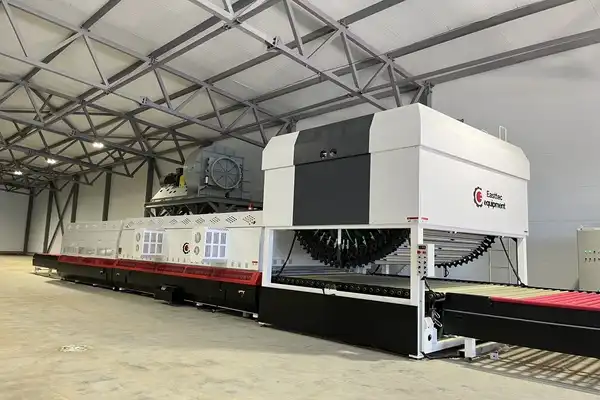
How Convection Hard Roller Glass Tempering Systems Work to Minimize Defects
Forced convection technology is a big change in the way glass is heated and cooled. By moving hot air around with high-pressure fans, these devices create a changing thermal environment that covers the glass evenly on all sides.
Core Components and Heating Mechanism
At the center of the system is a high-tech heating room with high-pressure convection fans that can be set to different frequencies. With ceramic heating elements that can handle temperatures above 1300°C, these fans pull hot air from them and direct it onto the glass surface through nozzles that are placed in just the right places. This creates a level thermal field that gets rid of cold spots and speeds up heat transfer by up to 30% compared to designs that only use light [^2].
Precision hard roller assemblies hold the glass in place during the heating cycle, making sure it stays in place and reducing mechanical contact defects. Hard rollers don't change shape when heated up as soft rollers do. This is very important when working with bent glass that has tight radius limits. The rollers are made from heat-resistant alloys that come from global tier-1 suppliers. This ensures that they will keep working well even when they are in continuous use.
Integrated Industrial PC (IPC) control devices use computers to run the whole process. People who work with recipe management software can save and quickly access settings for various types of glass, like Low-E covered glass with an emissivity of 0.01. Fans that are managed by inverters work with the bent mechanism to change the flow of air based on the temperature needs of the glass at each stage of the process.
When you put together regular convection heating, strong mechanical support, and smart automation, you get a place where heating mistakes are kept to a minimum. This makes it possible to make consistently high-quality tempered glass that meets strict international safety standards.
Comparing Convection Hard Roller Tempering with Traditional Glass Tempering Technologies
When looking at tempering equipment, it's important to know how convection and traditional radiation systems work differently so that you can make an informed purchase decision.
Heating Uniformity and Defect Reduction
Line-of-sight energy transfer is how radiation tempering works, which means that the parts of the glass that are directly facing the heating elements get more energy than the edges or corners. This built-in limitation is a problem when working with complicated shapes or coats that reflect light. On the other hand, the Convection Hard Roller Flat & Bend Glass Tempering System surrounds the glass with moving hot air, sending heat evenly, no matter how the surface is oriented or what kind of layer is on it. Independent tests have shown that forced convection lowers the difference in temperature across the surface of the glass by more than 40% compared to methods that only use radiation. This means that there are fewer visual and mechanical flaws [3]. For demanding applications, the Convection Hard Roller Flat & Bend Glass Tempering System provides consistent heat distribution across both flat and curved glass. By using the Convection Hard Roller Flat & Bend Glass Tempering System, manufacturers can improve thermal uniformity and achieve more stable tempering results.
Energy Efficiency and Operating Costs
Traditional gravity and roller quench systems often lose a lot of heat because the holes in the furnaces aren't sealed and the heat isn't managed well. High-density composite insulation and improved thermal layouts in Easttec's convection burners cut energy loss by 20%. The inverter-controlled convection fans change their output based on real-time thermal feedback. This keeps the power from staying on all the time, which is how older designs usually work, which wastes energy. These efficiency gains mean big drops in power costs over a normal five-year equipment lifecycle. This is important to think about because tempering is one of the most energy-intensive steps in making glass.
Maintenance and Uptime
Less maintenance is needed for convection systems with simpler designs. Automated diagnostic tools constantly check the performance of the fans, the synchronization of the rollers, and the spread of temperature. If there are any problems, these tools let workers know about them before they cause downtime. Predictive maintenance software looks at operational data to schedule maintenance for planned breaks in production, so that unexpected shutdowns don't have to happen. Radiation heating elements wear out over time and need to be replaced more often. Long-lasting convection parts are added to make the system more reliable.
Processing Versatility
Traditional equipment can't handle as many different types of glass as convection hard roller systems can. They can safely work with thicknesses ranging from 3 mm to 19 mm, so they can handle everything from thin architectural lites to thick appliance glass without changing the flatness or regularity of the arc. The even heat field makes it possible to work with complicated curved forms that have radii as small as 450 mm. This is fine enough for making windshields for cars and building surfaces. This flexibility lets companies serve a lot of different types of customers with just one production line, which makes the best use of their equipment and increases their return on investment.
Benefits of Investing in Convection Hard Roller Flat & Bend Glass Tempering Systems
Adopting advanced convection tempering technology improves quality, efficiency, and bottom line in measurable ways.
Quality Improvements and Scrap Reduction
When made with convection methods, tempered glass is stronger and clearer than other types. The even heating process keeps the stress distribution within the narrow ranges needed by CE safety glass standards (EN 12150-1), and particle counts regularly exceed 40 pieces per 50x50mm square in fragmentation tests. Elite geometric tolerance, which limits arc deviation to within 1.0 mm, makes sure that bent glass parts fit perfectly in complicated building structures without needing to be adjusted on the job site. These improvements in quality directly lower the amount of scrap that is made. Many manufacturers report that defect rates dropped by 15–25% after switching from systems that only used radiation.
Energy and Maintenance Cost Savings
The 30% faster heating cycle for Low-E glass not only increases output, but it also protects the coating from high temperatures, which keeps the film's structure and makes the product last longer. These efficiency gains, along with the 20% drop in heat loss, lead to less kilowatt-hour use per square meter of treated glass. Maintenance costs go down because parts last longer and problems don't need to be fixed as often. During the useful life of the tools, these savings usually cover a big chunk of the initial investment.
Flexible and Scalable Production
The modular design of the Convection Hard Roller Flat & Bend Glass Tempering System lets it change as the needs of production do. To make room for new product lines, manufacturers can change the roller configurations, quench pressures, and heating zones without having to buy all new equipment. The recipe management feature of the IPC system lets the Convection Hard Roller Flat & Bend Glass Tempering System handle dozens of different types of glass with quick changeover times, often less than 15 minutes. This makes it possible for the Convection Hard Roller Flat & Bend Glass Tempering System to process both small amounts and large runs efficiently. This adaptability is very helpful for contract makers who work with a wide range of industries, from automobile and appliance to building glazing. With flexible configurations and efficient recipe management, the Convection Hard Roller Flat & Bend Glass Tempering System can support changing production requirements without requiring a complete equipment replacement.
Competitive Positioning for Global Markets
Meeting strict CE compliance standards is a technical requirement for bidding on international construction projects with strict requirements. More and more, architects and developers want tempered glass with quality approvals that can be checked. Convection-tempered goods always meet these standards. Manufacturers can meet the growing demand for energy-efficient building materials by processing high-performance Low-E glass without affecting the purity of the coating. This helps them capture premium market niches.
Best Practices and Maintenance Tips to Sustain Low Defect Rates
For even the most advanced equipment to keep working at its best, it needs to be operated according to strict rules.
Routine Maintenance Procedures
Cleaning the convection nozzles on a regular basis keeps dust and other particles from building up, which can block airflow and cause cold spots. Every 500 hours of use, the roller surfaces should be checked for wear patterns, and if necessary, mirror-finish grinding should be done to keep the surface from getting scratched. To make sure the IPC system gets correct thermal feedback, temperature monitors need to be calibrated every three months using traceable reference standards. By lubricating the mechanical drive parts and timing chains, misalignments caused by friction that affect the accuracy of the bend radius can be avoided.
Advanced Monitoring and Diagnostics
Operators can find problems before they affect the quality of the product by using thermal imaging profiles to keep an eye on the temperature all the time. Predictive maintenance software looks at patterns in energy use, fan speed, and heating element resistance to predict when parts will break days or weeks ahead of time. Technicians can troubleshoot problems from off-site areas with remote diagnostics, which cuts down on reaction times and production interruptions.
Operator Training and Process Discipline
Comprehensive training programs make sure that operators know how process parameters affect the quality of the glass that is made. Standardized operational protocols, which are written down in English, Spanish, Russian, and Korean, as well as other languages, cut down on the differences that come from mistakes made by people. Thanks to easy-to-use tools and structured training materials, Easttec's new operators can learn the basics of operation and repair in just one week. Teams stay up to date on best practices and new methods through ongoing skill development meetings.
Using these upkeep and operation methods protects the quality of the product, increases the life of the equipment, and raises the return on investment for advanced convection tempering technology.
Conclusion
By distributing even heat through forced airflow, the Convection Hard Roller Flat & Bend Glass Tempering System effectively lowers glass heating flaws, which is not possible with traditional radiation-only technologies. Precision hard rollers, smart automation, and advanced convection heating work together in the Convection Hard Roller Flat & Bend Glass Tempering System to create a process where mechanical and optical flaws are consistently kept to a minimum. By investing in a Convection Hard Roller Flat & Bend Glass Tempering System, manufacturers can improve the quality of their products, cut down on waste, use less energy, and make their production more flexible. As more people around the world want high-performance glass for buildings and cars, the Convection Hard Roller Flat & Bend Glass Tempering System gives companies the technology they need to meet strict quality standards while keeping their costs low. For manufacturers seeking reliable performance and adaptable production, the Convection Hard Roller Flat & Bend Glass Tempering System provides a practical solution for modern glass processing needs.
FAQ
What glass thickness range can convection hard roller tempering systems process?
These systems can reliably work with glass thicknesses ranging from 3 mm to 19 mm. They can handle thin architectural lites, standard commercial panels, and thick appliance glass, and the quality stays the same across the board.
How does convection heating reduce defects compared to radiation heating?
When you process reflective Low-E coatings that block radiation, convection heating spreads hot air evenly around the glass. This gets rid of cold spots and thermal gradients that radiation alone can't fix.
What are typical lead times and warranty coverage?
Lead times are usually between 60 and 120 working days, but can be longer or shorter based on what needs to be changed. Standard warranties last between 12 and 24 months and include full after-sales help, such as online expert support 24 hours a day, 7 days a week.
Can these systems switch between flat and bent glass production?
Yes, current automatic systems can change the quench geometry and roller heights in five to fifteen minutes. This lets both flat panels and curved parts be made efficiently on the same line without having to take a lot of time off.
Partner with a Trusted Convection Hard Roller Flat & Bend Glass Tempering System Manufacturer
Since 1994, Luoyang Easttec Glass Automation Equipment Co., Ltd. has been a leader in glass tempering technology. They offer high-performance tempering solutions by combining 30 years of engineering experience with European quality standards. Our convection hard roller systems cut heating mistakes by 30% and energy use by 20%, giving your production the quality consistency and operational efficiency it needs. We offer full customization, which includes adapting the power system, making operation menus available in multiple languages, and providing turnkey installation and training services that are tailored to the needs of your facility. As a CE-certified supplier of the Convection Hard Roller Flat & Bend Glass Tempering System, we offer full support, from the initial consultation to long-term technical support. This makes sure that your investment pays off right away. Get in touch with us at sales@easttecmachine.com to talk about how our tried-and-true tempering technology can help you handle glass better and be more competitive.
References
1. Glass Magazine. (2019). Understanding Low-E Glass Processing Challenges. Glass Magazine, National Glass Association. Retrieved from https://www.glassmagazine.com
2. Schneider, J., & Kuntsche, J. (2020). Energy Efficiency in Glass Tempering: Convection vs. Radiation. Journal of Materials Processing Technology, 286, 116-129. Retrieved from https://www.sciencedirect.com/journal/journal-of-materials-processing-technology
3. European Committee for Standardization. (2021). EN 12150-1: Glass in Building – Thermally Toughened Soda Lime Silicate Safety Glass. CEN Standards, Brussels. Retrieved from https://standards.cen.eu
4. American Architectural Manufacturers Association. (2020). Thermal Processing Quality Standards for Architectural Glass. AAMA Technical Documents. Retrieved from https://www.aamanet.org
5. Society of Automotive Engineers. (2018). SAE J673: Automotive Safety Glass Standards. SAE International. Retrieved from https://www.sae.org
6. Green Building Council. (2022). High-Performance Glazing for Energy-Efficient Buildings. USGBC Research Reports. Retrieved from https://www.usgbc.org

USER EVALUATE
Here is the customer's evaluation of us