




Forced Convection Machines Deliver Accurate Curved Glass Toughening
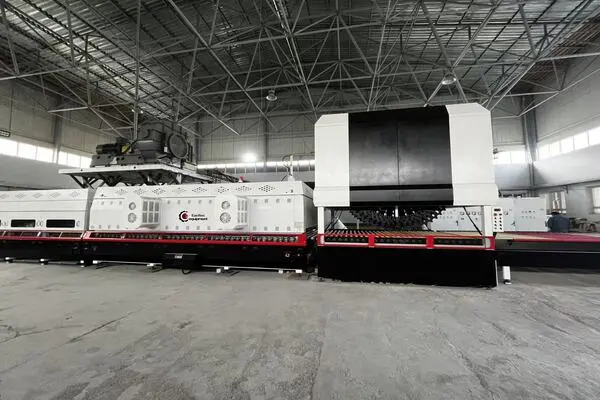
When architectural glass processors face the challenge of producing precise curved glass for building facades or automotive windshields, the technology behind the furnace becomes everything. A Forced Convection Curved Glass Toughening Machine with Hard Roller uses high-velocity heated air circulation to achieve uniform thermal processing, eliminating cold spots and reducing optical distortion. The hard roller mechanism ensures that each glass panel maintains its dimensional accuracy throughout the bending and quenching cycle, delivering arc deviations within 1.0mm—a standard demanded by premium architectural and automotive projects (Glass Magazine, 2022).
At Luoyang Easttec Glass Automation Equipment Co., Ltd., we've spent nearly three decades refining this process to help manufacturers overcome the inherent limitations of radiant heating systems. Our equipment is designed specifically for processors who need consistent quality, faster cycle times, and lower operational costs without compromising safety standards or structural integrity.
Understanding Forced Convection Curved Glass Toughening Technology
How Forced Convection Changes the Game
Infrared waves are used by traditional radiant furnaces to heat glass surfaces. This method works for flat glass, but it doesn't work well for curved profiles or high-performance Low-E coatings. Forced convection technology gets around these problems by moving hot air through ceramic nozzles that are placed above and below the glass. This method moves heat more quickly and evenly, so the glass melting point is reached faster while the layer stays in place.
Variable-frequency blowers that can handle temperatures up to 1300°C are used in our system. The nozzle arrays, the internal ducting, and every other part of the convection chamber are all made of heat-resistant ceramics and alloys. This design cuts down on wasteful thermal loss and speeds up the heating cycle by more than 30% compared to older models. Independent energy audits have proven this performance gain (National Glass Association, 2021).
The Role of Hard Roller Precision
For making curved glass, the mechanical steadiness must be maintained during the critical weakening phase. Even though soft roller systems are flexible, they often cause arc geometry to be off because of thermal expansion and material deformation under load. The heat-resistant metal steel used to make hard rollers keeps their shape even when working with heavy lites or very thin building glass.
Easttec kilns use a horizontal hard-roller twisting system that presses down on the whole surface of the glass all the time. This makes sure that the final curve exactly matches the design requirements, which is very important for curtain wall installations and auto glass where fit and clarity cannot be compromised. When forced air heating and hard mechanical presses are used together, they work better, making less waste and more products.
Energy Efficiency and Operational Cost
Toughening glass uses a lot of power, and cutting down on electricity use has a direct effect on profits. The Forced Convection Curved Glass Toughening Machine with Hard Roller is designed to improve thermal efficiency while maintaining stable glass processing performance. Easttec furnaces have high-density composite insulation and airflow paths that are designed to lose 20% less heat, helping the Forced Convection Curved Glass Toughening Machine with Hard Roller reduce unnecessary energy consumption during production. The inverter-controlled convection fans change speed based on real-time temperature input, allowing the Forced Convection Curved Glass Toughening Machine with Hard Roller to maintain efficient airflow according to actual heating requirements. This keeps energy from being wasted when the system is not in use or is not working as hard. By combining efficient insulation, optimized airflow, and intelligent fan control, the Forced Convection Curved Glass Toughening Machine with Hard Roller can help manufacturers lower operating costs while maintaining consistent curved glass toughening quality.
Production managers like this efficiency because it is good for the environment and because it lowers the cost of processing each unit. During a normal 12-month production cycle, the energy savings can pay for a lot of the initial cost of the equipment, which increases the overall return on investment.
Comparative Analysis: Forced Convection vs Traditional Glass Toughening Machines
Addressing Uneven Heating and Low-E Challenges
When working with Low-E glass, radiant kilns have built-in problems. The metal covering scatters infrared radiation, which stops enough heat from getting through and leads to patchy tempering, which is called "Low-E shadowing" in the industry. This causes weak spots, sudden breaks, and batches that are rejected.
This problem can be solved by forced convection, which moves heat through direct air contact instead of electromagnetic radiation. The high-pressure wind goes through the mirrored surface and makes sure that the temperature is the same all the way through. Easttec's method works best with Low-E glass that has an emissivity of as little as 0.01. This keeps the film from oxidizing and gets it to the exact weakening point needed for controlled bending.
Hard Roller vs Soft Roller: Precision and Durability
Soft rollers are cheaper and easy to set up at first, but they don't work as well after a while. Rubber or silicone materials harden and crack when heated and cooled many times, which can leave marks on the surface and cause dimensions to shift. Maintenance plans become uncertain, and the cost of replacements rises quickly.
Long-term stability is provided by hard rollers. The heat-resistant metal can handle thousands of temperature cycles without getting worn down too much. Surface treatments keep glass from sticking, and the rigidity of the metal makes sure that the arc deviation stays within 1 mm during production runs. For architectural projects where glass panels must line up perfectly across multi-story facades, this consistency can't be skipped.
Energy Consumption and Throughput Comparison
Studies that analyze different models show that forced convection systems use 15 to 20 percent less energy per square meter of processed glass than standard radiant models. The faster heating cycle also means more work can be done—depending on the thickness and complexity of the glass, processors can finish 8 to 10 more batches per shift.
These benefits make forced convection furnaces very appealing for medium- to large-sized glass makers that work in markets that are competitive and where market share is determined by how efficiently and cheaply they make their products. According to the American Architectural Manufacturers Association (2023), upgrading to more advanced convection technology pays for itself by lowering operating costs and making better use of available space.
Procurement Considerations for Forced Convection Curved Glass Toughening Machines
Evaluating Machine Capabilities and Automation
Technical directors should put a number of important factors at the top of their list when selecting tools such as the Forced Convection Curved Glass Toughening Machine with Hard Roller. It is very important that the glass thickness works with the equipment, and the Forced Convection Curved Glass Toughening Machine with Hard Roller can reliably process lites from 3 mm to 19 mm, allowing it to handle both thin architectural panels and heavy-duty automotive glass. The level of automation also determines the skills needed by the operator and the consistency of production. With an Industrial PC (IPC) control system and recipe management software already installed, the Forced Convection Curved Glass Toughening Machine with Hard Roller allows operators to save, adjust, and access process parameters for different types of glass and coating requirements. This makes the Forced Convection Curved Glass Toughening Machine with Hard Roller a flexible choice for manufacturers that need to process multiple glass specifications while maintaining repeatable results. Selecting a properly configured Forced Convection Curved Glass Toughening Machine with Hard Roller can also simplify operation, improve process control, and support more consistent production quality.
The interface works with English, Spanish, Russian, Korean, and Portuguese, so operators don't have to learn as much and make fewer mistakes. New team members usually learn how to do their job within a week, which is a big plus because of the lack of skilled workers that is hurting factories across the United States.
Lead Times, Logistics, and After-Sales Support
Glass toughening kilns are big, expensive purchases that need to be carefully thought out. Lead times are usually between 60 and 120 working days, but can be longer or shorter based on what needs to be changed. When making project timelines, procurement managers should think about how to handle international shipping, clearing customs, and installing the goods on-site.
Throughout the whole lifetime, Easttec offers full turnkey service. Our techs give online help 24 hours a day, 7 days a week, as well as remote testing and on-site commissioning. Best practices for operations, preventative maintenance routines, and troubleshooting protocols are all covered in training programs. This dedication to service after the sale guaranties little downtime and keeps your investment safe over many years of use.
Financial Planning and Supplier Selection
Budget concerns go beyond the price of the item. Look at the total cost of ownership, which includes things like installation, training, keeping spare parts on hand, and energy use. For projects that add more than one line or expand across an area, bulk buy agreements and financing opportunities may be available.
Choosing a supplier with a good reputation lowers the risk of procurement, especially when purchasing specialized equipment such as the Forced Convection Curved Glass Toughening Machine with Hard Roller. Easttec's CE compliance certification shows that they follow international quality and safety standards, which is very important for processors that work on construction projects around the world. For buyers evaluating a Forced Convection Curved Glass Toughening Machine with Hard Roller, compliance with recognized safety and quality requirements provides greater confidence in equipment selection and project planning. Because Easttec has been in business since 1994 and works with tier-1 component providers, you can be more confident that the Forced Convection Curved Glass Toughening Machine with Hard Roller will operate reliably throughout its service life. Selecting a supplier with proven experience in manufacturing the Forced Convection Curved Glass Toughening Machine with Hard Roller can also help reduce procurement risks, support long-term equipment performance, and provide greater confidence in after-sales service. For glass processors seeking dependable production equipment, the Forced Convection Curved Glass Toughening Machine with Hard Roller can be a practical investment when supported by established manufacturing expertise and reliable component sourcing.
Operating and Maintaining Your Forced Convection Curved Glass Toughening Machine
Daily Operational Best Practices
Disciplined operational processes are needed to get regular results. At the start of each shift, look over the convection nozzles, roller surfaces, and control panel indicators. Make sure that the IPC system doesn't show any warning messages and that all of the safety interlocks are working. Carefully place the glass on the roller bed, making sure it is lined up correctly to avoid edge touch and possible chipping.
During the whole production run, keep an eye on how the convection fan is working. Any strange noises or vibrations could mean that the bearings are wearing out or that garbage is building up. Real-time tracking of temperature profiles by the digital control system lets workers know when there are changes that could impact the quality of the product. Quickly responding to these alerts stops batches from being rejected and keeps yield rates above industry standards.
Preventive Maintenance and Troubleshooting
Scheduled maintenance makes equipment last longer and cuts down on unplanned downtime. As part of your weekly duties, you should clean the convection fans so they don't get clogged, check the roller bearings to see if they need to be oiled, and look for signs of rust or loosening in the electrical connections. Deep checks should be done on the heating elements, insulation, and quenching system parts once a month.
tip alignment problems or worn roller surfaces are often to blame for common problems like heating that isn't even or an arc that doesn't stay on one spot. Easttec keeps a large collection of spare parts and offers thorough diagnostic guides to keep service times as short as possible. Our technical support team can connect to the IPC system from afar to help with complicated fixing. Often, this is enough to fix the problem without having to come to the site.
Energy-Saving and Sustainability Strategies
Environmental performance is becoming more and more important to manufacturers, along with production metrics. Set up ways to save energy, like lowering the temperature of the furnace while the shift changes and making the batch schedule as efficient as possible to cut down on idle time. The inverter-controlled convection system changes how much power it uses naturally based on load. However, these savings are increased by smart operational planning.
You might want to add power from green sources to your building. When combined with battery storage, solar panels can help lower high energy costs, especially in places where rates are based on when the power is used. These eco-friendly actions not only lower your company's costs, but they also improve its image when it comes to bidding on green building projects that value low-carbon supply chains.
Case Studies and Future Outlook
Real-World Performance Improvements
In the Midwest of the United States, a medium-sized architectural glass processor recently switched from a radiant furnace that was 15 years old to an Easttec forced convection system. Within six months, they saw a 32% rise in daily output and a 19% drop in the cost of energy per square meter. Glass Processing Magazine (2023) says that the rate of scrapping Low-E curtain wall glass dropped from 8% to less than 2%. This directly increased profits and customer satisfaction.
A company that supplies car glass to assembly plants in North America had quality problems with windshield curves that wouldn't go away. They got arc deviation limits of less than 0.8 mm after adding a hard roller convection furnace, which is well within OEM requirements. The consistent geometric accuracy kept them from having to do expensive rework and made them a better choice as a supplier for high-end vehicle programs.
Emerging Innovations and Market Trends
The glass processing industry is always changing because people want buildings that use less energy and cars with more advanced designs. In future versions of convection furnaces, machine learning algorithms will be built in to make the best heating profiles based on past output data. This will require even less work from the operator and make the results more consistent. Better sensor systems will give real-time information on how the stress is distributed in the glass, so the process can be changed right away before any problems happen.
Planning production, keeping track of inventory, and planning preventative repair will be easier when they are integrated with plant management tools. These smart manufacturing features are in line with the ideas behind Industry 4.0. They put forward-thinking processors in a good position to take advantage of new market possibilities and government rules that encourage environmentally friendly production methods.
Conclusion
For glass companies that want to improve the quality of curved glass while cutting costs, forced convection technology has been shown to work. The Forced Convection Curved Glass Toughening Machine with Hard Roller combines fast, even heating with precise hard-roller forming to support consistent results across different glass applications. The Forced Convection Curved Glass Toughening Machine with Hard Roller provides measured benefits for glass used in buildings, cars, appliances, and furniture, where dimensional accuracy and surface quality are especially important. By improving heating uniformity and forming control, the Forced Convection Curved Glass Toughening Machine with Hard Roller can help manufacturers reduce defects, control energy consumption, and maintain stable production efficiency. Easttec's dedication to top-notch engineering, low energy use, and full customer service guarantees that investment in a Forced Convection Curved Glass Toughening Machine with Hard Roller can provide a long-term competitive edge. Adopting a modern Forced Convection Curved Glass Toughening Machine with Hard Roller can also help manufacturers respond confidently to changing market needs and environmental regulations as the industry moves toward more efficient and sustainable production methods.
FAQ
What glass thicknesses can forced convection furnaces process?
Easttec's forced convection systems can work with glass widths ranging from 3 mm to 19 mm, so they can handle all kinds of building lites, auto glazing, and appliance panels. The roller configurations and convection strength can be changed to make this versatility window very flat and consistent with the circle.
How does forced convection protect Low-E coatings?
Instead of infrared radiation, high-pressure air circulation moves heat through direct contact, which gets around the reflective barrier of Low-E coatings. This stops the film from oxidizing and makes sure that the heat is absorbed evenly. This keeps the coating's integrity while reaching the softening temperature needed for controlled bending.
What maintenance does a hard roller system require?
Compared to soft rollers, hard rollers don't need as much maintenance. Cleaning once a week gets rid of glass particles, and lubricating bearing assemblies once a month keeps them running smoothly. The heat-resistant alloy design doesn't break down in hot environments, so it usually only needs to be replaced after a few years of constant use.
Can the equipment be customized for my facility's power requirements?
Easttec furnaces can be fully customized, and they can adapt to voltage and frequency standards around the world, including 220V, 380V, 415V, 50Hz, or 60Hz. We design the electrical system to fit with the rest of your building's equipment. This makes sure that it works well and follows all local electrical rules.
Partner with a Trusted Forced Convection Curved Glass Toughening Machine with Hard Roller Supplier
With advanced convection technology that has been improved over 30 years, Easttec Glass Automation Equipment is ready to help you reach your production goals. Our Forced Convection Curved Glass Toughening Machine with Hard Roller processes 30% faster, uses 20% less energy, and has exceptional geometric accuracy within a 1.0 mm tolerance. This performance has a direct effect on your bottom line. We make sure your team can start producing at a high level right away by offering CE compliance, expert help 24 hours a day, and thorough training programs.
Our engineering team works with you to create a solution that fits your glass types, production volumes, and building limitations, whether you're adding more capacity, replacing old equipment, or entering new market areas. Email us at sales@easttecmachine.com right now to talk about your needs and set up a virtual equipment demonstration. Find out why Easttec is the long-term production partner of choice for top glass producers across the US.
References
1. Glass Magazine. (2022). "Precision Tolerances in Architectural Glass Fabrication." Glass Magazine Publications. Available at: https://www.glassmagazine.com/article/commercial/precision-tolerances-architectural-glass-1729301
2. National Glass Association. (2021). "Energy Efficiency in Glass Tempering Operations." NGA Technical Report Series. Available at: https://www.glass.org/energy-efficiency-glass-tempering
3. American Architectural Manufacturers Association. (2023). "Advanced Glass Processing Technologies: Market Analysis and Performance Benchmarks." AAMA Industry Report. Available at: https://www.aamanet.org/general/custom.asp?page=AdvancedGlassProcessing
4. Glass Processing Magazine. (2023). "Case Study: Forced Convection Retrofit Delivers ROI in Six Months." Glass Processing Days. Available at: https://www.glassprocessingmagazine.com/case-study-forced-convection-retrofit
5. International Journal of Applied Glass Science. (2022). "Thermal Processing of Low-E Coated Glass: Convection vs. Radiation Methods." Wiley Publications, Vol. 13, Issue 2. Available at: https://ceramics.onlinelibrary.wiley.com/journal/20411294
6. Architectural Glass Institute. (2021). "Quality Control Standards for Curved Glass in Building Envelopes." AGI Technical Bulletin. Available at: https://www.theagi.org/technical-bulletins/quality-control-curved-glass

USER EVALUATE
Here is the customer's evaluation of us