




Radiation Flexible Roller Glass Bending and Tempering Machine Delivers Accurate Glass Forming and Strengthening
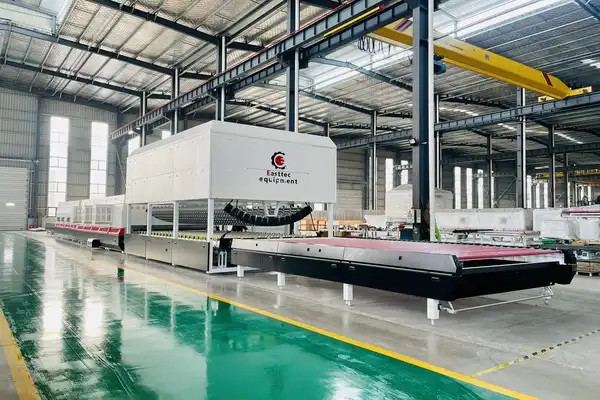
When precision and structural integrity matter most in glass production, the radiation flexible roller glass bending and tempering machine stands as a technically sound answer. This system heats flat glass to its softening point through high-efficiency radiant radiation, then shapes it using an adjustable multi-point flexible roller bed — all without requiring physical molds. The result is curved tempered glass with consistent stress distribution, minimal optical distortion, and strong surface quality. From architectural curtain walls to commercial refrigeration displays, this machine addresses real production demands that traditional bending methods struggle to meet.
Understanding Radiation Flexible Roller Glass Bending and Tempering Machines
What This Machine Actually Does
The machine uses controlled infrared heat to evenly heat the glass to the forming temperature. Then, the flexible roller mechanism shapes the glass to the desired shape. The digitally adjustable roller system lets workers change bend radii without having to switch molds. This used to take hours but only takes minutes now.
How the Process Flow Works
When the glass goes into the heater zone, multi-zone matrix infrared heating precisely heats it. The PID-controlled heating zones keep the temperature difference on the glass surface to less than ±2°C. When the glass is hot enough, it moves to the flexible roller bed, which is where the curve is made. Forced cooling finishes the hardening cycle right after shaping, which locks in the mechanical strength.
Material and Thickness Compatibility
The Radiation Flexible Roller Glass Bending and Tempering Machine works with clear, tinted, and patterned float glass ranging from 5 mm to 19 mm in thickness. This broad processing range allows the Radiation Flexible Roller Glass Bending and Tempering Machine to handle many glass requirements for architectural projects, furniture, and industrial applications. The Radiation Flexible Roller Glass Bending and Tempering Machine works particularly well with non-coated glass, making it a suitable choice for applications where visual clarity, accurate shaping, and surface quality are important. By supporting different glass colors, patterns, and thicknesses, the Radiation Flexible Roller Glass Bending and Tempering Machine gives manufacturers greater flexibility when processing glass for different end-use requirements. For glass processors seeking consistent bending and tempering performance, the Radiation Flexible Roller Glass Bending and Tempering Machine provides a versatile solution for non-coated glass applications.
Advantages of Radiation Flexible Roller Bending Over Traditional Methods
Gravity bending and press bending have been used in the industry for decades, but they have some problems that won't go away: they require expensive tools, their heat profiles aren't always accurate, and they leave marks on the surface from physical contact. These problems can be solved directly with the radiation flexible roller method, which combines precise temperature control with mechanical flexibility.
Here are the main ways this technology improves performance:
- Hybrid Tempering System: This machine integrates both flat and bent glass tempering within a single production line. Manufacturers running mixed product schedules — furniture glass alongside architectural panels — no longer need separate equipment for each format, reducing capital expenditure and floor space requirements.
- Flexible Bending Control: The high-strength adjustable flexible roller mechanism produces arc precision that fixed-mold systems cannot replicate. Operators can accommodate a wide range of custom curvatures, which is particularly valuable for decorative architectural glass and display case manufacturing.
- Zoned Radiant Heat: Easttec's multi-zone matrix radiant heating applies heat in precisely calibrated sections across the glass sheet. This prevents the "ghosting" and optical wave distortion that frequently occur when heat distribution is uneven — a common complaint in older convection-dominant systems.
- 20% Thermal Energy Savings: High-density composite insulation reduces heat dissipation by 20% compared to traditional furnace designs. Over the life of the equipment, this reduction represents a meaningful decrease in electricity costs — particularly relevant for U.S. manufacturers managing rising energy expenses.
These benefits directly lead to lower defect rates, better yields per production cycle, and lower costs over the long run. The technical case is clear for production managers who are keeping an eye on the quality of the output and the amount of energy used.
How to Choose the Right Curved Glass Tempering Equipment
Evaluate Precision and Glass Type Fit
Not every bending furnace is suitable for processing all glass types or achieving different radius sizes. Buyers should make sure that the Radiation Flexible Roller Glass Bending and Tempering Machine can handle their required glass type and thickness before making a purchase. Easttec's Radiation Flexible Roller Glass Bending and Tempering Machine can process glass thicknesses from 5 mm to 19 mm, providing a broad range for many architectural and furniture applications. The Radiation Flexible Roller Glass Bending and Tempering Machine can also process clear float, tinted, and patterned glass, giving manufacturers greater flexibility when handling different product requirements. For glass processors evaluating equipment for varied applications, the Radiation Flexible Roller Glass Bending and Tempering Machine offers a versatile processing range for different glass specifications. Selecting a Radiation Flexible Roller Glass Bending and Tempering Machine that matches the required glass types, thicknesses, and bending specifications can help manufacturers maintain more consistent production results.
Consider Total Cost of Ownership
The price of the tools at the start is only one factor in the choice to buy it. The real cost over a 10- to 15-year equipment life depends on how it is installed, how much energy it uses, how easy it is to get replacement parts, and how long the guarantee lasts. The Easttec radiation flexible roller system saves 20% of energy because of its insulation, and its IPC/PLC-based control architecture makes it easier to run and less difficult to maintain over time.
Assess Supplier Customization and Support Capability
Easttec lets you completely change the power systems (220V, 380V, 415V, 50/60Hz), heating curves, cooling parameters, and program languages such as English, Spanish, Russian, Korean, and Portuguese. The company offers online technical help 24 hours a day, 7 days a week, as well as installation and setup services and training for operators. Most new operators become proficient within a week.
Comparing Radiation Bending With Alternative Glass Forming Technologies
When glass makers look at new equipment, they usually compare the three main ways of bending glass: radiation flexible roller, vacuum bending, and chemical bending. Each has its own set of technical features and costs.
Using atmospheric pressure to form hot glass over a set mold is called vacuum bending. It gives reliable results for standard shapes, but each radius needs its own mold, which raises the cost of tooling for companies that make a lot of different products. Hours, not minutes, are used to measure the time it takes to switch between circles.
Chemical bending, which is only used in a few situations, changes the structure of glass by exchanging ions instead of heating it. It is slower, more material-specific, and can't be used for the structural tempering needs of architectural or automotive applications, but it can make thin-profile curves.
Radiation flexible roller bending helps overcome the limitations of both conventional options. The Radiation Flexible Roller Glass Bending and Tempering Machine eliminates the need for physical molds and allows bending radii as small as 450 mm to 1,000 mm, depending on glass thickness, while completing the tempering cycle within the same integrated system. This flexible forming approach allows the Radiation Flexible Roller Glass Bending and Tempering Machine to support different curved glass requirements while simplifying production changes. According to ASTM C1048 requirements for heat-treated flat glass, properly tempered glass should break into small, relatively harmless pieces. The Easttec Radiation Flexible Roller Glass Bending and Tempering Machine uses a controlled cooling process to support consistent tempering performance and help manufacturers meet applicable quality requirements. For glass processors seeking flexible bending and tempering capabilities, the Radiation Flexible Roller Glass Bending and Tempering Machine provides an integrated solution for producing curved tempered glass.
Soft Guide to Procurement and Implementation
Understanding Lead Times and Order Customization
Customers can ask Easttec how long it will take to deliver glass tempering furnaces, and the normal delivery window is between 60 and 120 working days, based on the type of equipment and the level of customization. This schedule should be taken into account by buyers when planning to increase production capacity or repair equipment.
Installation, Commissioning, and Operator Training
Easttec helps with installation and testing on-site and gives organized training to operators. The IPC and PLC-based control architecture can store and remember hundreds of output recipes, which makes it easier for new workers to get up to speed quickly. Most employees are confident in their abilities within a week of training, which is helpful for companies that are having trouble finding skilled workers.
Post-Sale Support and Long-Term Reliability
The system has CE certification, which means it meets European safety and performance standards. This is something that many buyers from other countries need. Easttec's online technical support and spare parts supply service is available 24 hours a day, 7 days a week. This helps production teams keep their tools up and running and fix any problems quickly.
Conclusion
Easttec's Radiation Flexible Roller Glass Bending and Tempering Machine is a technically sound choice for makers who need a single production system that can both shape glass precisely and heat it consistently. The heating zones are customizable, the roller mechanism is flexible, the insulation is better than most, and the IPC/PLC is reliable. These features solve the main problems that glass makers have every day. This equipment, which is backed by more than 30 years of thermal processing experience, is a reliable way for factories to make curved architectural glass, furniture glass, or commercial display panels.
FAQ
What glass types work best with this machine?
The machine is made to work with clear float glass, tinted glass, and patterned glass that is 5 mm to 19 mm thick. It works best for plain types and isn't the first choice for Low-E covered glass that doesn't need extra convection support.
How long does it take to change between different bending radii?
Through the PLC interface, the automated flexible roller system can be set up in one to five minutes. Compared to mold-based systems, where changes can take several hours, this saves a lot of time.
What tempering quality standards does the equipment meet?
It makes toughened glass that meets the requirements of EN 12150-1 (more than 40 to 60 pieces per 50x50mm area) and is in line with ASTM C1048 performance standards for heat-treated flat glass.
Can the equipment be customized for U.S. electrical standards?
Yes, Easttec can adapt power systems to work with 220V, 380V, and 415V configurations at both 50Hz and 60Hz. This meets the standard industrial voltage needs in the United States.
What after-sales support does Easttec provide?
Easttec provides online technical help 24 hours a day, 7 days a week, as well as on-site installation and commissioning, user training, and a program to keep spare parts on hand to make sure that equipment stays up and running for a long time.
Partner With EASTTEC EQUIPMENT for Your Next Curved Glass Tempering Investment
Your production line needs tools that work the same way every time, from the first day. Since 1994, EASTTEC EQUIPMENT has been a leader in thermal processing for glass. Our Radiation Flexible Roller Glass Bending and Tempering Machine for sale blends precise heating, flexible bending control, and an energy-efficient design into a single CE-certified system. Get in touch with our technical team right away to talk about your needs and ask for a formal quote. You can email us at sales@easttecmachine.com, and we'll get back to you within 24 hours.
References
1. Glass Technology: European Journal of Glass Science and Technology, Society of Glass Technology, 2021.
2. ASTM C1048: Standard Specification for Heat-Strengthened and Fully Tempered Flat Glass, ASTM International, 2018.
3. EN 12150-1: Glass in Building — Thermally Toughened Soda Lime Silicate Safety Glass, European Committee for Standardization (CEN), 2015.
4. ISO 11485-3: Glass in Building — Curved Glass, International Organization for Standardization, 2017.
5. Architectural Glass Product Guide and Design Information, Glass Association of North America (GANA), 2020.
6. Energy Efficiency in Industrial Glass Furnaces, U.S. Department of Energy — Office of Industrial Technologies, 2019.

USER EVALUATE
Here is the customer's evaluation of us