




Radiation Flexible Roller Furnace Supports High-Quality Tempering for Architectural Glass Projects
When architectural glass projects demand both precision and performance, the choice of tempering equipment directly affects the final product's quality, safety rating, and production cost. A radiation flexible roller furnace addresses all three concerns at once — combining adaptable roller mechanics with matrix radiant heating to deliver consistent, high-strength tempered glass for curtain walls, skylights, shower enclosures, and specialty industrial applications. This article breaks down how this technology works, how it compares to conventional systems, and what to consider before purchasing one for your facility.
Understanding Radiation Flexible Roller Furnaces in Architectural Glass Tempering
How the Heating System Works
Infrared radiation elements in a radiation-based furnace send heat directly to the glass surface, while convection-heavy systems depend on airflow to do the work. Easttec's multi-zone matrix radiant heating system splits the furnace chamber into zones that are each controlled by precise PID controllers. This method makes sure that the glass sheet's heat absorption stays the same from edge to center at temperatures that are usually between 680°C and 720°C, which is the normal range for tempering glass.
The Role of Flexible Rollers
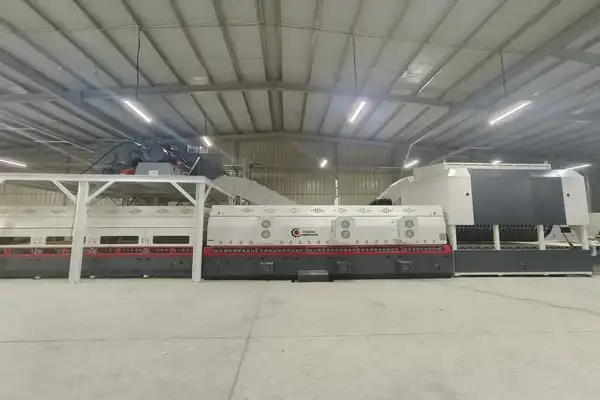
A radiation-based flat and bend tempering furnace with a flexible roller system can address issues that are difficult to solve with rigid processes that rely on fixed molds. The Radiation Flat & Bend Glass Tempering Furnace of Flexible Roller can process glass thicknesses ranging from 5 mm to 19 mm in both flat and curved configurations, making a radiation flexible roller furnace suitable for manufacturers handling different glass specifications. With controlled heating, the Radiation Flat & Bend Glass Tempering Furnace of Flexible Roller can maintain temperature uniformity within ±2°C, while high-density insulation can help reduce energy loss by up to 20%, according to the stated equipment specifications. A radiation flexible roller furnace can also provide more adaptable processing for production lines that frequently switch between flat and curved glass. The IPC and PLC control system of the Radiation Flat & Bend Glass Tempering Furnace of Flexible Roller allows production recipes to be managed automatically rather than relying entirely on manual operator adjustments, while the radiation flexible roller furnace configuration supports more flexible production changeovers. CE-related compliance also supports equipment evaluation for international markets. For glass producers working with building facades, skylight panels, automotive glass, or specialty glass products, the Radiation Flat & Bend Glass Tempering Furnace of Flexible Roller provides a flexible processing platform designed to support production capacity and consistent quality. Over the long term, a radiation flexible roller furnace can help manufacturers manage different glass shapes and thicknesses while simplifying production changeovers and reducing dependence on fixed forming configurations.
Energy-Saving Architecture
Easttec engineers the furnace with high-density composite insulation that makes it 20% more efficient at retaining heat than older models. The insulation package keeps the temperature inside the furnace stable, even during long production runs. This reduces the number of times the heating element has to cycle. For a plant that has multiple shifts every day, this design directly lowers the amount of power used and the monthly costs associated with tempering glass.
Comparing Radiation Flexible Roller Furnaces with Conventional Furnaces
To choose between burner types, production managers and technical directors need to have a clear picture of how well each system works in the areas that mean the most to them.
Energy Consumption
Most of the time, conventional roller furnaces that use forced air movement lose heat by heating the air around the glass instead of the glass itself. It takes less energy to get to the desired temperature with a radiation-based system because it moves heat more directly. This benefit is increased by Easttec's insulation design, which cuts heat loss by 20% compared to older thermal processing equipment.
Heating Uniformity and Glass Quality
Optical quality is the most important thing for people who buy architectural glass. Stress concentration spots are caused by uneven heating, which can cause surface distortion, "ghosting," or breaking after installation. This problem is fixed by Easttec's special multi-zone matrix infrared heating, which spreads heat evenly across the glass sheet before the bending phase starts. This level of accuracy lowers the number of defects and raises the overall output, which has a direct effect on profits.
Processing Flexibility Across Projects
A regular furnace usually performs well with one type of glass but may be less suitable for other glass specifications. The Easttec Radiation Flat & Bend Glass Tempering Furnace of Flexible Roller can process both flat and curved glass with thicknesses ranging from 5 mm to 19 mm, making a radiation flexible roller furnace a practical choice for manufacturers handling diverse production requirements. The Radiation Flat & Bend Glass Tempering Furnace of Flexible Roller can also handle clear float, tinted, and patterned glass, while a radiation flexible roller furnace provides greater flexibility for different glass types, thicknesses, and shapes. Because of this broad processing capability, the Radiation Flat & Bend Glass Tempering Furnace of Flexible Roller can be a practical option for glass processors that need to serve multiple customer segments at the same time. By supporting different glass specifications, a radiation flexible roller furnace can help manufacturers simplify production planning and reduce the need for separate equipment. For processors seeking a versatile solution for diverse glass orders, the Radiation Flat & Bend Glass Tempering Furnace of Flexible Roller, as a radiation flexible roller furnace, offers a flexible platform for both flat and curved glass production.
Benefits and Use Cases of Radiation Flexible Roller Furnaces in Architectural Glass Projects
Glass processors who work on well-known architectural projects always say that their two most important operational needs are production flexibility and consistent quality. Here are the main benefits that this tool gives you:
- Exceptional bending range: The adjustable flexible roller system accommodates a wider variety of curvatures than rigid alternatives. Processors handling custom architectural skylight panels or decorative facade glass can switch between profiles without manual mold changes, saving setup time and reducing labor dependency.
- Distortion-free surface finish: Precision matrix thermal control prevents the optical defects that typically emerge when heating is uneven. The result is a smooth, distortion-free surface that meets the visual standards required for commercial curtain wall and high-end residential glass.
- 20% energy cost reduction: High-density composite insulation maintains furnace temperature stability, which cuts heating element activation cycles and reduces total electricity draw over a production shift.
- IPC and PLC-driven recipe management: The Industrial PC and PLC interface allows operators to store and recall hundreds of production recipes instantly. Switching between flat glass and curved glass production takes under five minutes, which is critical when fulfilling mixed-product architectural contracts.
-- Management of recipes based on IPC and PLC: The Industrial PC and PLC interface lets workers save and quickly access hundreds of output plans. It only takes five minutes to switch between making flat glass and curved glass, which is very important when working on mixed-product architectural contracts.
Maintenance Tips and Safety Features for Optimal Furnace Operation
Preventative Maintenance Schedule
Easttec's system uses ceramic and alloy radiation plates that are made to last a long time. The only upkeep that is needed is cleaning off the waste once a year. Small problems that could lead to unplanned downtime can be avoided by keeping the roller transport mechanism clear of glass fragments and checking the tension on the flexible shaft on a regular basis. Easttec gives workers a structured maintenance guide and online technical help 24 hours a day, 7 days a week to cut down on the time they need to be involved.
Troubleshooting Common Issues
Most tempering furnace production stoppages can be associated with inconsistent roller speeds, unstable temperature zones, or problems with the cooling system. Easttec's Radiation Flat & Bend Glass Tempering Furnace of Flexible Roller uses an IPC-based control system to record real-time operating data during production, making the radiation flexible roller furnace easier to monitor during routine operation. This allows technicians to monitor process conditions and identify deviations from established operating patterns before they develop into production interruptions. The control system of the Radiation Flat & Bend Glass Tempering Furnace of Flexible Roller can help operators track key process parameters, while a radiation flexible roller furnace can provide integrated monitoring functions that support more efficient responses to potential issues. Easttec's training program states that operators can learn how to use the system in about a week and handle many first-level operating issues without immediately waiting for a service technician. With proper training, the Radiation Flat & Bend Glass Tempering Furnace of Flexible Roller can support more efficient routine operation and troubleshooting, while the radiation flexible roller furnace configuration helps operators manage production parameters from a centralized control system. For manufacturers focused on maintaining stable production, the Radiation Flat & Bend Glass Tempering Furnace of Flexible Roller provides integrated control and monitoring functions that can help simplify daily equipment management and make the radiation flexible roller furnace more convenient to operate and maintain.
Safety Standards and Certifications
The stove was built to meet CE safety standards, which means it meets both European and American safety standards for long-term use and sale. When temperature or mechanical limits are pushed too far, automated shutdown protocols go into action to protect both people and glass inventory. The glass that comes out of this furnace meets the impact standards set by ANSI Z97.1; this is a standard requirement for safety glass used in commercial building projects in the United States.
Procuring the Right Radiation Flexible Roller Furnace for Your Business
Evaluating Supplier Credibility
When buying capital equipment that needs to be delivered within 60 to 120 working days, the reliability of the supplier is just as important as the specifications of the equipment. Easttec has been in business since 1994, and its engineers have more than 30 years of experience working with glass. With this much background, buyers get equipment that has been improved over decades of field testing, rather than equipment that was just a trial.
Customization and Configuration Options
Every plant has its own set of rules for language, output volume goals, and electrical infrastructure. Easttec allows full ODM/OEM customization, which includes changing the voltage (220V, 380V, or 415V at 50/60Hz), the size of the equipment, the design of the heating curve, and software options in English, Spanish, Russian, Korean, and Portuguese. U.S. glass makers need this level of configuration because they need equipment that fits their building without having to make expensive electrical changes.
After-Sales Support and ROI
A tempering furnace will be useful in the long run if it is always on, doesn't cost much to maintain, and has good expert help. With Easttec's 24-hour online support approach, production managers can get in touch with trained techs at any time. With the 20% less energy used by the insulation system and the lower amount of scrap caused by precision heating, this type of equipment has a good return on investment timeline for medium to large production operations.
Conclusion
For architectural glass projects, manufacturers need tempering equipment that can process different types of glass without compromising surface quality or increasing energy consumption unnecessarily. The Radiation Flat & Bend Glass Tempering Furnace of Flexible Roller from Easttec combines intelligent IPC/PLC control, flexible roller bending, and matrix radiant heating in one production line, making the radiation flexible roller furnace suitable for applications that require both flat and curved glass processing. This integrated design allows the Radiation Flat & Bend Glass Tempering Furnace of Flexible Roller to support different architectural applications while giving manufacturers the flexibility associated with a radiation flexible roller furnace. For glass processors serving commercial construction, specialty architectural markets, or mixed-product contracts, the Radiation Flat & Bend Glass Tempering Furnace of Flexible Roller can provide greater production flexibility and process control, while a radiation flexible roller furnace can help accommodate varying production requirements. When evaluating the Radiation Flat & Bend Glass Tempering Furnace of Flexible Roller, buyers should carefully compare the equipment specifications, glass processing range, control system, energy requirements, and after-sales support with their production needs. Discussing these requirements with an experienced equipment supplier can help manufacturers determine whether the Radiation Flat & Bend Glass Tempering Furnace of Flexible Roller and its radiation flexible roller furnace configuration are suitable for their planned applications and production capacity.
FAQ
What types of architectural glass work best in this furnace?
The system can work with clear float glass, tinted glass, and patterned glass that is between 5mm and 19mm thick. It can work with both flat building panels and curved glass shapes like shower walls and skylights. It's not made for coated Low-E glass, so people who work with metallic-coated goods should call Easttec's technical support team before placing an order to make sure it will work.
How does the 20% energy saving actually work in practice?
The rate at which heat leaves the furnace room is slowed down by high-density carbon insulation. This keeps the temperature inside stable between production processes, which means the heating parts don't have to work as often. Compared to furnaces with standard insulation packages, this means that they use fewer kilowatt-hours overall over the course of a full production shift.
What is the typical lead time and installation process?
Delivery takes anywhere from 60 to 120 business days, depending on the model and level of customization. Easttec's one-stop service process includes planning the project, making it, installing it, commissioning it, and training the operators. With on-site training, new operators are usually fully up to speed in just one week.
Can the furnace handle both flat and bent glass without separate setups?
Yes. The flexible roller mechanism can be adjusted so that it can quickly change between flat and curved shapes. Operators use the IPC interface to bring up saved recipes, and switching between production modes takes less than five minutes.
Does the equipment meet U.S. safety and quality standards?
The kiln is CE-certified and makes glass that meets the impact standards of ANSI Z97.1 in the United States. This is the standard for safety glass used in business architecture.
Partner With EASTTEC EQUIPMENT for Your Next Tempering Line Investment
Every project that EASTTEC EQUIPMENT works on is based on its more than 30 years of experience thermally processing glass. Our Radiation Flexible Roller Furnace is an example of how that experience can be used to meet the needs of current architectural glass. We are a reliable company that makes Radiation Flexible Roller Furnaces. Our products are CE-certified, and we offer full customization options, from voltage settings to software language. We also offer 24-hour technical support. Get in touch with our team right away to talk about your production needs and get a custom equipment quote. Email us at sales@easttecmachine.com. We'll get back to you right away and are excited to work with you.
References
1. Glass Technology: European Journal of Glass Science and Technology Part A, Society of Glass Technology, 2022.
2. Flat Glass Technology and Applications, Edited by A. K. Varshneya, Society of Glass Technology, 2019.
3. Energy Efficiency in Industrial Furnaces, U.S. Department of Energy — Office of Industrial Technologies, 2021.
4. ANSI Z97.1 — American National Standard for Safety Glazing Materials Used in Buildings, American National Standards Institute, 2015 (reaffirmed 2020).
5. EN 12150-1: Glass in Building — Thermally Toughened Soda Lime Silicate Safety Glass, European Committee for Standardization (CEN), 2015.
6. Processing and Fabrication of Advanced Materials, Edited by T. S. Srivatsan & T. S. Sudarshan, ASM International, 2020.

USER EVALUATE
Here is the customer's evaluation of us