




How Does a Radiation Flexible Roller Furnace Improve Curved Glass Tempering Quality?
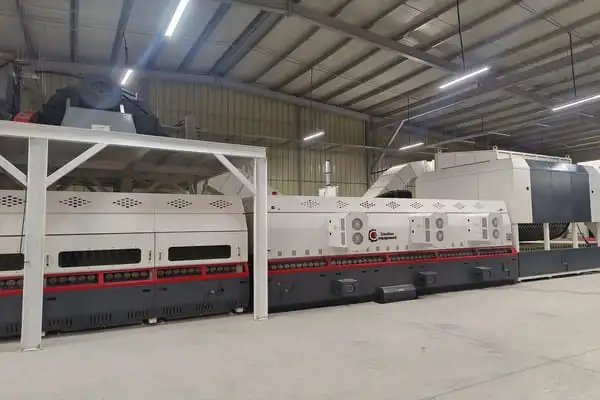
A Radiation Flexible Roller Furnace improves curved glass tempering quality by combining precision matrix radiant heating with an adjustable flexible roller transport system. This pairing delivers uniform thermal absorption across complex glass geometries, which reduces residual stress, optical distortion, and breakage rates. The flexible roller mechanism accommodates a wider range of curvatures and smaller bending radii than rigid systems allow, while the multi-zone radiant heating maintains temperature consistency before and during the bending phase. The result is structurally sound, optically clear curved glass that meets demanding architectural and automotive safety standards.
Understanding Radiation Flexible Roller Furnace Technology
Production teams need to have a good understanding of how the core technology works before they can decide what tools to buy. This is a commercial thermal processing device called the Radiation Flat & Bend Glass Tempering Furnace of Flexible Roller. It heats glass mostly through long-wave infrared radiation instead of convection. This method directly heats the glass body, reducing the amount of heat lost to the furnace walls and air around it.
How Matrix Radiant Heating Works
With Easttec's multi-zone matrix radiant heating system, heating elements are set up above and below the glass in a grid-like pattern. Precision PID controls keep the temperature even across the whole glass sheet by controlling each zone separately. This stops overheating in one area, which is a common reason for optical distortion and surface flaws in the production of curved glass.
The Role of the Flexible Roller Mechanism
The high-strength, bendable shaft system that can be adjusted is what makes this type of furnace unique. The rigid roller systems are fixed to a single plane. The flexible rollers, on the other hand, bend in a calculated arc, shaping the glass as it gets to the right temperature. This means that the same production line can work with both flat architectural glass and high-curve bent glass, without having to change the molds by hand or take a long time to recalibrate.
Dual-Purpose Production Capability
This furnace can be used for both heating and cooling. The Radiation Flexible Roller Furnace can process flat glass and bend glass with a wide range of curves in one integrated system. This makes the Radiation Flexible Roller Furnace useful for applications such as building skylights, shower enclosures, automotive glass parts, and other specialty industrial glass products. Glass thicknesses ranging from 5 mm to 19 mm can be processed, allowing the Radiation Flexible Roller Furnace to handle both smaller furniture glass pieces and large architectural panels. By combining heating, cooling, and flexible glass forming capabilities, the Radiation Flexible Roller Furnace provides manufacturers with a versatile solution for different production requirements. For glass processors handling multiple product types, the Radiation Flexible Roller Furnace can support greater production flexibility while reducing the need for separate equipment for different glass shapes and applications.
Challenges in Traditional Curved Glass Tempering Methods
A lot of people who work with glass have been frustrated by using regular rigid roller furnaces on curved glass jobs. Knowing these problems makes it easier to see why a more flexible method is worth thinking about.
Uneven Heating and Optical Defects
Heat isn't always evenly spread across non-flat glass surfaces when rigid methods are used. If some parts of the glass get more heat than others, the cooling stress map will not be straight. This causes visual flaws, which are sometimes called "ghosting" or zebra-angle distortion, and they don't pass quality checks for both building and car uses.
Mechanical Stress from Rigid Rollers
Roller beds that don't bend put uneven pressure on curved glass profiles. When a flat roller touches a curved glass surface, it creates stress points in certain areas that can lead to tiny cracks or roller marks, especially in glass that is between 5mm and 8mm thin.
High Energy Consumption and Operational Costs
Most conventional heaters lose a significant amount of the heat they generate because of inadequate insulation and heating methods that rely heavily on airflow. In contrast, the Radiation Flexible Roller Furnace can be designed with improved insulation and controlled radiant heating to help reduce unnecessary thermal loss during operation. This can make the Radiation Flexible Roller Furnace a practical option for glass manufacturers operating multiple shifts, where even small reductions in heat loss can contribute to better energy management over the course of a production year. By maintaining more stable heating conditions, the Radiation Flexible Roller Furnace can help manufacturers manage thermal energy more efficiently while supporting consistent glass processing. For production facilities seeking to improve equipment efficiency, the Radiation Flexible Roller Furnace provides an alternative approach to conventional heating systems.
How a Flexible Roller Furnace Improves Curved Glass Tempering Quality
Eastern Tech's radiation-based movable roller system directly addresses all of the above problems thanks to the technical choices that went into making it. In real life, these are the main performance benefits this equipment gives you:
- Precision Matrix Thermal Control: The multi-zone matrix radiant heating system ensures uniform thermal absorption across the glass sheet. Each zone is individually managed, which prevents hot spots and produces even stress distribution during quenching. This results in smooth surfaces and consistent fragmentation patterns that meet EN 12150-1 and ANSI Z97.1 standards.
- Exceptional Bending Versatility: The adjustable high-strength flexible roller system accommodates a wider range of curvatures than rigid alternatives, allowing processors to handle custom architectural and decorative designs. Operators can switch between different bend radii by recalling stored recipes rather than physically reconfiguring the machine.
- 20% Thermal Energy Savings: High-density composite insulation reduces heat loss by 20% compared to traditional models. This keeps the furnace environment thermally stable across long production runs, which lowers electricity consumption and reduces per-unit processing costs noticeably over time.
- Robust IPC & PLC Reliability: The system runs on a stable Industrial PC and PLC interface rather than consumer-grade touchscreens. Operators store and recall hundreds of production recipes, making changeovers between flat and bent glass production fast and repeatable. This reduces skilled labor dependency and shortens training time for new operators.
Strong IPC and PLC Reliability: A stable Industrial PC and PLC interface, not a consumer-grade tablet, is used to run the system. Operators can keep and remember hundreds of production recipes. This makes switching between making flat and bent glass easy and quick. This makes the machine less reliant on skilled labor and cuts down on the time it takes to train new operators.
Practical Considerations for Procuring This Equipment
The furnace supplier you choose is just as important as the technology you choose. Before you make a buy, you should think about a few useful things.
Supplier Credentials and Certification
Easttec's Radiation Flexible Roller Furnace is built to meet strict CE safety standards. This gives it a proven technical base for exporting around the world and running for a long time. As a minimum, buyers in the US and Europe should make sure the product has CE certification. Easttec has been making thermal processing tools for glass since 1994, and its production methods follow the rules of Italian convection technology.
Customization and Configuration Flexibility
Voltage standards, production volumes, and glass specifications are all different at each factory. Easttec allows for a lot of customization, such as adapting the power system to global industrial voltage standards like 220V, 380V, and 415V at 50Hz or 60Hz and setting parameters for heating curves, cooling settings, and software language choices. This makes it easier to integrate the furnace into a production system that is already in place.
After-Sales Support and Training
Eastern Tech's expert team offers online support 24 hours a day, seven days a week, as well as on-site help with installation and setup. According to the company's training standards, new operators can become proficient at their jobs in one week. For maintenance managers who are worried about the chance of downtime, the IPC and PLC architecture provides stable long-term performance, and the ceramic radiation heating elements are designed to last longer.
Case Studies: Radiation Flexible Roller Furnace in Action
The best proof of what this technology can do is real output data from plants that are already running.
Architectural Glass Application
An architectural glass processor that made curved skylight panels moved from a rigid roller furnace to a radiation flexible roller system and said that manufacturers further down the line were complaining less about surface distortion. Being able to remember saved bending recipes for future orders cut down on the time it took to set up each job.
Automotive Glass Application
The flexible roller system was used by a car glass maker to get better curvature limits when working with windshield blanks. During the tempering stage, the number of breaks went down, and zebra-angle testing benchmarks showed that final windshields were clearer.
Conclusion
When tempering curved glass, accuracy is difficult to achieve with standard rigid roller systems. This challenge can be addressed by the Radiation Flexible Roller Furnace, which combines stable IPC and PLC control, a customizable flexible roller mechanism, and multi-zone matrix radiant heating. The flexible design of the Radiation Flexible Roller Furnace allows manufacturers to adjust the roller configuration for different glass shapes and processing requirements. This technology can help glass makers in the furniture, appliance, automotive, and architectural industries reduce defects, manage energy consumption, and improve production changeovers. With a processing range of 5 mm to 19 mm, the Radiation Flexible Roller Furnace can accommodate different glass thicknesses for a variety of applications. For manufacturers seeking CE-certified equipment with flexible production capabilities, the Radiation Flexible Roller Furnace can provide a practical long-term equipment solution.
FAQ
What glass thicknesses can this furnace process?
The furnace handles both flat and bent glass within a 5mm to 19mm thickness range. This covers most architectural, furniture, and automotive glass specifications without requiring separate equipment lines.
What types of glass are compatible?
The system works with clear float glass, tinted glass, and patterned glass. It is designed for non-coated glass varieties and is not recommended for Low-E coated glass without specific process adjustments.
How much energy does this furnace save?
High-density composite insulation reduces thermal energy loss by approximately 20% compared to traditional furnace models. This directly lowers electricity costs during multi-shift operations.
How long does a recipe changeover take?
The IPC and PLC interface allows operators to recall stored production recipes in under five minutes, making transitions between different glass types or bend profiles fast and repeatable.
What certifications does the furnace carry?
The furnace is built in compliance with CE safety standards, making it suitable for global export markets including the United States and Europe.
How long does installation and training take?
Easttec provides on-site installation and commissioning support. New operators typically reach operational proficiency within one week of training.
Request a Quote From EASTTEC EQUIPMENT — Radiation Flexible Roller Furnace Supplier
Since 1994, EASTTEC EQUIPMENT has been making furnaces for thermal processing glass. All of our furnaces are CE-certified and are managed according to Italian quality standards. Our Radiation Flexible Roller Furnace saves 20% on energy costs, heats multiple zones evenly, and can bend materials in any shape all in one production line. To get a full quote that fits your factory's needs, please email our expert team at sales@easttecmachine.com or visit our website right now.
References
1. Glass Technology: European Journal of Glass Science and Technology Part A — Society of Glass Technology, 2021.
2. Journal of Materials Processing Technology — Elsevier, 2019.
3. ASTM C1048 Standard Specification for Heat-Strengthened and Fully Tempered Flat Glass — ASTM International, 2018.
4. EN 12150-1: Glass in Building — Thermally Toughened Soda Lime Silicate Safety Glass — European Committee for Standardization, 2015.
5. ANSI Z97.1 American National Standard for Safety Glazing Materials Used in Buildings — American National Standards Institute, 2015.
6. Energy Efficiency in Industrial Furnaces and Heating Systems — U.S. Department of Energy, Office of Industrial Technologies, 2020.

USER EVALUATE
Here is the customer's evaluation of us