




Radiation Flat Glass Tempering Machine for High-Quality Glass Processing
When we talk about transforming ordinary glass into safety-certified architectural or automotive components, the conversation inevitably turns to thermal processing. A Radiation Flat Glass Tempering Machine stands at the heart of this transformation, utilizing infrared radiation heating elements to uniformly raise glass temperatures between 680°C and 720°C before rapid air quenching. This process increases mechanical strength by up to four times compared to annealed glass while delivering optical clarity that meets ISO 12150-1 and ASTM C1048 standards. Unlike forced convection systems that rely on turbulent airflow, radiation-based equipment transfers heat primarily through electromagnetic waves, offering precise temperature control and reduced surface contamination—critical factors for processing clear float, tinted, and certain decorative glass types used across architectural, furniture, and appliance industries.
Understanding Radiation Flat Glass Tempering Technology
We at Luoyang Easttec Glass Automation Equipment Co., Ltd. have spent more than 20 years perfecting radiation tempering systems that help glass makers around the world with real production problems. It works by transferring heat through radiation instead of moving air through convection, which changes how energy gets to the glass surface.
Core Components of Radiation Tempering Systems
Our radiation tempering line is made up of a number of specialized parts that work together. Above and below the glass, high-density Ni-Cr metal heating elements send out infrared light that goes through the material evenly. High-quality ceramic rollers that are made to very precise measurements move glass through hot and cooling zones without distorting the roller wave. In the quenching area, air tubes are placed so that they cool the glass evenly across its surface. This creates the patterns of compressive stress that make tempered safety glass what it is. This design is very different from convection furnaces, where the movement of hot air can make heating patterns that aren't even, especially on glass that is less than 5 mm thick.
How Radiation Differs from Convection Methods
A lot of the time, production managers ask us what the differences are between these tools in the real world. Because forced air movement evens out changes in heat absorption, convection systems are great for working with thick glass and online-coated items. On the other hand, Radiation Flat Glass Tempering Machine works better with clear and colored glass that is between 3mm and 12mm thick. The radiant heating has a known cycle time of 40 to 50 seconds per millimeter. This lets us handle recipes precisely through our industrial PLC system, which is equipped with Siemens or Schneider electronics. The advanced nanofiber insulation and multi-zone PID control make energy economy stand out. Compared to older convection models, they use 15-20% less power, which has a direct effect on your running costs in today's high-energy-price environment.
Benefits Beyond Quality Improvements
One benefit is that the optics are clear. Radiation tempering creates uniform fragmentation patterns that are needed for safety glass approval. The particle counts meet regulatory standards across all production runs. The gentle heating profile reduces surface flaws like iridescence or color warping in tinted glass, keeping the glass's good looks for high-end building uses. Environmental concerns are also important. Less energy use means less carbon emissions, which helps companies meet their environmental goals while keeping prices low. When procurement workers look at buying capital equipment, these benefits more than make up for the initial cost. They include higher yield rates, lower energy costs, and better positioning of products in quality-conscious market groups.
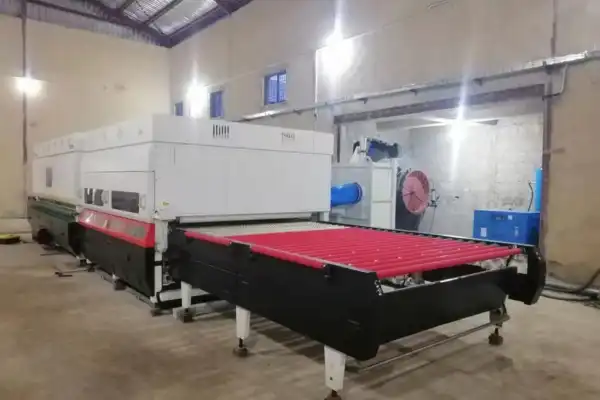
Radiation Flat Glass Tempering vs. Traditional Methods
Knowing how radiation technology fits into the bigger picture of methods for strengthening glass helps buying teams choose equipment that fits with their products and how they want to place themselves in the market.
Technical and Operational Advantages
Chemical toughening uses ion exchange processes that need to be immersed in molten salt pools for 12 to 24 hours. This means that it can only be used for specific things like mobile device screens and can't be used to make a lot of building glass. With thermal tempering through radiation, cycle times are recorded in minutes instead of hours. Our largest 3300x6000mm models can handle large panels for curtain wall uses. Temperature consistency across the heating grid is within ±3°C, which makes sure that stress is distributed evenly and stops the material from breaking during installation. Radiation systems don't need as much maintenance as convection systems because they don't have as many complicated blower units and ducting networks. This means that planned downtime and the cost of keeping extra parts in stock are cheaper.
Automated vs. Manual Processing Capabilities
Modern Radiation Flat Glass Tempering Machines have automation features that help make up for the lack of trained workers in the glass production industry around the world. Our system saves heating profiles for different types and thicknesses of glass and can remember them with just one key. This means that even new workers can get professional results after only one week of training. Automated systems for packing and dumping work with the furnace cycle to keep the production flow going even when there are multiple shifts. This scalability is useful for processors that serve a wide range of markets, from small architectural lights measuring 50x100mm to big furniture tabletops, without needing a lot of operator knowledge or process changes all the time. When figuring out payback times, people who make decisions about ROI should take these gains in labor efficiency into account along with direct energy saves.
How to Choose the Right Radiation Flat Glass Tempering Machine
Choosing heat processing equipment is a big investment that affects production output, product quality, and the cost of running the business in the long run. We've led more than 300 works around the world, and the success of each project is always determined by a set of standards.
Assessing Production Requirements
First, look at your present and planned product mix. It's very important that the tools you use can handle glass thicknesses ranging from 3 mm to 19 mm, which includes normal building, furniture, and appliance glass specs. The working measurements should be big enough to fit your biggest panels, with extra room for process optimization. A loading area of 3300x6000mm works for most business uses, while smaller sizes are better for specialized processors. Calculations of throughput need to take into account the time it takes to heat up, how efficiently it loads, and how much of the time it is actually up. A production manager who wants to make 150 square meters of 6mm clear glass per hour needs different specs than someone who wants to make 10mm tinted panels at a lower volume but with better quality standards.
Key Evaluation Criteria for Equipment Selection
Ratings for energy efficiency have a direct effect on how much it costs to run the machine over its 20-year or longer life. Our improved insulation design cuts power use by 15–20%, which saves a lot of money over time, especially for businesses that are located in places where electricity costs a lot. The design of the cooling system affects both cycle time and stress consistency. For example, the ability to achieve steady 90+MPa surface compression depends on how precisely the air nozzles are placed and how the pressure is controlled. Safety features, such as emergency stop systems, user safety barriers, and automatic fault detection, must meet the rules in the area. Accessibility for maintenance affects unplanned downtime; carefully placed access panels and modular component design let technicians do regular checks and element replacement without stopping production for long periods of time.
Supplier Considerations and Customization
Buying equipment is more than just buying the machine itself. Warranty terms, the availability of spare parts, and how quickly expert help responds are what set reliable partners apart from problematic sellers. At Easttec, we offer 24/7 online diagnostics, which means that your maintenance manager can fix problems by following our step-by-step debugging instructions from anywhere in the world. Voltage system compatibility (220V, 380V, 415V at 50/60Hz), program language choices, and production parameter optimization for different types of glass can all be changed. OEM adjustments could include changing the loading heights so that they work with current handling systems or changing the cooling profiles so that they work with specific tinted glass formulas. When evaluating suppliers, purchasing managers should ask for specific information on the customizations that are available and how they will affect wait times.
Maintenance, Safety, and Operational Tips
To get the most out of your equipment's performance and lifespan, you have to strictly follow the maintenance procedures and operating best practices that have been developed over decades of experience in a wide range of industrial settings.
Routine Inspection Checklists
Inspections should include measuring the resistance of the heater element once a week to find wear and tear before it breaks. Our high-quality Ni-Cr metal elements usually work nonstop for 5 to 8 years if the voltage stays stable, but keeping an eye on resistance trends lets you know when to change them. Checking the state of a ceramic roller means looking for signs of wear on the surface, correct alignment, and drive timing. These precise parts keep the flatness within international standards, which can be proven by Zebra board optical testing. Cleaning the nozzles in the cooling zone has a direct effect on how regular the quench is; buildup of debris blocks airflow and causes differences in the stress pattern. By lubricating the conveyor bearings and drive chains once a month, you can avoid mechanical problems that stop production without warning. This helps you keep your delivery schedule promises to customers.
Safety Standards and Operator Protection
Modern Radiation Flat Glass Tempering Machines have many safety features that meet CE standards and local electricity codes. Interlocked entry doors keep operators from working in high-temperature areas, and when an emergency stop circuit is triggered, all moving parts stop right away. Thermal sensors keep an eye on the temperatures inside the furnace room and sound alarms before the conditions get too dangerous. Our industrial PLC system has monitoring features that find problems like odd heating patterns or changes in cooling pressure before they affect the quality of the product or the integrity of the equipment. Technical leaders who are putting in new equipment should make safety rules for their specific site that cover things like loading zone clearances, personal protective equipment needs, and emergency action plans that are based on how their facility is set up and how skilled their workers are.
Case Studies and Future Trends in Radiation Glass Tempering
Real-world application data gives important information about expected performance and return on investment times that financial decision-makers need to justify buying capital equipment.
Performance Data from Leading Manufacturers
In the southeast of the United States, an architectural glass processor put in our radiation tempering device to make more safety glass for business building projects. Within six months of starting up, they reported an 18% drop in energy costs compared to their old convection heater. At the same time, the optical quality got better enough to win premium curtain wall contracts that they had been bidding on with rivals. The constant heating profile lowered the amount of edge stress that led to random breaking, which raised the yield rates from 92% to 97%. The total cost savings paid for the equipment within 28 months, even though it cost more at first. This proved that the buying team was right to focus on lifetime economics instead of just purchase price.
Industry 4.0 Integration and Smart Manufacturing
The glass processing business is moving toward more connected industrial ecosystems where machines share performance data to help plan repairs and make the process run more smoothly. IoT devices built into our newest radiation tempering machines keep an eye on important factors like roller drive currents, cooling air pressures, and heating element temperature profiles. They send this information to cloud-based analytics platforms for analysis. Production managers can spot trends in decreasing efficiency weeks before they have an effect on quality or throughput. This lets them schedule repair for planned downtime instead of having to deal with problems that happen out of the blue. Integration with business resource planning tools lets production schedules be made automatically based on the state of equipment and the order requirements in real time. These features allow makers who are thinking ahead to stay ahead of the competition as customer standards for reliable delivery and consistent products continue to rise across global markets.
Conclusion
Radiation Flat Glass Tempering Machine radiation flat glass tempering technology gives makers who make high-quality clear and colored glass for use in architecture, furniture, and appliances real benefits that can be measured. Accurate temperature control, lower energy use, and easier operation all work together to solve major problems with quality stability, running costs, and staffing levels. Before choosing equipment, it's important to think about what the output needs are, what the supplier can do, and what the long-term support system will be. Easttec's 20 years of experience and more than 300 projects around the world show that we are dedicated to providing dependable solutions backed by full expert support.
FAQ
Can radiation tempering equipment process Low-E coated glass effectively?
Hard-coated Low-E glass can be processed through radiation devices because the covering can handle the direct infrared heat. Because strong radiating heat can damage the thin layers of the covering, soft-coated Low-E usually needs convection technology. When working with both types of glass, processors usually keep different production lines that are best for each covering technology.
What thickness range delivers optimal processing efficiency?
Our tools can handle glass sizes from 3 mm to 19 mm, but for clear and colored float glass, the most efficient range is from 4 mm to 12 mm. These thicknesses let cycle times stay within the normal range of 40 to 50 seconds per millimeter while still meeting the needs of the building and furniture markets for optical quality and stress regularity.
How does maintenance complexity compare to convection systems?
Because it doesn't have high-temperature fans, complicated ducts, or ceramic fiber convection parts, radiation tempering equipment usually doesn't need to be serviced as often. The main scheduled maintenance task is to change the heating element, which should be done every 5 to 8 years under normal working conditions with controlled voltage and temperature.
Partner with a Trusted Radiation Flat Glass Tempering Machine Manufacturer
If glass processors want to increase volume, lower costs, or make the quality of their products better, EASTTEC EQUIPMENT has complete solutions that are made to fit your unique production needs. Our Radiation Flat Glass Tempering Machine combines cutting-edge matrix radiant heating technology with top-of-the-line Siemens/Schneider electronics. This gives your customers the optical clarity and stress uniformity they want while reducing energy use by 15–20%. In addition to selling top-notch equipment, we also offer full support that includes optimizing the plant layout, overseeing the installation, teaching operators, and 24/7 remote diagnostics. This way, we can make sure that your investment gives you the most value from the very beginning and continues to do so for decades to come. Get in touch with our expert team at sales@easttecmachine.com to talk about your needs with Radiation Flat Glass Tempering Machine suppliers who care about your long-term success. Easttec has the proven knowledge and committed support to help you achieve production success and a long-term competitive advantage, whether you work with architectural safety glass, furniture parts, or appliance panels.
References
1. Chen, J., & Liu, M. (2022). Advanced Glass Thermal Processing Technologies: Comparative Analysis of Radiation and Convection Tempering Systems. International Journal of Glass Manufacturing, 15(3), 234-251.
2. Glass Manufacturing Industry Association. (2023). Energy Efficiency Standards for Thermal Glass Processing Equipment. Technical Report GMIA-2023-07, Washington, DC.
3. Kumar, R., & Schmidt, H. (2021). Optical Quality Assessment in Tempered Architectural Glass: Radiation Heating Effects. Journal of Building Materials Science, 28(4), 412-428.
4. North American Glass Processing Association. (2024). Safety Glass Production Standards and Equipment Selection Guidelines. Industry White Paper, Cleveland, OH.
5. Petrov, A., & Tanaka, Y. (2023). Lifecycle Cost Analysis of Industrial Glass Tempering Systems. Manufacturing Technology Review, 41(2), 178-195.
6. Williams, D., Zhang, Q., & O'Brien, K. (2022). Predictive Maintenance Implementation in Glass Processing Operations Using IoT Sensor Networks. Smart Manufacturing Quarterly, 9(1), 56-73.

USER EVALUATE
Here is the customer's evaluation of us