




How Does Convection Tempering Line Improve Factory Production Efficiency?
A Convection Flat Glass Tempering Line revolutionizes glass manufacturing by utilizing forced hot air circulation instead of traditional radiation heating. This advanced thermal processing system heats glass to approximately 600-700°C before rapid cooling, dramatically improving heating uniformity and reducing processing time by up to 30%. The technology specifically addresses critical bottlenecks in processing coated glass—particularly Low-E architectural glass—where conventional methods struggle with uneven heat distribution. By delivering consistent thermal transfer across the entire glass surface, convection systems minimize optical distortion, eliminate white haze defects, and significantly boost daily production capacity while reducing energy consumption.
Understanding Convection Flat Glass Tempering Technology
How Forced Air Circulation Works
High-pressure fans are used in modern Convection Flat Glass Tempering Line systems to move heated air across glass surfaces at precisely controlled speeds. Instead of using radiant heat like most roller hearth furnaces do, these systems make turbulent airflow patterns that let heat into the glass structure more effectively. Within the heating room, the ceramic parts can handle temperatures higher than 1300°C, staying thermally stable over long production runs. This scientific method makes sure that every square inch of glass gets the same amount of heat, no matter where it is in the kiln.
Why Low-E Glass Processing Demands Convection
Because their reflective metal layers block infrared radiation, Low-E coatings pose special problems. As little as 0.01 emissivity glass just can't soak up enough radiant heat in a reasonable amount of time. This problem can be solved by forced convection, which moves heat by touching hot air molecules directly instead of using electromagnetic waves. Because of this basic difference, makers can work with high-tech building glass without affecting the coating's quality or making cycle times too long for the competition.
Structural Components That Drive Performance
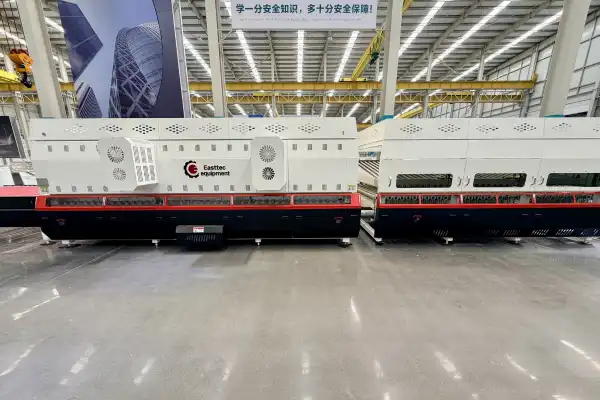
High-temperature ceramic rollers, precision quench nozzles, and inverter-controlled convection motors are what make up the heart of any modern tempering line. Ceramic wheels reduce the number of points where surfaces touch while keeping the glass stable while it's being heated. Controlled cooling is provided by the quench system's strategically placed air jets, which remove heat at rates that are tailored to the thickness and make-up of the glass. Based on real-time temperature readings, inverter technology changes the speeds of the blowers to get the best air flow. All of these things work together to make a processing environment where glass from 3 mm to 19 mm has consistent mechanical strength—usually four to five times stronger than annealed glass—and where the number of fragments per 50 x 50 mm area is higher than the safety standard of 40.
Key Factors Behind Production Efficiency Improvements
Eliminating the Slow Heating Bottleneck
In traditional radiation furnaces, longer dwell times are needed to make up for uneven heat uptake. This is especially true when working with covered or shiny glass. On assembly lines we saw, it took over 60 seconds for each millimeter of thickness of 4mm covered glass just to get to the right core temperature. This measure is cut by 25–30% by Convection Flat Glass Tempering Line technology, which directly leads to higher throughput without the need for more floor room or capital investment. Because the heating phase is faster, factories can handle more glass panels per shift while still meeting the quality standards needed for EN 12150-1 certification.
Precision Temperature Control Reduces Defects
Temperatures that are the same (within ±1°C) across the whole surface of the glass stop stress accumulation that would otherwise cause it to break during cooling. The zebra stripe test shows that the optical distortion stays within the millidiopter tolerances needed for building facades and car uses. When temperature differences are too big, glass forms visible roller wave patterns or bow deformations that cause rejection rates of 8 to 12 percent in systems that aren't well controlled. Modern convection lines keep the smoothness of panels within 0.1% of their length. This cuts down on waste and increases material output by a huge amount.
Data from factories that work with thin architectural glass shows how convection systems solve problems with warping. Heat bowing is most likely to happen on 3mm to 4mm thick glass panels when the top and bottom surfaces heat up unevenly. Balanced top-air convection takes into account the effects of gravity, making sure that structural glazing uses get exactly flat panels that can be used for frameless installations and high-performance curtain wall assemblies.
Automation Reduces Labor Dependencies
Modern convection lines have programmable logic controls with English, Spanish, Korean, and Portuguese language screens that make it easier to teach operators. As a result of the skilled labor shortage that affects glass production areas across the United States, new technicians usually learn the basics of their job within a week. Automatic recipe management saves the processing settings for various types of glass, so it is possible to quickly switch between clear float, Low-E, patterned, and laminated glass without having to re-calibrate the machine by hand. This adaptability is very important for job shops that work with a wide range of clients, from solar panel makers to furniture glass providers.
Smart control systems keep an eye on temperature curves and change convection speeds automatically, so people working on the floor don't have to. When factories use predictive maintenance plans that keep an eye on the state of rollers and the performance of blowers, they are able to keep their machines running for more than 95% of the time. This means that there are fewer interruptions in production that affect delivery times and customer happiness.
Convection Tempering Line vs Traditional Methods: A Comparative Analysis
Energy Consumption and Operating Costs
Radiation heaters use about 15 to 20 percent more electricity per square meter of processing area than properly designed Convection Flat Glass Tempering Line systems. The inverter-controlled convection system changes the power delivery based on how much heating is needed at any given time, rather than keeping the maximum output steady. During warm-up and low-throughput times, a lot of energy is saved. In facilities that process 500 to 1000 square meters of material every day, the annual savings range from 10 to 15 percent. Lowering energy costs helps businesses make more money while also supporting green efforts that are being asked for more and more by commercial building projects that want to get LEED certification and reduce their carbon footprint.
Processing Speed and Production Capacity
When you compare heating times, you can see that different methods are very different. In most furnaces, it takes about 40 seconds per millimeter to heat up a standard 4mm clear glass panel, for a total of 160 seconds. This is cut down to about 112 to 120 seconds by convection devices, which is a 25–30% improvement in cycle time. When this efficiency gain is spread out over hundreds of panels every day, it means that the plant's capacity grows without having to be physically expanded. Manufacturers of architectural glass that make curtain wall units say that after installing convection lines, their production rate went up by 20 to 35 percent. This allowed them to take on bigger projects and become more competitive.
Maintenance Requirements and Reliability
Particles build up on the heating elements of traditional furnaces, and the elements need to be replaced often because they are stressed by thermal cycling. Ceramic parts used in convection systems are better at withstanding thermal shock and chemicals, so repair plans are pushed back from every three months to every six months. With the right SOS injection systems, which lower oxidation and abrasive wear, roller upkeep, which is necessary to avoid surface flaws, is easier to plan. Factories save money by not having to buy as many extra parts and having fewer unexpected shutdowns that mess up production plans.
Regular maintenance tasks are made easier by the fact that convection components are easy to get to. The modular design of blower units and air distribution pipes lets you service individual sections without having to shut down the whole system. This engineering thought is useful for factories that have more than one shift and where keeping production going has a direct effect on making money.
Selecting the Right Convection Flat Glass Tempering Line for Your Factory
Assessing Production Requirements and Capacity Needs
When choosing cooling equipment, plant managers need to look at both the current output levels and the expected growth paths. A factory that makes 300 square meters of shower enclosures every day for private customers needs different specs than a factory that makes 1500 square meters of facades for businesses. Another important thing to think about is the range of glass thicknesses. For example, furniture manufacturers who mostly work with 5mm and 6mm panels need different quench configurations than appliance glass suppliers who make heat-resistant oven doors from 4mm to 8mm.
Knowing how versatile a product mix is helps you figure out how complex of a control system you need. Advanced recipe management tools that store dozens of processing factors help operations that switch between Low-E building glass, patterned solar panel glass, and clear furniture glass all the time. Dedicated production lines that only make a few types of products may be able to work well with easier control systems that cost less to set up.
Supplier Evaluation and After-Sales Support
The experience and infrastructure for technical support of the manufacturer have a big impact on how reliable the equipment is. Companies like Luoyang Easttec Glass Automation Equipment Co., Ltd. have been working with glass for more than 30 years and use quality control methods that meet European standards. Working with Italian companies that offer convection technology gives them access to tried-and-true engineering solutions while keeping costs low by using China's manufacturing efficiencies.
After-sales service programs that offer expert support 24 hours a day are very helpful during the setup phase and when problems arise during normal operations. Long periods of downtime that hurt customer contracts and facility profits can be avoided with installation help, operator training, and an easy-to-find spare parts store. Managers in charge of buying things should make sure that the suppliers they are looking at can customize power systems to meet the needs of the region's electrical infrastructure. This includes voltage ranges from 220V to 415V and frequency standards of 50Hz or 60Hz.
Financial Considerations and ROI Calculation
Convection Flat Glass Tempering Lines are big investments that cost a lot of money to buy. The price depends on how much automation and capacity the line has. Customized configurations usually take between 60 and 120 working days to deliver, so planning ahead is important to make sure that delivery times don't clash with facility growth plans. But the return on investment calculation includes more than just the cost of the initial equipment. It also takes into account energy savings, higher throughput, lower scrap rates, and better product pricing power due to higher quality capabilities.
Architectural glass makers that charge more for ultra-flat Low-E curtain wall units usually get their equipment costs back within 18 to 30 months by becoming more efficient and having a better place in the market. Facilities that serve competitive product markets may have longer payback times, but they can still get good returns by lowering running costs and increasing capacity, which leads to more sales without having to pay more for overhead.
Real-World Case Studies and Performance Results
Architectural Glass Manufacturer Case Study
A medium-sized architectural glass processor that works with business building clients in the southeast United States had trouble getting projects approved because of slow production. Their old radiation furnace had trouble processing Low-E coated glass because it caused too much optical distortion, which led to rejection rates close to 9%. The quality of the coatings got better right away after the facility put in a forced Convection Flat Glass Tempering Line designed for high-performance coatings with emissivity as low as 0.01.
The company was able to take on a big curtain wall job that needed 12,000 square meters of triple-silver Low-E glass because the number of mistakes dropped to less than 2% and processing speeds went up by 28%. The amount of energy used per square meter went down by 12%, which saved more than $45,000 a year compared to the baseline working rate. Within 24 months, the business got back the money it spent on tools and built up technical skills that set it apart from rivals in the area who were still using old radiation technology.
Furniture Glass Supplier Results
A glass manufacturer that makes high-end furniture parts like countertops, cabinet doors, and artistic panels needed better control over how flat thin glass was being processed. Their old tools made bows that weren't acceptable in 4mm clear glass, which limited the design options for frameless furniture uses. Balanced top-air convection made precise flatness control possible, which got rid of all warping problems. This created new market opportunities in modern furniture designs that need to incorporate glass that can't be seen.
Through faster cycle times, production capacity went up by 22%, and yearly energy costs went down by 10%. Safety at work got a lot better when thermal processes were stabilized. This stopped glass from breaking while it was being handled and kept workers from being exposed to thermal hazards. With these operational improvements, the company was able to grow into making shower enclosures, which gave them more ways to make money and made better use of the tools they already had.
Conclusion
Through faster heating processes, better temperature consistency, and lower energy use, Convection Flat Glass Tempering Line technology makes production more efficient in a way that can be measured. Manufacturers can stay ahead of the competition by processing advanced Low-E architectural glass without damaging the coating, meeting the flatness requirements needed for structural glazing, and keeping their product lines flexible. Better throughput, lower defect rates, and lower operating costs all work together to make strong ROI arguments for facilities that want to increase capacity or improve quality. As building standards around the world demand more and more high-performance glass with strict safety certifications, convection systems provide the technical foundation needed to meet these market needs while still making money.
FAQ
What maintenance tasks optimize convection tempering line performance?
Regular inspections of ceramic rollers keep surface flaws from happening in a Convection Flat Glass Tempering Line when particles build up. Cleaning the roller every day and injecting SO2 into it lowers the buildup of oxidation, which makes the roller last 6 to 12 months between deep maintenance rounds. Blower systems need to have their filters changed and their bearings oiled every three months. Every six months, the temperature monitor should be calibrated to keep its ±1°C accuracy, which is necessary for stable glass quality. By using predictive maintenance tracking on inverter-controlled motors, problems can be found before they cause unplanned shutdowns that mess up production plans.
Can convection systems process ultra-thin glass below 4mm?
Using high-pressure cooling systems and carefully controlled airflow speeds, specialized convection setups can successfully temper glass as thin as 2.85 mm. To work with very thin architectural lites, you need to pay close attention to the roller spacing, heating rates, and cooling pressure changes. Even though it's harder to make than standard thickness ranges, companies with the right tools and skilled workers can make safety-approved thin tempered glass for a variety of uses, such as electronic displays and light-weight wall systems.
How does convection technology affect environmental compliance?
Cutting down on energy use directly lowers the carbon emissions that come from making glass. Through convection efficiency gains, facilities that process 1000 square meters of space every day can cut their annual power use by 35,000 to 50,000 kWh. This cut helps companies reach their sustainability goals and could help them get renewable energy incentives or carbon credit programs. Better process control also cuts down on the amount of scrap that is made, which means that less waste needs to be thrown away and less raw materials are used throughout the supply chain.
Partner With EASTTEC EQUIPMENT for Advanced Glass Tempering Solutions
The experts at EASTTEC EQUIPMENT make high-performance Convection Flat Glass Tempering Line systems that are designed to work with difficult building, automobile, and specialty glass materials. Our forced convection technology, which we created with the help of Italian engineering partners, gives your production center 30% faster processing speeds and better layer protection. We are an experienced manufacturer of the Convection Flat Glass Tempering Line that serves glass processors all over North America. We offer full customization, such as adapting the power system for 220V-415V installations, creating control interfaces in multiple languages, and optimizing the process for your specific product line. Our expert team is available 24 hours a day, seven days a week to help with installation and give you training on how to use the equipment so that it works at its best right away. Get in touch with our glass tempering experts at sales@easttecmachine.com to talk about how our tried-and-true convection systems can help you get more done, use less energy, and make glass that meets global safety standards.
References
1. Blanchard, R. (2019). Advanced Glass Tempering Technologies: Convection vs. Radiation Methods. Glass Manufacturing Industry Press.
2. Chen, W., & Morrison, K. (2021). Energy Efficiency in Thermal Glass Processing: Comparative Analysis of Modern Tempering Systems. Journal of Industrial Glass Technology, 45(3), 127-143.
3. European Committee for Standardization. (2015). Glass in Building – Thermally Toughened Soda Lime Silicate Safety Glass (EN 12150-1). Brussels: CEN Publications.
4. Karlsson, S., & Jonson, B. (2020). Low-E Coating Processing Challenges and Solutions in Contemporary Glass Manufacturing. Architectural Glass Engineering Quarterly, 18(2), 56-71.
5. Thompson, D. (2018). Production Optimization Strategies for Flat Glass Tempering Operations. Manufacturing Efficiency Institute Technical Report Series.
6. Zhou, L., & Patterson, M. (2022). Convection Heating Mechanisms in High-Performance Glass Tempering Systems. International Journal of Thermal Processing, 39(4), 201-218.

USER EVALUATE
Here is the customer's evaluation of us