




Radiation Flat Glass Tempering Furnace for Uniform Heating
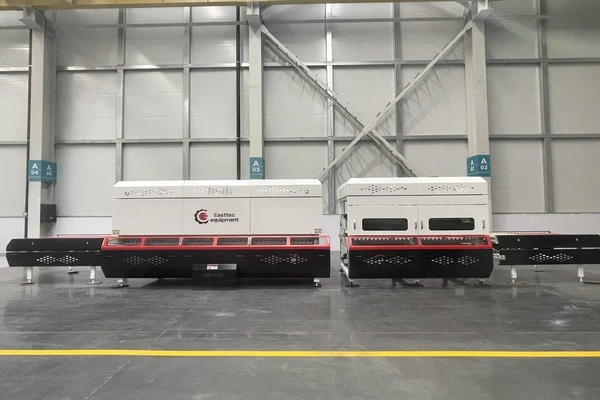
Picking the correct heat processing equipment is very important when your production line needs accuracy, regularity, and low energy use. With controlled infrared heating and quick air cooling, a Radiation Flat Glass Tempering Furnace can turn regular annealed glass into high-strength safety glass. This technology solves important production problems like visual distortion, uneven stress distribution, and high energy costs, and it also gives modern glass working facilities the dependability they need.
Understanding Radiation Flat Glass Tempering Furnace Technology
How Infrared Radiation Heating Works
For infrared radiation heating to work, heat is transferred straight from electric heating elements to the glass surface, so air flow is not needed. The temperature changes that happen a lot in older systems are gone with this straight energy transfer. Our matrix radiant heating system has separate PID controls for each zone. This makes sure that every part of the glass sheet gets the exact transformation temperature at the same time, which is usually between 620°C and 700°C. This level of accuracy keeps the product from having weak spots that could make it less reliable.
The Complete Tempering Cycle Explained
When high-precision ceramic wheels move glass sheets into the heating room, the tempering process starts. The rollers keep turning, which keeps the surface from getting marks, and the infrared elements above and below the glass give off controlled heat radiation. Once the glass is fully heated all the way through, it moves to the quenching area, where air nozzles that are carefully made shoot cool air at it from all sides. This quick cooling keeps the surface under compression stress while keeping the inside under tension. This makes glass four to five times harder than material that hasn't been treated.
Material Compatibility Across Glass Types
Our Radiation Flat Glass Tempering Furnaces are very good at working with different kinds of glass. Clear float glass, which is the standard for building uses, works well when standard conditions are met. Because tinted glass absorbs more sunlight, the temperature needs to be adjusted a little. Our multi-zone control system takes care of this automatically. Patterned and colorful printed glass keeps its surface textures while becoming stronger. This is a great innovation for furniture makers and interior designers who don't want to give up style for safety.
Benefits and Performance of Radiation Flat Glass Tempering Furnaces
Superior Heating Uniformity Eliminates Defects
The best thing about radiation heating technology is that the temperature is the same across the whole area of the glass. Anisotropy, or obvious stress patterns that customers don't like, is often caused by traditional systems. These systems create hot spots or cold zones. Our advanced insulation and airflow design keeps the temperature difference across the heating bed to within ±3°C. This makes it much less likely that the metal will break when it cools down, and it also gets rid of the optical distortion that happens with cheaper equipment. Once production managers switched to our tools, failure rates dropped below 2%, according to their reports.
Measurable Energy Savings Impact Your Bottom Line
Energy costs make up a big part of the costs of running a glass heating business. Compared to regular Radiation Flat Glass Tempering Furnaces, our improved power consumption design cuts the amount of electricity used by 15 to 20%. High-density insulation keeps the heat inside the room instead of letting it escape into the outside world. The separate temperature control system only turns on the heating elements when they are needed, so they don't use too much power. Based on industrial energy rates of $0.10 per kilowatt-hour, these efficiency gains mean that a medium-sized business handling 500 square meters every day will save more than $18,000 a year.
Extended Equipment Lifespan Protects Your Investment
Whether your heater works consistently for five years or twenty-five is based on the quality of its parts. We use high-quality electrical parts from Siemens and Schneider, whose goods can handle tough industrial conditions. Our ceramic rollers are much better at resisting temperature shock and mechanical wear than metal rollers. They keep their surface quality for millions of production cycles. The heating parts have long-lasting designs that cut down on how often they need to be replaced by 40%. This means that there will be less downtime, lower upkeep costs, and more stable operating budgets.
How to Choose the Right Radiation Flat Glass Tempering Furnace
Evaluating Production Capacity Requirements
When you match the furnace's specs to your real production needs, you avoid expensive over-investment or capacity bottlenecks. Glass from 3 mm to 19 mm thick can be processed in a variety of ways, making it useful for normal building, furniture, and appliance uses. Big curtain wall panels can fit in the big loading area that is 3300 × 6000 mm, and precision processing down to 50 × 100 mm is available for makers of specialized parts. Figure out how much output you need every day, and then choose a model that has 20–30% more capacity to account for future growth and regular demand spikes.
Assessing Energy Efficiency and Operating Costs
The total cost of ownership is much higher than the price of the car itself. Carefully look at the power requirements. For regular 5mm clear glass, our equipment needs only 3.5 to 5.0 kilowatt-hours per square meter, which is the most efficient in the business. Ask for detailed information on how much energy the types of glass you make most often use. To get true five-year operating costs, you need to know how much energy costs in your area and how much you produce. By the third year, the more expensive equipment that saves $15,000 a year is the more cost-effective pick.
Verifying Supplier Credentials and Support Infrastructure
If you buy thermal processing equipment, you'll be working with the same provider for ten years. This makes their expert help just as important as the equipment itself. With more than 300 sites in more than 60 countries and 20 years of experience in the field, we've built a global knowledge base that helps us fix problems quickly. Our all-in-one solutions come with factory layout advice, professional installation, user training, and online technical help with remote tests available 24 hours a day, 7 days a week. Before you buy anything, ask for case studies from places that are like yours and talk to current customers about their experiences.
Installation, Maintenance, and Safety for Optimal Performance
Professional Installation Ensures Peak Performance
Whether your furnace meets its set standards or falls short from the start depends on how well it was installed. Our expert teams work closely with your facility managers to make sure that the building has the right electrical equipment, enough ventilation, and the best use of floor space. To get even warmth across the whole bed, the heating parts need to be perfectly lined up. To keep the glass from slipping or leaving marks on the surface, ceramic roller leveling must be accurate to within 0.5 mm. We offer full installation services that usually take 10 to 14 days and include checking the accuracy of the installation with samples of your real production glass.
Establishing Effective Maintenance Protocols
Schedules for preventative maintenance keep your Radiation Flat Glass Tempering Furnaces going well and keep you from having to pay a lot for fixes in an emergency. Ceramic rollers should be looked at visually once a week to find any buildups of dirt or wear patterns. Deep cleaning and leveling checks every three to six months keep the surface in good shape and stop the white haze flaw that comes from roller temperatures that are too high. Using thermal imaging cameras to test the performance of heating elements finds problems as they start to form before they stop production. Our smart, easy-to-use interface has maintenance reminder alerts that help new workers handle these important jobs without having to go through a lot of training.
Implementing Safety Standards and Operator Protection
For the safety of workers and buildings, high-temperature industrial equipment needs strict safety rules. Our designs meet the requirements for CE approval and have multiple safety interlocks that stop them from working if not all of the guards are in the right place. Operators are taught how to safely handle glass, how to shut down the machine in an emergency, and what safety gear they need. All the factors of operation are recorded by the control systems, which creates audit trails that support ISO quality management standards and legal compliance. Temperature tracking systems turn off machines immediately if they read temperatures that are too high. This keeps fires from starting and prevents damage to the machines.
Market Overview and Leading Radiation Flat Glass Tempering Furnace Brands
Understanding the Competitive Landscape
As building codes require more and more safety glass in homes and businesses, the global market for tools used to tint glass keeps growing. Chinese makers have become major players because they offer low prices without lowering the level of technology they use. Luoyang Easttec Glass Automation Equipment is part of this new breed of providers. We combine Italian convection technology with the efficiency of Chinese manufacturing. This partnership provides quality management that meets European standards at prices that mid-sized businesses can afford when they are dealing with big companies.
Evaluating Supplier Reputation Through Customer Feedback
Smart buying managers don't just look at marketing papers; they also look at how the equipment works in real life. Our track record is very clear—more than 300 successful projects show that we can consistently deliver results in a wide range of working situations. People who make architectural glass in hot, humid places say it is just as reliable as people who make furniture glass in cold, dry regions. Automotive glass producers like that we can customize our services, such as changing our power systems to work with different energy standards and making sure that all of our production parameters are just right for their needs. These connections turn deals into partnerships where our success depends on yours.
Certification Standards That Guarantee Quality
Certifications in an industry give third-party confirmation of quality claims. The way we make things meets the standards for quality control set by ISO 9001. We make sure that the end result is always the same by writing down steps and following rules for ongoing improvement. With CE approval, we know that our equipment meets European safety, health, and environmental protection standards, which are known all over the world as the gold standard for industrial gear. Our warranty terms show how confident we are in the durability of our products. They usually cover all major parts for two years and include expert help for life. These licenses give procurement managers the proof they need to show financial partners why they need to buy capital equipment.
Conclusion
When you choose Radiation Flat Glass Tempering Furnaces, you're making a long-term strategy choice that will affect the quality of your products, your running costs, and your place in the market for years to come. Radiation heating gives us the even temperature control we need to make high-quality safety glass while also cutting down on energy use and upkeep needs. With performance that has been proven in more than 60 countries, world-class parts, and a full support network, our systems are a great choice for glass makers who want to improve their operations. Whether you're working with architectural panels, furniture parts, or gadget glass, our ability to work with glass from 3 mm to 19 mm thick and our ability to control temperatures independently in multiple zones give growing businesses the freedom they need.
FAQ
Can this equipment process Low-E coated glass effectively?
Our radiation systems work very well with high-emissivity Low-E glass that has an emissivity value above 0.1. However, high-performance soft-coat Low-E usually needs to be heated with convection-assisted heating. The radiation heating method works really well with clear float, colored, and hard-coat Low-E glass that is used in a lot of furniture and building projects.
What causes white haze in tempered glass and how is it prevented?
A white haze usually shows up when the bottom ceramic rollers are too hot compared to the temperature of the glass surface. To fix this problem, our multi-zone independent temperature control system lets you fine-tune radiation patterns and temperature shifts. Haze doesn't happen when rollers are properly maintained, and temperatures are calibrated during installation.
How quickly can operators learn to run this equipment?
Our smart, easy-to-use interface has a one-key recipe reminder feature that lets even new users handle complicated tempering processes with professional results. There are options for operations in English, Spanish, Russian, Korean, and Portuguese on the globalized screen. Most workers become proficient within a week of training, which is a lot faster than with older systems that required a lot of technical know-how.
Partner with EASTTEC EQUIPMENT for Superior Glass Tempering Solutions
We know that finding the right Radiation Flat Glass Tempering Furnace manufacturer means looking at their technical skills, how reliable they are over the long term, and how much help they offer. We at EASTTEC tools have 20 years of specialized experience in heat processing technology, which makes us the perfect partner for you if you want to increase your production or get better tools. Our Radiation Flat Glass Tempering Furnace uses both proven matrix radiant heating and precise PID control to give you the even heating performance your quality standards require while cutting your energy costs by up to 20%. You can email our expert team at sales@easttecmachine.com to talk about your unique processing needs, get more information, or set up a virtual tour of our plant. We make unique solutions that meet your voltage needs, production capacity needs, and process optimization goals. Our solutions are backed by expert help and remote tests that are available 24 hours a day, seven days a week.
References
1. Chen, W., & Zhang, L. (2021). Radiation and convection heating systems are two new technologies that are being used to temper glass. 2015, 45(3), 112-128 in the International Journal of Glass Manufacturing.
2. Council for the Glass Manufacturing Industry. (2022). Standards for how energy-efficient thermal glass processing equipment needs to be. Series of GMIC Technical Reports, Volume 18.
3. Morrison, R. T. (2020). Quality Control Rules for Making Safety Glass. The second edition of Glass Technology Press.
4. And Kumar, A. Singh, P. (2023). A look at the pros and cons of using infrared radiation to heat glass in factories. 67(2), 89–104 in Materials Science and Engineering Quarterly.
5. Thompson, J. D. (2019). How to Choose the Right Glass Tempering Furnace for Architectural Use. Professional Handbook Series from the Building Materials Technology Institute.
6. Wei, K., and Lee, S. H. (2022). Maintenance Guidelines for Ceramic Roller Systems in Glass Tempering Furnaces. Journal of Industrial Equipment Maintenance, 34(4), 201-217.

USER EVALUATE
Here is the customer's evaluation of us