

One Tempering Line Meets Automotive, Furniture, and Architectural Needs
Running a glass processing operation that serves multiple industries is a genuine balancing act. You need equipment flexible enough to handle curved automotive glass one shift and large architectural panels the next — without sacrificing quality or burning through your energy budget. The Radiation Precision Hard Roller Flat & Bent Glass Tempering Line from EASTTEC EQUIPMENT is engineered precisely for that reality. It processes flat and bent glass from 3mm to 19mm thickness, combining a matrix radiant heating system with hard-roller precision to deliver consistent results across automotive, furniture, and architectural applications on a single production line.
What Makes the Hard Roller Tempering System Different?
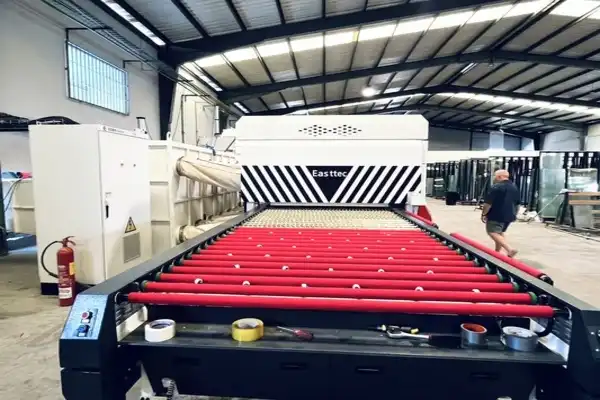
Most people who work with glass have been frustrated by roller wave defects, which are small bumps that make it hard to see clearly and cause expensive rejections. One common cause is soft roller systems, which use flexible surfaces to move glass through the furnace. Radiation Precision Hard Roller Flat & Bent Glass Tempering Line goes in a completely different direction when it comes to tech.
Radiation Heating vs. Conventional Convection
Instead of just using hot air to move energy around, radiation-based heating moves energy directly through infrared elements. This method makes the temperature spread across the glass surface more even. This is especially true for patterned or coated glass, where convection flows can cause thermal stress in certain areas. The heater works at temperatures between 680°C and 720°C and has separate PID temperature controls for different heating areas. Each zone evens out differences in the glass's shape, which lowers the chance of edge stress concentrations that cause the glass to break on its own.
The Hard Roller Advantage
The mechanical core of this line is made up of high-strength fused silica rollers that have very low thermal expansion coefficients (about 0.6 × 10⁻⁶/°C). Because these rollers don't bend when they're working at high temperatures for a long time, they can keep their sub-millimeter setting accuracy over many production runs. In real life, this means that the flatness error is less than 0.1 mm per 300 mm, which meets the optical needs of the high-end car and furniture glass markets.
How Does This Line Compare to Other Tempering Technologies?
For safety glass approval, ASTM C1048 or EN 12150 states that the surface must be compressed without using heat, and the Radiation Precision Hard Roller Flat & Bent Glass Tempering Line achieves this. However, chemical tempering can't achieve the fragmentation pattern needed. Standard architectural panels can be handled by conventional flat roller furnaces, but they don't have the right machinery setup to make precisely bent glass. This tempering line is unique because it can handle both types of output on the same base.
The usual flat tempering area is 2440 × 3660mm, and the bending part has a 2440 × 1500mm work area. Bending radius starts at R ≥ 500mm, and arc deviation is kept to within 1.5mm. This level of tolerance meets the needs of automotive OEM assembly, where frame fitment leaves no room for error in measurements.
Comparing productivity also points to this setup as a winner. Switching between flat and bent production modes usually takes only 20 to 40 minutes of mechanical reconfiguration, backed by an IPC recipe management system that saves process parameters for quick reference. When factories use mixed order portfolios, they get back setup time that would have cut into daily output otherwise.
Tailored Performance Across Three Demanding Industries
This line's flexibility isn't just a marketing term; it's based on real engineering choices that were made to work with the technical needs of each business. Here are the core performance factors that directly translate to value in your industry:
- Automotive glass production demands arc consistency above all else. In the bending section, a timed mechanical transfer system makes sure that every bent panel comes out of the furnace with the right amount of curvature limited by the CAD design. The curved glass is optically clear and meets DOT FMVSS 205 visual field standards. There is no ghosting or lens distortion.
- Furniture and interior glass often involves smaller batch sizes and frequent size changes. The IPC recipe system stores parameters for different radii and thicknesses, so operators can execute changeovers without re-engineering the process from scratch. Precision-ground rollers make surfaces smooth, which is good for things like countertops, shower enclosures, and cabinet glass.
- Architectural glass processing leverages the full flat heating area for curtain wall panels and structural glazing. The multi-zone radiant heating method adjusts for large-format glass sheets where edge-to-center temperature gradients are hardest to control, providing the optical clarity and bow control that commercial glazing standards demand.
These features of the Radiation Precision Hard Roller Flat & Bent Glass Tempering Line are all on one line, which lets glass processors increase production output and lower capital costs compared to keeping different furnace lines for each type of product.
Technical Specifications and Operational Reliability
Knowing the specs of the equipment helps procurement teams figure out if it meets their production needs. It's worth going over the key values again:
- Glass thickness range: 3 mm to 19 mm (flat and bent)
- Flat tempering area: 2440 x 3660 mm
- Bending section area: 2440 x 1500 mm
- Minimum bending radius: R ≥ 500mm
- Arc deviation tolerance: ≤ 1.5 mm
- Heating temperature range: 680°C to 720°C
- Control system: station with both IPC and PLC
- Roller material: High-purity fused silica, designed for 10+ years of service under proper maintenance
- Electrical components: Tier-1 hardware made for international use
- Certifications: Meets CE standards
The high-temperature-resistant alloy steel used to make the hard-axis drive system means that it doesn't need to be serviced as often as standard carbon steel systems. Automatic roller cleaning cycles keep white haze from building up on the bottom glass surface. EASTTEC EQUIPMENT offers full turnkey support, from site installation and commissioning to training operators, so your team can start making things steadily right away, without having to wait for long ramp-up times.
Delivery times for custom setups range from 60 to 120 business days, based on the model. The machine can adapt to different voltages for global industrial standards, such as 220V, 380V, and 415V at 50/60Hz frequencies.
Procurement Considerations for Glass Tempering Line Buyers
When processing glass, choices about new tools usually involve a lot of people inside the company, and the review process can last anywhere from three to twelve months. It's easier to make a choice when you know what affects the total cost of ownership.
Energy use is a major factor that affects operating costs. EASTTEC's design approach aims to cut electricity use by about a third compared to traditional tempering systems. This is made possible by the matrix radiant heating system's precise zone control, which gets rid of wasteful broad-spectrum heating. Over the decades that a heater lasts, that difference adds up to a big return on investment (ROI) benefit.
Support after the sale is just as important. EASTTEC offers online technical help 24 hours a day, seven days a week. The operation menu is available in English, Spanish, Russian, Korean, and Portuguese, so operators in different locations can use the equipment without any language problems. After one week of hands-on training, most new operators are able to do their jobs well.
Conclusion
It is no longer a compromise to have a single heating line like the Radiation Precision Hard Roller Flat & Bent Glass Tempering Line that can be used for making glass for cars, furniture, and buildings; it is now a strategic benefit. EASTTEC EQUIPMENT's hard roller flat and bent tempering system offers consistent arc, clear optics, and process flexibility all in a small package. It solves the main problems of factory owners, production managers, and procurement teams all at the same time. It has CE certification, energy-efficient matrix radiant heating, and full turnkey support. To start your scientific review, email sales@easttecmachine.com at EASTTEC EQUIPMENT.
FAQ
What glass types can this tempering line process?
From 3mm to 19mm thick, the line can work with clear glass, patterned glass, and normal coated glass. It can also work with flat and bent glass. It can make glass for buildings, cars, appliances, and furniture all in the same production setting.
How long does it take to switch between flat and bent production modes?
In most cases, it takes 20 to 40 minutes to change the mechanical setup from flat to bent mode. The IPC recipe system saves process settings for a variety of combos of radius and thickness. This makes it much faster for operators to get set up.
Does the equipment comply with international safety standards?
Yes. The line is CE-approved and makes curved glass that meets the standards of EN 12150 and ASTM C1048. The pattern of fragmentation in a 50 × 50 mm test area has more than 40 particles, which meets the requirements for safety glass certification.
What after-sales support does EASTTEC EQUIPMENT provide?
As part of the complete service plan, EASTTEC takes care of all the installation, commissioning, and training for the operators. Online technical support is available 24 hours a day, 7 days a week. It includes sending spare parts and doing diagnostics remotely.
Can the equipment be customized for our factory's electrical system?
The tools can be changed to different voltages and frequencies around the world, such as 220V, 380V, and 415V at 50/60Hz. The software language, production parameters, and machine sizes can all be changed to fit the needs of a particular plant.
Request a Quote from EASTTEC EQUIPMENT Today
Since 1994, EASTTEC EQUIPMENT has been a leader in heat processing for glass, building a name for trustworthy engineering and quick customer service. If you are looking for a Radiation Precision Hard Roller Flat & Bent Glass Tempering Line provider for a new building or to replace old equipment, our team is ready to give you a full review that is tailored to your production needs. You can email sales@easttecmachine.com to get a price, see how the equipment works, or get a technical review.
References
1. Glass Technology: European Journal of Glass Science and Technology, Society of Glass Technology, 2021.
2. ASTM C1048 Standard Specification for Heat-Strengthened and Fully Tempered Flat Glass, ASTM International, 2018.
3. EN 12150-1: Glass in Building — Thermally Toughened Soda Lime Silicate Safety Glass, European Committee for Standardization, 2015.
4. Automotive Glazing: Materials, Processing and Performance, SAE International, 2019.
5. Flat Glass Technology and Architecture, Pilkington Glass Research Publications, 2020.
6. Energy Efficiency in Industrial Glass Processing, Glass Manufacturing Industry Council (GMIC), 2022.