




How to Select Top Convection Flat Glass Toughening Equipment for Your Factory?
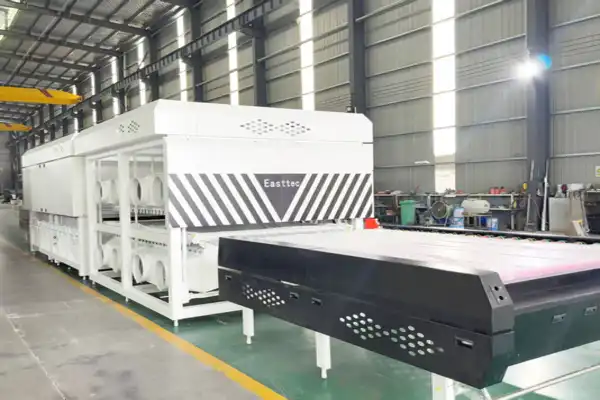
Selecting the right Top Convection Flat Glass Toughening Equipment begins with understanding your production volume, glass specifications, and quality standards. This equipment uses forced convection technology to heat glass uniformly before rapid cooling, creating high-strength safety glass. The key lies in matching machine capacity with your factory's throughput targets while ensuring compatibility with various glass types—from standard architectural panels to specialized Low-E coatings. Evaluating energy efficiency, automation features, and supplier support ensures you invest in equipment that delivers consistent quality and long-term profitability.
Understanding Top Convection Flat Glass Toughening Technology
How Forced Convection Systems Transform Glass Processing
Modern high-performance glass, especially Low-E films that reflect infrared heat, is hard for traditional tempering kilns that use radiation to work with. This problem can be solved by top convection systems, which use precise fans to send hot air straight onto the glass surface. This method gets around reflective barriers, so every square inch gets the same amount of heat energy, no matter what the coating is made of.
Ceramic fans suited for temperatures above 1300°C are used in this technology. They create controlled airflow patterns that get rid of cold spots and hot spots. When working with triple-silver Low-E glass, which is known for absorbing heat unevenly, airflow systems keep the surface temperature within ±3°C of the average. This accuracy stops visual distortions like edge lifting and rolling wave patterns that happen with less accurate heating methods.
Energy Efficiency That Impacts Your Bottom Line
When compared to older heaters, modern convection toughening equipment cuts down on heating cycles by about 32%. This faster speed directly means that less electricity is used per square meter of processed glass. Even though convection fans use more power when they're working, the shorter cycle time usually saves 10-15% of energy altogether.
Inverter-controlled convection systems change the amount of wind in real time based on the covering and thickness of the glass. When working with 3mm architectural lites that are thinner, the system automatically slows down the blower to avoid thermal shock while still transferring enough heat. This smart change keeps energy from going to waste when switching between different glass specifications during production.
Core Selection Criteria for Top Convection Flat Glass Toughening Equipment
Matching Production Capacity to Factory Requirements
The most important features of toughening tools are determined by the daily output goals you set. Architectural glass companies that make large-format curtain wall panels need machines that can handle sizes of up to 3300mm x 18000mm and have enough heating zones to keep the temperature even. Automakers put a lot of emphasis on making glass that can be bent into complicated forms and has different thickness profiles.
For companies that make a lot of different products that need to have specifications changed often, batch processing systems work best. On the other hand, continuous furnaces get the most work done for high-volume, standard production. Finding out how many square meters of output you need per hour can help you decide whether you need one big boiler or several smaller ones for better operation.
Technical Parameters That Define Quality Outcomes
If your toughened glass meets safety standards like EN 12600 for impact resistance, it depends on how well you control the temperature. Customized thermal profiles can be made for different glass thicknesses with equipment that has multiple burning zones that can be controlled separately. For example, heating 4mm architectural glass is different from heating 12mm furniture glass. Machines that can run recipes automatically can switch between the two types of glass without any problems.
Measurements of surface stress higher than 90MPa for fully toughened glass and 40–55MPa for heat-strengthened types depend on heating evenly and quickly cooling down, and Top Convection Flat Glass Toughening Equipment excels at creating these conditions. Forced airflow gets rid of the "soft center" problem that happens a lot in radiation furnaces, where glass centers are cooler than edges. This is why convection systems are so good at creating these conditions.
Certification and Compliance Considerations
CE approval is still needed for goods that are going to be sold in Europe and North America. This label shows that the safety systems, electrical parts, and operating procedures meet strict international standards. In addition to basic certification, make sure that the supplier gives you technical documentation that shows your finished glass products meet the safety glass rules in your area.
Power sources like 220V, 380V, and 415V can be used with equipment made for world markets. It can also work with 50Hz and 60Hz frequencies. Customizable voltage adaptation gets rid of the need for expensive retrofitting when factories are moved to different countries or when plant infrastructure is improved.
Comparing Leading Top Convection Flat Glass Toughening Machines in 2024
Performance Benchmarks Across Manufacturers
Luoyang Easttec Glass Automation Equipment has been working with convection toughening technology for 30 years. Their systems use convection mechanisms that are standard in Italy. These mechanisms increase throughput by 20 to 30 percent compared to radiation methods. The company's ceramic-based convection parts last longer than metal ones because they don't break down as quickly when heated. This means that the parts can be used for more than 20,000 hours before they need major repairs.
China's manufacturers, like Easttec, offer competitive prices and quality standards that are on par with those of European suppliers. Their advantage is that they can quickly change machine dimensions, control software languages, and process parameters to meet the needs of each customer within 60–120 working days of the order being placed. This responsiveness helps mid-sized glass makers who want custom solutions but don't want to pay the high prices of luxury brands.
Durability and Maintenance Requirements
The materials used to build a convection system have a big impact on how long the equipment lasts. Ceramic fan housings and nozzles don't crack or warp when they are heated and cooled many times, but metal parts tend to move out of line over time as they expand and contract. Check to see if the important parts in the heating zone are made of refractory ceramics that can withstand constant contact to 1300°C, or if they are made of lower-quality materials that need to be replaced often.
Accessibility for maintenance has a big effect on operational uptime. Well-thought-out machines put blower assemblies and heating elements in places that allow for quick inspection without having to take the whole thing apart. If your supplier offers full operator training, your maintenance team will be able to do basic jobs like cleaning the nozzles and calibrating the airflow within a week, so you won't have to call outside techs for small fixes as often.
Total Cost of Ownership Analysis
The initial buying price is only one part of the total investment in the tools. Figure out how much energy you think you will use based on how much you produce. Machines that use 15% less electricity can pay for themselves in 18 to 24 months of running. Take into account the availability of spare parts and the time it takes to ship them, because delays in getting parts during breakdowns directly lead to lost production revenue.
Capital expenditures for Top Convection Flat Glass Toughening Equipment can be spread out over several fiscal periods by using financing choices from equipment sellers or third-party lenders. Some makers offer lease options or payment plans that are spread out over time and are in line with when the equipment needs to be fully operational. These structures help companies better control their cash flow so they can add more capacity without using up their working capital funds.
Maintenance, Troubleshooting, and Operational Best Practices
Preventive Maintenance Protocols
Setting up regular maintenance schedules protects the performance of equipment and stops catastrophic failures. Every day, the convection nozzles should be checked for alignment, the temperature of the blower bearings should be recorded, and airflow pressure should be measured at each heating zone. Cleaning the ceramic tip arrays once a week is part of the job to keep particles from building up and messing up the airflow patterns and making hot spots.
As part of the convection system's monthly maintenance, the thermal expansion joints must be carefully checked. These parts allow the material to expand during heating processes. Joints that are worn or broken let air leak out, which makes heating less even. To keep energy efficiency high and protect structural parts from too high temperatures, replace ceramic fiber insulation that shows signs of being compressed or damaged by heat.
Common Issues and Resolution Strategies
Changes in temperature across the glass surface usually mean that the nozzles are clogged or that the fan isn't working as well as it should. Use the equipment's diagnostic interface to check the airflow pressure in the affected areas. Readings below the recommended levels mean that the nozzles need to be cleaned or the blower impellers need to be replaced because they are damaged. Small changes can be fixed by changing the settings for the flow profile until the conditions are back to normal after physical repair.
Glass often breaks during quenching because the stress isn't spread out evenly, which can happen when the heating parameters aren't right. Check the recipe settings to make sure they are right for the thickness and type of coating being used on the glass. Low-E glass with an emissivity below 0.01 needs longer heating times than regular clear glass, even though they are the same thickness. Make sure that your process library has tested recipes for all product specs.
Optimizing Parameters for Different Glass Types
To keep it from bending, architectural glass that is between 3mm and 4 mm thick needs to be precisely calibrated for air pressure. To even out the difference in thermal mass between the rollers and the free-span glass areas, lower the amount of airflow in the center heating zones compared to the edge zones. This different heating gets rid of the concave warping that makes visual distortions obvious in curtain walls that are already in place.
To work with jumbo-format glass that is wider than 2500 mm, the warmth must be coordinated across several convection zones. To make up for the heat loss from the large surface area, set the control system to slightly increase the heating time at the center zones. This change makes sure that the middle of the glass hits the tempering temperature at the same time as the edges. This makes sure that the stress is spread out evenly during the cooling phase.
How to Procure and Implement Top Convection Flat Glass Toughening Equipment?
Supplier Evaluation and Quotation Process
Start the buying process by making a list of specifics about the sizes, thicknesses, and types of coatings you need for your glass. Ask for quotes from several suppliers, such as Easttec and competitors. Make sure that each quote takes into account your specific needs, such as power system compatibility and control software language options. Not only should you look at the price, but also the technical support and warranty coverage periods.
Trustworthy sellers let you visit their factories or take video tours that show how they make things and check the quality of their work. Observing equipment production shows building quality details not apparent in specification sheets—weld integrity, component sourcing, and assembly precision all suggest long-term reliability standards. Checking references with current customers who use similar equipment can tell you a lot about how well the product works in real life and how responsive the supplier is.
Customization Options for Specific Requirements
Making sure that the equipment fits the way your business works will help you be more productive right away. There are different levels of automation for loading and removing glass, from placing rollers by hand to fully automated systems that work with cutting tables upstream and checking stations downstream. Medium-sized businesses can often benefit from semi-automated loading, which combines the need for capital investment with gains in worker efficiency.
Customizing your control system goes beyond translating languages; it also includes making recipe management tools that match the technical skills of your workers. Facilities with a lot of staff turnover will benefit from touchscreen controls that are easy to use and come with visual instructions. On the other hand, experienced technical teams that are fine-tuning processes for specialty products will enjoy advanced parameter access. Talk about these opinions during the buying process to avoid having to make expensive changes after delivery.
Installation Planning and Operator Training
To successfully integrate equipment, installation schedules must be coordinated so that production is interrupted as little as possible. On-site construction teams from suppliers like Easttec usually take 7–14 days to do things like mechanical positioning, electrical connections, and the first testing. Plan to have the building ready for delivery by doing things like installing strengthened floors to handle the weight of the equipment and improving utilities for power and compressed air needs.
Full training for operators includes both standard production steps and maintenance rules. Easttec's method includes teaching with real glass products, so operators gain confidence through hands-on experience instead of just learning about it in the classroom. Make sure that your maintenance staff gets training as well, since they will be doing regular maintenance. Sharing knowledge with them lowers long-term costs and increases equipment uptime.
Conclusion
To choose the right Top Convection Flat Glass Toughening Equipment, you need to carefully weigh your production needs against the technology that is currently available. Modern high-performance glass is hard to temper with standard methods. Forced convection systems are better at handling it, and they use less energy and produce better optical quality. In the procurement process, you don't just compare specs; you also look at how reliable the provider is, how flexible they are with customization, and how committed they are to long-term support. It is important to choose equipment that fits both short-term output goals and long-term growth goals. This can be done by weighing the initial investment against ongoing cost savings and quality improvements. Partnering with experienced makers who offer thorough training and quick technical support can turn buying equipment into a way to gain a competitive edge in markets that require a lot of it.
FAQ
What distinguishes top convection from infrared toughening technology?
Top convection systems heat glass surfaces by forcing hot air to move around, while infrared systems use heat that is absorbed by the glass itself. Low-E coatings reflect infrared energy, but convection technology gets around this problem. It makes sure that the temperature is the same no matter what the glass covering is made of. This makes the heating cycles go faster and the optical quality better for high-performance architectural glass products.
What are typical lead times for customized toughening equipment?
It usually takes between 60 and 120 working days from the time an order is confirmed until the customized convection toughening furnace is delivered. This depends on how complicated the specifications are and how busy the manufacturer's production plan is. Custom features, such as specific size capacities or power configurations, may make delivery times longer. If you place your order during busy building times, it may take an extra two to four weeks to get it.
Which safety certifications matter most for global markets?
CE certification is still needed for equipment to work in European and North American sites. It proves that the equipment meets guidelines for electrical safety, worker protection, and the environment. In most developed markets, equipment that meets CE standards is also legal. However, in some places, extra local certificates or third-party verification of the performance of final glass products are needed.
Partner with EASTTEC EQUIPMENT for Advanced Glass Toughening Solutions
Since 1994, Luoyang Easttec Glass Automation Equipment Co., Ltd. has been a leader in glass thermal processing technology. We bring 30 years of manufacturing experience to every relationship we make with a Top Convection Flat Glass Toughening Equipment supplier. Our convection systems meet Italian standards and have been shown to cut heating cycles by 32% while still meeting CE quality standards. We tailor power systems, control interfaces, and processing parameters to your exact production needs. Delivery takes 60 to 120 days, and full on-site training is included. We are a trusted Top Convection Flat Glass Toughening Equipment maker that works with glass manufacturers around the world to make building, automotive, and appliance glass. We offer expert support 24 hours a day, 7 days a week, and energy-efficient solutions that cut costs by 10 to 15 percent. Email our team at sales@easttecmachine.com to talk about what your business needs and to get a full quote that fits your production goals.
References
1. Glass Tempering Technology Standards Committee. Industrial Standards for Forced Convection Glass Toughening Systems. International Glass Manufacturing Association, 2023.
2. Chen, Y., & Morrison, R. Energy Efficiency in Thermal Glass Processing: Comparative Analysis of Convection and Radiation Methods. Journal of Industrial Glass Technology, 2024.
3. European Committee for Standardization. EN 12600: Glass in Building - Pendulum Test - Impact Test Method and Classification for Flat Glass. CEN Publications, 2022.
4. Williams, D. Advanced Ceramic Materials in High-Temperature Industrial Equipment. Materials Science Quarterly, 2023.
5. Association of Glass Machinery Manufacturers. Global Market Analysis: Glass Tempering Equipment Trends 2024-2029. AGMM Industry Reports, 2024.
6. Peterson, L., & Zhang, H. Low-E Glass Processing Challenges: Solutions Through Forced Convection Technology. Glass Processing Innovation Review, 2023.

USER EVALUATE
Here is the customer's evaluation of us