




How Forced Convection Improves Glass Heating Uniformity
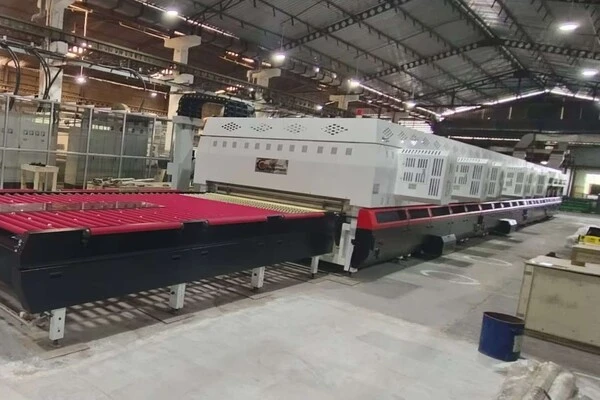
Forced convection improves glass heating uniformity by moving hot air across the glass surface with powerful fans, so heat reaches every area at a similar rate instead of depending on radiation alone. In a Forced Convection Double Chamber Machine, a pre-heating chamber and a final heating chamber share the work, which narrows temperature gaps between the center and the edges of each sheet. The result is less warping, fewer roller wave defects, and steadier tempering quality. I wrote this guide for US glass processors, plant managers, and procurement teams who want to understand how the technology works and how to select it.
Understanding the Problem of Glass Heating Uniformity
Why Uneven Heating Damages Glass
Because heat moves slowly through glass, the edges and the middle can be at very different temperatures. At this point, the temperature of the soda-lime glass is raised to between 620°C and 650°C. Then it is quickly cooled to keep the stress in. When the sheet cools, it has uneven stress because there is a hot spot on it. That makes it more likely that the thing will break while being used or moved because it can be seen to bow, bend, and change shape in other ways. ASTM C1048 in the US says that properly polished glass has a surface tension of at least 69 MPa. Even if the sheet looks fine, it can't meet the goal if it isn't balanced.
Where Natural Convection and Single-Chamber Systems Fall Short
An old lot of stoves use radiant elements and the way hot air moves on its own. The sheet heats up slowly, and the Low-E coats reflect infrared light, making it hard to heat the glass equally. Each load has to be warmed up, soaked, and finished in the same room because there is only one. To make up for it, workers often either slow down the cycle or make the parts hotter. The slopes close to the glass surface get steeper as the temperature does. The people in charge of plants are used to seeing longer cycles, more scrap, and longer due dates. Once the buying teams understand it, they can ask about convection design before they ask for a price.
What Heating Defects Cost a Glass Plant
In more than one way, not having enough heat costs money. The work and power that sheets used to heat the room are lost when they are not used. Shipping takes longer because of the extra work that needs to be done. People who buy things in the transportation, building, furniture, and appliance markets pay close attention to how flat something is. The order might be turned down if there is a clear roller wave. You can use ASTM C1651 to find out how much heated flat glass distorts light with roll waves. They won't have to argue about how it looks because everyone will agree on how big the flaw is. You don't have to look for these problems because a heater that keeps the temperature steady takes care of them before they happen.
How a Forced Convection Double Chamber Machine Works to Improve Heating Uniformity
Active Air Circulation Inside the Furnace
A high-temperature fan circulates hot air inside the Forced Convection Double Chamber Machine, allowing heat to transfer directly to the glass rather than relying solely on radiation. At Easttec, the related convection structures and components are made of ceramics that can withstand temperatures of up to 1300°C. This helps maintain stable airflow under high-temperature conditions and reduces unnecessary energy consumption. Forced convection is also beneficial for processing low-E glass, as it promotes more uniform heating across both sides of the sheet despite the coating's reflective properties, helping reduce the risk of glass bowing. In addition, variable-frequency drives allow engineers to adjust the convection fan speed according to the glass type and thickness, supporting more precise and efficient heating.
Pre-Heating and Final Heating Chambers Working Together
The first stage of heating is not the same as the last stage of heating because there are two rooms. A separate room slowly warms up the glass while the next batch starts to cook. The job is then finished in a room with a lot of heat. Heat shock and internal stress are less likely to happen if you heat something slowly instead of quickly all at once. Easttec says that it can handle 1.8 to 2 times as much as a single-chamber burner and cuts the heating cycle in half. The timing between the two chambers and the part that cools the metal is controlled by an industrial PC. That way, each batch will reach the right level of quench at the right time.
Control Components That Hold Temperature Steady
The button must move with the air for it to work. Eastern Tech's science specs show that each of the two heating parts (top and bottom) has its own PID temperature control. This can help them make sure the bottom and top are the same temperature. To keep the temperature even in both parts of the heating process, matrix radiant heating is used. On top of that, convection moves the air. The instructions say that the heating bed is warm all the way through to about 1.5°C. When high-density ceramic wheels with a TIR of less than 0.05 mm are used, the rolling is flat and smooth. The professional IPC computer stays cool, so it can show both rooms at the same time with no input lag. It can also get rid of 20% more heat.
Benefits and Applications of Forced Convection Double Chamber Machines in Glass Heating
Core Advantages of the Easttec Double Chamber Line
Here are the core advantages buyers check first when comparing tempering lines.
- Better optical flatness: The two-stage process raises glass temperature gradually. That reduces thermal shock and internal stress, which supports better surface flatness and less distortion than rapid single-stage heating. This matters most for large architectural lites and appliance panels, where buyers inspect reflected images closely and reject sheets with visible waves.
- Higher throughput: The twin-chamber design pre-warms the next batch while the first batch finishes. Easttec reports a production capacity 1.8 to 2 times that of standard single-chamber furnaces. Factories can add output without doubling floor space, which helps plants with limited building area and high-volume orders for 4mm to 6mm architectural glass.
- Lower energy cost: Specialized insulation cuts heat dissipation by 20%, and an intelligent power management system distributes electricity between the chambers. Easttec also states that its energy-saving design helps customers save one-third of their electricity. Tempering uses a lot of power, so these figures deserve a close look when you calculate cost per square meter.
These advantages address three common production problems: distortion, limited output, and high power bills.
Applications Across Glass Industries
For many US market groups, having two chambers works well. There are a lot of 4mm to 6mm lites that architects can work with quickly. The same machine can also work with 19mm structural glass, which is thicker. Countertops, bathroom walls, and cabinet glass can all be softened so they stay flat. Even heat is good for companies that make glass for fridge and oven doors because customers look at their goods very carefully. In deep-processing companies that are not linked to each other, one line can handle a lot of different customers and types. For solar and car jobs, let us know ahead of time what kind of glass you need, how thick it is, and what size it is. In this way, our techs can be sure that it fits between 4mm and 19mm.
Quality Checks That Verify Uniformity
When you say something is the same, you need to provide evidence. Quality teams use standardized tools to verify performance, including checks on a Forced Convection Double Chamber Machine. Standards such as EN 12150-1 specify how to count glass fragments within a 50 × 50 mm area to verify proper tempering. A zebra board helps identify edge lift and optical distortion, while laser-based SCALP tools measure stress across the glass surface. Tests conducted over 24 hours can also confirm whether roller speed remains consistent. A Thermal Uniformity Survey evaluates temperature distribution within each chamber, helping protect Low-E coatings as glass moves from one chamber to the next. These test results provide objective evidence that buyers can review, and you can request the same inspection procedures during a factory visit.
Selecting the Best Forced Convection Double Chamber Machine for Your Needs
Match Capacity and Thickness to Your Product Mix
Start by making your own order book. You should know how many square meters you produce daily, what the usual glass size is, and what percentage of glass is thin and what percentage is thick. You can use glass from 4 mm to 19 mm thick at Easttec. This means it can be used for building projects, furniture, and appliances. Decor glass that is between 4 mm and 6 mm thick can also be used quickly. Next, think about what you could change. With a double chamber, things can change faster, and when layers of the same thickness are grouped together, the convection pressure profiles stay the same. Software that was made just for this purpose lets people change the heating settings for different sizes. Last, check out the floor space. Being able to make the room twice as big without adding on makes it good for plants that can't add on to their buildings.
Compare Control, Energy, and Safety Specifications
Make sure that the questions you ask everyone are the same. True forced convection has a fan that moves the air around. Does the furnace use radiant heating, which doesn't move the air around much? Does each part of the machine (top and bottom) have its own PID track? How well do the fibers in the wood keep the heat in? Easttec says that 20% less heat is leaving the building. Are they able to prove that they follow CE rules? Easttec makes equipment that meets CE standards. This is a good place to start when it comes to being safe on foreign projects. But people in the US should still have their own professionals check the gear to make sure it meets safety and electrical standards in their country. That way, you can compare data on energy, roller TIR, and consistency in a fair way. Ask for a written measurement sheet at the end.
Verify Supplier Support, Delivery, and Customization
A tempering kiln is an investment that will last for a long time. The numbers are only half of the story. It's also important how strong the provider is. Since 1994, Easttec has worked on technologies that make glass stronger. Asking questions, planning the project, signing the contract, making it, installing it, testing it, showing workers how to use it, and giving service after the sale are all things that can be done in one place. Because each stove is made to order, it takes anywhere from 60 to 120 business days to deliver. You can pick 50/60Hz, 220V, 380V, or 415V. You can also change the language and color of the menu, as well as the size, heating curves, and cooling settings of the tool. You can get help online 24 hours a day, seven days a week. Check out the plant. A line run will help you understand many things.
Maintenance Tips and Safety Features for Long-Term Operation
Routine Maintenance Schedule
It's important to keep the heat even. Easttec says that high-temperature fan bearings should be greased every 2,000 hours of use. To stop shaking, the fan should also be balanced once a year. It's important to keep the temperature monitors in good shape, clean the ceramic wheels, and check the heating sources and insulators. Don't forget to record every job. You can usually tell before something goes wrong if the fan speed or the time it takes to heat up changes. People who have never done it before can learn how to do it in a week. Ask your supplier for a list of spare parts they think you should get when you first put the machine together. Any trouble will not stop a shift.
Troubleshooting Heating Uniformity Problems
Read through a short list if the glass waves, bows, or shows signs of too much stress in different places. To begin, look at the most recent temperature uniformity study and the last one next to each other. Check the speed and flow of air with the fan in the second step. The speed of the convection can change if the fan is old or not balanced. Last but not least, check the heating elements for broken parts. It is very important to do this on the upper and lower circuits that are controlled by the PID controller separately. Fourth, check the rollers' speed and state. When rollers move randomly, they leave marks and warp. This is the last step. Make sure you know what glass and lid to use by reading the recipe again. Easttec offers online support seven days a week, 24 hours a day. This means that your team doesn't have to wait for a site visit to talk to a tech about data.
Built-In Safety Features and Operator Training
Making things safe starts with how they are made. Getting people to change their habits is the next step. The IPC monitor lets more than one person see both rooms at the same time, and Easttec's heaters are CE-approved. There are rules set out by OSHA in 29 CFR 1910.147, but businesses should also have their own. For instance, there should be clear rules about who can and can't go near the furnace and quench area, as well as lockout and tagout procedures before service and gloves that can handle heat. Trainees are just as important as hardware. There are automatic multi-language menus for English, Spanish, Russian, Korean, Portuguese, and other languages. This way, teams that speak different languages can all follow the same steps. So, they can find strange things more quickly and keep the glass and the people who work on it safe.
Conclusion
Hot air moves across the glass sheet because of forced convection, which makes the heat more even. Not only does this add a second way for heat to move, but it also helps Low-E surfaces that reflect heat. There are two parts to a Forced Convection Double Chamber Machine: the heating part and the heating part that goes all the way through. That makes it possible for two groups to go through the oven at the same time and speeds up the process. When you heat something properly, it's less likely to twist, roll, or be stressed in different ways. This is important for rules like EN 12150-1 and ASTM C1048. To find the right width range and capacity for their goods, buyers should compare control, insulation, and safety statistics that are all the same. They should also check how long it takes to ship and how good the customer service is. The process is kept going by making sure the rollers, fans, and sensors are in good shape. To keep people safe and the quality of the glass safe, operators need to be trained in safe ways to do their jobs.
FAQ
What temperature uniformity can the machine reach?
Easttec's precise specs say that the heating bed should be ±1.5°C all the way through. There should be two separate PID settings for the heated parts on top and below. People can check to see if the heat is the same on both sides this way.
Does the double chamber design save energy?
Insulation can cut heat loss by 20%, and Easttec says its design saves energy and helps people cut their electricity use by a third. Any savings depend on the type of glass, the mix of goods, and how the load is laid out.
Can it heat Low-E glass evenly?
Yes. The glass doesn't bend because forced airflow heats it from both sides. In this case, the reflective shield of the layer is broken. It stays the right way to breathe when you put layers together that are all the same thickness.
How long does delivery take?
Due to the fact that each heater is made to order, delivery takes anywhere from 60 to 120 business days. There is live help 24 hours a day, seven days a week after it has been set up, tested, and operators have been trained.
Can the furnace match my plant's electrical supply?
Yes. Electricity in most of the world is 220V, 380V, or 415V at 50/60Hz, which is what Easttec changes power tools to work with. When I ask, tell me what your plant needs.
Request a Forced Convection Double Chamber Machine Quotation from EASTTEC EQUIPMENT
Want to buy a Forced Convection Double Chamber Machine from a business that can set it up, plan it, and fix it after the sale? ETEC EQUIPMENT has double chamber tempering lines that are CE-compliant. You can change the power and software language, and you can get live help 24 hours a day, seven days a week. Send your daily goals, types of glass, and thicknesses to sales@easttecmachine.com. After that, our experts will make a plan and give you a price. You can visit easttecglass.com to learn more, or you can ask to be shown around the office and see how the machines work.
References
1. ASTM C1048, Standard Specification for Heat-Treated Flat Glass, ASTM International, 2018
2. EN 12150-1, Glass in Building: Thermally Toughened Soda Lime Silicate Safety Glass, European Committee for Standardization, 2015
3. Fundamentals of Heat and Mass Transfer, John Wiley & Sons, 2011
4. Introduction to Glass Science and Technology, Royal Society of Chemistry, 2005
5. Energy and Environmental Profile of the U.S. Glass Industry, U.S. Department of EnCommission, 1977ergy, 2002
6. Safety Standard for Architectural Glazing Materials (16 CFR Part 1201), U.S. Consumer Product Safety

USER EVALUATE
Here is the customer's evaluation of us