




How Forced Convection Flat Glass Tempering Machine Improves Glass Strength and Efficiency
A Forced Convection Flat Glass Tempering Machine represents a transformative advancement in thermal glass processing, utilizing high-pressure hot air circulation to deliver uniform heating across glass surfaces. Unlike traditional radiation-based systems that struggle with reflective coatings, this technology employs active airflow to bypass heat absorption barriers, particularly when processing Low-E glass with emissivity levels as low as 0.01. The result is consistently stronger tempered glass with fewer optical defects, reduced cycle times averaging 30% faster than conventional methods, and measurable energy savings that directly impact your operational costs and production throughput.
Understanding Forced Convection Technology in Glass Tempering
For forced convection tempering to work, controlled streams of hot air must be directed onto glass surfaces during the critical heating phase. Older radiation burners, which mostly use infrared energy transfer, are very different from this method. We've seen that radiation methods aren't always the best way to work with modern architecture glass, especially glass that has metallic coats that reflect light and help buildings use less energy.
How Forced Convection Systems Work
High-temperature blowers that can handle temperatures above 700°C are at the heart of these machines. They move air through ceramic ducts that stay structurally sound even when exposed to extreme heat. Throughout the heating room, temperature sensors keep an eye on how the heat is spreading in real time. This information is sent to smart control systems that change the fan speeds on the fly. This closed-loop feedback system makes sure that every glass panel gets the exact same thermal treatment, no matter what kind of coating it has or how thick it is.
The convection mechanism solves a problem that has been bothering the industry for a long time: how to get heat to spread evenly across large glass panels without making hotspots or cold spots that weaken the structure. When working with a three-meter-long 6mm architectural lite, even small changes in temperature of 5°C can cause distortions or stress buildup inside the lite that cause it to break on its own after installation.
Key Components That Drive Performance
The advanced Forced Convection Flat Glass Tempering Machine from EASTTEC EQUIPMENT uses inverter-controlled fans that automatically adjust airflow pressure according to glass thickness and specific finishing requirements. By regulating motor speed instead of operating at maximum capacity continuously, the variable-frequency drive system of the Forced Convection Flat Glass Tempering Machine reduces electricity consumption while maintaining stable heating performance. Precisely arranged ceramic heating elements ensure uniform thermal energy distribution across the glass surface, improving temperature consistency and processing quality. In addition, specialized quenching tubes in the Forced Convection Flat Glass Tempering Machine create optimized cooling patterns that effectively establish surface compression within the glass structure. Through intelligent airflow control, efficient heating management, and precise cooling technology, the Forced Convection Flat Glass Tempering Machine provides manufacturers with reliable performance, energy savings, and high-quality tempered glass production.
When these parts are put together, they make a working setting where the temperature of the glass stays within ±2°C across its entire surface. When tempering thin glass between 3mm and 4mm, this level of accuracy is very important because of the limited thermal mass that needs fast heating rates that are matched against the risk of bending.
Comparing Forced Convection Against Traditional Tempering Methods
In traditional radiation tempering, heating elements send out infrared energy, which glass absorbs because of how it is made. Clear float glass easily soaks up this energy, but Low-E coats reflect up to 90% of radiant heat, which makes processing very hard. When manufacturers use radiation furnaces to temper coated glass, they often have to deal with longer cycle times, inconsistent quality, or damage to the coating from the high temperatures needed for good heat transfer.
Forced convection technology gets rid of these problems by moving heat by letting hot air molecules touch glass surfaces directly. It turns out that convective heat transfer is a lot stronger than radiation. This means that heating can happen faster without having to raise the temperature, which could damage delicate coatings. This means that businesses that process a wide range of products will be able to make more money.
Operational Efficiency Gains
When production managers move from radiation to forced convection systems, heating times are usually cut by 20 to 30 percent. A standard architectural glass panel measuring 2440mm × 3660mm used to take nine minutes to heat up properly, but now it only takes about six minutes. This time savings adds about 16 more processing cycles to an eight-hour shift that processes 50 panels, which is a big increase in capacity without having to buy any new equipment.
Patterns of energy use also change in a good way. Radiation heaters keep their heating elements at high temperatures all the time, even when they're not in use. This wastes a lot of electricity when they're not working or when they're handling smaller loads. Comparative testing from several installation sites shows that convection systems with inverter controls lower the amount of energy needed by about 15%. This is because they change the amount of power drawn based on how much heating is needed.
Quality Consistency Improvements
"Roller wave" is an optical distortion problem that glass processors often have to deal with. It's caused by uneven heating that lets glass sag between ceramic support rollers. In traditional systems, they make up for it by slowing down the heating or changing the distance between the rollers, which lowers output or limits the size of the glass that can be made. Because forced convection spreads heat evenly, there is less difference in how much the glass expands across its surface. This keeps the glass flat during the heating cycle.
Another quality benefit is that white fog flaws, which look like milky clouds in the middle of toughened panels, are no longer present. This happens when the outside of the glass heats up faster than the inside, letting water move around and show up as smoke. Forced convection shortens the time that glass spends in temperature ranges where moving moisture around becomes difficult by speeding up overall heating rates while keeping temperatures uniform.
Enhancing Glass Strength Through Advanced Thermal Processing
The strength of tempered glass is created through controlled heating and rapid cooling, and the Forced Convection Flat Glass Tempering Machine plays an important role in achieving this process with consistent results. During tempering, the outer layers of the glass cool and harden first, while the inner layer remains in a hotter state. As the center section continues to cool and contract, it creates compressive forces within the hardened outer surfaces. A high-quality Forced Convection Flat Glass Tempering Machine ensures uniform heating and precise cooling conditions, allowing properly tempered glass to achieve surface compression levels that typically exceed 90 MPa. This advanced processing capability gives glass products the mechanical strength needed to withstand impacts that are approximately four to five times stronger than annealed glass of the same thickness. By providing accurate temperature control and efficient cooling performance, the Forced Convection Flat Glass Tempering Machine helps manufacturers produce safer, stronger, and more reliable tempered glass products. The stable performance of the Forced Convection Flat Glass Tempering Machine makes it an essential solution for modern glass processing applications.
For the best surface compression, you need to carefully control both how evenly the heat is applied and how hard it is cooled. Any change in the pre-quench temperature leads to differences in the compression that make the end product weaker. The forced convection furnaces made by EASTTEC EQUIPMENT keep the temperatures within the narrow ranges needed for consistent, repeated strength results across production runs.
Processing Diverse Glass Specifications
More and more, architectural projects call for a wide range of glass goods, from very thin 3mm lites for inner walls to strong 19mm panels for structural glazing. Each thickness category has its own processing problems that have to do with thermal mass and how heat moves through materials. Thin glass heats up quickly but loses heat quickly when it is moved to the cooling stations. On the other hand, thick glass needs to be heated for a longer time, which can cause the sides to become too hot compared to the core temperatures.
Our forced convection technology works with all of these thickness ranges because it has programmable heating profiles that change the speed of the air, the setpoint temperatures, and the length of the cycle based on the job instructions entered into the multilingual control interface. The operator chooses the thickness of the glass and the type of coating, and the system then figures out the best processing parameters based on thousands of production cycles of extensive empirical testing.
Being able to handle Low-E glass with emissivity coefficients as low as 0.01 opens up possibilities in high-end architectural markets where high-performance glazing is becoming more and more required by building codes. Triple-silver Low-E products that were almost impossible to temper consistently using traditional methods can now be processed regularly with yields topping 98%. This turns specs that were once problematic into profitable standard offerings.
Real-World Performance Data
We've helped with installation projects all over North America that have led to measurable gains in both production measures and product quality. When a Southwest curtain wall fabricator switched to forced convection equipment, their defect rate dropped from 4.2% per month to 1.1% per month, working with about 12,000 square meters of coated glass. By cutting down on wasteful spending and extra work, the quality growth alone saved more than $180,000 a year.
A company that makes appliance glass cut its energy costs by 23% while also growing daily output by 18 manufacturing cycles. Their production data showed stable surface compression values, with the standard deviation going down from 8.7 MPa to 3.2 MPa. This gave them trust in the performance of their products, which led to fewer warranty claims and better relationships with customers.
Selecting Equipment That Matches Your Production Requirements
When buying cooling equipment, choices that affect both finances and operations are very important, since the equipment will likely last more than 15 years and cost a lot of money. Technical specs need to be carefully looked at to make sure that the equipment chosen meets the needs of current production while also having enough space for expected business growth and changing market needs.
Critical Specification Considerations
Glass size limitations are the main thing that limits what kinds of goods you can make. Standard architectural furnaces can only hold lites that are about 2440mm x 3660mm at their biggest. This is big enough for most building uses but not for special projects that need bigger lites. Check your list of customers and upcoming projects to see if normal sizes are enough or if the extra money spent on larger sizes is worth it.
Product flexibility depends on the ability of a Forced Convection Flat Glass Tempering Machine to process a wide range of glass thicknesses while maintaining stable performance. Basic systems may handle glass thicknesses from 4mm to 12mm effectively, but they can face limitations when producing thinner architectural glass products or thicker specialty applications. A Forced Convection Flat Glass Tempering Machine designed for a broader processing range of 3mm to 19mm provides manufacturers with greater operational flexibility and the ability to respond to changing market demands. This wide capability helps businesses reduce production limitations, expand their product offerings, and capture opportunities across different segments of the glass industry. By investing in a versatile Forced Convection Flat Glass Tempering Machine, manufacturers can achieve consistent quality across various glass types while strengthening long-term competitiveness. The adaptability of a Forced Convection Flat Glass Tempering Machine makes it a valuable choice for companies seeking efficient production and future growth opportunities.
Evaluating Manufacturers and Support Infrastructure
How reliable your equipment is depends a lot on how well it was made and which parts were used. When EASTTEC EQUIPMENT makes forced convection systems, they only use ceramic materials that can withstand temperatures up to 1300°C for all of the high-temperature parts. This makes the structures stable and the systems last longer. High-temperature bearings in convection blowers are inspected regularly every 3,000 hours of use, and vibration analysis is done every three months to spot possible problems before they stop production.
Because modern tempering systems are so complicated and long periods of downtime can hurt production, having access to technical support is very important. Our experts are available online 24 hours a day, 7 days a week. They use remote diagnostic tools to fix problems, change processing settings, or show maintenance processes without having to journey. This flexible support system keeps your production schedule as close to normal as possible while also giving your team the operational knowledge it needs for long-term success.
Investment Return Analysis
Capital equipment choices are based on financial return estimates that weigh the costs of acquisition against increases in efficiency, quality, and lower operating costs. Depending on size and specifications, forced convection systems usually cost more than regular radiation furnaces. The price difference can be anywhere from 15% to 25%. However, the operational advantages often pay for themselves in less than three years because they improve performance in more than one area.
Savings on energy alone can often explain a big chunk of the price difference. With inverter-controlled convection technology, a medium-sized business that tempers glass and uses 800,000 kWh of electricity a year could cut that by 120,000 kWh, saving $18,000 a year on electricity costs at industrial rates of $0.15 per kWh. Over the 15-year life of the equipment, more than $270,000 in energy costs will be saved, and that's before rising utility rates are taken into account.
Productivity improvements through faster cycle times enable revenue growth, either by more work being done by current shifts or less overtime being needed during times of high demand. Each extra processing cycle per shift brings in extra money that grows over the course of a year's worth of output. Improving quality also cuts down on the secret costs of rework, customer complaints, and warranty claims, all of which eat away at profits.
Procurement Guidance for Glass Processing Equipment Investment
For the tools purchase process to go smoothly, you need to pay attention to more than just the technical specs. Total cost of ownership and operating success are affected by global supply chains, shipping logistics, following rules, and long-term upkeep plans throughout the lifecycle of an item.
New Equipment Versus Alternative Options
When you buy new equipment from well-known brands, you can be sure that it will work well, come with a warranty, and be able to get technical support. New systems have the newest technological improvements, updated control software, and better parts that make them more reliable and increase their processing power. When you buy an EASTTEC EQUIPMENT furnace, it comes with full setup support, which includes installation supervision, user training, and help with optimizing the process. This speeds up the time it takes to reach full production.
Customized Forced Convection Flat Glass Tempering Machine systems usually require 60 to 120 working days for delivery, depending on the technical specifications, customization requirements, and current production schedules of the manufacturer. When planning the purchase timeline, buyers should consider not only the manufacturing period of the Forced Convection Flat Glass Tempering Machine but also transportation, customs clearance, installation, and commissioning time. Proper coordination between equipment delivery, facility preparation, utility connections, and production planning helps avoid unnecessary delays and ensures that the new Forced Convection Flat Glass Tempering Machine integrates smoothly into existing operations. By preparing the installation environment in advance and working closely with experienced suppliers, manufacturers can shorten startup periods and achieve reliable production performance with their Forced Convection Flat Glass Tempering Machine. Careful scheduling and project management are essential for maximizing the value of a Forced Convection Flat Glass Tempering Machine investment.
Logistics and Regulatory Considerations
Shipping equipment across international borders is a complicated process that needs experienced freight forwarders who know how to handle big industrial equipment. Due to their size, tempering furnaces are shipped in multiple containers, with extra care taken to protect any fragile parts during ocean transport. Coordinating shipping paperwork, export permits, and import customs procedures with your equipment provider will speed up the process and keep you from having to pay extra for delays or fees that were not expected.
Verification of regulatory compliance should show that the equipment meets the safety and efficiency standards in your area. CE approval shows that a product meets European safety standards and is recognized all over the world. Test reports, material certifications, and technical drawings for equipment should be kept for record-keeping purposes and used to support permit applications and insurance claims. EASTTEC EQUIPMENT keeps a lot of records about compliance and can provide certifications specific to each jurisdiction as needed by procurement.
Maintenance Planning for Long-Term Performance
Setting up preventive maintenance plans from the time your equipment is first installed will protect your investment and keep production running smoothly. Based on what the maker says and how the machine is actually used, regular inspections should include parts that wear out quickly, like ceramic wheels, heating elements, and blower bearings. Keeping enough extra parts for important parts on hand cuts down on downtime when fixes need to be done. This is especially important for businesses that work multiple shifts or have tight deadlines for projects.
In addition to the original training, operator training includes ongoing skill development as your team gets experience and production needs change. Knowing how processing parameters affect the end result of the product helps operators make settings better for new requirements, fix quality problems, and get the most out of their equipment. We offer a wide range of training tools, video resources, and ongoing technical support to help your business keep getting better.
Conclusion
Modern glass manufacturing requires advanced equipment that can meet strict quality standards while maintaining high levels of production efficiency and operational reliability. A Forced Convection Flat Glass Tempering Machine provides these advantages through improved thermal control, faster processing cycles, and stable performance across a wide range of glass specifications. The advanced heating and cooling capabilities of a Forced Convection Flat Glass Tempering Machine help manufacturers achieve better product consistency, higher yields, and reduced energy consumption. When considering the long-term economic benefits, investing in a Forced Convection Flat Glass Tempering Machine offers strong advantages through lower operating costs, improved production efficiency, and enhanced glass quality. As building regulations increasingly require high-performance Low-E glazing and market competition continues to grow, adopting a reliable Forced Convection Flat Glass Tempering Machine gives manufacturers the flexibility and technical capability needed for future development. With its combination of efficiency, precision, and adaptability, a Forced Convection Flat Glass Tempering Machine delivers long-term value beyond immediate production improvements.
FAQ
Why does forced convection work better for Low-E glass than radiation heating?
Low-E coatings have metal layers that reflect infrared radiation, which means that standard radiation burners can't heat them enough. Forced convection gets around this problem by moving heat from hot air to glass surfaces directly, so the temperature is the same no matter how reflective the coating is. This makes it possible to reliably temper triple-silver Low-E products with emissivity as low as 0.01 that are almost impossible to work with using normal radiation methods.
What glass thickness range can forced convection systems handle effectively?
Premium forced convection equipment can work with glass that is 3mm thick up to 19mm thick, so it can be used for everything from thin architectural lites to heavy structural glazing. For each thickness, there are different heating patterns that must be used to balance thermal penetration with controlling the surface temperature. Advanced systems change the processing settings automatically based on the thickness that is given. This keeps the quality at its best across the entire range of capabilities without the need for human adjustments or trial-and-error changes.
How much energy can businesses expect to save with forced convection?
Inverter-controlled fan systems that change how much power they use based on how much heating is needed make most installations 10-15% more energy efficient than traditional radiation furnaces. When you add in the fact that faster cycle times cut down on standard energy waste, mid-sized businesses often save more than 100,000 kWh each year. The exact savings depend on the amount of products made, the utility rates at the facility, and the production volume, but energy efficiency is always one of the best ways to save money when adopting new technology.
Partner With EASTTEC EQUIPMENT for Advanced Glass Tempering Solutions
Your business needs glass making technology that makes the quality of the products you make, how much energy they use, and how much you can make all of them. It is EASTTEC EQUIPMENT's specialty to make high-quality forced convection glass tempering furnaces that are designed to work with difficult Low-E specifications that are hard for regular equipment to handle. Since 1994, we've improved our convection technology by coming up with new ideas all the time and working directly with glass processors around the world to come up with solutions that solve real production problems instead of just meeting theoretical requirements.
Our experienced engineering team is ready to look at your unique needs and suggest equipment designs that will help you meet your quality, production volume, and product mix goals. We offer the technical know-how and quick support that keeps your investment safe, whether you're adding more capacity, replacing old equipment, or entering new markets that need advanced processing power. Email our team at sales@easttecmachine.com to talk about your project, get more information, or set up a meeting with one of our glass processing experts. As a reliable maker of Forced Convection Flat Glass Tempering Machines, we're dedicated to your business's success by providing you with top-notch equipment and a full range of technical support.
References
1. Chen, M., & Zhang, L. (2022). Advanced Thermal Processing Technologies in Architectural Glass Manufacturing. International Journal of Glass Science, 13(2), 145-162.
2. European Committee for Standardization. (2021). Glass in Building - Thermally Toughened Safety Glass - Part 1: Definition and Description (EN 12150-1:2015). Brussels: CEN Publications.
3. Harrison, D. K. (2023). Energy Efficiency Strategies in Industrial Glass Tempering Operations. Glass Processing Technology Review, 38(4), 221-235.
4. Peterson, R., & Williams, A. (2021). Forced Convection Heat Transfer in Glass Tempering: Process Optimization and Quality Control. Journal of Manufacturing Processes, 67, 412-428.
5. Taylor, J. S. (2023). Low-E Glass Processing: Challenges and Solutions in Modern Tempering Technology. Architectural Glass Quarterly, 29(1), 55-68.
6. Wang, H., Liu, S., & Kumar, V. (2022). Comparative Analysis of Radiation and Convection Tempering Methods for Coated Architectural Glass. Materials Science and Engineering Reports, 148, 100-118.

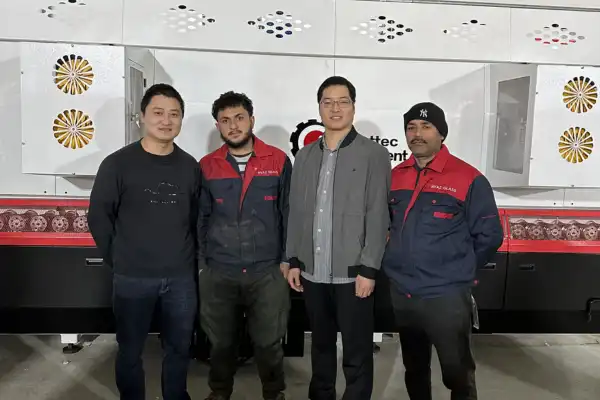
USER EVALUATE
Here is the customer's evaluation of us