




How Dual-Chamber Furnaces Handle Large Architectural Glass Panels
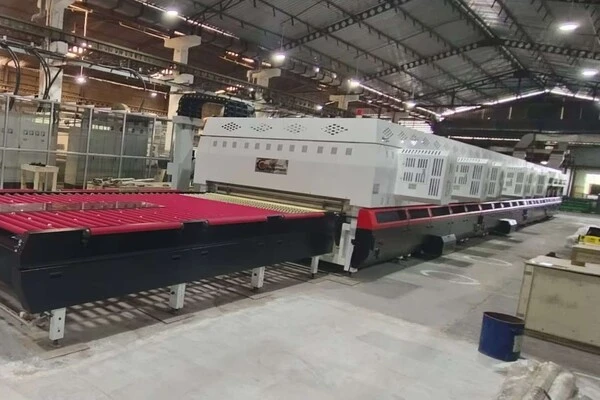
A Dual-Chamber Architectural Glass Tempering Furnace handles large glass panels by splitting the heating into two stages. The first chamber pre-heats the glass, and the second brings it to tempering temperature while the next panel enters the pre-heat zone. This gradual rise reduces thermal stress, limits roller wave distortion, and keeps big panels flat. An industrial PC (IPC) times both chambers and the quenching section together, so panels move without delay. Below, I explain how the design works, how it compares with other furnaces, what maintenance involves, and how to choose the right machine for your plant.
Understanding the Dual-Chamber Architectural Glass Tempering Furnace
You will better understand all the other perks if you start with the basic plan.
How Do the Two Chambers Work Together?
In the Dual-Chamber Architectural Glass Tempering Furnace, there is a room for pre-heating and a room for high-temperature heating. A big screen moves into the first room and gets warmer over time. Then it is taken into a room that is very hot. This gets it up to the tempering temperature, which for building glass is generally around 680°C to 720°C. The next panel in the first chamber is already getting warm, but the first panel is still getting warm. Two groups can work at the same time this way. The panel is heated up and then moved to a place where it can cool down. In this case, air quickly cools the surfaces and holds the stress down. People can better understand the value when they picture a steady flow instead of a loop where things start and stop.
Forced Convection Heating for Wide Panels
Big panels get hot in different places because they have a lot of surface area. This can be seen as bending, edge lift, or changes in how things look. Our furnaces use real forced convection. There is a high-temperature blower in the room that moves a stream of hot air around. That part that moves air is made of ceramic and can stand up to 1300°C of heat. Just the sun's heat warms things up. Low-E glass cools things down slowly because it reflects heat. When you set up the dual chambers and use top convection, Low-E cooking cycles go 30% faster. The temperature stays the same across a big screen because air is moving across it. This means that the results are the same from edge to edge. The main parts of the machine that control how well it works with a big, oversized panel are shown here.
Core Components Buyers Should Check
- Heating and convection system: The heaters and ceramic ventilation parts are inside the pre-heating and high-heating tanks. The panel stays at the same temperature before the glass reaches the quench because of even heating in both chambers. This stops film oxidation on sensitive architectural coatings. This protects the sight of Low-E glass.
- Quenching section: Air jets cool the hot glass, and the settings for cooling can be changed based on the thickness, which can be between 4mm and 19mm. Using slower cooling rates, you can also make glass that is stronger from heat. ASTM C1048 says that the surface needs to be squished between 24 and 52 MPa. In other words, the machine can still work with both kinds of goods.
- IPC control hub: An industrial PC in the middle controls all the heating and convection settings and also controls the timing between the two chambers and the quenching section. The person in charge picks a way, and the software makes sure that every step is carried out properly. With the automatic multi-language menu, you can choose from English, Spanish, Russian, Korean, Portuguese, and more.
First, look at these three gears. They made sure that the heating was stable, flat, and even on big panels.
Advantages of Dual-Chamber Furnaces Over Single-Chamber and Other Types
This displays how the two-stage layout compares to other Dual-Chamber Architectural Glass Tempering Furnace types in terms of quality, output, and energy use.
Throughput Compared With Single-Chamber Furnaces
Some ovens only heat one batch at a time, so you have to wait in line to load, heat, and take out food. With two stages, it takes less time to heat each batch because the pre-heating box warms up the next load while the first round is done. Easttec says it can make 1.8 to 2 times as much as a regular oven with one chamber. Architectural lights that are 4 to 6 mm thick show the most gain because that's where plants that need to work quickly need to be. This overlap turns idle waiting time into output and helps one line handle more orders. This is helpful for plants that want to be open 24 hours a day, seven days a week.
Dual-Chamber vs. Multi-Chamber and Conveyor Lines
There are other layouts, like lines with more than one room and lines that run continuously. Sometimes, having more heating stages costs more, takes up more floor space, and has more parts to take care of. The temperature rise is slow because it has two chambers, and you can only control two heating zones. The best choice is based on what you sell. Heat curves need to be able to bend for plants that make different thicknesses and sizes. On the other hand, plants that only make one specific thing might look at other plans. You shouldn't compare each choice to a book. Instead, you should write down the types of glass you need, how much you need every day, and how much floor room you have.
Flatness and Energy Savings
Glass heats up quickly with single-stage heating, but more slowly and evenly with two-stage heating. The surface is smooth and less warped, which is good for big screens that are seen in reflection. There is also less heat shock and stress. To save energy, high-tech insulation cuts heat loss by 20%, and an intelligent power management system lets the chambers share electricity. This makes running the building cheaper per square meter. Easttec says that the way its goods are made will also help people save one-third of the power they use. The money you save on energy costs goes right into your return on investment because tempering takes a lot of it.
Operations: Process, Maintenance, and Safety
You can figure out how much something will cost in the long run before you buy it if you know how it works every day. This is called the daily routine. The worker puts something in the glass and picks a recipe on the IPC. The panel gets hot in the room that is used to heat it up. After that, it soaks in the room that is very hot until the temperature is the same all the way through the panel. The temperature curve for 4 mm glass is not the same as that for 19 mm glass because 19 mm glass needs more time to soak. After that, the screen cools, and air quickly cools both sides. The center of something cools down after the edges have hardened. This flattens the edges and pulls the middle tight. Toughened glass is strong because it is all the same weight. It is possible to set heating and cooling curves that work for your products.
The Tempering Process Step by Step
You should stick to a simple routine for the Dual-Chamber Architectural Glass Tempering Furnace because downtime can push back delivery dates. The clay rollers should be checked every day for sulfur buildup. Every three to six months, depending on how much you make, they should be deep cleaned and adjusted. Write down when you will check the sensors and blowers on a calendar. This way, you'll notice even small changes right away. The way our equipment is made makes it easy to keep up. It only takes new operators one week to learn how to use and keep up. You can get help from technicians online 24 hours a day, and the one-stop service process includes setting up, starting, and teaching the user how to use the product. Find out what spare parts they have before you sign.
Maintenance Routines That Protect Uptime
A high-power machine that works all the time needs to be built with safety in mind. That mark, CE, means that the Dual-Chamber Architectural Glass Tempering Furnace was built in line with CE safety rules. Still, workers should close off the area, wear gloves that can handle heat, and keep their hands and eyes away from the moving rollers. The CE seal is on the machine itself, but not on the glass that you make with it. In the US, ASTM C1048, ANSI Z97.1, and CPSC 16 CFR 1201 are the rules for building safety glass. After making sample panels, you should compare them to these rules. Roller waves are measured, the surface of fully toughened glass is pressed above 69 MPa, and there are at least 40 pieces in a 50 x 50 mm area. These are all common tests.
Safety Features and Standards
These three questions will help you stay focused on your search if you are looking at different suppliers right now.
How to Choose the Right Dual-Chamber Architectural Glass Tempering Furnace?
Start with the glass list. Make a note of the biggest panel's size, the thickest glass's thickness, and the daily average amount. 4mm to 6mm lites can go through the Dual-Chamber Architectural Glass Tempering Furnace at the fastest speeds. The furnace can handle glass that is 4mm to 19mm thick. As you ask for a quote, please let us know the largest length and width of the equipment. You can then choose its size, heating curves, and cooling parameters. You need to be careful when putting loads of different sizes into the mix. For the best quality, I recommend putting loads of the same thickness together. When you work with Low-E glass, keep track of the type of coating you use. Top convection and controlled warmth will keep the film safe.
Capacity, Thickness Range, and Panel Size
Being skilled is hard to come by, so pay close attention to the control system. Everything you need to set up airflow and heat is in one place on our IPC hub. Reading the menu is possible in English, Spanish, Russian, Korean, Portuguese, and more. Find out how long it takes to train workers from each company. In a week, we can teach new workers how to run and fix things. Also, make sure the power works. Our burners can handle 220V, 380V, and 415V at 50Hz or 60Hz, as well as other different types of power around the world. You can also pick out what color the gear is. We'll set up the power system so that it works with the frequency and energy that you send us from your plant.
Automation, Software, and Voltage Fit
The price you pay for a Dual-Chamber Architectural Glass Tempering Furnace isn't the only cost. Compare how much energy is used per square meter, the output, the care, and the help. These glass heating kilns are made to order, and delivery takes sixty to one hundred work days. Plan your project around this time. It takes a few months to decide what to buy, so you are welcome to come to our factory and see how our tools work before you decide. Since 1994, Easttec has worked with technology for hardening glass. Their quality control and ventilation techniques are based on the rules set by Italy. Questions, project planning, and making changes to the plan are all part of our one-stop process. This includes the agreement, the making, the installation, the launching, the training, and the service after the sale.
Real-World Applications and Case Studies
This is about how the same design elements are used on three different items.
Curtain Wall and Façade Panels
Big, clear, heat-strengthened glass that doesn't reflect light is needed for people who want to look at high-rise curtain walls. This is because everyone sees the whole front. Panels stay flat in frames and don't get roller waves because they are heated slowly in two steps. It's also important to have edge lift. Panel edges should be within 0.1 mm of being flat, which keeps the gaps between structural glass small. The cooling rate can be slowed down to get the quench for heat-strengthened glass to a range of 24 to 52 MPa. This is how I think you should measure a small amount of each new recipe before you make the whole batch.
Low-E Coated and Structural Glass
Low-E glass with two or three silver coats can break if the heat isn't spread out flat or is too strong. Because the Dual-Chamber Architectural Glass Tempering Furnace system heats evenly through convection, the film doesn't oxidize, and the coating's optical quality is kept safe. Glass that is used to build things is a different issue. Large windows and balustrades are usually made of thick glass that is 12 mm to 19 mm thick. That range is covered by the furnace's flat sides. The two-stage method works best for thick glass, which needs to soak for longer and heat up more slowly. Because these things are open to wind and people walking on them, samples need to be broken up and squished together.
A Planning Example With Real Ratings
Keep in mind that this is not a customer report, but an example of how to plan. Let's say a plant warms up 6mm Low-E lights on a single-chamber line that can light up 100 square meters an hour. The same mix of goods could be made on a dual-chamber line that could handle 1.8 to 2 times its throughput in an hour. The top flow gets weaker. Thermal energy loss is cut by 20% and low-E heating cycles are cut by 30% when shielding is better. The price per square meter should go down because of this. As well as the load arrangement and type of glass, they change. During the design phase of the project, we make models of your products, and a factory demonstration can set the numbers.
Conclusion
Because the heating is split into a pre-heating stage and a high-heating stage, Dual-Chamber Architectural Glass Tempering Furnaces can handle large pieces of building glass. Both chambers and the cooling section are controlled by an IPC. With this design, the capacity goes up to 1.8 to 2 times what a normal single-chamber furnace can hold. It also warms surfaces more slowly and evenly, which is good for flat surfaces. Balanced convection also protects Low-E coatings. Also, it stops 20% of heat loss and fits over glass from 4 mm to 19 mm thick. It is possible to keep production steady with trained workers, regular upkeep on the rollers, and a safety design that is CE-certified. To make sure the quality of the glass, samples are checked against ASTM C1048, ANSI Z97.1, and CPSC 16 CFR 1201. Start by writing down your power, loudness, and glass list goals. This will help you make a good choice. Then you should look at how much it costs, how much energy it uses, how much it yields, and how much it supports.
FAQ
What glass thicknesses can the furnace temper?
It can temper glass from 4 mm to 19 mm thick. Window lites that are 4mm to 6mm thick move the fastest, and glass that is up to 19mm thick stays flat on its surface.
Can it process Low-E glass?
Yes. Even cooking and airflow from the top make it go faster. The visual quality of the coating is kept safe by low-E heating processes in the Dual-Chamber Architectural Glass Tempering Furnace that cut film oxidation by 30%.
How long does delivery take?
It takes between 60 and 120 working days to send a heater because each one is made to order. After that, the machine is set up, tested, and the operator is trained.
Can you adapt the furnace to my plant's voltage and language?
Yes. You can set the power system for 220V, 380V, or 415V at 50Hz or 60Hz. You can read the menu in English, Spanish, Russian, Korean, Portuguese, and other languages.
Can it produce heat-strengthened glass?
Yes. You can change the quench in a number of ways to make it cool more slowly and still meet the ASTM C1048 standards for heat-strengthened glass with a surface stress of 24 to 52 MPa.
Request a Dual-Chamber Architectural Glass Tempering Furnace Quote from EASTTEC EQUIPMENT
Want to buy a Dual-Chamber Architectural Glass Tempering Furnace from a company you can trust? The equipment made by EASTTEC is CE-certified, has online support 24 hours a day, and can be set up to meet your voltage, volume, and language needs. Send a list of the glasses you need to sales@easttecmachine.com to get a price quote, or call to set up a time to see the glasses in person. To find out more, visit easttecglass.com. Our team will help you plan installation, training, and support after the sale from the very first question.
References
1. ASTM C1048 Standard Specification for Heat-Strengthened and Fully Tempered Flat Glass, ASTM International, 2018
2. EN 12150-1 Glass in Building: Thermally Toughened Soda Lime Silicate Safety Glass, Part 1, European Committee for Standardization, 2015
3. ANSI Z97.1 Safety Glazing Materials Used in Buildings: Safety Performance Specifications and Methods of Test, American National Standards Institute, 2015
4. Code of Federal Regulations, Title 16, Part 1201: Safety Standard for Architectural Glazing Materials, U.S. Consumer Product Safety Commission, 2023
5. Fundamentals of Inorganic Glasses, Arun K. Varshneya, Society of Glass Technology, 2006
6. Glass: Science and Technology, Volume 5: Elasticity and Strength in Glasses, Academic Press, 1980

USER EVALUATE
Here is the customer's evaluation of us